


 Damage
  Loss
Loss  Theft
Theft 


Rooftop Tents: Soft Shell vs Hard Shell, Which Should You Choose?
A rooftop tent is one of the single best upgrades you can make to your overlanding or off-road setup — elevating your camp experience in every sense of the word. But when it comes to choosing between soft shell and hard shell, your decision will depend on your style, budget, and what adventure means to you. Let's break it all down so you can choose confidently.
 The Foundation
What Is a Rooftop Tent?
A rooftop tent is a portable shelter that mounts directly to your vehicle's roof rack or load bars. Unlike traditional ground tents, they set up fast, keep you off uneven terrain, and add a unique sense of elevation to your camping experience.
They come in two main categories: soft shell rooftop tents — foldable fabric designs that open to create a spacious covered shelter — and hard shell rooftop tents — enclosed in a rigid fibreglass or aluminium shell that opens to reveal the sleeping area.
Both designs have genuine strengths. The right one for you depends entirely on how you camp, how often you move, and what you value most in your outdoor setup. 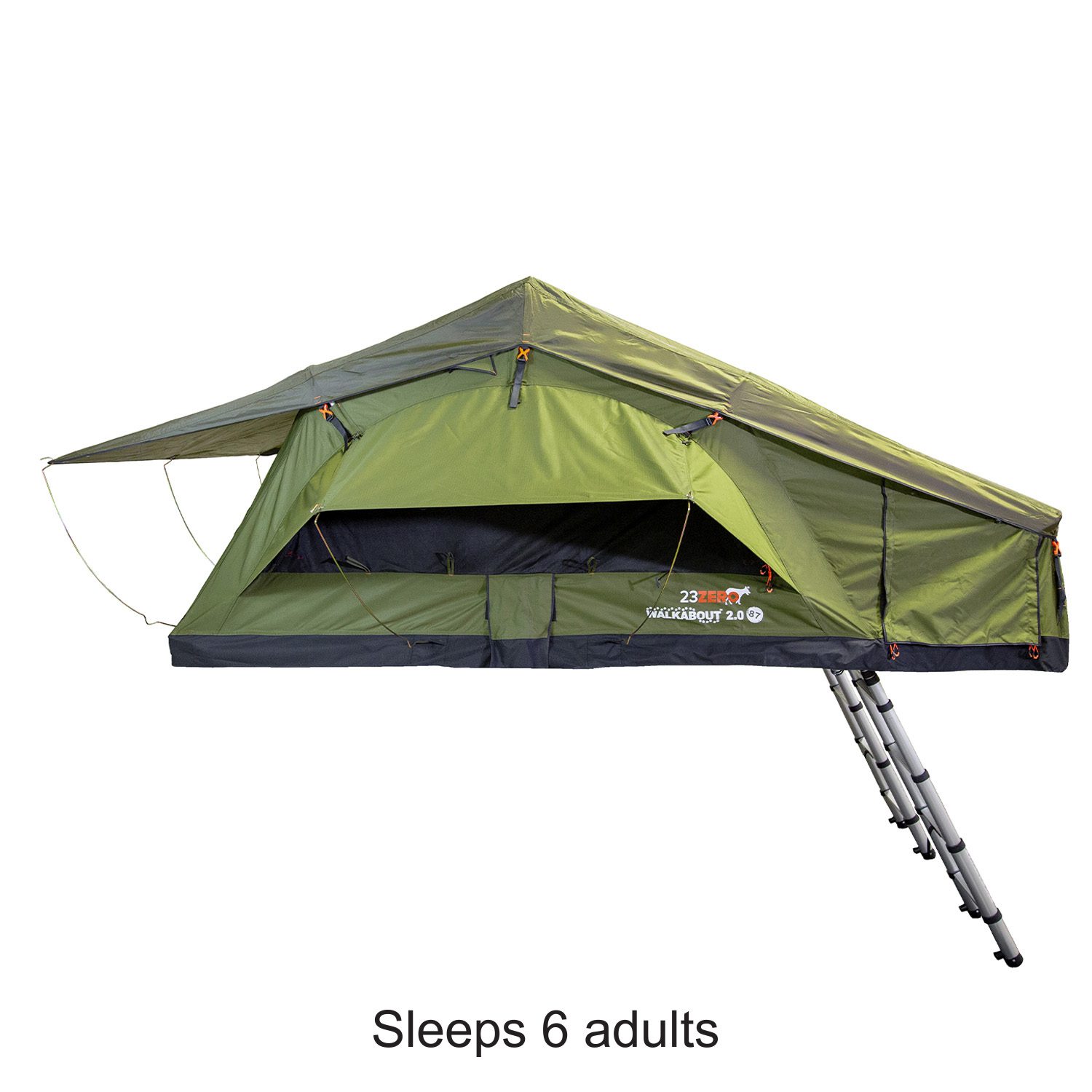
Soft Shell Rooftop Tents: The Classic Choice
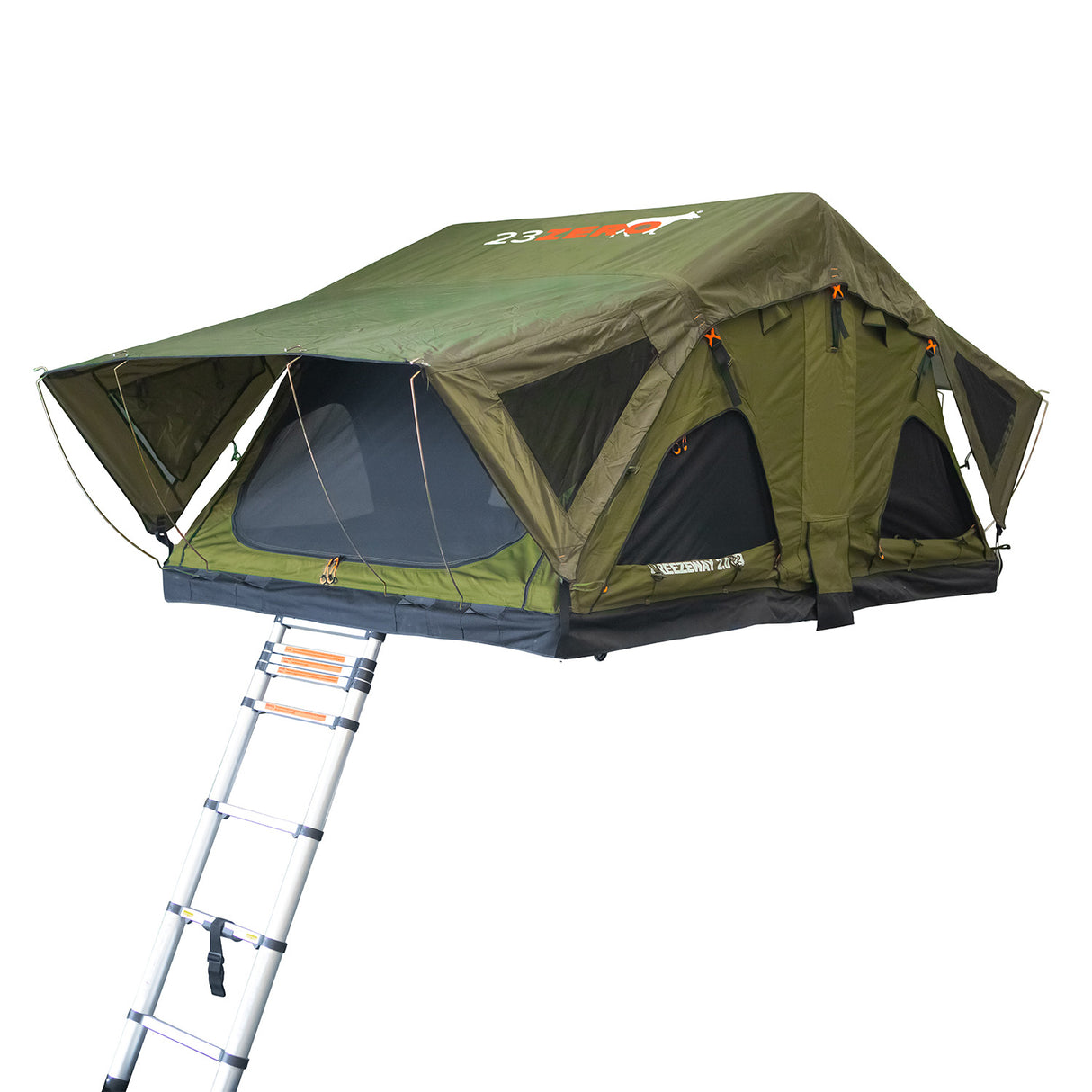
Soft shell RTTs are the original style that gained popularity among overlanders. They're typically more affordable and come in larger sizes, making them ideal for families or groups who need genuine room to sleep and move around.
Their fold-out design means a bigger interior footprint — some models can comfortably sleep four or more people — and they often include annexe options that extend your covered living space significantly.
- Lower cost — budget-friendly compared to hard shells
- More sleeping space — available in larger footprints, often sleeping 4+
- Flexible spacing — annexe compatibility creates extra covered living area
- Longer setup and pack-down — typically 5 to 15 minutes
- Less aerodynamic — bulky profile adds wind drag and reduces fuel efficiency
- Durability concerns — covers, zippers, and fabric are prone to wear over time
- Heavier than they look — larger footprints can stress lighter roof setups
Hard Shell Rooftop Tents: The Premium Upgrade
 Hard shell RTTs are sleek, compact, and incredibly fast to deploy. They're popular among solo travellers and couples who want a quick-access shelter without sacrificing sleeping comfort.
The rigid shell protects the interior mattress and built-in insulation from UV, rain, road debris, and wind — even while driving. When you pull up to camp, you're sleeping in minutes, not quarter-hours.
- Fast setup — pops open in 20 to 40 seconds
- Superior protection — rigid shell resists UV, rain, and debris
- Better aerodynamics — slim profile reduces wind noise and drag
- Comfort upgrades — often ships with thicker mattresses and built-in insulation
- Higher cost — premium materials come at a premium price
- Limited capacity — most models sleep 2 to 3 people max
- Heavier overall — some models weigh more than comparable softshells
- Less modular — fewer annexe options for extending the living area
Which Rooftop Tent Is Right for You?
Your camping style should drive this decision. Answer these honestly — and the right tent will become obvious.
Choose a Soft Shell if…
- You camp with family or groups of 3 or more
- You want maximum covered living space
- Budget is your primary concern
- You stay in one location for several nights
Choose a Hard Shell if…
- You prioritise speed and convenience above all
- You move campsites frequently
- You value fuel efficiency on long drives
- You're a solo traveller or camping as a couple
How to Choose the Best Overlanding Rooftop Tent for You
Before looking at any specific models, ask yourself these five questions. Your answers will narrow the field down significantly and help you invest in a tent you'll actually use — rather than one that looks good in a catalogue.
How often do I camp?
Frequent campers benefit from a more durable, easier-deploying tent — even at a higher upfront cost. Occasional campers may get better value from a softshell that prioritises space and flexibility over speed.
Will I stay in one spot or move frequently?
If you're moving locations every night or two, setup time matters enormously over the course of a long trip. A hard shell that pops open in 30 seconds versus a softshell that takes 10 minutes adds up fast across a two-week overland route.
How many people need to sleep in the tent?
If you're camping with kids or a larger group, a softshell's expanded floor area gives everyone breathing room. Solo and couple setups are well-served by the compact efficiency of a hardshell.
What is your vehicle's roof load rating?
This is non-negotiable. Check your vehicle's dynamic roof load limit in the owner's manual before shopping. Your tent, rack, and all accessories combined must stay within that figure. Never exceed it.
Can I handle the weight and size while travelling?
Think about your overall vehicle setup — clearance heights, fuel consumption, and whether you'll be driving through low structures like car parks or ferry decks. A bulkier softshell sitting high on the roof can affect all of these.
Key Buying Criteria
Once you've settled on soft shell or hard shell, use these four criteria to compare specific models and separate genuinely good tents from well-marketed ones.
Weight
Always verify the tent's weight against your vehicle's roof load rating. Factor in bedding, the rack itself, and any additional gear you'll carry. Lightweight doesn't always mean better — check that the construction quality justifies it.
Materials
Look for 280–320 gsm polycotton canvas on softshells, and fibreglass or anodised aluminium shells on hardshells. Seams should be taped, not just stitched. A hydrostatic head rating above 3,000 mm is the benchmark for reliable wet-weather performance.
Durability
Hard shell RTTs last longer in exposed conditions — UV, road debris, and persistent rain all take a toll on fabric over time. If you overland year-round, the durability premium of a hard shell is often worth the extra investment.
Setup Simplicity
Watch real-world setup videos — not brand marketing material. Test how the tent performs in the dark, in wet weather, and when you're tired. Some tents that look simple in a showroom become a genuine frustration on a remote track at midnight.
Size vs Footprint
More sleeping capacity doesn't always mean a better tent. A larger soft shell that sleeps six may require two vehicles or an extended rack system. Confirm the packed footprint fits your current setup before purchasing.
Long-term Value
Consider the full cost of ownership — warranty length, availability of replacement parts, and whether the brand has a track record of standing behind its products. A tent that costs more upfront but lasts a decade is almost always better value than replacing a cheap one every two years.
Soft Shell vs Hard Shell — At a Glance
| Feature | Soft Shell | Hard Shell |
|---|---|---|
| Setup Time | 5 – 15 minutes | 20 – 40 seconds |
| Sleeping Capacity | 2 – 6 people | 1 – 3 people |
| Interior Space | Larger, more generous | Compact and efficient |
| Aerodynamics | Bulkier — more drag | Low-profile — less drag |
| Weather Protection | Good — fabric dependent | Excellent — rigid shell |
| Price Range | Lower entry point | Higher — premium build |
| Best For | Families, basecampers | Solo, couples, frequent movers |
| Annexe Options | Wide range available | Limited or none |
Final Thoughts
When everything is considered, the best rooftop tent is the one that genuinely matches how you travel. Think about your setup, your camping companions, and how much you value convenience versus space — and you'll make the right call.
If you move often and camp solo or as a couple, a hard shell will transform your routine. If you're heading out with family or setting up a multi-night basecamp, a quality soft shell gives you more room to live and breathe.
Either way, rooftop camping will elevate your adventures permanently.
Ready to Make the Switch?
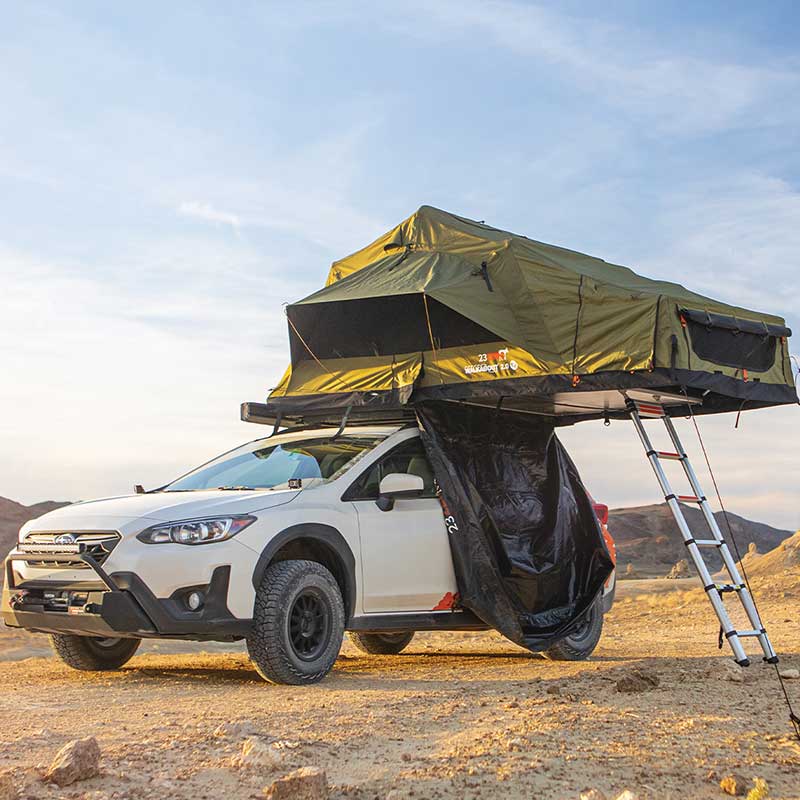
If your travels call for a spacious soft shell that doesn't cut corners on construction, weather protection, or comfort — the 23ZERO Walkabout is the tent to look at. Built for overlanders who travel as a group and refuse to compromise on their night's sleep.
23ZERO Walkabout 87" 2.0 — 6-Person Roof Top Tent
A large-format softshell rooftop tent engineered for serious group adventures. Polycotton canvas, high-density foam mattress, full annexe compatibility, and a build quality that holds up across seasons. Your entire crew, elevated.