


 Damage
  Loss
Loss  Theft
Theft 


Positive & Negative Pressure Room Monitoring for Hospitals
Airborne illnesses remain a persistent challenge in healthcare environments, making hospital safety protocols more important than ever. Protecting patients and staff from contagious diseases demands rigorous infection control strategies. Among the most critical tools in this effort are isolation rooms that rely on differential pressure to contain harmful pathogens and maintain safe indoor air quality throughout medical facilities.
Differential Pressure Monitoring in Hospital Rooms
Understanding How Isolation Rooms Operate
Isolation rooms — frequently referred to as Airborne Infection Isolation (AII) rooms — are specially engineered spaces within hospitals built to quarantine patients who carry contagious infections or viruses. The fundamental purpose of their design is to halt the migration of airborne particles from one area of the hospital to another. Controlled airflow is the cornerstone of an effective isolation room: it ensures that contaminated air never drifts into adjacent corridors or common areas, safeguarding healthy patients and medical personnel alike.
Pressure monitoring systems serve an indispensable role in infection prevention. These systems continuously track the pressurized airflow differential between the isolation space and surrounding areas, ensuring the room operates correctly at all times. Without accurate pressure readings, a breach in airflow could go undetected and compromise the entire infection-control strategy.
Negative Air Pressure
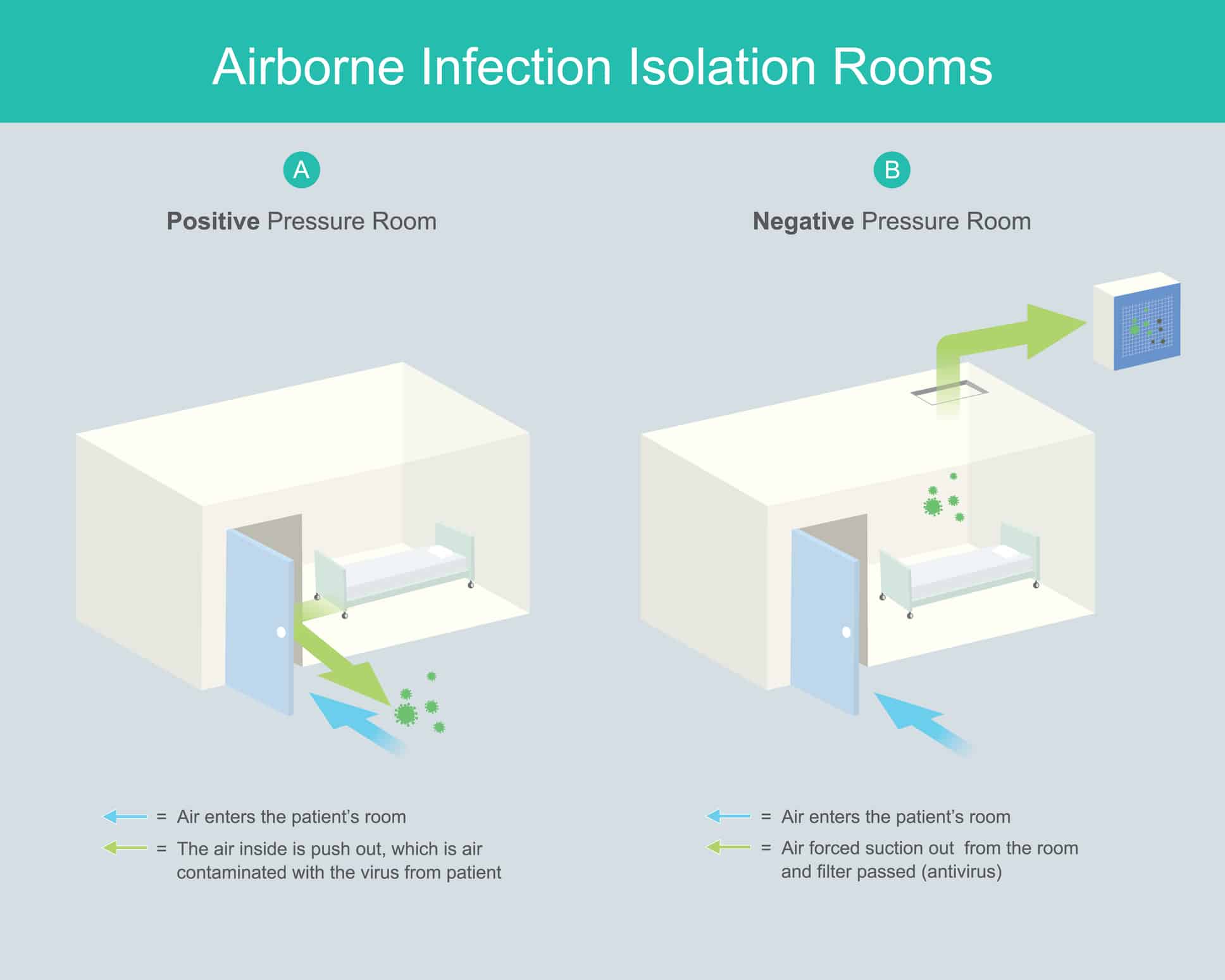
Certain isolation rooms employ negative air pressure as a strategy to block contaminated air from escaping into the rest of the facility. This approach is especially effective for containing airborne illnesses like COVID-19 and tuberculosis. In these rooms, pressurized air is drawn inward, processed through high-efficiency filtration, and then safely exhausted to the outside.
A telltale sign of a properly functioning negative pressure room is a subtle inward pull of air noticeable under a closed door or near a slightly open window — confirmation that contaminants are being contained rather than released.
Positive Air Pressure
Positive pressure isolation rooms function in the opposite manner and are typically reserved for patients with severely compromised immune systems. In these environments, purified and filtered air is continuously pumped into the room, creating outward pressure that prevents external contaminants from entering the patient's space.
You can often detect a positive pressure room by feeling air gently pushing outward beneath the closed door — a sign that the room is actively shielding the patient from outside pathogens and pollutants.
What to Expect When Using an Isolation Room
Visitation policies may vary, though they are sometimes permitted. Every visitor and staff member entering the space should don proper PPE — including masks, gowns, and gloves. Anyone showing symptoms of illness must be restricted from entering the isolation area.
Thorough handwashing is mandatory for anyone entering or exiting the isolation room to minimize cross-contamination risks.
Patients placed in isolation are generally required to remain inside the room at all times, leaving only when specific tests or procedures cannot be performed on-site.
The isolation room door must remain securely closed at all times unless hospital staff specifically direct otherwise, as even brief openings can compromise the pressure differential.
A reliable remote pressure monitoring system should be deployed to continuously verify that the isolation room is maintaining correct pressure levels and performing as intended at all times.
Looking for a dependable room pressure monitoring solution for your facility? Explore our featured product below.
Abatement RPM-RT Pressure Monitor