


 Damage
  Loss
Loss  Theft
Theft 


Planning & Maintaining Hospital Air Isolation Rooms
Share
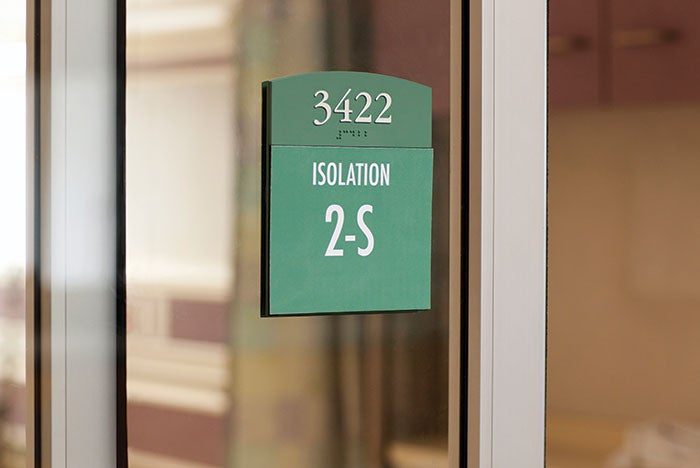
Preventing the transmission of infectious diseases within healthcare facilities is one of the most critical responsibilities in hospital management. To address the threat of airborne contagions, hospitals rely on specialized isolation rooms designed with carefully controlled airflow systems. These rooms, known as airborne infection isolation (AII) rooms, utilize negative pressure differential or protective environment (PE) configurations to contain or exclude harmful pathogens from vulnerable patients.
Standard isolation rooms must meet the same general requirements as typical medical-surgical patient rooms, but they also carry additional specifications for airflow control, sealed construction, and continuous pressure monitoring.
Room Maintenance & Core Requirements
While isolation rooms share the basic structural requirements of standard hospital patient rooms — such as hand-wash stations, gas and power outlets, and storage space — they carry several additional mandates. Each room must incorporate an area designated for gowning and storage of protective supplies. The entrance should include a self-closing door paired with a hard-setting ceiling, and the room should be outfitted with a separate toilet area and hand-washing sink.
Additionally, isolation room doors need to remain sealed against air leakage to ensure pressure differentials are maintained. A visual monitoring indicator should be installed so staff can quickly confirm whether the room pressure is functioning correctly. This is especially important in negative pressure configurations, where the goal is to prevent contaminated air from escaping into adjacent hallways and patient areas.
The permanent pressure monitoring device can range from a simple mechanical ball-in-tube indicator to a sophisticated electronic controller. Basic mechanical monitors consist of a clear tube and a small colored ball. When the correct pressure differential is present, the ball rises to a visible position. However, these devices must be mounted precisely — installed in a wall shared between the corridor and the patient room — and calibrated correctly to offer reliable readings.
Electronic room pressure monitors represent a more advanced approach. These devices typically feature a control panel and a remote sensor, offering continuous digital readouts of room pressure differential. A major advantage is that the electronic controller can include both audible and visual alarms that activate when pressure levels drift outside the acceptable range. This makes electronic monitors the preferred solution in modern healthcare environments where real-time feedback is critical.
Controls & Design Considerations
The latest edition of the American Society of Heating, Refrigerating and Air-Conditioning Engineers (ASHRAE) Standard 170, along with relevant sections of the Facility Guidelines Institute (FGI) publications, outlines the specific requirements for isolation room ventilation. Healthcare facilities must ensure that each isolation room is equipped with a continuously reliable air pressure control system that maintains the prescribed pressure differential at all times.
While the permanent monitoring device itself can be as simple as a ball-in-tube indicator or as complex as a fully integrated electronic pressure sensor, the underlying goal remains the same: to provide healthcare workers with an immediate and unmistakable visual confirmation that the room's airflow is functioning as designed. Electronic systems take this a step further by offering data-logging capabilities, alarm thresholds, and the ability to integrate with building automation systems for centralized monitoring.
Negative Pressure Rooms
Negative pressure isolation rooms are designed for patients confirmed or suspected of carrying an airborne infectious disease. These rooms maintain lower air pressure relative to the corridor, pulling air inward and preventing contaminated particles from drifting into surrounding spaces. ASHRAE standards typically require a minimum pressure differential of 0.01 inches of water column (in. w.c.) between the room and the adjacent corridor.
Positive Pressure Rooms
Positive pressure isolation rooms serve the opposite purpose — they protect immunocompromised patients by keeping room pressure higher than the surrounding corridor. This configuration pushes clean, filtered air outward, preventing contaminated air from entering. These rooms require a minimum of 12 air changes per hour with HEPA-filtered supply air, and the relationship between the anteroom and the corridor must be carefully managed.
Equipment Selection & Airflow Management
When designing the mechanical systems to support isolation rooms, facility teams must carefully evaluate the type of equipment, its sensitivity, and its long-term maintenance requirements. Depending on the number and type of isolation suites within a facility, it may prove more practical to install a single robust system capable of serving multiple rooms rather than outfitting each room with its own standalone device.
The air handling configuration should incorporate systems that serve other standard patient rooms alongside the isolation suites. Units equipped with MERV 14 or higher efficiency particulate air (HEPA) filtration are considered adequate for isolation room applications. Portable or temporary HEPA filtration devices can be introduced for short-term conversions or emergency scenarios where a standard room must temporarily serve as an isolation space.
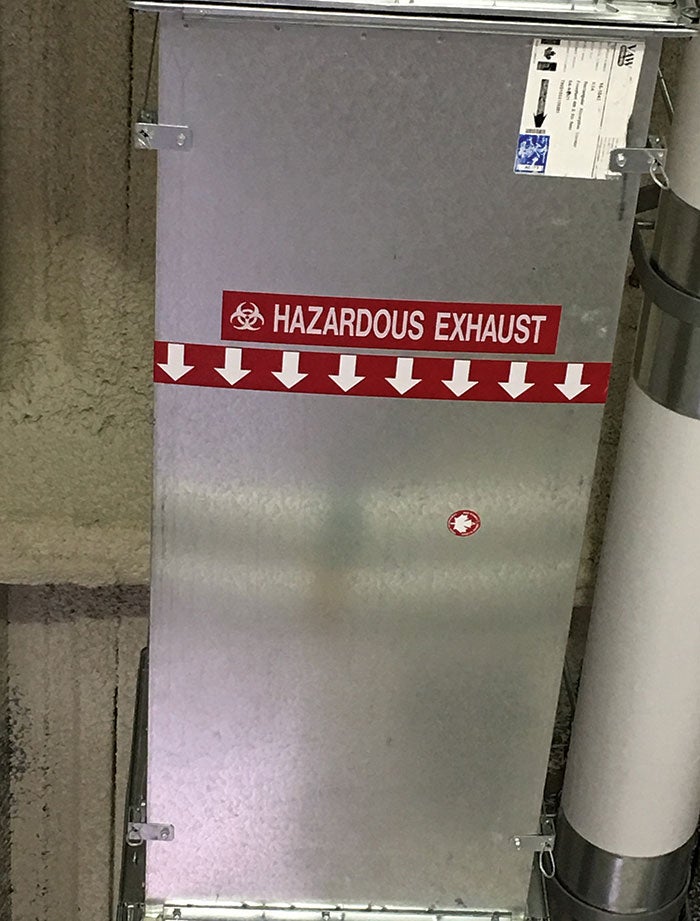
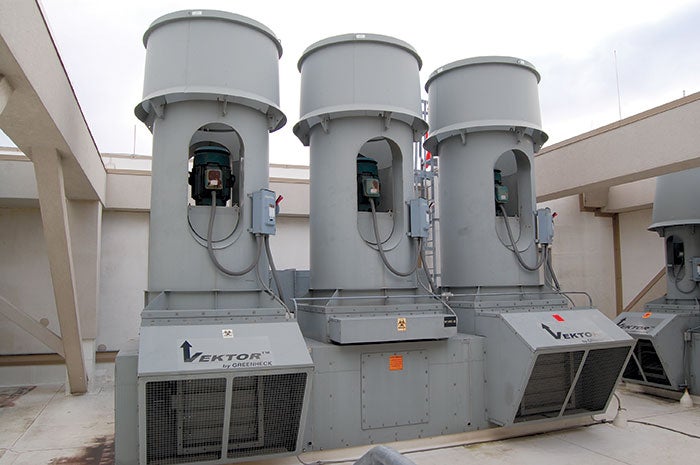
For exhaust systems serving AII rooms, the expelled air should be routed directly to the building exterior — positioned well away from intake vents, occupied areas, and foot traffic zones. The exhaust outlet should sit no fewer than 25 feet from any air intake point and should be directed upward with enough velocity to ensure proper dispersal. Under no circumstances should exhaust from a negative pressure isolation room be recirculated back into the general building ventilation system.
Supply air to the room is typically provided through ceiling-mounted diffusers located above the patient bed, with return air extracted at or near floor level on the wall closest to the corridor door. This arrangement creates a clean-to-contaminated airflow path — fresh air flows over the patient first and then moves toward the exhaust, minimizing cross-contamination. For corridor-facing outlets, all exhaust air from AII rooms should pass through HEPA filtration before release.
Key Pressure Specifications
0.01"
Min. Water Column (Negative)
≥12
Air Changes Per Hour
0.005"
Min. Rebalance Offset
Design Requirements & Room Configurations
Individual control systems and associated equipment form the backbone of any successful isolation room strategy. Facilities must be prepared to accommodate several different pressure configurations based on the clinical need. Standard negative pressure rooms draw air inward from the corridor while exhausting it directly outdoors. Positive pressure configurations work in reverse, keeping rooms at a higher pressure than adjacent spaces to protect susceptible patients.
A notable consideration involves dual-purpose isolation rooms. Some facilities install systems designed to be switchable between negative and positive isolation, offering maximum flexibility. When this type of room is no longer needed for isolation, it can revert to standard patient room operations. The process of switching configurations requires careful verification to ensure the pressure relationships between the anteroom, corridor, and patient space all align with the intended function.
ASHRAE 170 also requires that each isolation room be tested regularly to confirm proper operation. During commissioning, engineering staff should validate the pressure differential using calibrated instruments rather than relying solely on the permanently installed monitors. The room's integrity — including wall seals, door gaskets, ceiling tiles, and plumbing penetrations — must also be inspected to prevent air leakage that could undermine the pressure differential.

Supply, Exhaust & Anteroom Configurations
For negative pressure isolation rooms, all associated anteroom spaces and connected toilet facilities must also be maintained under negative pressure relative to the corridor. The goal is to create a cascading pressure gradient that draws potentially contaminated air progressively inward and ultimately routes it through the exhaust system. Multiple AII rooms may share a connected exhaust system, provided each room has independent flow control.
When an anteroom is used, airflow should move from the corridor into the anteroom and then from the anteroom into the patient isolation space. To maintain the required negative pressure differential, the exhaust air quantity must always exceed the supply air flow. Depending on such factors as room size and the room's leakage characteristics, ASHRAE 170 requires a minimum of 12 air changes per hour, with no fewer than two of those changes coming from outside air. The net exhaust airflow differential of 150 to 300 cubic feet per minute (CFM) is generally adequate for maintaining stable negative pressure conditions.
Exhaust from negative pressure isolation rooms, associated anteroom spaces, and connected toilet facilities must all be routed to a dedicated outdoor discharge point. The exhaust air delivered through negative pressure isolation rooms should ultimately be vented at a location that presents no risk to building occupants — at least 25 feet from any air intake, operable window, or pedestrian area. Recirculation into the general HVAC supply is strictly prohibited under current codes.
Supply air for the room is generally introduced through ceiling-level diffusers positioned directly above the patient bed, with return or exhaust grilles placed low on the wall nearest the corridor entry. This top-down, clean-to-dirty airflow pattern ensures that the freshest air passes over the patient first before being drawn toward the contaminated zone and ultimately exhausted. For anteroom configurations, the airflow path should follow a similar logic — clean air enters from the least contaminated space and flows toward the most contaminated area, where it is captured and removed.
Why Proper Isolation Matters
Given that a strong consensus — backed by organizations such as the Joint Commission — exists regarding the essential role of air isolation rooms in healthcare infection control, maintaining these systems to the highest possible standard is not simply a best practice but a regulatory necessity. Proper ventilation design and the maintenance of correct isolation room configurations is a daily responsibility for healthcare facility teams.
Beyond the initial installation and commissioning, the ongoing task of monitoring and maintaining isolation rooms requires consistent attention from both engineering and clinical staff. The hospital's engineering team will need to routinely verify that the monitoring and controls equipment is operating within its intended parameters. Meanwhile, nursing and clinical staff should be trained to recognize the visual and audible indicators of correct room function — and to know exactly what steps to take when an alarm signals that something is amiss.
Regular Testing Is Non-Negotiable
In addition to the routine testing of isolation room systems, the hospital staff must be continually monitoring the rooms' pressure indicators. A properly maintained monitoring system is the first line of defense against undetected failures — and the last barrier between a controlled environment and an uncontrolled outbreak.
This article is provided for informational purposes only. Always consult with a licensed HVAC professional and follow local building codes and healthcare regulations when designing or maintaining hospital isolation rooms.