


 Damage
  Loss
Loss  Theft
Theft 


Positive Vs Negative Pressure: What Is the Difference?
Pressure measurement is a critical component of process control, industrial production, and manufacturing operations. Monitoring pressure data allows professionals to identify abnormal conditions early, prevent safety hazards, and maintain efficient operations. In the world of pressure measurement, two fundamental concepts stand out — positive pressure and negative pressure. These are relative values measured against atmospheric pressure. In this guide, we break down both types so you can confidently choose the right pressure approach for your applications.
What Is Positive Pressure?
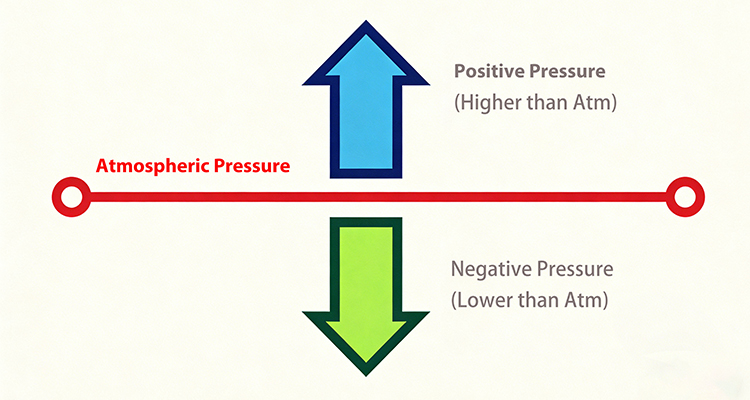
Positive pressure describes a condition in which the pressure within a system exceeds the atmospheric pressure of the surrounding environment at a given time. It is also commonly referred to as gauge pressure. The relationship is expressed as:
Positive pressure measurement is widely utilized in oil and natural gas pipelines, chemical processing facilities, reaction vessels, closed equipment systems, ventilator machines, and energy or power system monitoring. Anywhere you need to confirm that internal pressure exceeds the surrounding atmosphere, positive pressure measurement is essential.
What Is Negative Pressure?
Negative pressure refers to a state where the pressure inside a system falls below the local atmospheric pressure. This condition is commonly known as vacuum pressure. The formula is:
Negative pressure has powerful applications across a wide range of sectors. In healthcare, it is used in chest drainage systems, wound treatment devices, and isolation rooms. Industrial applications include vacuum packaging, vacuum distillation, vacuum coating processes, and environmental engineering. Energy and power systems also rely on negative pressure principles to function safely and efficiently.
Positive Pressure Vs Negative Pressure
Both positive and negative pressure are measured relative to atmospheric pressure. When the system pressure rises above atmospheric levels, it is classified as positive pressure. When it drops below, it is classified as negative pressure. Because atmospheric pressure varies by region and altitude, the threshold between positive and negative can shift depending on location. In a positive pressure environment, fluid or gas moves from inside the system outward, whereas under negative pressure, flow reverses — drawing fluid or gas from the outside inward. Understanding these dynamics is essential when selecting the right pressure type for your specific application.
| Aspect | Positive Pressure | Negative Pressure (Vacuum) |
|---|---|---|
| Basic Definition | Pressure state that exceeds the local ambient atmospheric pressure. | Pressure state that falls below the local ambient atmospheric pressure, often called a "vacuum." |
| Flow Direction | Fluid or gas flows from the interior of the system outward to the external environment. | Fluid or gas flows from the external environment inward into the system. |
| Typical Applications | Hydraulic systems, pneumatic tools, pipeline transport, pressure vessel testing, ventilators (CPAP), sterile room ventilation, inflating tires, and spray cans. | Vacuum suction cups, vacuum packaging, vacuum distillation, semiconductor manufacturing, isolation rooms, operating theaters, wound suction devices, vacuum cleaners, and drinking through a straw. |
| Common Measurement Devices | Pressure gauges and gauge pressure sensors. | Vacuum gauges, vacuum sensors, and compound pressure sensors (negative range). |
Conclusion
Pressure measurement is a foundational process in industries ranging from process control and petrochemical production to constant pressure water supply systems, machinery manufacturing, and well beyond. Reliable pressure monitoring makes work environments safer, operations more stable, and outcomes more predictable. Positive and negative pressure represent two distinct classifications within the broader field of pressure measurement — and understanding their differences is the key to choosing the right tools and products for your particular use case.
Frequently Asked Questions
What is the fundamental difference between positive and negative pressure?
The core distinction lies in how each relates to the local atmospheric pressure. Positive pressure exists when the system pressure exceeds atmospheric levels, while negative pressure (vacuum) exists when the system pressure falls below atmospheric levels.
How are positive and negative pressure used in the medical field?
Positive pressure is commonly applied through ventilators to push oxygenated air into a patient's lungs. Negative pressure is used in ventilation systems within operating rooms or isolation wards to ensure air flows only inward, preventing contaminants from spreading outward. It is also a key element of wound suction therapy.
What are some industrial scenarios that rely on negative pressure (vacuum)?
Negative pressure has broad industrial use, including vacuum packaging to extend food shelf life, vacuum suction cups for material handling, vacuum furnaces used in precision heat treatment or coating, and vacuum distillation in chemical processing operations.
How does a positive pressure system promote safety?
In chemical and energy industries, maintaining pipelines or reaction vessels under positive pressure prevents external air or contaminants from entering the system. This reduces the risk of pollution, unwanted chemical reactions, and potential explosions — serving as an important safety control measure.
Can one sensor measure both positive and negative pressure?
It depends on the sensor type. Compound pressure sensors are designed to measure both positive and negative pressure. However, for applications that require unidirectional measurement, you would typically use either a dedicated gauge pressure sensor (for positive) or a vacuum pressure sensor (for negative).
How does a negative pressure isolation room work?
A negative pressure room uses a ventilation system to actively exhaust air from inside, keeping the room pressure consistently lower than the pressure outside. When a door or window opens, only clean external air enters — while contaminated air inside is filtered before being expelled. This design effectively prevents the spread of airborne viruses or bacteria.
Can you experience positive or negative pressure in everyday life?
Absolutely. A household vacuum cleaner generates negative pressure internally to suck in dust and debris. When you inflate a bicycle tire using a pump, you are creating positive pressure to force air into the tire. These are simple, everyday demonstrations of both pressure types in action.
What is the most important factor when choosing a pressure type?
Your specific application goal should drive the decision. Choose positive pressure when you need to push a substance or air out of a system (ventilation, spraying, inflation). Choose negative pressure when you need to draw a substance or air into a system (suction, extraction, vacuum sealing). Additional factors like safety requirements, precision needs, and environmental conditions should also be taken into account.
What are the calculation formulas for positive and negative pressure?
Both are based on comparison with atmospheric pressure (Patm). For positive (gauge) pressure: Pgauge = Pabsolute − Patm. For negative (vacuum) pressure: Pvacuum = Patm − Pabsolute.
Why is understanding pressure types critical when selecting a sensor?
Correctly identifying whether you need to measure positive, negative, or both types of pressure is the first step in selecting the right sensor range, type, and model. An incorrect choice can result in inaccurate readings, damaged equipment, or even safety incidents. Knowing the nature of pressure in your application is fundamental to making the right selection.