


 Damage
  Loss
Loss  Theft
Theft 


Positive & Negative Pressure Rooms 101: Everything You Need to Know
Indoor climate control systems play a vital role across a wide range of settings, including medical facilities, laboratories, pharmaceutical plants, and food processing environments. One of the most critical applications of these systems is the use of positive and negative pressure rooms.
These specialized environments help stop the spread of airborne contaminants, keep the integrity of sterile or sealed areas intact, and protect both patients and healthcare workers from infection.
Monitoring and maintaining these spaces can provide essential information related to compliance with health standards that enforce strict guidelines on patient protection and overall safety. There are also significant and far-reaching consequences for failing to maintain appropriate air pressure conditions in a host of environments, from healthcare and life sciences settings to advanced manufacturing and food preparation, including:
- Cross-contamination risks: Air pressure that is either too high or too low can cause headaches, dizziness, and nausea. Air pressure that is too high can cause ear pain, sinus issues, and barotrauma in extreme cases.
- Health risks: Air pressure that is too high can lead to ear pain, headaches, dizziness, and nausea. Air that is too high in certain areas can create hazardous conditions for occupants.
- Infection and pathogen spread: Air pressure that is too low can make it easier for bacteria and viruses to thrive. This is particularly concerning in healthcare facilities, where vulnerable individuals are present.
- Product spoilage: Air pressure that is too low can cause food and other products to spoil. This is especially a concern in food processing and storage facilities.
- Fire risk: Air pressure that is too low can make it more difficult to extinguish fires. This is a particular concern in industrial settings, where fires can be large and difficult to contain.
Positive Pressure Rooms: Where the Air Streams Out
Otherwise known as protective environments, positive pressure rooms are designed to maintain a higher pressure within the room space than that of the surrounding spaces.
In other words, in such a room, air may leave without escaping back in. So any airborne particles that originate from within the positive-pressure room will be efficiently filtered out.
When germs and positive contaminants in the surrounding spaces will not get easily into the room.
Positive pressure rooms are particularly indispensable in medical settings where they allow healthcare professionals to keep patients safe from vital infections and diseases.
These rooms require specialized construction and climate control equipment to remain effective, including:
HEPA Filtration
No less than twelve air-filter changes per hour must be maintained to sustain the desired environmental cleanliness. Depending on the size and purpose of the room, more air changes may be warranted.
Air Filtration via HEPA
Recirculation of air through HEPA filters helps control the movement of airborne contaminants and allergens.
Sealed Environment
A sealing entryway with adequate sealing prevents air from escaping. Thoughtfully applied floors, ceilings, walls, and windows also play a role in helping maintain a positive pressure atmosphere.
Outward Airflow
Pure air that is pushed outward as in the correct direction, from the cleanest areas toward less controlled spaces.
Monitoring Systems
A monitoring system enables users to adjust pressure levels whenever necessary. Some healthcare facilities integrate UV radiation into the system to help maintain a sterile environment.
Positive pressure rooms have different applications in different medical and research settings. They are especially useful when treating patients with compromised immune systems because any harmful external air that is introduced into this room will be efficiently filtered out.
Positive pressure rooms are also used in certain situations where a specific type of atmosphere must be maintained for research purposes, in vitro fertilization labs, and operating theaters.

Negative Pressure Rooms
Under positive pressure rooms, these rooms leverage lower air pressure to prevent unsafe air from entering the occupants’ environment.
This traps and keeps potentially harmful particles within a negative-pressure room by preventing internal air from leaving the space.
They are commonly used in hospitals and healthcare facilities where patients with infectious diseases are isolated to protect people in the surrounding spaces from exposure.
Negative pressure rooms are also referred to as airborne infection isolation rooms (AIIRs).
Like their positive-pressure counterparts, AIIRs require specialized construction and climate control equipment to remain effective:
Air Exchange Requirements
They require at least twelve air-filter changes per hour to sustain the desired environmental conditions.
HEPA Filtration
Recirculation of air through HEPA filters helps regulate the movement of airborne contaminants and maintain negative pressure environments.
Self-Closing Entryways
A self-closing entryway with adequate seals prevents air from escaping. Thoughtfully applied floors, ceilings, walls, and windows help maintain a negative pressure environment at all times.
Controlled Inward Airflow
Pure and clean air that is directed inward, from the exterior towards the interior of the controlled room, keeping contaminants sealed inside.
Monitoring Systems
A monitoring system allows users to adjust pressure levels whenever necessary. Negative pressure rooms play a critical role in helping control the spread of infectious diseases throughout the facility via the HVAC system.
They are also used in other areas of the hospital, including emergency rooms, triage areas, ambulance bays, autopsy and cadaver rooms, animal quarantine rooms, and decontamination spaces.
Hospitals use them in inpatient rooms to ensure infectious germs cannot spread outside the facility via the HVAC system.
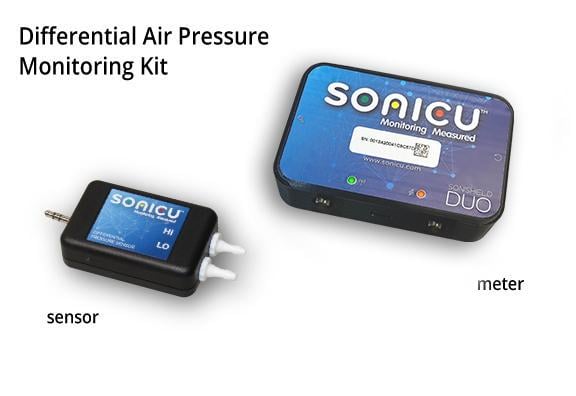
The Sonixx air pressure monitoring system can capture the data to ensure your negative pressure environment is performing as required and that you are ready to satisfy compliance with applicable standards.
Hospitals, clinics, laboratories, and manufacturing facilities across the country rely on Sonixx for affordable and accurate air pressure differential monitoring.
Installing Positive and Negative Pressure Rooms
Installing a pressure-controlled room in a healthcare or other kind of commercial setting involves careful planning to make sure the room seamlessly suits the facility’s needs and spaces, conforms to applicable regulations, and integrates with existing HVAC and building management systems.
Properly installed positive and negative pressure rooms can be instrumental in preserving a healthy environment for hospital patients or one compromised by dangerous pathogens.
Proper installation of a pressurized room is essential to its effectiveness in controlling airborne contaminants.
⚠ Important
Hospital managers should enlist the services of experienced and skilled contractors with the necessary expertise in designing and constructing these sorts of rooms to guarantee all requirements are met.
Steps Involved in the Installation of a Positive or Negative Pressure Room
Assess the Needs of the Space: Before installing a pressurized room, it is important to first figure out the specific requirements of the space. They may include the intended use of the room, the category of contaminants it has to filter, the level of pressure needed, and the size of the room.
Design the Room: Based on the requirements of the space, you can develop a design for the room that includes the HVAC system, the air filtration system, the sealing of the room, the placement of the air vents within the building, the room’s layout, and the equipment needed.
Select the Right Materials: Positive and negative pressure rooms require specific materials to function properly. These include HEPA filters, sealed doors and windows, and specialized HVAC equipment.
Install an Air Delivery System: The air delivery system is an independently configured component of a pressurized room. It comprises HVAC equipment, ductwork, and filters, which ensure the air in the room is clean and properly pressurized.
Seal the Room Properly: To be effective, a positive or negative pressure room needs to be sealed tightly to keep air from leaking in or out. This involves sealing doors, windows, and other potential air leaks.
Install a Monitoring System: Installing a monitoring system is essential to guarantee that the room maintains accurate air pressure and quality. Such a system consists of sensors that track air pressure, temperature, and humidity — key data points for maintaining optimal conditions.
Test the Room: Once the room is installed, it needs to be tested to make sure it performs as intended. Testing involves verifying air pressure differentials, checking for leaks, and confirming filtration efficiency. The room should not be used for patient care or research until it has been thoroughly tested, validated, and certified. Any issues need to be corrected before putting the room into service. The room can only be used after final approval, and regular staff should be aware of its specifications, protocols, and limitations.
Monitoring Solutions: Why Air Pressure Tracking Matters
Sonixx provides a comprehensive suite of monitoring applications designed to help healthcare facilities, labs, and manufacturing environments track air pressure differentials in real time.
Designed to be easy to install and simple to use, the Sonixx environmental monitoring system can be deployed by a non-technical healthcare employee, while the supporting dashboard system is pre-configured to meet the strict requirements of healthcare and life sciences environments.
Case Study: Exide Technologies
A case study from a California-based manufacturing company, Exide Technologies, demonstrates how easy it is to deploy Sonixx air pressure differential monitoring systems and how it can be transparently operated.
Key Takeaways
Positive pressure rooms push air outward, protecting patients with weakened immune systems from external contaminants.
Negative pressure rooms pull air inward, containing infectious agents and preventing them from spreading throughout the facility.
Continuous monitoring is essential to maintain proper pressure differentials and comply with healthcare and safety standards.
By helping prevent the spread of airborne contaminants and maintaining strict environmental control, properly installed and monitored pressure rooms safeguard the well-being of patients, staff, and products alike.
Room Pressure Monitor - RPM-RT Series