


 Damage
  Loss
Loss  Theft
Theft 


Best UV Lights for Your HVAC System
Indoor UV lights are not simply a luxury upgrade for your HVAC system — they are a primary layer of defense for your household's daily air quality. With so many options on the market, it can be overwhelming to determine which UV light solution is truly the best fit for your home. This guide walks you through everything you need to know, from how UV lights function to the top-performing products worth your investment.

Why Consider UV Lights for Your HVAC System?
Fresh indoor air is something most homeowners take for granted — until allergies worsen, musty odors emerge, or HVAC maintenance costs begin climbing. UV lights installed within your heating and cooling system work silently to eliminate airborne pathogens, mold spores, bacteria, and volatile organic compounds. Unlike standalone air purifiers that only treat one room at a time, HVAC UV lights sanitize the air flowing through your entire ductwork, delivering cleaner air to every corner of your home.
Beyond air purification, UV lights help protect the evaporator coil inside your air handler. Over time, mold and biofilm can accumulate on this coil, reducing efficiency and potentially causing foul odors. A properly positioned UV lamp prevents this buildup, which means your system operates more efficiently and you avoid costly deep-cleaning appointments.
How Do HVAC UV Lights Actually Work?
HVAC UV lights harness the power of ultraviolet-C (UV-C) radiation, which operates at a wavelength around 254 nanometers. At this frequency, UV-C energy penetrates the cell walls of microorganisms — including bacteria, viruses, and mold spores — and disrupts their DNA. Once the DNA structure is destroyed, these organisms can no longer reproduce or cause infection. The result is dramatically cleaner air circulating throughout your living spaces.
Most systems install directly near the evaporator coil or inside the return air duct. As conditioned air passes through the system, it is continuously bathed in germicidal UV light, neutralizing contaminants before they ever reach your living rooms, bedrooms, and common areas.

Types of UV Lights for HVAC
Not all ultraviolet light systems serve the same purpose. Understanding the differences ensures you select the right type for your specific air quality goals.
- Coil-Sanitizing UV Lights — Mounted near the evaporator coil, these run continuously to prevent mold and microbial growth on the coil surface. They are the most common and affordable type of HVAC UV system.
- Air-Sanitizing UV Lights — Positioned inside the return air duct, these treat the air stream as it flows through the system. They are more effective at reducing airborne pathogens throughout the home.
- Combination Systems — Premium solutions that combine coil treatment with air purification and often incorporate activated carbon cells for odor and chemical vapor removal.
Key Features to Look For
Lamp Wattage
Higher wattage translates to greater UV-C output and more effective pathogen elimination across larger duct systems.
Bulb Longevity
Look for UV lamps rated for 9,000 hours or more. Most quality units only require an annual bulb replacement.
Carbon Cells
Activated carbon components absorb odors, VOCs, and chemical vapors that UV light alone cannot address.
Installation Fit
Ensure the unit fits your specific air handler configuration. Universal mounting kits simplify the process considerably.
Top UV Light Systems Worth Considering
Premium Whole-Home UV Air Treatment
The most advanced UV systems on the market today combine germicidal UV-C light with photocatalytic oxidation and activated carbon filtration. These all-in-one units install directly on the supply plenum of your HVAC system, treating every cubic foot of air before it enters your living space. They reduce airborne pathogens by over 99% on the first pass and simultaneously neutralize odors, smoke, and chemical vapors. For homeowners who want maximum protection, these premium combination systems represent the gold standard.
Mid-Range Duct-Mounted UV Purifiers
For those seeking reliable UV air treatment at a more accessible price point, duct-mounted UV purifiers provide excellent value. These units feature high-output UV lamps that sterilize air as it passes through the return duct. While they may not incorporate carbon filtration like premium models, they are exceptionally effective at destroying mold, bacteria, and viruses. Many models feature tool-free lamp changes and LED status indicators that simplify maintenance.
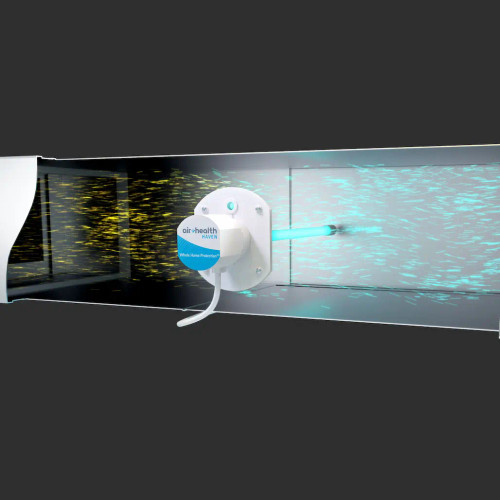
Compact Coil-Cleaning UV Lights
Budget-conscious homeowners can still benefit from UV technology with dedicated coil-cleaning lights. These compact units install directly beside the evaporator coil and run around the clock to prevent biofilm and mold accumulation. They keep your system running efficiently and prevent the musty smells that often indicate coil contamination. While they primarily protect equipment rather than actively purifying airflow, they are an excellent entry point into HVAC UV technology.
Recommended: Airpura UV700 Air Purifier
For homeowners who also want standalone room purification alongside their HVAC UV system, the Airpura UV700 combines a medical-grade HEPA filter with a powerful UV germicidal lamp to deliver hospital-quality air cleaning. Ideal as a supplemental unit for bedrooms, nurseries, or home offices.
Airpura UV700Benefits and Drawbacks of HVAC UV Lights
Advantages
- Eliminates up to 99.9% of mold, bacteria, and viruses in your ductwork
- Keeps the evaporator coil clean and extends equipment lifespan
- Reduces musty odors and improves overall indoor air freshness
- Operates silently with virtually zero maintenance beyond annual lamp swaps
- Can reduce allergy and asthma symptoms for sensitive household members
- Improves HVAC energy efficiency by preventing coil buildup
Considerations
- UV lamps require annual replacement to maintain effectiveness
- Premium combination systems carry a higher upfront investment
- UV lights cannot remove dust or particulates — a quality filter is still essential
- Professional installation is recommended for optimal lamp positioning
- Some lower-quality units may produce trace ozone as a byproduct
Things to Keep in Mind Before You Buy
System Compatibility: Verify that the UV light kit you choose fits your specific air handler model. Most reputable manufacturers provide universal mounting hardware, but it is always wise to double-check dimensions before ordering.
Lamp Replacement Schedule: UV-C lamps gradually lose intensity even if they still appear to glow. Replace your bulb every 12 months to ensure you are receiving the full germicidal benefit.
Complementary Filtration: UV lights handle biological contaminants brilliantly, but they do not capture dust, dander, or particulate matter. Pair your UV system with a high-quality MERV-rated filter for comprehensive air treatment.
Professional vs. DIY Installation: While many UV light kits are marketed as DIY-friendly, having a qualified HVAC technician position the lamp ensures optimal exposure angles and prevents potential wiring issues.
Frequently Asked Questions
Absolutely. The UV lamp is enclosed within your ductwork, so no ultraviolet radiation escapes into your living spaces. Household members and pets are never directly exposed to the UV-C light. The system sanitizes air as it passes through the sealed air handler, making it completely safe for families of all sizes.
Coil-sanitizing UV lights are typically wired to run 24 hours a day, regardless of whether your HVAC system is actively cooling or heating. This constant operation ensures the evaporator coil stays mold-free at all times. Air-sanitizing models may be wired to operate only when the blower is running, which is when active air purification is most beneficial.
Most manufacturers recommend replacing the UV lamp every 12 months. While the bulb may still emit visible light beyond that point, its germicidal UV-C output diminishes significantly over time. Annual replacement ensures your system continues to perform at peak effectiveness.
For coil-mounted units, yes — continuous operation is recommended to prevent any mold or biofilm from establishing on the coil surface. For air-sanitizing units installed in the ductwork, running the lamp whenever the blower is active provides thorough air treatment without unnecessary energy consumption.
Many UV light kits include all necessary mounting hardware and straightforward instructions for homeowners comfortable with basic tools. However, having a licensed HVAC technician handle the installation ensures proper lamp placement for maximum coverage and safe electrical connections.
Final Thoughts
Investing in a UV light system for your HVAC unit is one of the smartest decisions you can make for your home's air quality. Whether you choose a premium whole-system purification unit or a straightforward coil-cleaning lamp, you are adding a powerful layer of protection against the biological contaminants that traditional filters simply cannot address. Cleaner coils mean lower energy bills, fewer service calls, and most importantly, fresher and healthier air for everyone under your roof.
We recommend starting with your most pressing need — if musty smells and coil maintenance are your primary concern, a coil-sanitizing light is a cost-effective first step. If whole-home air purity is the goal, look into combination systems that pair UV-C germicidal power with activated carbon and photocatalytic oxidation technology.