


 Damage
  Loss
Loss  Theft
Theft 


How to Choose Between Sliding and Swinging Driveway Gates: Pros and Cons
Choosing the right driveway gate for your property is a decision that impacts far more than just curb appeal. It influences your daily routine, your sense of security, and the overall character of your home. Understanding the core differences between sliding and swinging gate systems empowers homeowners to make smart choices that align with their property layout, budget, and long-term goals.
Modern driveway gates function as the first line of defense for residential properties while adding a striking architectural statement. Whether you are leaning toward an automated sliding system or a classic hinged design, the decision between these two gate types requires careful evaluation of your property's unique characteristics, financial considerations, and ongoing maintenance needs.

Understanding Sliding Driveway Gates
Sliding driveway gates work by traveling horizontally along a pre-engineered track system, making them a practical solution for properties with space limitations or steep driveways. These advanced gate systems do not swing outward or inward, but instead glide smoothly parallel to the fence line or property boundary.
The mechanics behind sliding gates involve either a cantilever system or a track-supported mechanism. Cantilever systems suspend the gate above ground level, preventing debris accumulation and ice formation that could hamper operation. Track-supported systems, while more affordable, require regular upkeep to ensure smooth operation and prevent track blockage.
Material selection plays a significant role in sliding gate performance. Steel driveway gates offer outstanding durability and security, while aluminum options provide corrosion resistance with reduced weight. Wrought iron sliding gates blend traditional elegance with modern functionality, creating eye-catching entrance statements that enhance property values.
The automation potential of sliding systems makes them especially attractive for busy households. Electric gate installations from San Jose have become increasingly popular thanks to their convenience and enhanced security features. Advanced safety systems include photo sensors and obstacle detection to ensure safe operation for vehicles, pedestrians, and pets.

✓ Advantages of Sliding Driveway Gates
Space Efficiency: Space efficiency stands out as the primary advantage of sliding gate systems. Properties with limited driveway space or proximity to sidewalks benefit enormously from horizontal gate movement. This design eliminates concerns about gate clearance during operation, making them suitable for locations where swinging gates would interfere with parked vehicles or pedestrian traffic.
Security Features: Security features in sliding gates often surpass those of swinging alternatives. The continuous contact with the track system and robust motor mechanisms make unauthorized entry extremely difficult. Custom driveway gates can incorporate additional security measures such as anti-lift devices, magnetic locks, and integrated surveillance systems.
Weather Resistance: Weather resistance is another notable benefit. Sliding gates maintain functionality during various severe weather conditions, including strong winds that might affect swinging gate operation. The reduced wind resistance of closed sliding gates prevents weather-related damage and ensures consistent performance throughout seasonal changes.
Low Maintenance Design: SF Bay Automatic Gates designs sliding systems with low maintenance requirements. Quality installations using premium materials minimize ongoing service needs while maximizing operational lifespan. Regular lubrication of tracks and periodic motor servicing typically constitute the primary maintenance requirements.
✗ Disadvantages of Sliding Driveway Gates
Installation Complexity: Installation complexity represents the primary challenge of sliding gate systems. The requirement for precise track alignment, proper foundation preparation, and motor installation typically increases initial costs compared to swinging alternatives. Gate installation professionals must ensure proper drainage around track areas to prevent water accumulation and freeze-thaw damage.
Power Requirements: Power requirements for sliding gates generally exceed those of swinging systems due to the continuous motor engagement needed to move heavier gate structures. This increased power consumption may impact long-term operating costs, particularly for frequently used residential installations.
Repair Complexity: Repair complexity can present challenges when mechanical issues occur. Sliding gate components require specialized knowledge for proper diagnosis and repair. Finding qualified technicians for sliding gate services may prove more challenging than locating professionals familiar with simpler swinging gate systems.
Space Requirements: Space requirements, while minimal during operation, can be substantial during installation. The gate path must have adequate space to slide completely open, which may require property modifications alongside the fence line.

Benefits of Swinging Gate Systems
Installation simplicity represents a significant advantage of swinging driveway gates. The straightforward hinge mechanism requires minimal ground preparation compared to sliding systems, often resulting in faster installation times and reduced labor costs. Basic swinging gates can often be installed in a single day, making them attractive for time-sensitive projects.
Cost-effectiveness extends beyond initial installation expenses. Swinging gate systems are generally more affordable and readily available than specialized sliding gate parts. This accessibility translates to lower maintenance costs and easier long-term issue resolution.
Aesthetic versatility allows swinging gates to complement virtually any architectural style. Decorative driveway gates for curb appeal can incorporate intricate designs, artistic elements, and premium materials that might be impractical for sliding systems due to weight considerations.
Power efficiency represents another advantage, particularly for automated systems. Driveway gate automation experts confirm that swinging gates typically require less power to operate than sliding alternatives, resulting in lower electricity consumption and extended battery backup operation during power outages.
Weather adaptability makes swinging gates suitable for various climatic conditions. Unlike sliding systems that may accumulate debris in tracks, swinging gates maintain functionality even when ground conditions change due to weather or seasonal variations.
Drawbacks of Swinging Gate Configurations
Space requirements represent the most significant limitation of swinging driveway gates. Properties with limited clearance space may find swinging gates impractical due to interference with parked vehicles, landscaping, or adjacent structures. This spatial demand can be particularly problematic in urban environments where space utilization is critical.
Wind vulnerability affects swinging gates more severely than sliding alternatives. Strong winds can cause operational difficulties, potential damage to gate materials, and safety concerns during automated operation. Secure driveway gates for privacy may require additional reinforcement to withstand weather-related stresses.
Security considerations may favor sliding systems in high-security applications. The pivot points and hinge mechanisms of swinging gates can present potential vulnerability points that determined intruders might exploit. However, proper design and quality hardware can minimize these concerns.
Ground clearance issues may arise on sloped driveways or uneven terrain. Swinging gates require consistent clearance throughout their arc of travel, which may necessitate ground modifications or limit gate height in certain installations.
Exploring Swinging Driveway Gates
Swinging driveway gates operate on traditional hinge mechanisms, opening either inward toward the property or outward toward the street. This time-tested design offers simplicity, reliability, and cost efficiencies that appeal to many property owners seeking residential driveway gates with proven performance records.
The operational mechanics of swinging gates involve pivot points mounted on sturdy posts positioned on either side of the driveway opening. These gates can be configured as single or double-leaf systems, depending on opening width requirements and aesthetic preferences. Single gates work well for narrower driveways, while double gates provide impressive visual impact for wider entrances.
SF Bay Automatic Gates offers extensive swinging gate options, from traditional wooden driveway gates to contemporary steel and aluminum designs. The versatility of swinging systems accommodates virtually any architectural style, from rustic ranch properties to modern minimalist designs.
Automation integration for swinging gates has advanced significantly, with driveway gate openers installation becoming increasingly sophisticated. Modern systems feature soft-start and soft-stop technology, battery backup capabilities, and smartphone connectivity for remote monitoring and control.

Making the Right Choice for Your Property
Selecting between sliding and swinging driveway gates requires careful evaluation of multiple factors specific to your property and lifestyle requirements. Reputable driveway gate contractors recommend conducting thorough site assessments before making final decisions.
Consider your available space carefully. Properties with limited clearance space benefit from sliding gate installations, while those with ample room can take advantage of the simpler installation and maintenance of swinging systems. Professional consultations help determine optimal gate configurations for specific properties.
Evaluate your security requirements objectively. High-security applications may favor the robust nature of sliding systems, while standard residential applications can achieve adequate security with either gate type when properly designed and installed.
Budget considerations should encompass both initial installation costs and long-term operational expenses. While swinging gates typically offer lower upfront costs, sliding systems may provide better long-term value through reduced maintenance requirements and enhanced durability.
Climate considerations play important roles in gate selection. Properties in areas with heavy snowfall may benefit from sliding systems that avoid ground-level obstructions, while locations with strong prevailing winds might favor the reduced wind resistance of closed sliding gates.
Professional Installation Ensures Optimal Performance
Professional installation ensures optimal performance regardless of gate type selected. Residential driveway gates installation requires expertise in electrical systems, mechanical components, and safety protocols. Certified technicians who understand local building codes and safety requirements deliver the best long-term results.
Remote control driveway gate services can enhance convenience and security for both gate types. Modern automation systems provide sophisticated features that were previously available only in commercial applications, bringing professional-grade functionality to residential properties.
The integration of modern landscape elements should influence gate selection. Custom driveway gates can accommodate specific design requirements, but certain gate types may work better with existing architectural features, plant materials, or hardscape elements.
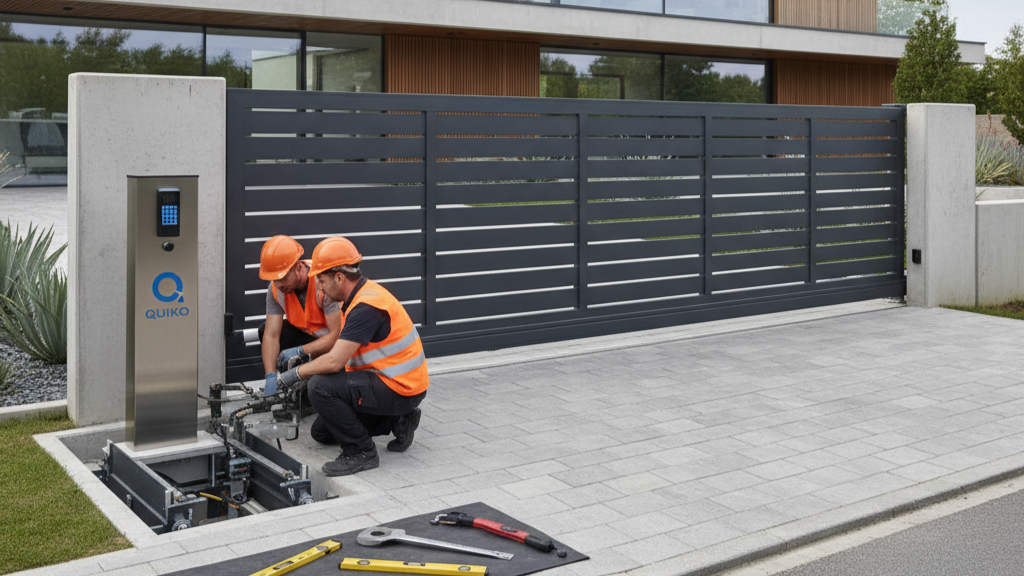
Sliding vs. Swinging Driveway Gates: A Quick Comparison
| Feature | Sliding Gates | Swinging Gates |
|---|---|---|
| Space Needed | Minimal (horizontal track) | Significant (arc clearance) |
| Installation Cost | Higher upfront | Lower upfront |
| Security Level | Higher (continuous track) | Moderate (hinge points) |
| Wind Resistance | Excellent | Vulnerable |
| Maintenance | Track cleaning required | Hinge lubrication |
| Aesthetic Options | Limited by weight | Highly versatile |
| Power Usage | Higher | Lower |
| Sloped Driveways | Better suited | May need modifications |
Future-Proofing Your Driveway Gate Investment
Consider future modifications and expansion possibilities. Properties that may undergo future development or renovation should select gate systems that accommodate potential changes without requiring complete replacement.
Maintenance capabilities and preferences should factor into the decision-making process. Property owners who prefer minimal maintenance may lean toward swinging systems, while those comfortable with periodic adjustments might appreciate the simplicity of swinging gate mechanisms.
Professional consultation ensures that all relevant factors receive proper consideration. Experienced installers can identify potential challenges, recommend appropriate solutions, and provide realistic expectations for different gate configurations.
The Bottom Line
The decision between sliding and swinging driveway gates ultimately depends on the unique combination of factors affecting each property. Both gate types offer distinct advantages when properly selected, installed, and maintained. Success lies in matching gate characteristics with property requirements, user preferences, and long-term objectives.
Understanding these considerations enables property owners to make informed decisions that enhance security, convenience, and property value — delivering the performance, beauty, and satisfaction you expect from a quality driveway gate.