


 Damage
  Loss
Loss  Theft
Theft 


What Temperature Should a Wine Fridge Be Set At?
Wine fridges are among the most effective tools for protecting and preserving your collection — whether you plan to serve a bottle this weekend or age a case for a decade. You may already know that a wine cooler keeps your wine at the right temperature, but do you know exactly where to set it? This guide walks you through everything: what wine fridges actually do, ideal serving temperatures for every wine style, and how long-term storage differs from short-term chilling.
What Does a Wine Fridge Do?
A wine fridge is purpose-built to hold your bottles at precisely the right conditions. Modern units go well beyond simple temperature control — they protect your wine from the four main enemies: heat, humidity imbalance, UV light, and vibration.
Humidity Control
Most wine coolers regulate humidity between 50–70%. Too little humidity dries out the cork, letting oxygen in. Too much causes condensation and mould on labels.
UV Protection
Many units feature UV-protected glass doors that block light from accelerating the ageing process and triggering unwanted chemical reactions inside the bottle.
Bottle Compatibility
Most fridges are designed for standard Bordeaux bottles, though many models include adjustable or display shelves to accommodate larger formats.
Installation Styles
Wine fridges come freestanding, built-in, or integrated. Freestanding units need a few inches of clearance around the sides and rear; built-in models are designed to sit flush with cabinetry.
What Temperature Should You Set a Wine Fridge?
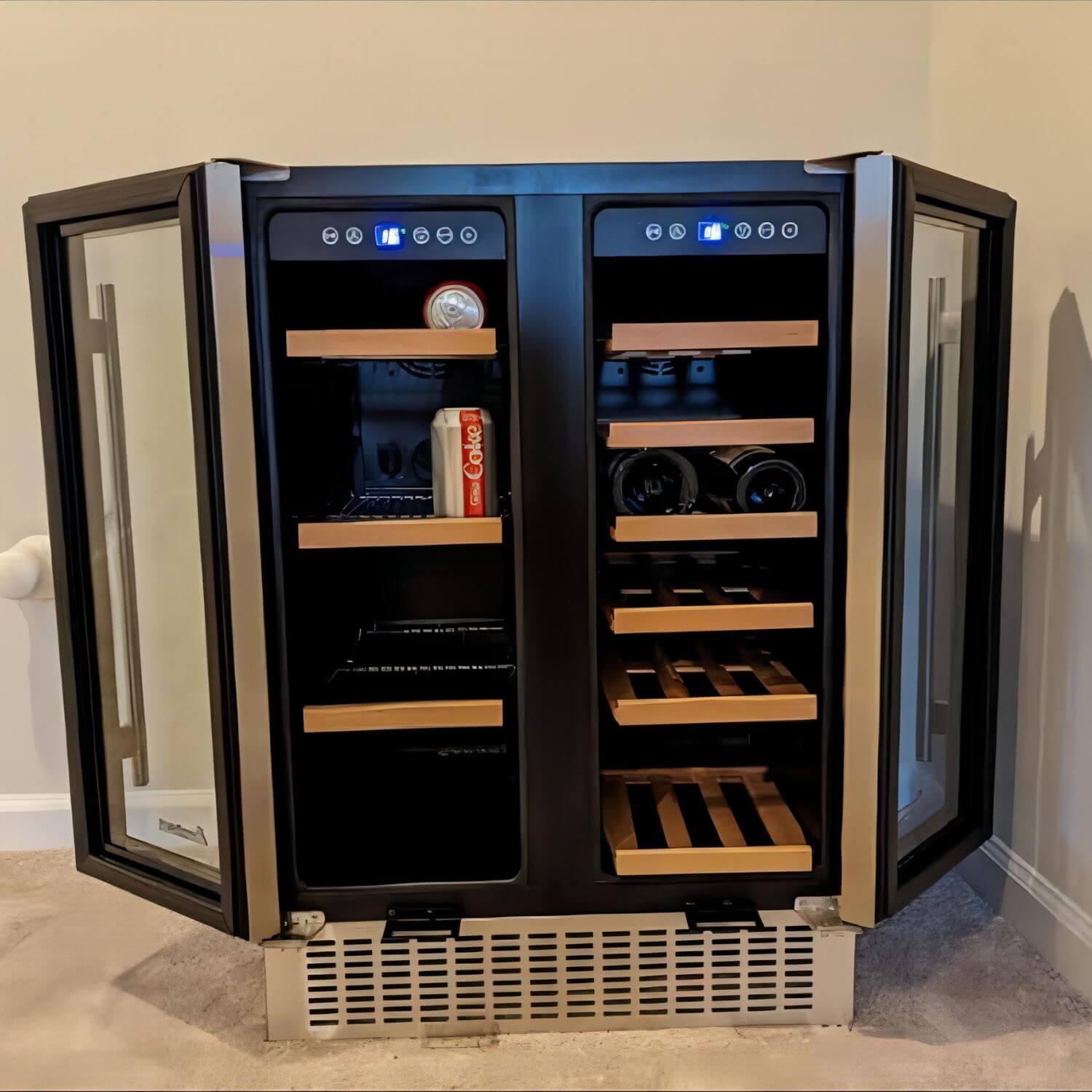
While humidity, UV shielding, and vibration dampening all matter, the primary job of a wine fridge is keeping your wine cool at a consistent, appropriate temperature. You can find units with a single temperature zone, dual zones, or models featuring multiple zones using polyvalent technology — allowing up to six independent zones in one appliance. The right setting depends entirely on whether you are storing for serving or for long-term ageing.
Single Zone
One uniform temperature throughout — ideal for a focused collection stored at a single long-term temperature.
Dual Zone
Two independent chambers — perfect for storing reds and whites simultaneously at their respective serving temperatures.
Multi-Zone
Polyvalent technology supports up to six zones, giving collectors precise control over a diverse range of wine styles.
Short-Term Storage (Serving Temperatures)
Short-term storage is all about getting your wine to the perfect serving temperature before you pour. Different wines have very different sweet spots — and serving at the right temperature can dramatically change how a wine tastes on the palate. Below is a quick reference guide:
Serving Temperature Guide
| Wine Type | Temperature Range | Notes |
|---|---|---|
| Sparkling (Champagne, Prosecco) | 3–7°C | Keep well chilled to preserve bubbles and crisp acidity. |
| Light Whites & Rosé (Sauvignon Blanc, Pinot Grigio) | 7–10°C | Cold enough to be refreshing; not so cold that aromas are muted. |
| Fuller-Bodied Whites (Chardonnay) | 10–12°C | Slightly warmer to let complexity and buttery texture develop. |
| Light & Medium Reds | 12–15°C | The standard wine fridge temperature range for most everyday drinking. |
| Full-Bodied Reds | 15–20°C | Warmer service unlocks complex flavours and tannin balance. |
| Dessert Wines | Varies by style | Consult producer recommendations; generally served slightly chilled. |
Short-term storage generally refers to anything under six months. If your collection exceeds this timeframe, shift to long-term storage protocols to protect flavour development and bottle integrity.
Long-Term Storage (6+ Months)
Long-term storage is a different discipline entirely. The goal shifts from serving to preservation — protecting the wine's character, allowing it to evolve gracefully, and guarding against the kind of irreversible damage that heat or cold can cause over time.
Temperature varies by wine style and serving preference. Best suited for collections consumed within six months.
A single, stable temperature regardless of whether it's red, white, or sparkling. The standard recommended by most manufacturers and wine experts.
Unlike short-term storage, wines kept for the long haul should be held at a single, consistent temperature — typically between 11°C and 14°C — whether the bottles are red, white, or sparkling. This range is why the majority of wine coolers ship with this as the factory preset. Consistency prevents expansion and contraction cycles in the cork that can slowly introduce air into the bottle over time.
People cellar wine for many reasons: to keep bottles out of the way, to allow the wine to reach peak maturity, or to invest in bottles that appreciate in value. Whatever your reason, maintaining the proper temperature protects your investment and ensures the wine tastes exactly as the winemaker intended when you finally open it.
Storing at temperatures that are too warm can develop an irreversible cooked character, creating unwanted flavours and aromas. Storing at temperatures that are too cold risks freezing, which expands the wine, damages the bottle seal, and can permanently alter the wine's natural flavour profile.
If your wine has been stored long-term and you plan to serve it, transfer the bottles to a fridge or compartment set to serving temperature for at least several hours beforehand — or use the dual-zone function on your cooler to manage both simultaneously.
Key Takeaways for Wine Fridge Temperature
- Set your wine fridge between 11–14°C for long-term storage of any wine variety.
- Use a dual-zone fridge if you want to age one section while keeping another at serving temperature.
- Sparkling and light whites need the coldest service temperatures (3–10°C); bold reds the warmest (15–20°C).
- Consistency matters more than the exact number — avoid frequent fluctuations in temperature.
- Most wine coolers ship pre-set to the long-term range; verify your unit before storing valuable bottles.
- Short-term storage is anything under six months — beyond that, follow long-term cellar guidelines.
Ready to Store Your Wine Properly?
The AOBOSI 28-Bottle Retro Dual Zone Wine Cooler gives you independent temperature control for both serving and cellaring in one sleek unit.