


 Damage
  Loss
Loss  Theft
Theft 


The Best Wine Storage Temperature (Wine Temperature Chart)
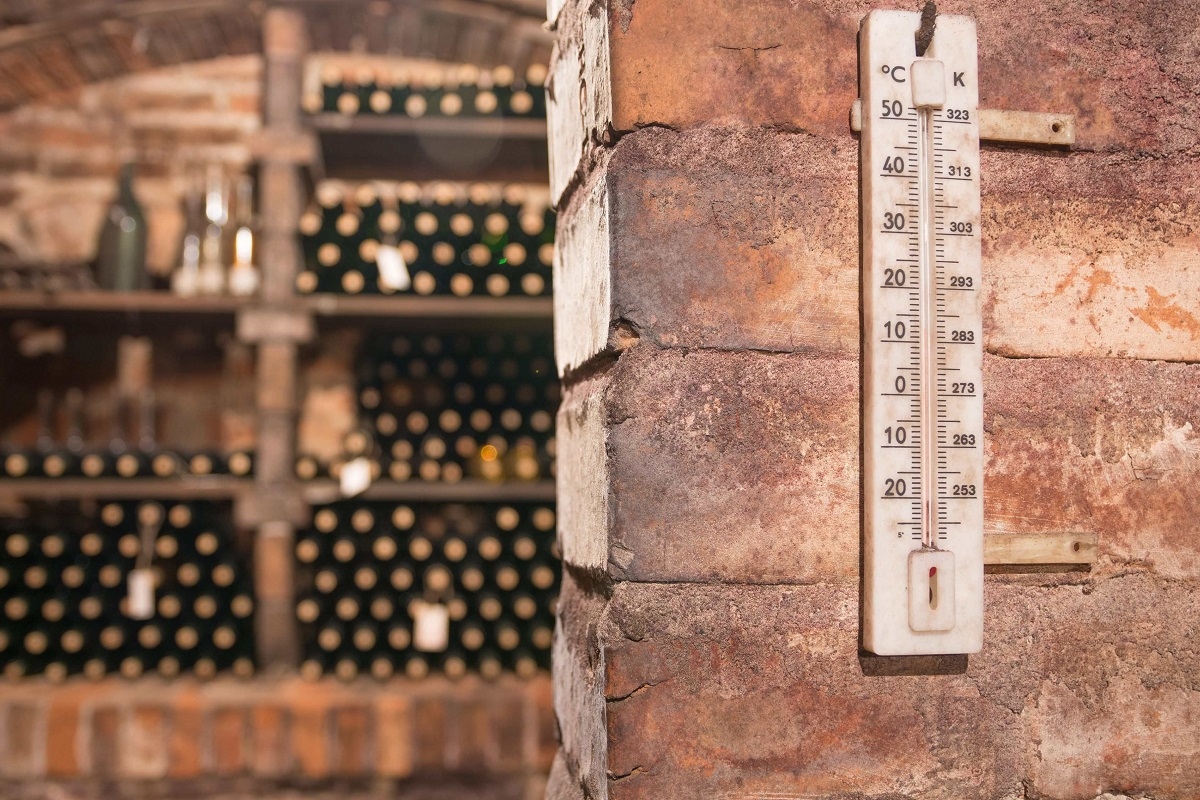
There is nothing quite like opening a well-stored bottle at exactly the right moment — whether you are winding down after a long day or raising a glass to celebrate something special. To get the most out of every bottle, one thing matters more than most people realize: the temperature at which you store it. This guide covers everything you need to know, complete with a temperature chart for quick reference.
Why Is Storage Temperature Important Anyway?
Temperature plays a critical role in how long your wine will last and how well it will taste when you finally open it. Storing wine at the correct temperature prevents it from aging too quickly, keeps it from turning too warm or too cold, and protects the overall quality of what is inside the bottle.
The ideal storage temperature varies by wine type — ranging from a refrigerated chill to just under room temperature. Even minor fluctuations in temperature can have a lasting impact on a wine's future, so consistency is just as important as getting the number right in the first place.
Keeping wine at the right temperature prevents all of these problems. It keeps conditions stable and controlled, allowing the wine to reach its full potential for as long as possible. Not all wines share the same requirements, which is why it pays to know the correct range for each variety.
What Temperature Should I Store My Wine?
The right storage temperature depends entirely on the type of wine you have. A few simple rules apply across the board: serve red wines closer to room temperature, keep whites and rosés chilled, and store your lighter wines in the coolest spot you have. As a general principle, the lighter the wine, the cooler its ideal storage environment.
Red Wines
Red wines divide into several categories based on body and strength — primarily their age and alcohol content. The most important distinction is between full-bodied, medium-bodied, and lighter reds, as each requires a different temperature range.
Full-Bodied Reds 60–65 °F / 16–18 °C
Full-bodied reds such as Cabernet Sauvignon, Malbec, Shiraz, and Burgundy are best stored at slightly below room temperature — around 63 °F (17 °C). Darker full-bodied varieties like Bordeaux and Shiraz can sit a touch warmer at 64 °F (18 °C), while the deepest and most robust reds, including Port and Madeira, peak at around 66 °F (19 °C).
Light & Medium Reds 55–60 °F / 12–16 °C
Light and medium reds, including Merlot, Sherry, Lambrusco, and Pinot Noir, prefer a cooler range of 55–60 °F (12–16 °C). The very lightest reds, such as Pinot Noir and Lambrusco, do best toward the lower end of that range — around 56 °F (13 °C).
Rosé Wines 50–55 °F / 10–13 °C
Rosé sits comfortably between red and white wine in terms of storage needs — bold enough for the warmer end, light enough to need a cool environment. As a rule, the darker the rosé, the warmer it can be stored. Lighter styles like Pinot Nero Rosé and Grenache Rosé are best at 51–52 °F (11 °C), while richer rosés like Syrah and White Zinfandel are better suited to 54–55 °F (12–13 °C).
White Wines 43–55 °F / 7–12 °C
White wines break down by dryness and sweetness rather than color depth. Dry whites have most of their residual sugar removed after fermentation, giving them a crisper, more refined flavor profile. Sweet whites retain more sugar and tend to be fuller-bodied — they need to be stored at a cooler temperature as a result.

Dry Whites 47–53 °F / 8–11 °C
Common dry whites like Chardonnay, Sauvignon Blanc, and Pinot Gris are kept at around 47 °F (8 °C), with Chardonnay sitting slightly higher at 53 °F (11 °C).
Sweet Whites 43–50 °F / 7–10 °C
Sweet whites — Pinot Grigio, Moscato, Sake, and similar varieties — are stored at the coolest end of the white wine range: 43–50 °F (7–10 °C). Some, like Moscato, can go as low as 42–43 °F (5–6 °C).
Sparkling Wines 40–45 °F / 5–7 °C
Sparkling wines need the coldest storage of all — between 40–45 °F (5–7 °C). Most varieties sit at the lower end, though some sparkling rosés can be stored slightly warmer. Notable sparklings like Muscato and Prosecco are kept at around 42 °F (6 °C), with Champagne best stored at a precise 44 °F (7 °C).
Wine Storage Temperature Chart
Here is a quick-reference breakdown of the ideal storage temperature for every major wine type, in both Fahrenheit and Celsius:
| Type of Wine | Storage Temp (°F) | Storage Temp (°C) |
|---|---|---|
| Red (all) | 55–65 | 12–18 |
| Full-Bodied Reds (Cabernet Sauvignon, Shiraz, Bordeaux, Port, etc.) | 60–65 | 16–18 |
| Light & Medium Reds (Pinot Noir, Merlot, Lambrusco, Sherry, etc.) | 55–60 | 12–16 |
| Rosé (White Zinfandel, Syrah Rosé, Pinot Nero Rosé, Grenache Rosé, etc.) | 50–55 | 10–13 |
| White (all) | 43–55 | 7–12 |
| Dry Whites (Chardonnay, Sauvignon Blanc, Pinot Gris, etc.) | 47–53 | 8–11 |
| Sweet Whites (Pinot Grigio, Moscato, Sake, etc.) | 43–50 | 7–10 |
| Sparkling Wine (Champagne, Prosecco, Riesling, Muscat-Blanc, etc.) | 40–45 | 5–7 |
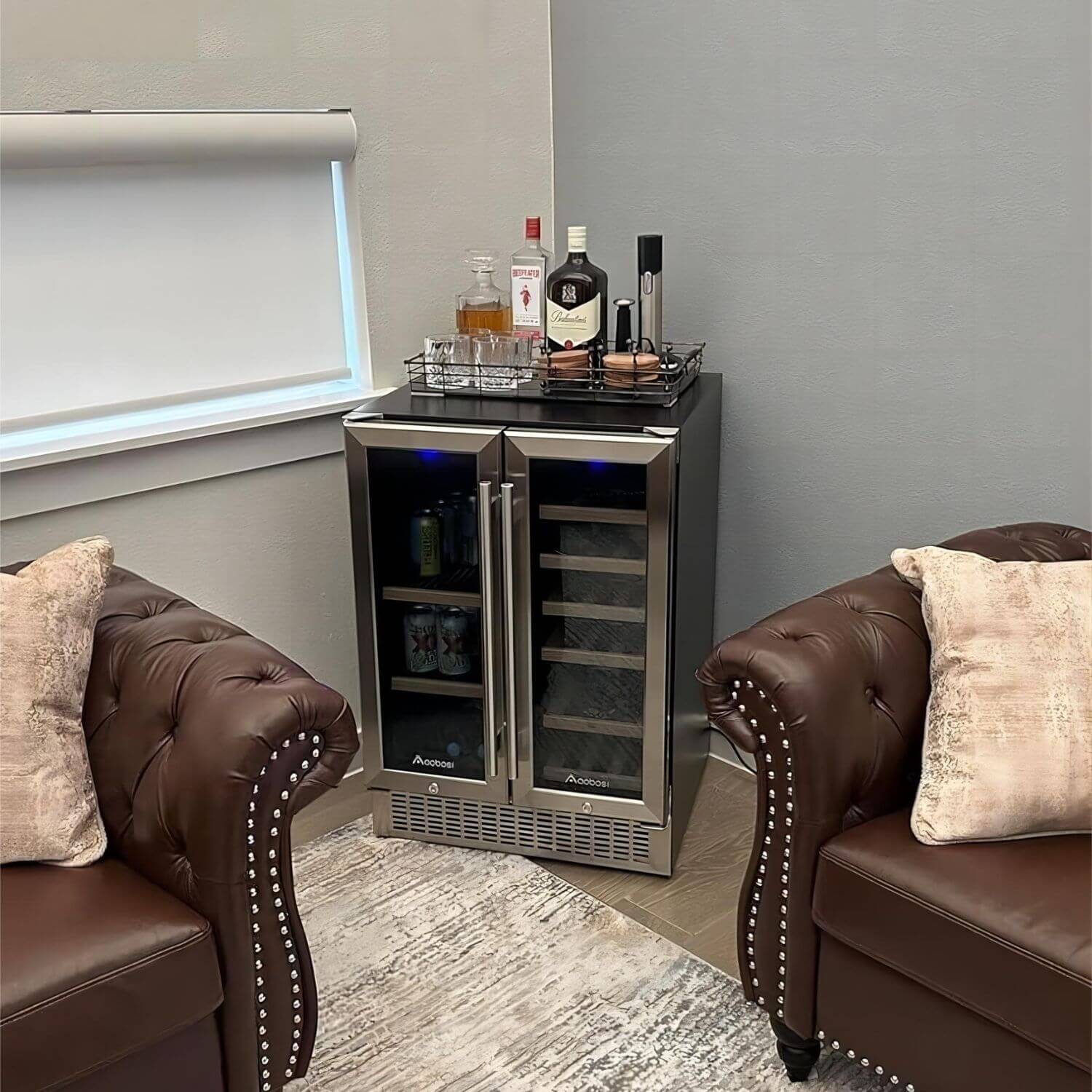
AOBOSI Retro Dual Zone Wine Cooler
Store up to 28 bottles across two independent temperature zones — perfect for keeping your reds and whites at their ideal temperatures simultaneously. A stylish, compact 15-inch design that fits beautifully in any home.
AOBOSI Dual Zone CoolerWhere Should I Store My Wine?
Wine is traditionally stored in a cool, dark, and humid cellar — and for good reason. Most people do not have a dedicated cellar at home, so finding a suitable substitute is key. For lighter wines, a kitchen cupboard that stays cool and dark can work reasonably well for short-term storage.
White wines, sweet wines, and sparkling varieties need to be chilled more consistently and are less forgiving of temperature swings — a wine refrigerator is the best solution for more than a few days' storage.
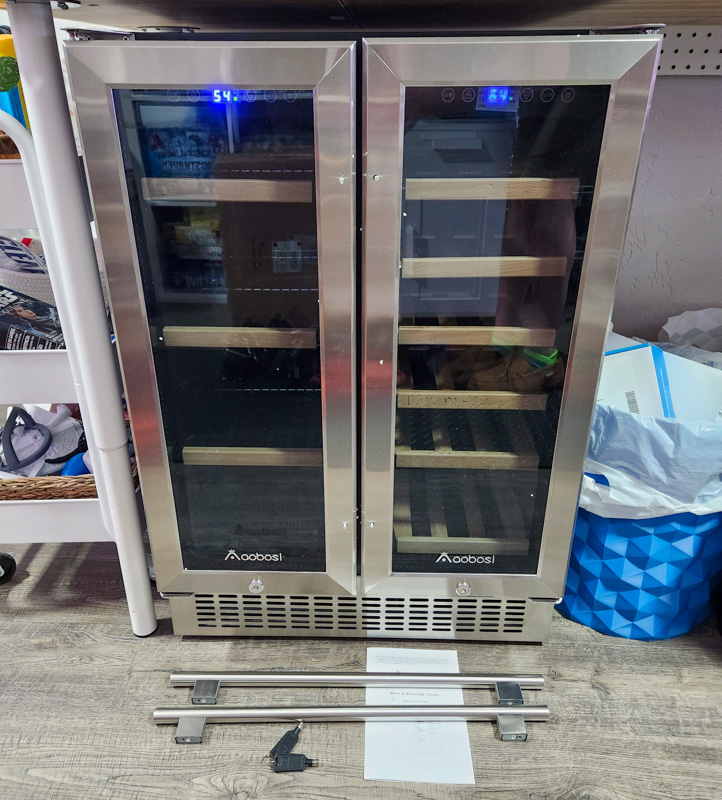
Garages can work as a secondary option, but keep in mind that vibrations and strong smells — both common in garages — can negatively affect your wine over time. Make sure bottles are well-insulated if you go this route.
A dedicated wine fridge is the gold standard. It offers separate temperature zones for different wine types and a controlled environment that protects your collection long-term.
FAQs About Wine Storage Temperatures
Final Thoughts
Now that you know the ideal storage temperatures for every major wine type, you have everything you need to protect your collection and enjoy every bottle at its best. Proper storage is one of the most overlooked factors in getting true value out of your wine — but with the right setup, it becomes second nature.
Every wine is different, but with this guide and the temperature chart above, you will always know exactly where to start. Whether you are building a serious collection or simply want to keep a few bottles on hand, storing your wine correctly makes a real and noticeable difference in the glass.