


 Damage
  Loss
Loss  Theft
Theft 


How to Use a Manual Pallet Jack: A Beginner's Step-by-Step Guide
 Introduction: The Backbone of a Productive Warehouse
Learning to operate a manual pallet jack is a foundational skill for anyone working in a warehouse, stockroom, or receiving dock. It's one of the most common tools on the floor, and getting comfortable with it pays off every single shift. Commercial settings depend on these simple machines to keep product moving without delays. A good unit can haul pallets weighing several thousand pounds, which saves hours of effort and protects the people working around them. It takes only a few minutes to grasp the basics, but knowing the right technique keeps you and everyone else safe. This guide walks through what a manual pallet jack is, how each part functions, the safety habits you should never skip, and a clear step-by-step process so you can start using one with confidence.
What Is a Manual Pallet Jack?
A manual pallet jack is a hand-powered lifting and moving tool built to transport palletized loads across flat, even surfaces. It doesn't rely on a motor or a power source — the operator works the handle to pump the hydraulic system, which lifts the forks just high enough to clear the ground. Once raised, the load can be rolled to its destination with relatively little effort.
To use one well and safely, it helps to know how it's built. Many workplace injuries happen when people rush or don't understand how the pressure, wheels, and frame interact under a loaded pallet. The sections below break down the key components so the jack stops being a mystery and starts being a tool you trust.
Manual Pallet Jack Parts Explained
 1. The Handle (Tiller / Steering Column)
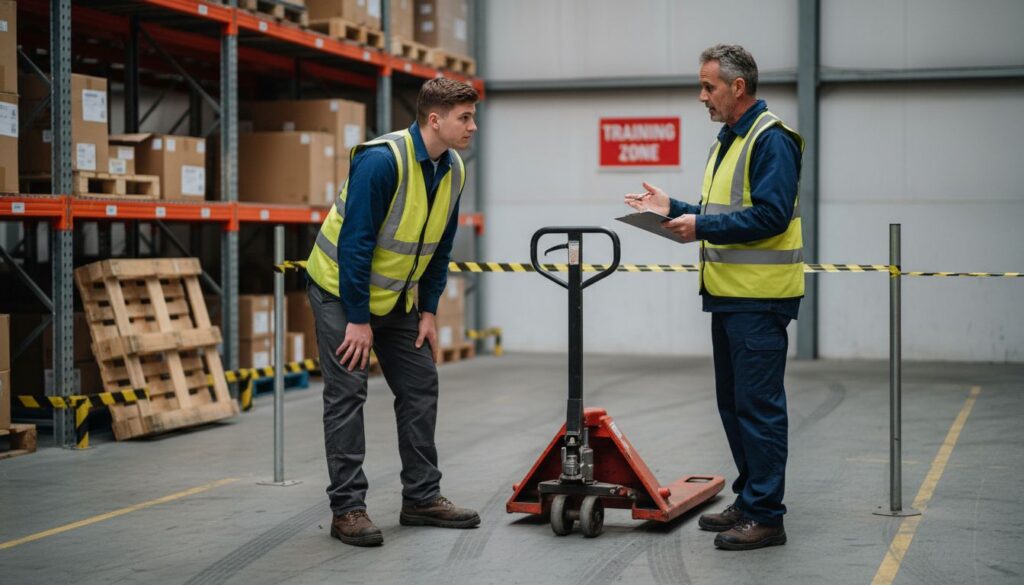
The handle is your primary control point. It does two key jobs at once: you push and pull it to steer the jack, and you pump it up and down to raise the forks. Because every lift and every turn passes through it, handles on quality units are built from heavy-gauge steel so they can take constant use without bending or loosening.
 2. The Control Lever (Actuator Valve)
Usually located at the top of the handle, this lever has three positions: Raise (pump to lift), Neutral (hold position), and Lower (release to set the load down). A small, simple control with a big effect — it decides whether the hydraulics are charging, holding, or releasing pressure. Knowing which position you're in before you pump is a core habit.
 3. The Hydraulic Pump System
Tucked inside the base of the handle housing, the pump is where the real work happens. Each stroke of the handle drives oil through a piston, and the pressure pushes the forks upward. It's basic physics doing heavy lifting — literally. A well-sealed pump should feel firm on every stroke and shouldn't drop the load on its own.
 4. The Forks (Prongs / Lifting Arms)
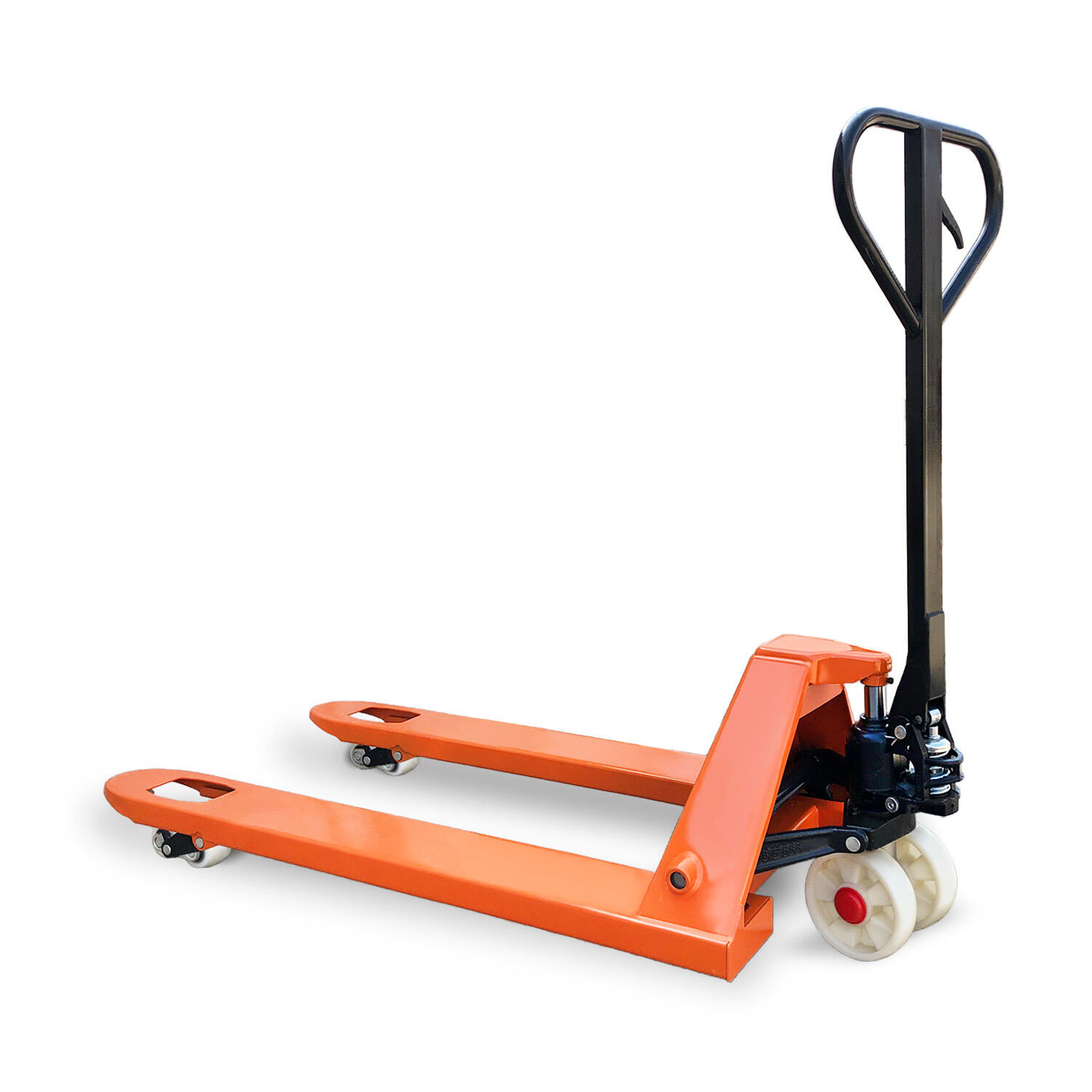
The forks are the two steel arms that slide into a pallet's openings. On a standard unit they measure roughly 48 inches long and 27 inches across the pair, which fits nearly every North American pallet. They're built to distribute weight evenly so the pallet rides balanced and stable during every move.
 5. Steer Wheels (Drive Wheels)
Positioned under the pump housing at the handle end, these larger wheels do the steering. They connect directly to the handle, so when you turn the tiller, they turn the whole jack. Good steer wheels grip the floor without marking it and give you control even under a fully loaded pallet.
 6. Load Wheels (Rollers)
Mounted at the tip of each fork, the load wheels are smaller but carry most of the weight. As you pump the handle, they push down against the floor and raise the forks against the pallet. Tandem rollers (two per fork) spread pressure better and are gentler on flooring over time.
 7. The Chassis and Undercarriage (Frame)
The frame is the skeleton holding the whole machine together. It's usually welded heavy-gauge steel with a protective powder-coat finish that resists chips, rust, and the scrapes of daily warehouse life. A solid frame is what lets these jacks take years of abuse without flexing or failing.
Safety First: 5 Rules to Follow Every Time
Before you ever touch the handle, remember these five habits. They're simple, they take seconds, and they prevent almost every common injury tied to pallet jacks.
Know the Weight Limit
Find the rated capacity printed on the unit itself — most manual jacks fall between 4,400 and 6,600 lbs. Never exceed it. Overloading can rupture seals, bend forks, and cause a load to drop without warning.
Do a Quick Pre-Use Check
Take thirty seconds before each shift. Look at the forks for cracks or bends, check the wheels spin freely, make sure the handle pumps smoothly, and confirm the control lever moves between positions without sticking.
Center the Load on the Forks
An off-center load throws everything off balance. Slide both forks all the way under the pallet until the center of gravity sits squarely between them. A balanced load stays put; an unbalanced one can tip.
Wear the Right Gear
Steel-toed or composite-toed boots are the minimum. Add work gloves for grip and eye protection when conditions call for it. Proper gear has prevented countless crushed toes and pinched hands.
Respect Ramps and Slopes
Manual jacks are designed for flat, level surfaces. If you must cross an incline, keep the load downhill of you and go slowly. Never try to stop a heavy load speeding down a ramp — it can roll right over you.
How to Use a Manual Pallet Jack: Step by Step
Perform a Visual and Tactile Inspection
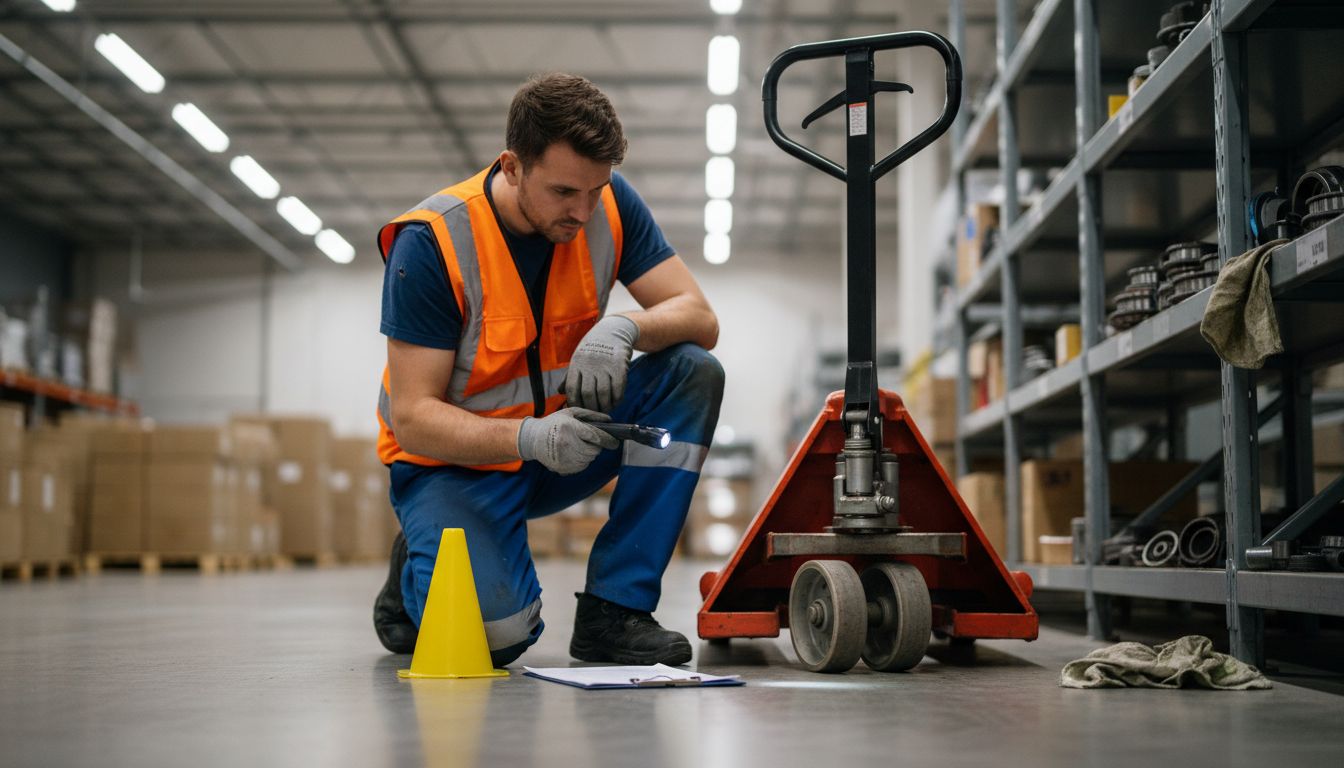
Walk around the jack before picking it up. Check the forks for damage, look for hydraulic oil pooling on the floor, confirm the wheels aren't flat-spotted, and pump the handle once or twice to feel for resistance.
Find the Release Lever
Stand in front of the jack and place both hands on the handle. Locate the control lever on top. Move it to the "Lower" position so the forks drop to their lowest point — this ensures they can slide into the pallet's openings.
Lower the Forks Fully to the Floor
Hold the lever in the release position until the forks are resting flat. They need to sit as low as possible so they glide in without catching on the bottom boards of the pallet.
Line Up and Drive the Forks In
Approach the pallet straight on. Steer the forks into the two openings with the tips aimed dead center. Push until the pallet touches the back of the forks — that's when it's fully seated.
Slide the Prongs All the Way Under
Make sure the forks are fully engaged. A half-loaded fork concentrates weight on the tip, which is a fast way to bend them. Push until you feel the pallet make contact with the jack's backstop.
Pump to Lift (The Hydraulic Phase)
Move the control lever to the "Raise" position. Work the handle up and down with firm, steady strokes. The pallet only needs to clear the floor by a couple of inches — just enough to move it without dragging.
Shift the Lever Back to Neutral
Once the pallet is raised to your travel height, move the lever to the Neutral position. This locks the forks at that height so they don't sink as you move or accidentally drop while you're steering.
Transport the Load Smoothly
Stand at the handle and pull the jack behind you, keeping the load trailing. Pulling gives you better sight lines and steering control than pushing. Move at a walking pace — no running, no sudden turns.
Lower the Load Gently at the Destination
Once you're positioned, pull the control lever to the "Lower" position. The forks will descend slowly. Once the pallet is fully on the floor and the forks are clear of pressure, you're done.
Pull the Forks Free
With the pallet resting on the ground and the forks fully lowered, slowly pull the jack straight backward. The forks will slide out cleanly, and you can return the jack to its staging area.
Ready to Equip Your Workspace?
If you're looking for a durable, high-capacity manual pallet jack built for daily use, the Apollolift 5500 lb model is a proven choice. Its 48" x 21" forks handle standard pallets easily, and its hydraulic system holds up shift after shift.
Shop Apollolift 5500 lb Pallet JackConclusion
A manual pallet jack is simple on the surface, but using it well takes a little knowledge and a lot of consistency. Once you've got the parts, the safety habits, and the ten-step routine down, the tool becomes almost invisible — it just works. Keep it inspected, don't overload it, stay on flat floors, and respect the weight you're moving. Do those four things and your jack will keep your operation moving smoothly for years to come.