


 Damage
  Loss
Loss  Theft
Theft 


How to Operate a Pallet Jack Safely and Efficiently
A pallet jack is one of the most dependable tools in any warehouse, workshop, or storage facility. When used correctly, it streamlines lifting, maneuvering, and stacking — but only if the operator understands how the equipment works and respects its limits. This guide walks you through everything you need to handle a pallet jack the right way.
 Key Features and Applications
Pallet jacks are engineered for one core job — moving palletized loads horizontally without operator strain. Their design makes them suitable across a wide range of industries:
Warehousing
Transfer inventory between storage racks, staging bays, and loading docks with minimal labor input.
Retail Operations
Restock shelves, unload deliveries, and reposition heavy goods during overnight resets.
Manufacturing
Shuttle raw materials and finished goods between workstations on the production floor.
Logistics & Shipping
Load and unload trailers, vans, and containers quickly while keeping packages intact.
Manual Pallet Jacks
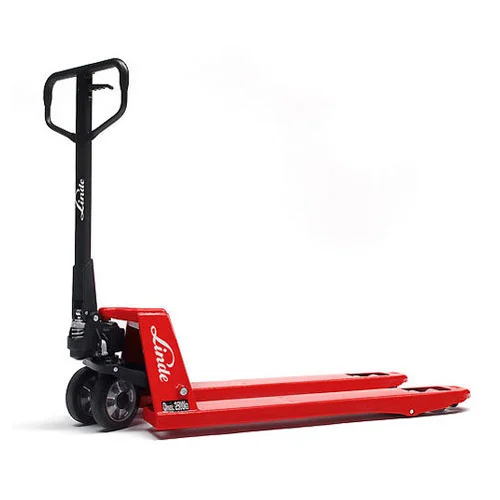
A manual pallet jack is the traditional workhorse of the industry. It uses a hand-pumped hydraulic system to raise and lower the forks beneath a pallet, and operator force to push or pull the load across flat surfaces. These units are affordable, low-maintenance, and ideal for light-to-medium duty lifting in smaller facilities.
Typical lifting capacity falls between 4,400 and 5,500 lbs, making them versatile enough for most standard pallet sizes. Because they require no battery or charger, manual jacks are ready to work the moment you need them.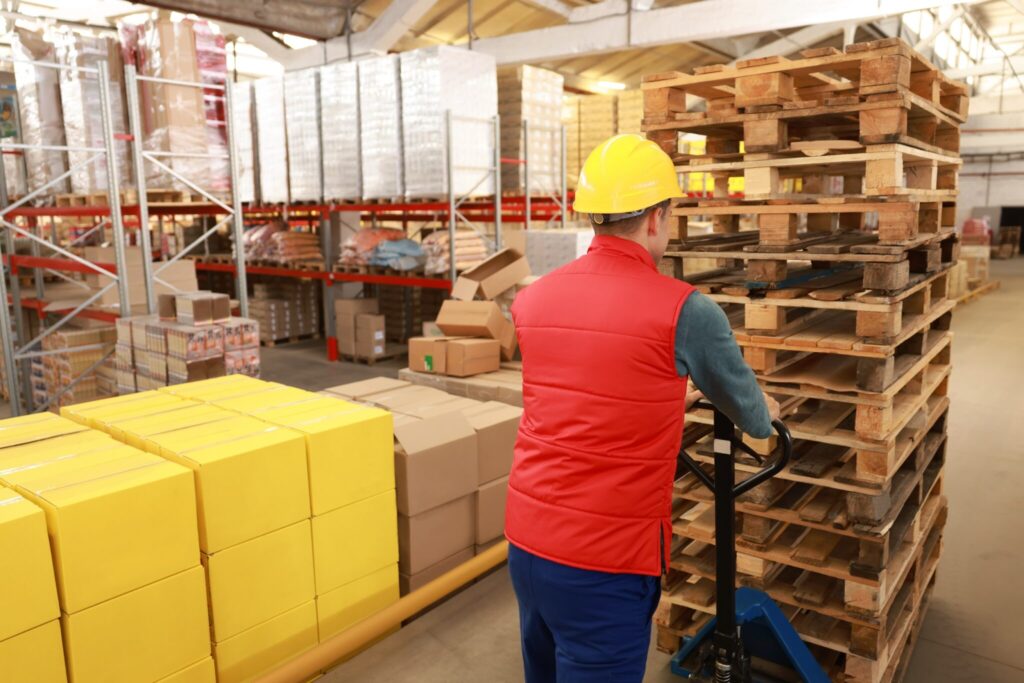
Ready for Dependable Lifting Power?
The Apollolift Manual Hydraulic Pallet Jack is built to haul 5,500 lbs with ease — a proven pick for warehouses, garages, and commercial floors.
Shop Apollolift A-1006Electric Pallet Jacks and Their Applications
Electric pallet jacks use a rechargeable battery and a motorized drive system to handle both lifting and transport. They're ideal for high-throughput operations where speed and reduced operator fatigue matter. Modern units offer push-button controls, regenerative braking, and ergonomic steering tillers for confident handling.
Electric jacks typically move loads between 3,300 and 6,000 lbs, and many models include advanced safety features like anti-roll protection, speed control on ramps, and automatic shut-off systems.
| Feature | Manual Pallet Jack | Electric Pallet Jack |
|---|---|---|
| Power Source | Hand-pumped hydraulics | Rechargeable battery |
| Load Capacity | Up to 5,500 lbs | Up to 6,000 lbs |
| Ideal Use | Short distance, occasional lifts | Long distance, heavy-duty cycles |
| Maintenance | Low | Moderate (battery care required) |
| Cost | Budget-friendly | Higher upfront investment |
What Are Pallet Jacks Used For?
Pallet jacks have applications in nearly every sector that handles goods on pallets — from grocery distributors and auto parts suppliers to farms, factories, and self-storage operators. Wherever palletized cargo moves, a pallet jack is the quickest way to handle it without back strain or damaged product.
Pallet Jack Operation Guide
Knowing how to operate a pallet jack properly is the foundation of safe and productive use. Whether you're pulling a few crates across a storeroom or shuttling pallets across a warehouse, these fundamentals apply to every lift.
Pre-Use Inspection Steps
Before you begin any lift, confirm the jack is in working order. A two-minute walk-around can prevent accidents, damaged goods, and costly downtime.
- Visually inspect the pallet jack for cracks, bent forks, or loose bolts.
- Test the hydraulic pump and release lever to ensure smooth, consistent operation.
- Check for fluid leaks beneath the unit or around the hydraulic cylinder.
- Verify that the wheels and rollers roll freely without wobble or resistance.
- Inspect the tiller arm — handle grip, control levers, and pivot points should move cleanly.
- Ensure the brake system (on electric models) engages firmly and releases without lag.
- Remove debris from the path of travel and keep the work area well-lit.
How to Use an Electric Pallet Jack
Operating an electric pallet jack requires focus on battery level, load balance, and controlled steering. Always work with the tiller using a neutral electric pallet jack:
- Check battery charge and ensure the unit is fully powered before use.
- Position the forks parallel to the pallet and slide them in fully.
- Use the control button or trigger to raise the forks to travel height.
- Steer gently using the tiller, maintaining a walking pace.
- Slow down well before stops, and release controls to engage automatic braking.
- Lower the forks before disengaging from the pallet.
- Return the jack to its designated storage area when finished.
How to Use a Manual Pallet Jack
Manual pallet jacks involve a straightforward pump-and-pull process, but operator technique still affects efficiency and safety. Here are the core steps:
- Position the forks squarely under the pallet, ensuring full insertion.
- Pump the handle up and down to raise the pallet off the floor.
- Once the pallet clears the ground, lower the handle to neutral for rolling.
- Pull the jack forward while keeping the load stable and within your line of sight.
- At the destination, squeeze the release lever to lower the pallet gently.
- Slide the forks out carefully and store the jack upright when done.
Pallet Jack Safety Precautions
Pallet jacks cause thousands of preventable injuries each year in North America. Proper training, situational awareness, and disciplined technique are the best defenses. The following practices should be standard on every shift.
| Hazard | Prevention Strategy |
|---|---|
| Foot injuries | Wear steel-toed boots; keep feet clear of wheels at all times. |
| Tip-overs | Stay within the rated load capacity and keep loads centered. |
| Collisions | Travel at walking pace and watch blind corners with mirrors or a spotter. |
| Runaway jacks | Never leave a loaded jack unattended on an incline. |
| Strain injuries | Use proper body mechanics; pull with the legs, not the back. |
Load Limits and Handling
Every pallet jack has a rated load capacity printed on the data plate. Never exceed this figure, even briefly. Overloading can bend forks, burst hydraulic seals, or cause sudden equipment failure during transport.
- Confirm the pallet's actual weight before lifting.
- Center the load between the forks for even balance.
- Inspect the pallet for broken boards or protruding nails.
- Never stack multiple pallets unless the design supports it.
Path Clearance and Workspace Safety
Your travel path determines how safely a lift can be completed. Cluttered aisles, wet floors, and uneven surfaces are responsible for a large share of pallet jack incidents. Take thirty seconds to scan the route before moving a load.
Clear the Aisle
Remove boxes, cords, and debris. Confirm no one is walking into the path of travel.
Dry the Floor
Wipe up spills immediately — wet floors are the top cause of slip-related pallet jack injuries.
Check Door Widths
Measure clearance before heading through narrow doorways with an oversized load.
Watch Overhead
Avoid low beams, pipes, and signage — a shifted load can catch on obstacles above.
Personal Protective Equipment
The right gear reduces the severity of accidents when they occur. Standard PPE for pallet jack operators includes:
- Steel-toed boots — protect toes from dropped loads and runaway wheels.
- High-visibility vest — especially in dock areas and shared forklift zones.
- Work gloves — improve grip on the handle and protect against splinters from wood pallets.
- Safety glasses — guard against flying debris in loading environments.
Push vs. Pull Safe Practices
As a rule, pulling a manual pallet jack keeps the load behind you and your line of sight ahead — the safer option for most scenarios. However, there are situations where pushing is necessary:
- Pulling uphill pulls the load toward you and risks a runaway.
- Pushing is safer when navigating tight doorways where pulling exposes your body to door frames.
- When pushing, always keep one hand on the release lever and move slowly.
Maintenance, Inspection, and Repair
Pallet jacks last years — even decades — when properly cared for. A consistent maintenance schedule prevents breakdowns and keeps every unit performing at peak capacity.
Routine Maintenance Tips
Routine maintenance includes cleaning, lubricating, and inspecting the major mechanical systems of the unit. Grease hydraulic pivot points every few months, wipe the hydraulic shaft clean to prevent corrosion, and tune loose fasteners. For electric models, check battery water levels where applicable and clean terminal contacts to prevent charging issues.
Pallet Jack Inspection Checklist
Use this quick checklist before every shift to catch issues early:
- Forks are straight, clean, and free of cracks.
- Wheels roll smoothly with no flat spots.
- Hydraulic system holds load without drift.
- Release lever returns to neutral cleanly.
- Handle grip is secure and undamaged.
- Data plate with load rating is visible.
- No fluid leaks beneath the unit.
- Brakes engage firmly (electric models).
Training and Certification
While manual pallet jacks do not require formal OSHA certification in most regions, employers are still responsible for ensuring operators are trained on safe use. Electric pallet jacks, depending on jurisdiction, may require powered industrial truck certification similar to forklifts.
Employers should document training, refresh it annually, and maintain a record of operators cleared to use each unit. Newer employees should always be paired with an experienced operator during their first lifts.
Choosing the Right Pallet Jack
Assessing Your Needs
Start by defining the kind of work the jack will handle. Consider the average pallet weight, the travel distance within your facility, whether you'll navigate inclines, and the volume of daily lifts. A light-use manual jack is perfect for a small garage or showroom; a high-cycle electric model earns its keep in a distribution center running multiple shifts.
Key Features of a Quality Pallet Jack
Not every pallet jack is engineered to the same standard. When shortlisting a model, look for these markers of durability and user-friendly design:
Heavy-Duty Steel Frame
Reinforced chassis and forks handle daily abuse without bending or fatigue.
Reliable Hydraulics
Sealed hydraulic systems with low-maintenance seals and a smooth pump stroke.
Ergonomic Handle
Insulated grip, three-position control lever, and a natural pull angle for reduced fatigue.
Polyurethane Wheels
Non-marking wheels roll quietly and handle warehouse floors without damage.
Clear Load Rating
A visible capacity plate keeps operators aware of safe limits during every lift.
Warranty Coverage
A solid manufacturer warranty signals confidence in build quality and after-sale support.
Advantages of the Apollolift A-1006
- 5,500 lb rated lifting capacity
- 48" x 21" heavy-duty fork assembly
- 220° steering angle for tight aisles
- Three-position handle control
- Polyurethane steer and load wheels
Best Suited For
- Warehouses with standard GMA pallets
- Retail back-of-house operations
- Workshops and light manufacturing floors
- Garages handling heavy parts
- Farm and agricultural storage
A Trusted Workhorse for Any Facility
The Apollolift A-1006 Manual Hydraulic Pallet Jack combines a 5,500 lb capacity with a compact 48" x 21" fork — built for demanding daily use.
Shop Apollolift A-1006Rental vs. Purchasing a Pallet Jack
Renting makes sense for short-term projects, one-off moves, or seasonal spikes in workload. For any recurring use, purchasing delivers a better return. A quality manual pallet jack pays for itself within months compared to repeated rental fees, and it's always available when you need it.
| Factor | Renting | Purchasing |
|---|---|---|
| Upfront Cost | Low | Higher |
| Long-Term Cost | High over time | Lower per lift |
| Availability | Limited to rental period | On demand |
| Maintenance | Provider handles it | Owner's responsibility |
| Best For | Short-term jobs | Daily operations |
Conclusion
A pallet jack is a small investment with a huge operational payoff — but only when it's operated safely and maintained consistently. Train every operator, inspect before each use, stay within load limits, and pick a model built to handle your daily workload. Do that, and a quality pallet jack will pay dividends for years.
For a durable, American-favorite manual pallet jack with a proven 5,500 lb capacity, the Apollolift A-1006 remains one of the most recommended options in its class.
Frequently Asked Questions
How do I choose the right pallet jack for my warehouse?
Match the jack to your load weight, pallet size, and travel distance. Manual models handle occasional lifts up to 5,500 lbs; electric models are worth the investment when you're running repeated cycles across long distances.
Can you use an electric pallet jack outdoors?
Most electric pallet jacks are designed for indoor use on smooth, dry surfaces. Outdoor use on uneven ground or wet surfaces can damage the motor and compromise traction. Check the manufacturer's specifications before using one outside.
Do I need special training to operate a pallet jack?
Yes. While manual jacks may not require formal OSHA certification, employers are responsible for providing operator training. Electric jacks may require powered industrial truck certification depending on your jurisdiction.
What safety gear should I wear when using a pallet jack?
At a minimum, wear steel-toed boots, a high-visibility vest in shared work areas, and work gloves for handling pallets. Safety glasses are recommended in loading environments where debris may be present.
How often should a pallet jack be inspected?
A brief visual inspection should happen before every shift. A more thorough inspection — including hydraulic fluid checks, wheel wear, and fastener tightness — should take place monthly, with a full service annually.