


 Damage
  Loss
Loss  Theft
Theft 


The Complete Guide to Ventless Dryers
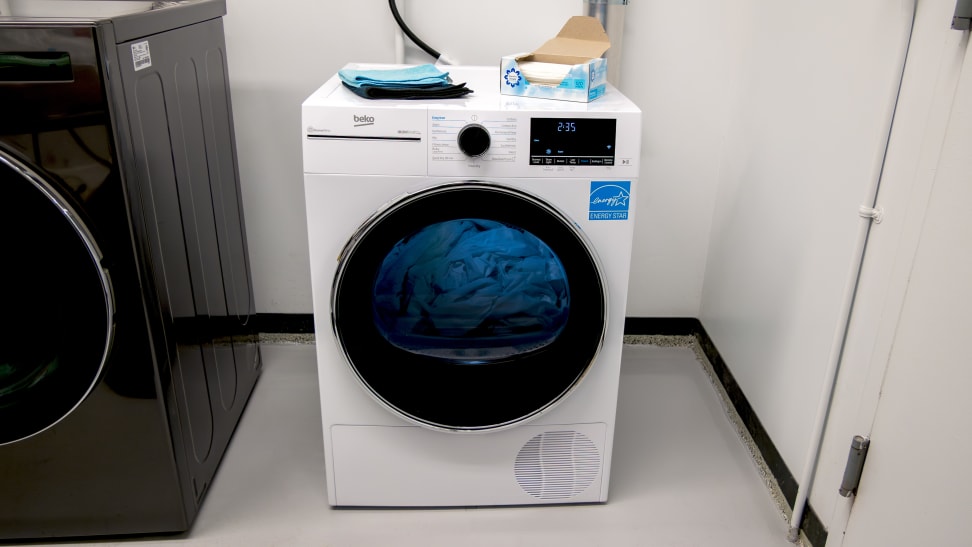
If your laundry space is compact or your home simply wasn't built with an exterior vent, a ventless dryer could be the practical solution you've been looking for. Rather than pushing humid air outside through a duct, a ventless dryer recirculates and processes that moisture internally — keeping your clothes dry without the need for any wall or roof penetration.
Unlike a standard vented dryer, a ventless model continuously filters and cools the warm, moist air it generates. This design makes it remarkably flexible for apartments, condos, and finished basements where ductwork isn't an option.
A standard vented dryer must always exhaust to the outdoors. If it is vented improperly or not at all, it will release excess heat and humid air directly into your home — creating conditions that promote mold growth, damage building materials, and can become a serious fire hazard over time.

How Does a Ventless Dryer Work?
All ventless dryers run on electricity. Instead of exhausting warm, moist air outside, they use a closed-loop system that continuously heats and cools the air circulating inside the drum. This allows moisture to be extracted from your laundry without needing any external outlet. Depending on the model, excess moisture is either collected in a built-in tank or drained via a standard household drain line.
Types of Ventless Dryers
There are two main categories of ventless dryers: condensation dryers and heat pump dryers. Each handles moisture differently, and the right choice will depend on your home setup and energy priorities.
Condensation Dryers
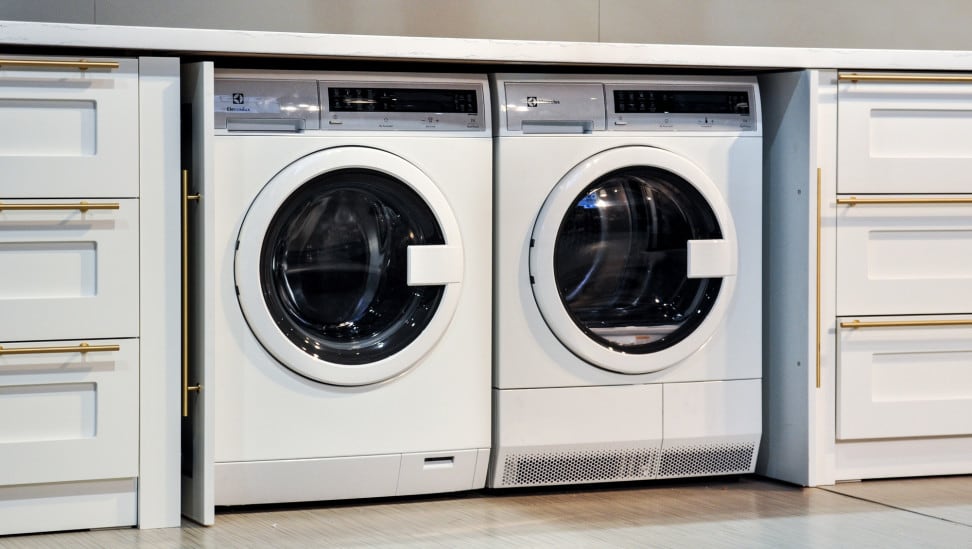
A condensation dryer works by drawing cool, dry air into the drum, heating it, and then passing it through a heat exchanger. The exchanger cools the air rapidly, causing the moisture from your clothes to condense into water. That water is either routed through a drain hose or collected in a removable reservoir. The dried air is then reheated and sent back through the drum — the cycle repeating until the load is fully dry.
This design is particularly useful when you can position the dryer near a washer with a drain connection. Units that use a collection tank simply need to be emptied after every few cycles.
Heat Pump Dryers
A heat pump dryer uses refrigerant technology to pull warm air from the drum, extract its moisture on a cool evaporator coil, and then reheat that same air before returning it to the drum. The collected moisture drains away through a pipe or fills a collection tank. Heat pump models are among the most energy-efficient home dryers available and are especially common in Europe, where vented appliances are often restricted by building codes.
Pros & Cons of Ventless Dryers
Ventless dryers offer a compelling combination of flexibility and efficiency, though there are a few practical trade-offs worth understanding before you buy.
- Can be installed anywhere in the home — no exterior wall or vent pipe required
- No ductwork means no installation of exhaust piping, ideal for renters and apartments
- Drums don't overheat, making them gentler on fabrics and reducing wear
- Use significantly less energy than traditional vented dryers
- Generally considered safer, particularly in regions where vented appliances face restrictions
On the other hand, ventless dryers typically have smaller drum capacities than their vented counterparts and may take longer per cycle. Purchase prices can also run slightly higher, especially for heat pump models. Keep these factors in mind when comparing against your household's laundry volume and budget.
How to Use & Maintain a Ventless Dryer
Like any appliance, a ventless dryer performs best when it receives regular attention. Staying on top of a few simple tasks will protect its lifespan and keep your loads drying efficiently.
Empty the Containment Chamber
After every load, take a moment to empty the lint trap and clean the dryer lint trap door to ensure no debris is blocking the drainage pipe. Collected water from condensation can often be repurposed for watering houseplants or garden beds.
Check and Clean the Condenser Unit
Lint will accumulate on the condenser unit over time, no matter how diligently you clean the trap. A clogged condenser reduces efficiency and shortens the appliance's lifespan. Follow these steps to keep it clear:
- Remove the condenser unit from the dryer and take it outside or to a utility sink.
- Rinse both sides thoroughly with a strong stream of water to dislodge any lint buildup.
- Allow the unit to air dry completely — do not reinstall it while wet.
- Reinsert the condenser and secure it back in place before running the next load.
Pay special attention to the underside of the dryer drum, particularly around the condenser coils. Lint tends to accumulate in this area and is easy to overlook during routine cleaning — especially with condensation models where moisture can make lint stick more stubbornly to surfaces.
Provide Adequate Airflow
While a ventless dryer doesn't need an exterior vent, it still requires good air circulation around the unit itself. Humidity levels in the room can affect drying performance — if the ambient air is already saturated, the dryer has to work harder. Make sure the appliance has breathing room, and consider vacuuming regularly behind and underneath it to prevent airflow blockages.
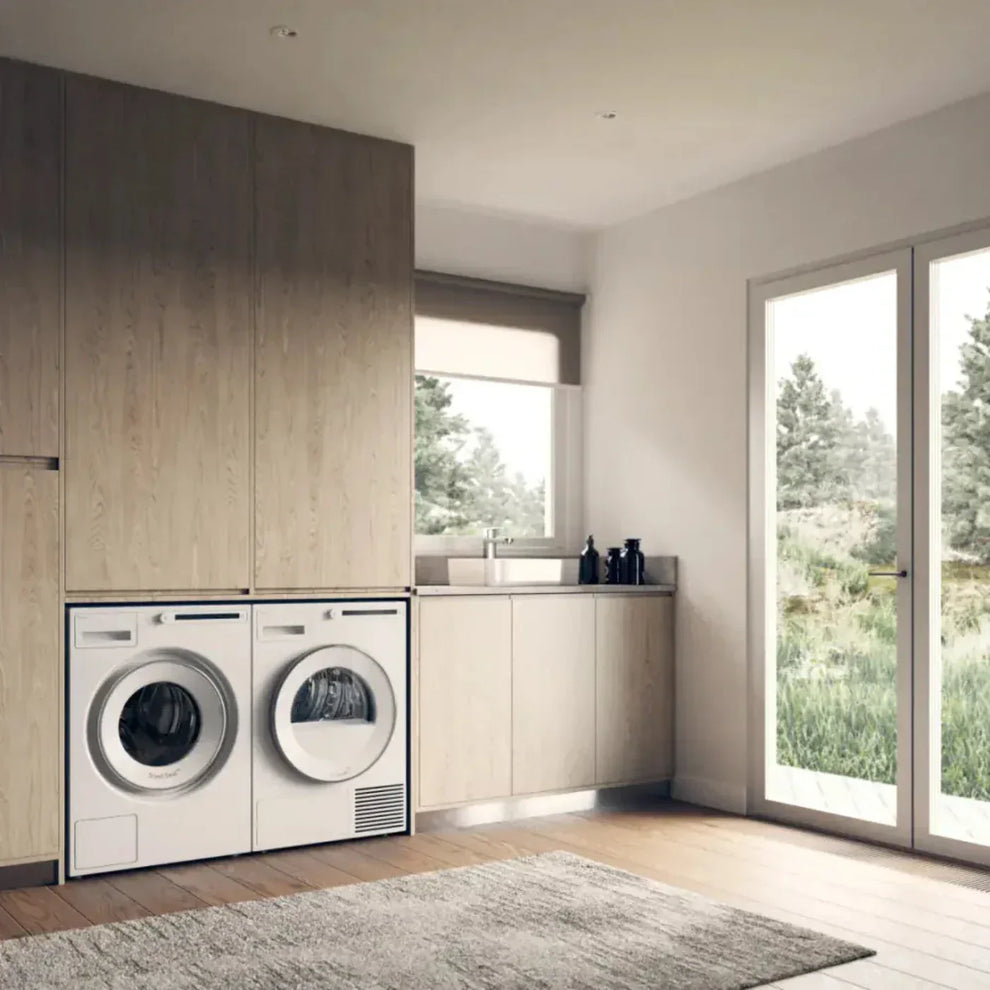
Ready to upgrade your laundry setup? Shop our top-rated ventless dryer:
Asko 24" Classic Dryer – WhiteFrequently Asked Questions
The lint trap in a ventless dryer should be cleaned after every single use. Lint accumulates quickly and a full trap restricts airflow, reducing efficiency and potentially creating a fire hazard over time.
Not necessarily. Some models collect moisture in a removable tank that you empty manually, while others can be connected directly to a household drain for continuous drainage. Check the specifications of your specific model before installation.
Installation is generally straightforward. You need the correct electrical outlet type and adequate ventilation space around the unit. Most homeowners can complete the setup themselves, though consulting a qualified technician for electrical connections is always recommended.
Maintenance requirements are specific to the appliance design rather than the ventless format. In general, you'll need to empty the lint trap after every load, empty the containment chamber as needed, and periodically clean the condenser unit — typically every one to two months depending on usage frequency.