Damage
  Loss
Loss  Theft
Theft 


Steam Showers: Everything You Need to Know Before You Buy
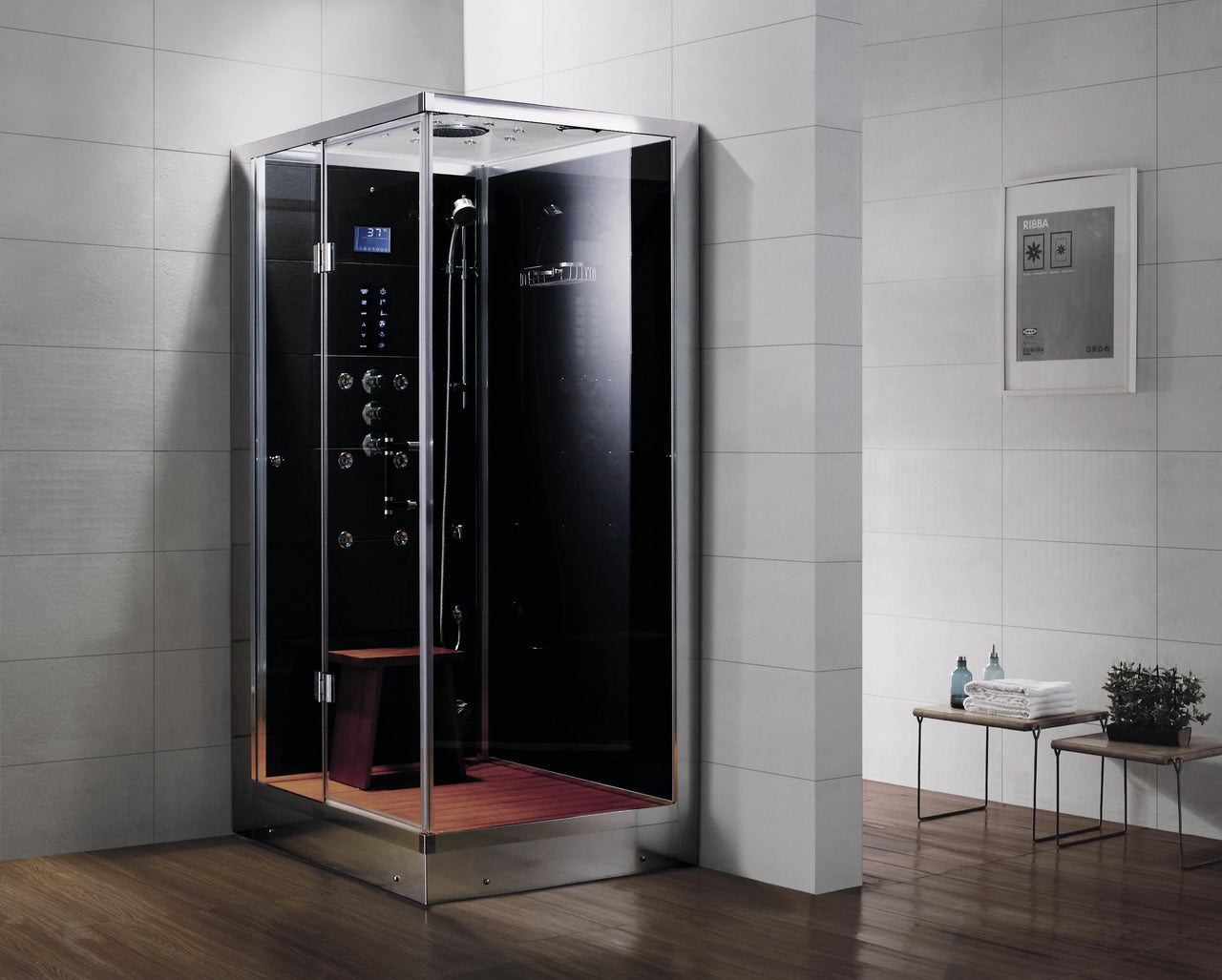
For many homeowners, a steam shower is the luxury they never knew they needed — until they step into one. That first rush of warm, enveloping steam has a way of making even the most practical person reconsider their bathroom priorities. The good news: today's steam showers are more accessible, more beautiful, and more technologically refined than ever before.
Steam showers are far more than a wellness indulgence. They're a genuine investment in your home's value and your daily quality of life. Whether you're renovating a master bath or building from scratch, this guide will walk you through every consideration so you can shop with confidence.
What Is a Steam Shower?
A steam shower is a fully enclosed shower unit connected to a steam generator. Unlike a standard shower that simply runs hot water, a steam shower produces continuous, heated vapor that fills the enclosure — wrapping you in warmth that penetrates deeply and relaxes the body in ways that a regular shower simply cannot replicate.
The generator heats water to produce steam that is delivered directly into your shower space through a small nozzle. A digital control panel — often operable via remote — lets you set your preferred temperature and session duration with precision. Most modern steam showers also include standard rain-head or handheld shower functionality, giving you the best of both worlds.
Steam has been used for wellness and recovery for thousands of years — from Roman bathhouses to Nordic saunas. Today's home steam showers bring that ancient tradition into your private space, with smart controls, aromatherapy options, chromotherapy lighting, and built-in audio. The experience is personal, on-demand, and remarkable.
Steam Shower vs. Sauna — What's the Difference?
A sauna uses dry heat — typically produced by heated rocks — and operates at temperatures between 160°F and 200°F with very low humidity. Your body sweats intensely, and the experience feels intensely hot and dry.
A steam shower, by contrast, uses moist heat at much lower temperatures (typically 110°F–120°F) with near-100% humidity. The moisture opens pores, hydrates skin, and eases respiratory passages. The two experiences are complementary rather than interchangeable.
If you're choosing between the two, consider what you value most. Saunas offer a more intense, purifying sweat experience. Steam showers offer a gentler, deeply hydrating session that also functions as a full shower — making them far more practical for daily use.
Many wellness-focused homeowners eventually install both. But if you're selecting one, a steam shower offers versatility that a sauna simply cannot: it's your everyday shower AND your spa, in one beautifully designed enclosure.
The Wellness Case for a Steam Shower
The health advantages of regular steam bathing are well-documented and wide-ranging. Here's what consistent use can do for your body and mind:
- Improves circulation and cardiovascular conditioning by gently raising heart rate
- Opens and cleanses pores, reducing acne and improving skin tone
- Relieves muscle tension, joint stiffness, and post-workout soreness
- Eases respiratory symptoms — especially beneficial for those with sinusitis or congestion
- Reduces cortisol levels and promotes deep mental relaxation
- Hydrates skin from the outside, countering the dryness of conventional hot showers
- Supports lymphatic drainage and natural detox processes
A Surprisingly Long History
Steam therapy is not a modern invention. Ancient Romans built elaborate bathhouses — the thermae — that were central to both social life and physical wellbeing. The concept traveled through Ottoman hammams, Finnish saunas, and Native American sweat lodges before finding its modern form in today's home steam enclosures. The technology has evolved dramatically, but the underlying principle remains unchanged: heat, moisture, and stillness are among the most restorative tools available to the human body.

How Does a Steam Shower Work?
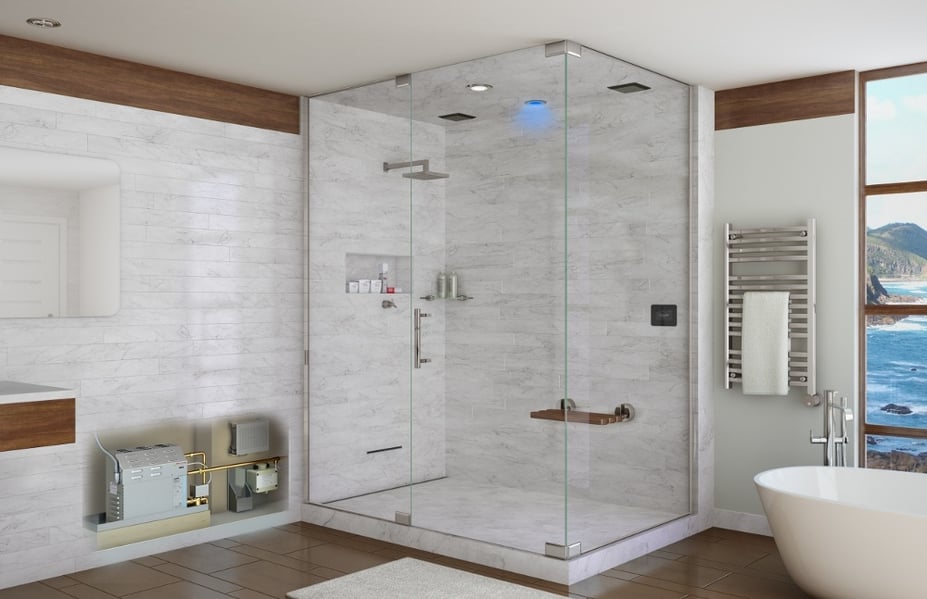
The heart of any steam shower is the generator — a compact appliance typically installed in an adjacent cabinet or utility space. When activated, the generator heats cold water through a high-performance element, converting it rapidly to steam. That steam is then channeled through insulated piping to a nozzle outlet inside the shower enclosure.
Because steam showers must be fully sealed to retain heat and moisture, they are constructed with continuous surfaces — glass panels, sealed tile, or solid acrylic — with no gaps. A digital control panel (often touch-enabled) gives you real-time control over temperature and duration. Many premium units include a remote control and smartphone connectivity.
One key advantage: a steam generator uses only 2–3 gallons of water per session. Compare that to a standard 10-minute shower, which uses approximately 20 gallons. Steam showers are not only luxurious — they're measurably more water-efficient, making them an environmentally responsible upgrade.
How to Choose the Right Size Steam Shower
Size matters — but not in the way most people think. The common mistake is assuming a larger enclosure always delivers a better experience. In reality, the generator must be correctly sized for the cubic footage of the enclosure. An undersized generator in a large space produces weak, inconsistent steam. An oversized unit in a compact shower overheats the space rapidly.
"The best steam shower isn't the biggest one — it's the one properly matched to your generator, your space, and your daily routine."
When measuring for your steam shower, calculate the total cubic footage of the enclosure (length × width × height). Then match your generator's kilowatt rating to that volume. As a general rule, you need approximately one kilowatt per 50–60 cubic feet of enclosure space. Factors like large stone tile walls (which absorb more heat) may require upgrading to the next generator tier.
For most households, a compact steam shower enclosure of 3×3×7 feet works beautifully — keeping the space intimate enough to heat quickly while offering sufficient room for comfort. That said, dual-person enclosures in the 4×5 range are increasingly popular for master bathroom upgrades.
What to Look for When Buying a Steam Shower
- Generator Power: Correctly rated for your enclosure's cubic footage. Don't compromise here.
- Digital Controls: Look for precise temperature control, programmable presets, and ideally a remote or app interface.
- Warranty Coverage: Premium generators should carry at least a 10-year warranty. Less is a red flag.
- Ventilation Design: Proper steam nozzle placement keeps heat distribution even and prevents hot spots.
- Enclosure Sealing: Every joint must seal completely. Poorly sealed enclosures leak steam and damage surrounding structures.
- Aromatherapy Port: Essential oil infusers transform the experience. Not all units include them — verify before purchasing.
- Built-in Seating: Especially important for longer sessions. A well-placed bench is both comfort and safety.
- Chromotherapy Lighting: Color-based light therapy amplifies the wellness benefits significantly.
What Does a Steam Shower Cost to Install?
Installation costs vary widely based on the unit selected, bathroom complexity, and whether existing plumbing and electrical infrastructure needs upgrading. Here is a realistic breakdown:
| Cost Component | Estimated Range | Notes |
|---|---|---|
| Steam Shower Unit | $1,500 – $6,000+ | Depends on size, brand, and features |
| Plumbing & Electrical | $500 – $1,500 | Dedicated circuit + water line required |
| Steam Generator | $500 – $2,500 | Often included in unit package |
| Labor (Installation) | $300 – $1,500 | Varies by complexity and region |
| Ventilation & Custom Tiling | $200 – $800 | If bathroom modifications are required |
The total investment for a quality steam shower installation typically falls between $3,000 and $10,000. Pre-assembled units — like those available through Backyard Provider — significantly reduce installation complexity, cutting both labor time and cost. Many homeowners with basic plumbing literacy install prefabricated units themselves over a weekend.
Most Common Steam Shower Repairs
Like any appliance, steam showers require occasional maintenance. Being aware of the most common issues helps you address them early and avoid costly damage:
Mold Growth
The most frequent issue. A humid enclosure is an ideal environment for mold if not properly ventilated and cleaned. Spray with an antimicrobial solution after each use and let the unit air dry. Consistent care eliminates the problem entirely.
No Steam Production
Usually traced to the electric steam generator. Check the circuit breaker first. If power is confirmed, the heating element or thermostat may need professional inspection. Most quality generators come with long warranties that cover this.
Low Steam Pressure
Commonly caused by mineral deposits (limescale) clogging the steam head nozzle. A simple descaling solution resolves this in most cases. It's a good idea to descale every 3–6 months depending on your water hardness.
Control Panel Faults
Digital panels exposed to prolonged steam can develop connectivity issues over time. Ensure the panel is rated for wet environments and follow the manufacturer's care instructions. Most brands offer replacement panels as a straightforward fix.
Can You Install a Steam Shower Yourself?
For a pre-fabricated unit, a confident DIY homeowner with basic plumbing and electrical knowledge can absolutely handle the installation. The enclosure panels are engineered to connect cleanly, the steam nozzle and drain simply plumb into your existing supply and waste lines, and the generator connects to a dedicated 240V circuit.
That said, one important caveat: the electrical supply line — running a new dedicated circuit from your panel — should always be handled by a licensed electrician. This is both a code requirement and a safety non-negotiable. All other aspects of the installation are approachable for a capable weekend DIY project.
A professional installation eliminates all guesswork and ensures your warranty remains fully intact. If this is your first time working with steam systems or if your bathroom requires any structural modifications, engaging a licensed plumber and electrician from the start will save you time, money, and stress in the long run.
Either path — DIY or professional — leads to the same result: a beautiful, functional steam shower that transforms your bathroom into a private retreat.
Do You Need to Remodel Your Bathroom?
Not necessarily. Many homeowners are surprised to discover that their existing bathroom can accommodate a steam shower with minimal modification. If you already have a shower stall of reasonable size, replacing it with a pre-fabricated steam enclosure is often straightforward. The existing drain, water supply, and electrical panel are typically reusable with only minor adjustments.
Where remodeling becomes more significant is when your current layout lacks the necessary space, or when you're converting a tub-only bathroom to include a shower. In those cases, the cost and scope expands — but the resulting upgrade in daily experience and home value makes it an investment most homeowners don't regret.