


 Damage
  Loss
Loss  Theft
Theft 


Complete Guide to Automotive Car Lifts
Everything you need to know about choosing, installing, and maintaining the perfect car lift for your backyard garage or workshop
Understanding Automotive Lifts
Automotive lifts have transformed the way vehicle maintenance and repair work is performed, both in professional garages and home workshops. These essential pieces of equipment provide safe, efficient access to the underside of vehicles, making tasks ranging from oil changes to major repairs significantly easier and more convenient.
For backyard mechanics and automotive enthusiasts, investing in a quality car lift represents a game-changing upgrade to any workspace. Whether you're working on routine maintenance, custom modifications, or restoration projects, the right lift can save countless hours while providing a safer, more ergonomic working environment.
This comprehensive guide will walk you through everything you need to know about automotive lifts, from the various types available to installation considerations and safety requirements.
Automotive Car Lift in Action
Two-Post Automotive Lifts
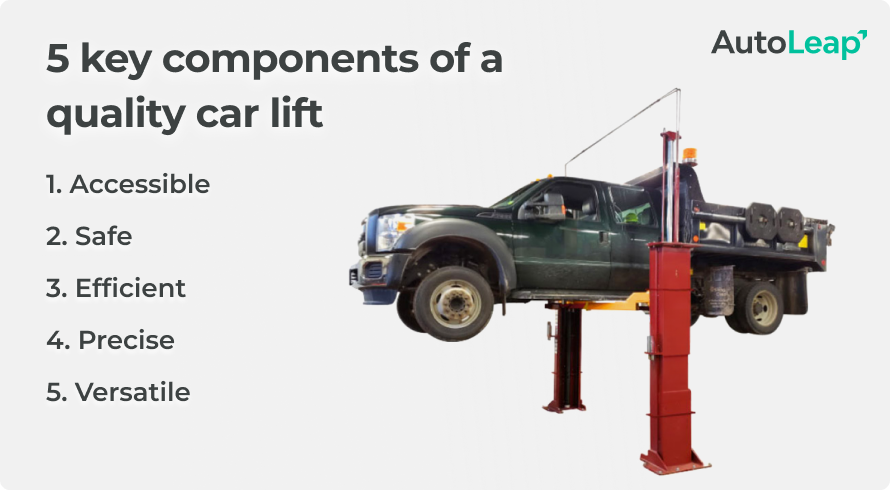
Two-post lifts represent one of the most popular configurations for both professional shops and home garages. Their design features two vertical posts positioned on either side of the vehicle, with extending arms that support the vehicle at designated lift points along the frame or chassis.
Symmetric Two-Post Lifts
Symmetric two-post lifts feature posts and arms that are positioned directly across from each other, creating a balanced, centered lifting configuration. The vehicle's center of gravity sits directly between the two posts, providing excellent stability. These lifts work exceptionally well for vehicles with evenly distributed weight and are commonly found in professional automotive facilities.
The design allows for straightforward positioning and provides unobstructed access to both the front and rear of the vehicle. However, careful attention must be paid to the lift points to ensure proper balance, particularly with vehicles that have unusual weight distribution.
Asymmetric Two-Post Lifts
Asymmetric lifts feature columns positioned at angles, with the posts set back from the vehicle's center. This design allows the vehicle's center of gravity to be positioned slightly behind the posts, which provides improved door clearance and easier entry and exit for the operator. The front arms are typically shorter than the rear arms to accommodate this offset positioning.
This configuration has become increasingly popular for modern vehicles with longer front overhangs and front-heavy weight distribution. The enhanced door clearance makes asymmetric lifts particularly valuable when working inside the vehicle or performing services that require frequent access to the interior.
Two-Post Lift Configuration
Four-Post Automotive Lifts
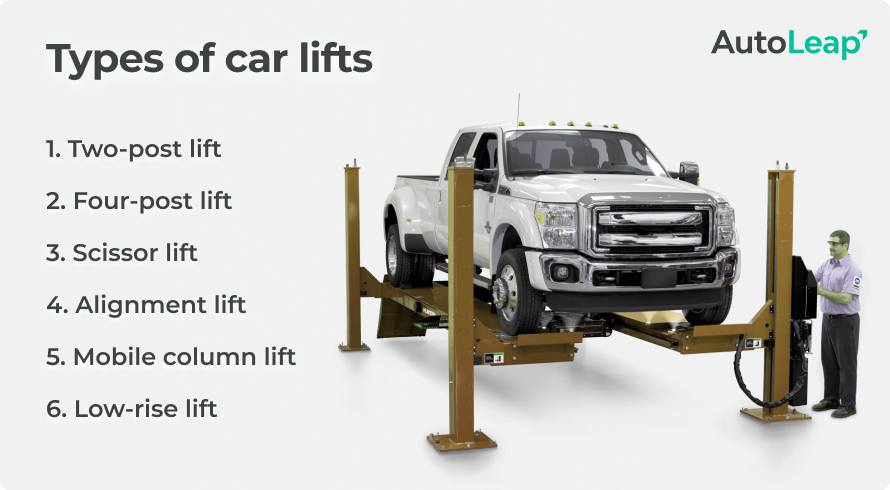
Four-post lifts provide exceptional stability and versatility, making them an excellent choice for home workshops and storage applications. These lifts feature four vertical posts with runway platforms that support the vehicle's wheels, eliminating the need to locate specific lifting points on the frame.
The drive-on design makes positioning vehicles incredibly simple—you simply drive onto the platforms and engage the lift. This user-friendly operation combined with outstanding stability makes four-post lifts particularly popular among hobbyists and collectors who may be working with valuable or delicate vehicles.
While four-post lifts provide excellent access for many types of work, the wheels remain on the platforms during lifting, which can limit access to suspension components, brakes, and wheels. However, many four-post models can be equipped with rolling bridge jacks that allow the wheels to be lifted free of the platforms when needed for wheel and suspension work.
These lifts are also outstanding for vehicle storage, allowing you to maximize your garage space by stacking vehicles vertically. Many automotive enthusiasts and collectors use four-post lifts specifically for this purpose, safely storing seasonal vehicles or collection pieces above their daily drivers.
In-Ground Automotive Lifts
In-ground lifts represent the premium choice for those seeking a completely flush installation that preserves full ceiling height and provides maximum workspace flexibility. These sophisticated systems are installed below the garage floor level, with the lifting mechanism housed in an excavated pit.
When lowered, in-ground lifts sit completely flush with the floor surface, creating no obstruction to vehicles or foot traffic. This makes them ideal for spaces where maintaining an open, uncluttered environment is important. The lack of overhead components also means you retain full ceiling clearance, which is particularly valuable in garages with limited height or when working with tall vehicles.
Installation requirements for in-ground lifts are more substantial than surface-mounted alternatives. You'll need adequate floor depth for excavation, proper drainage systems to prevent water accumulation in the pit, and professional installation to ensure correct positioning and anchoring. However, the investment in installation pays dividends in workspace versatility and aesthetic appeal.
These lifts provide exceptional access to the entire underside of vehicles while maintaining a clean, professional appearance. They're particularly popular in high-end residential garages and specialty shops where appearance and functionality are equally important.
Featured Product
Atlas FM9SL In-Ground Full-Rise Lift
Professional-grade 9,000 lb capacity in-ground lift system designed for residential and commercial applications. Features full-rise capability and flush floor installation for maximum workspace flexibility.
Atlas FM9SL 9,000 lbScissor Lift Systems
Scissor lifts utilize a distinctive expanding mechanism that raises vehicles from directly beneath, providing exceptional stability and even weight distribution. The characteristic X-pattern of crossing supports that gives these lifts their name expands vertically to raise the platform and vehicle, creating a solid, stable lifting platform.
These lifts come in various configurations, including above-ground models that sit on the garage floor and in-ground versions that install flush with the floor surface. The in-ground scissor lift configuration is particularly appealing because it provides the flush installation benefits while maintaining the reliable scissor mechanism.
Scissor lifts provide excellent access to the entire underside of vehicles while keeping the center of gravity low during lifting operations. The wide platform design distributes the vehicle's weight evenly, which is particularly beneficial when working with heavier vehicles or when performing work that might shift the vehicle's balance.
One consideration with scissor lifts is that they typically require more lateral space than two-post designs due to the expanding mechanism. However, their exceptional stability and comprehensive underside access make them an outstanding choice for serious automotive work.
Mobile and Portable Lift Solutions
For those who need flexibility or work in spaces where permanent installation isn't practical, mobile and portable lifts offer compelling alternatives. These systems range from low-rise portable lifts that can be moved and stored when not in use to more substantial mobile column lifts that provide serious lifting capacity while remaining relocatable.
Low-rise portable lifts typically raise vehicles 12 to 18 inches off the ground, providing enough clearance for many common maintenance tasks like oil changes, exhaust work, and inspection activities. Their compact size and portability make them ideal for home enthusiasts with limited space or those who prefer to move equipment when not in use.
Mobile column lifts represent a more substantial option, using individual wireless columns that can be positioned independently around the vehicle. These systems are popular in commercial settings but are increasingly being adopted by serious enthusiasts with larger workshops. The wireless operation and independent positioning provide tremendous flexibility in how vehicles are lifted and supported.
While portable options may not match the lifting height or permanent installation benefits of fixed lifts, they offer unmatched versatility and can be an excellent entry point for those new to automotive lifts or working within space constraints.
Essential Components and Features
Hydraulic Power Systems
The hydraulic system forms the heart of most automotive lifts, providing the power necessary to raise thousands of pounds smoothly and safely. These systems use pressurized hydraulic fluid to drive cylinders or actuators that perform the actual lifting operation. Quality hydraulic systems deliver consistent, reliable performance with minimal maintenance requirements.
Modern hydraulic lifts feature sophisticated controls that allow for precise positioning and smooth operation throughout the entire lifting range. Regular maintenance of hydraulic systems—including fluid checks and seal inspections—ensures long-term reliability and safety.
Safety Lock Mechanisms
Safety locks represent one of the most critical components of any automotive lift. These mechanical devices engage automatically as the lift rises, providing redundant support independent of the hydraulic system. If hydraulic pressure were lost for any reason, the safety locks prevent the lift from descending, protecting both the vehicle and anyone working beneath it.
Quality lifts feature multiple safety lock positions throughout the lifting range, allowing operators to secure the vehicle at various heights as needed for different types of work. Regular inspection and testing of safety lock mechanisms should be part of routine maintenance procedures.
Lift Arms and Adapters
The lift arms and their associated adapters provide the actual contact points between the lift and the vehicle. These components must be properly positioned at designated lifting points on the vehicle's frame or chassis to ensure safe, balanced lifting. Modern lifts offer adjustable arms that can be configured to accommodate vehicles of vastly different sizes and designs.
Various adapter styles are available to suit different vehicle configurations and lift point designs. Rubber pads protect the vehicle's finish while providing secure contact, while frame cradles and pinch-weld clamps offer specialized support for specific lifting scenarios.
Control Systems
Control systems vary from simple mechanical controls to sophisticated electronic interfaces. Basic lifts typically feature straightforward up and down controls, while more advanced systems may include programmable height presets, wireless remote operation, and diagnostic capabilities that monitor system performance and alert operators to potential issues.
The control station should be positioned for clear visibility of the vehicle during lifting operations, allowing the operator to monitor the lift process and respond immediately if any issues arise. Emergency stop controls must be easily accessible and clearly marked.
Installation Requirements and Considerations
Concrete Requirements
Proper concrete specifications are absolutely critical for safe lift installation. Most automotive lifts require concrete with a minimum thickness of four to six inches and a compressive strength of at least 3,000 PSI. The concrete must be properly cured—typically at least 28 days—before lift installation to ensure it has reached full strength.
For in-ground installations, additional considerations include proper pit dimensions, adequate drainage to prevent water accumulation, and reinforcement to prevent cracking under load. Professional installation typically includes a thorough assessment of existing concrete or specifications for new concrete work.
Ceiling Height Requirements
Adequate ceiling height is essential for comfortable, safe operation. For two-post lifts, you'll typically need a minimum of 12 to 14 feet of ceiling clearance, depending on the specific lift model and the types of vehicles you'll be servicing. Taller vehicles or lifts with greater maximum rise will require additional height.
Four-post lifts and in-ground systems may have different clearance requirements. In-ground lifts offer a significant advantage in lower-ceiling spaces since the lift mechanism doesn't extend above floor level, preserving maximum working height.
Electrical Requirements
Most automotive lifts require dedicated electrical circuits to power the hydraulic pump motors. Common configurations include 220-volt single-phase or three-phase power, though some smaller lifts can operate on standard 110-volt circuits. The electrical system must be properly sized for the lift's power requirements and installed according to local electrical codes.
Professional installation includes verification that your existing electrical service can support the lift's requirements or recommendations for necessary electrical upgrades. Proper circuit protection and emergency shutoff capabilities are essential safety features.
Spatial Planning
Beyond the lift's footprint itself, you need to consider the total space required for safe operation. This includes adequate clearance around the lift for positioning vehicles, opening doors, and moving around the workspace. You'll also want to plan for storage of accessories, positioning of tool chests and equipment, and comfortable working space around lifted vehicles.
Consider traffic patterns in your workspace and how the lift installation will affect access to other areas. If you're working in a multi-purpose garage, think about how the lift position will impact parking for other vehicles or storage access when the lift is in use.
Critical Safety Guidelines
Pre-Operation Inspection
Before every use, conduct a thorough visual inspection of the lift. Check for any signs of damage, wear, or hydraulic leaks. Verify that all safety mechanisms are functioning correctly and that the work area is clear of obstructions. This simple habit takes only moments but can prevent serious accidents.
Ensure the vehicle is properly positioned with the center of gravity appropriately located relative to the lift's design. Verify that lift points are correctly positioned at designated locations on the vehicle's frame or chassis before beginning the lifting operation.
Load Capacity Compliance
Never exceed the lift's rated capacity. This rating includes not just the vehicle's weight but also any additional load from occupants, fuel, cargo, or equipment that might be on or in the vehicle. When working with heavier vehicles or those near the capacity limit, verify the exact weight before lifting.
Remember that capacity ratings apply to evenly distributed loads. Uneven weight distribution or off-center positioning can create dangerous conditions even when the total weight is below the rated capacity.
Proper Lifting Procedures
Raise the vehicle slowly and steadily, watching carefully for any signs of instability or improper positioning. Stop lifting immediately if you observe any wobbling, tilting, or unusual movement. Once the vehicle reaches the desired height, engage all safety locks before performing any work underneath.
Never work under a vehicle supported only by hydraulic pressure. Always ensure mechanical safety locks are properly engaged. Even brief work beneath an unlocked lift creates unacceptable risk.
Maintenance and Inspection Schedule
Establish and follow a regular maintenance schedule for your lift. This includes hydraulic fluid checks, safety mechanism testing, structural inspections, and verification of all electrical components. Many manufacturers recommend monthly inspections for frequently used lifts, with more comprehensive annual inspections.
Keep detailed records of all maintenance activities and any issues discovered. Address problems immediately—never continue using a lift with known defects or concerns. Professional annual inspections by qualified technicians provide additional assurance of continued safe operation.
Selecting the Perfect Lift for Your Needs
Assess Your Vehicle Types
Consider the types of vehicles you'll be servicing most frequently. Light-duty lifts with capacities around 7,000 to 9,000 pounds are suitable for standard passenger cars and light trucks. If you work with larger trucks, SUVs, or commercial vehicles, you'll need lifts with capacities of 10,000 pounds or more.
Think about future needs as well. If you're building a long-term shop or workspace, investing in slightly higher capacity than currently needed provides flexibility for future projects and vehicle changes.
Evaluate Your Workspace
Carefully measure your available space, including ceiling height, floor dimensions, and the location of doors, windows, and other fixtures. Consider how the lift installation will affect traffic flow and access to other areas of your garage or shop. If ceiling height is limited, in-ground options may provide the solution you need.
Evaluate your floor condition and determine whether it meets the requirements for lift installation. If you're working with an existing garage, you may need to assess concrete thickness and strength or plan for floor reinforcement.
Consider Your Budget
Automotive lift prices vary significantly based on type, capacity, and features. While budget is certainly a consideration, remember that this is a long-term investment in safety and capability. Quality lifts from reputable manufacturers, properly installed, can provide decades of reliable service.
Factor in installation costs, which can be substantial, particularly for in-ground models. Professional installation ensures proper setup and often includes warranty coverage that can provide valuable peace of mind.
Plan for Your Work Type
Different lift types excel at different tasks. Two-post lifts provide excellent access for general repair work and suspension service. Four-post lifts are outstanding for storage and offer easy positioning for routine maintenance. In-ground lifts provide maximum versatility and professional appearance.
Consider the types of work you perform most frequently and choose a lift design that optimizes access and efficiency for those tasks. If you perform diverse work, you might even consider multiple lifts with different configurations to maximize your capabilities.
Maintenance and Longevity
Regular Inspection Routine
Establish a comprehensive inspection routine that includes checking hydraulic fluid levels and quality, examining all structural components for signs of wear or damage, testing safety lock mechanisms, and verifying proper operation of all controls and safety features. Document each inspection to maintain a record of your lift's condition over time.
Pay particular attention to high-wear components like cables, chains, and pivoting mechanisms. Early detection of wear allows for planned maintenance rather than emergency repairs and helps prevent costly damage or safety issues.
Hydraulic System Care
The hydraulic system requires regular attention to maintain optimal performance. Check fluid levels according to manufacturer recommendations and top off as needed with the specified fluid type. Monitor for any signs of leaks, which should be addressed immediately to prevent damage and maintain safe operation.
Hydraulic fluid typically requires periodic replacement—often annually for frequently used lifts—to maintain proper viscosity and prevent contamination that could damage seals or pump components. Follow manufacturer specifications for fluid type and change intervals.
Lubrication and Moving Parts
Moving components require regular lubrication to prevent premature wear and ensure smooth operation. Pivot points, chains, cables, and sliding mechanisms all benefit from appropriate lubrication on a regular schedule. Use lubricants recommended by the manufacturer and avoid over-lubrication, which can attract dirt and debris.
Clean accumulated dirt and debris from components during lubrication to prevent contamination and allow for proper inspection of component condition.
Professional Service
While routine maintenance can be performed by competent owners, annual professional inspection provides an additional layer of assurance. Qualified technicians can identify potential issues that might be missed during routine checks and can perform more complex service tasks.
Professional service also ensures that your lift remains in compliance with any applicable regulations and maintains warranty coverage. Keep records of all professional service for warranty purposes and to maintain documentation of your lift's maintenance history.
Advanced Features and Accessories
Rolling Bridge Jacks
Rolling bridge jacks transform four-post lifts into even more versatile tools by allowing you to raise individual wheels off the runways. This accessory rolls along tracks in the runway platforms, positioning beneath the vehicle to lift it free of the platforms for wheel and suspension work that would otherwise be difficult with a four-post configuration.
Quality bridge jacks feature safety locks and controlled raising and lowering mechanisms, providing the same level of security as the main lift. They're an essential accessory for anyone using a four-post lift for comprehensive vehicle service.
Drip Trays and Oil Management
Integrated or aftermarket drip tray systems help contain fluids during service work, preventing contamination of your workspace and simplifying cleanup. These systems can range from simple portable pans to sophisticated integrated tray systems that attach directly to the lift structure.
Professional installations often include comprehensive fluid management systems with collection points and drainage systems that make oil changes and fluid service cleaner and more efficient.
Extended Height Capabilities
Some lift models offer extended height ranges that provide additional working clearance for tall vehicles or when maximum access is needed for specific tasks. Extended-height configurations typically require correspondingly higher ceiling clearances but provide valuable additional workspace underneath lifted vehicles.
If you regularly work with tall vehicles like vans, trucks, or SUVs, the additional height capability can significantly improve ergonomics and access during service work.
Specialized Adapters and Lift Points
A comprehensive collection of adapters and lift point accessories allows you to safely lift a wide variety of vehicle designs. Frame cradles, pinch-weld clamps, and specialized pads accommodate different frame configurations and protect vehicle finishes during lifting operations.
Investing in quality adapters appropriate for the vehicles you service ensures safe, proper lifting and protects your investment in the vehicles themselves. Many lift manufacturers offer application-specific adapter kits designed for particular vehicle types or models.
Common Applications and Uses
Routine Maintenance Services
Automotive lifts dramatically simplify routine maintenance tasks like oil changes, filter replacements, and fluid services. The improved access and comfortable working height reduce fatigue and allow you to perform these routine tasks more efficiently and thoroughly than would be possible working from the ground.
Brake and Suspension Work
Brake service, suspension repairs, and wheel work become significantly easier with proper lift access. The ability to safely support the vehicle while removing wheels and suspension components provides the access needed for thorough inspection and service. Two-post lifts excel at these applications, though four-post lifts equipped with bridge jacks are also highly capable.
Exhaust System Service
Exhaust system work—whether replacing components, repairing leaks, or installing performance upgrades—is dramatically simplified with lift access. The ability to comfortably reach the entire exhaust system from underneath makes what could be a frustrating job into a straightforward task.
Undercarriage Inspection and Detailing
Thorough undercarriage inspection for damage, rust, or wear becomes practical with lift access. You can also use the lift for detailed cleaning and protective coating application to undercarriage components, helping preserve your vehicle's value and longevity.
Vehicle Storage and Collection Management
Four-post lifts provide outstanding vehicle storage capabilities, allowing collectors and enthusiasts to maximize garage space by stacking vehicles vertically. This application has become increasingly popular as vehicle collections grow and available space becomes more precious. The stable platform and easy drive-on design make storage applications both practical and safe.
Investment and Cost Considerations
Initial Purchase Price
Automotive lift prices vary widely based on type, capacity, features, and manufacturer. Basic two-post lifts might start around a few thousand dollars, while high-capacity or feature-rich models can cost significantly more. Four-post lifts generally fall in a similar range, with pricing influenced by capacity and construction quality.
In-ground lifts typically represent a higher initial investment due to their more complex design and installation requirements. However, their flush installation and space-saving benefits often justify the premium for those with appropriate applications and budgets.
Installation Costs
Professional installation is strongly recommended for all automotive lifts and is often required to maintain warranty coverage. Installation costs vary based on lift type, site conditions, and any necessary preparation work. Surface-mounted lifts on suitable existing concrete may have relatively straightforward installation, while in-ground models require excavation, pit preparation, and potentially drainage system installation.
Factor in potential costs for concrete work, electrical service upgrades, and any structural modifications needed to accommodate the lift. Getting detailed quotes from qualified installers helps establish realistic budgets and avoid surprises.
Operating and Maintenance Costs
Ongoing costs for lift ownership are generally modest. Electrical consumption is minimal, as lifts only draw power during actual lifting operations. Maintenance costs primarily involve periodic hydraulic fluid replacement, occasional replacement of wear items, and professional inspection services.
Quality lifts from reputable manufacturers, properly maintained, can provide decades of reliable service, making the long-term cost per use quite reasonable. The value added in terms of work capability, safety, and efficiency often far exceeds the operational costs.
Return on Investment
For professional shops, automotive lifts often pay for themselves relatively quickly through increased productivity and expanded service capabilities. Even for hobbyists and home mechanics, the improved work quality, safety, and enjoyment can represent excellent value relative to the investment.
Consider also the property value implications—a well-equipped garage with professional-grade lifts can be a significant selling point for automotive enthusiasts and can enhance your property's appeal to potential buyers who value such facilities.
Transform Your Workspace Today
An automotive lift represents one of the most transformative investments you can make in your garage or workshop. The improved access, enhanced safety, and expanded capabilities fundamentally change how you approach vehicle maintenance and repair work.
Whether you're a professional technician, dedicated enthusiast, or homeowner looking to handle more of your own vehicle maintenance, the right lift configuration can elevate your workspace from basic to truly professional. The combination of convenience, safety, and capability makes automotive lifts an investment that pays dividends every time you use them.
Take time to carefully assess your needs, evaluate your space, and choose equipment from reputable manufacturers with strong support networks. Proper installation by qualified professionals and commitment to regular maintenance will ensure decades of reliable, safe service from your lift investment.
Your enhanced workspace awaits—it's time to elevate your automotive capabilities to professional standards.
Ready to Upgrade Your Garage?
Explore professional-grade in-ground lift solutions designed for both residential and commercial applications. Experience the difference that quality equipment makes in your workspace.
Atlas FM9SL 9,000 lb