


 Damage
  Loss
Loss  Theft
Theft 


Best Range Hoods for 2026: Quiet, Powerful & Stylish
Key Takeaways
✓ A quality range hood eliminates smoke, grease particles, and lingering cooking odors — protecting both your cabinetry and indoor air quality.
✓ CFM rating, noise level (sones), and duct configuration are the three most critical specs to compare before purchasing.
✓ Under-cabinet, wall-mount, island, and insert-style hoods each serve different kitchen layouts — choosing correctly matters.
✓ Modern range hoods combine sleek aesthetics with smart features like LED lighting, multiple speed settings, and dishwasher-safe filters.

Cooking at home should be a pleasure — not a smoky, greasy ordeal that leaves your kitchen ceiling stained and your living space smelling like last night's stir-fry for days. A dependable range hood is the unsung hero of every well-designed kitchen, quietly pulling smoke, steam, airborne grease, and odors away from your cooking surface and venting them outside (or filtering and recirculating the air in ductless setups). Whether you are building a brand-new kitchen from scratch, upgrading your current ventilation, or simply replacing a noisy unit that has seen better days, choosing the right range hood can transform your entire cooking experience.
In this guide, we walk through everything you need to know about selecting the best range hood for your home in 2026 — covering the different styles available, the key specifications that actually matter, noise-level considerations, energy-saving design features, installation tips, and maintenance best practices. By the end, you will have a clear understanding of exactly what to look for so that your next range hood purchase is one you are thrilled with for years to come.
Range Hoods Available on Our Site
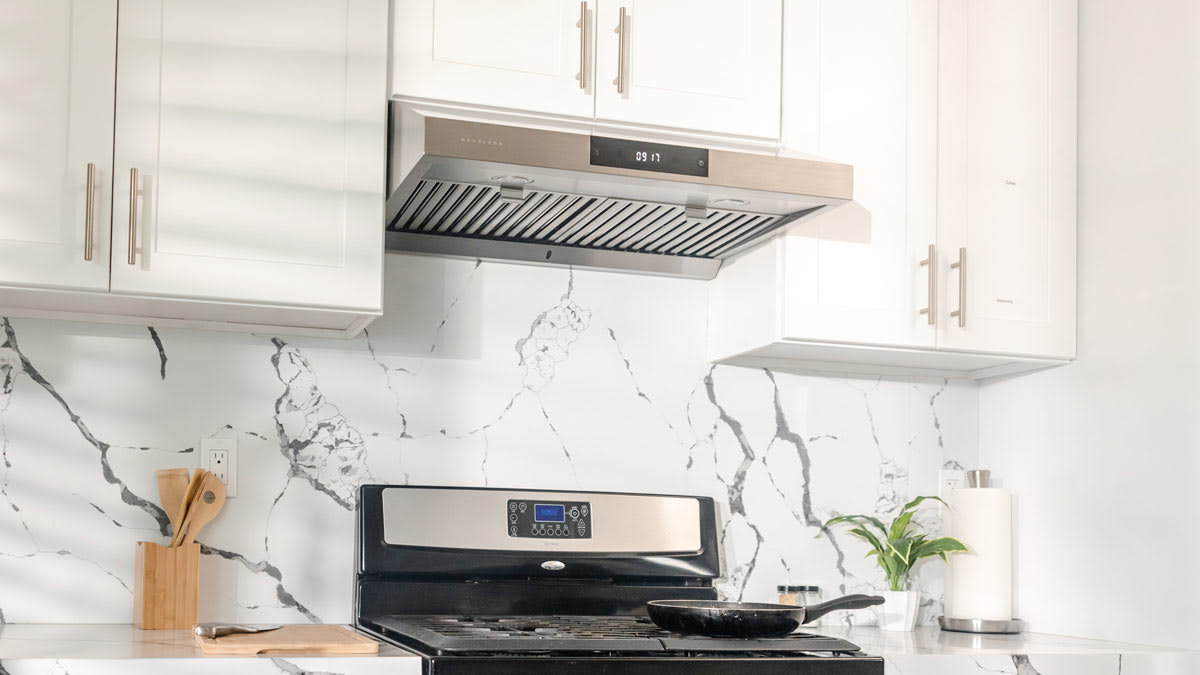
At Backyard Provider, we have carefully curated a selection of top-rated range hoods that balance power, quiet operation, and elegant design. One standout model in our catalog is the Awoco RH-IT06 — a super-quiet split insert range hood crafted from premium stainless steel. With 800 CFM of airflow, four fan speed settings, a remote 6-inch blower unit, aluminum mesh filters, and built-in LED lighting, this unit delivers serious performance while keeping noise impressively low. It is designed to fit seamlessly into custom cabinetry for a built-in look that complements any kitchen style.
Kitchen Ventilation 101 — What Range Hoods Actually Do
A range hood is essentially an exhaust system mounted directly above your cooktop or range. Its primary job is to capture and remove airborne contaminants produced during cooking — including smoke, steam, grease vapors, carbon monoxide traces, and volatile organic compounds released by heated cooking oils. Without proper ventilation, these pollutants accumulate inside your home, degrading indoor air quality, coating surfaces with a sticky grease film, and even triggering smoke alarms during high-heat cooking sessions.
Range hoods work by using one or more internal fans (blowers) to draw air through a capture area, pass it through filters that trap grease particles, and then either exhaust the air outside through ductwork or recirculate it back into the kitchen after charcoal filtration. Ducted systems are generally more effective because they physically remove contaminants from the home, while ductless (recirculating) models offer flexible installation where exterior venting is not practical — such as in apartments or condos.
Beyond air quality, a good range hood also protects your kitchen investment. Grease buildup on cabinetry, walls, and ceilings leads to discoloration, material degradation, and costly cleaning or refinishing down the road. The right range hood keeps your kitchen looking cleaner and lasting longer.
Ducted vs. Ductless Range Hoods
Ducted (Vented) Range Hoods
Ducted range hoods connect to exterior ductwork that channels contaminated air completely out of your home. This is the gold standard for kitchen ventilation because smoke, grease, moisture, and odors are permanently removed rather than filtered and pushed back into the room. If your kitchen layout and building structure allow for duct installation, a ducted system will almost always deliver superior performance. They tend to handle high-heat cooking techniques like searing, wok cooking, and deep frying more effectively because they can move large volumes of air without recirculation limitations.
Ductless (Recirculating) Range Hoods
Ductless range hoods pull air through mesh and charcoal filters, then recirculate the cleaned air back into your kitchen. While they do not remove moisture or heat the way ducted models do, they are a practical solution for apartments, condos, or kitchen remodels where running ductwork to an exterior wall or roof is impractical or too expensive. Modern charcoal filters have improved significantly, and many ductless hoods do a respectable job of reducing odors and grease particles. Just keep in mind that charcoal filters need periodic replacement — typically every three to six months depending on how frequently you cook.
Choosing the Right Range Hood for Your Home
Selecting the perfect range hood is not a one-size-fits-all decision. Your ideal match depends on your kitchen layout, cooking habits, aesthetic preferences, and budget. Here are the main styles to consider:
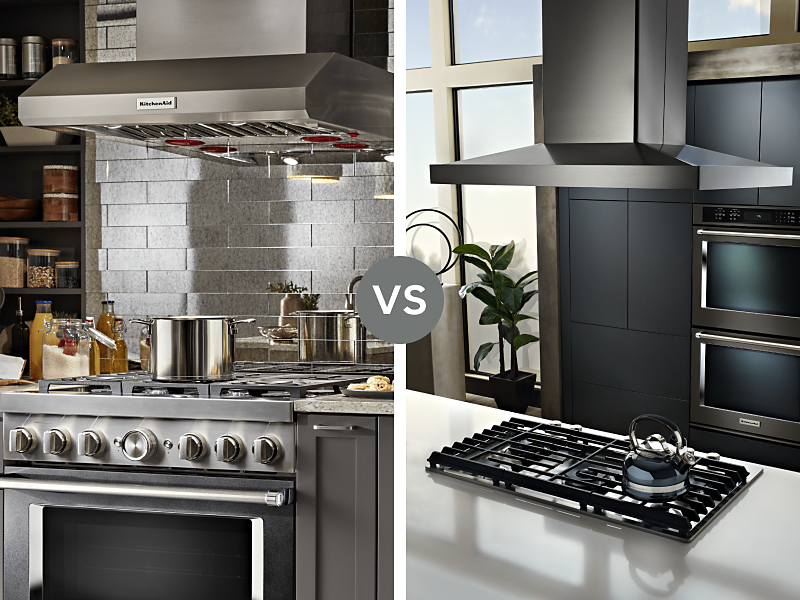
Under-Cabinet Hoods: These mount beneath your upper cabinets directly above the cooktop. They are one of the most popular and affordable options, ideal for standard kitchen layouts. Many models offer both ducted and ductless configurations, giving you flexibility regardless of your kitchen setup.
Wall-Mount (Chimney) Hoods: Designed to mount directly on the wall above your range where there are no overhead cabinets, these hoods feature a decorative chimney that conceals the ductwork. They serve as a visual focal point in the kitchen and are available in a wide range of finishes — from brushed stainless steel to matte black and copper.
Island Hoods: If your cooktop sits on a kitchen island, you need a hood that mounts to the ceiling rather than a wall. Island hoods are finished on all four sides for a polished look from every angle and require ceiling-mounted ductwork. They tend to need higher CFM ratings because they lack the natural air containment that walls and cabinets provide.
Insert (Built-In) Hoods: These are designed to be concealed inside custom cabinetry or a decorative hood surround. Only the bottom capture panel with filters and lighting is visible. Insert hoods like the Awoco RH-IT06 are perfect for homeowners who want powerful ventilation without the visual bulk — the blower unit can be placed remotely for ultra-quiet operation.
Downdraft Hoods: A downdraft ventilation system rises up from behind or beside the cooktop when activated, pulling smoke and fumes downward instead of upward. While they save overhead space and maintain sightlines in open kitchens, they are generally less effective than overhead options — especially for tall pots and high-heat cooking that produces a lot of rising steam.
Quiet Kitchen Range Hoods: Keeping the Noise Down
Noise is one of the most common complaints homeowners have about range hoods. Nobody wants to shout over a roaring fan just to have a conversation while dinner is being prepared. Range hood noise is measured in sones — a unit of perceived loudness. For reference, one sone is roughly equivalent to the hum of a quiet refrigerator, while six to eight sones can feel like standing next to a noisy dishwasher or vacuum cleaner.
Look for models that offer multiple fan speeds so you can run the hood on a lower, quieter setting for everyday cooking and ramp up to full power only when searing, frying, or dealing with heavy smoke. Split-blower designs — where the motor is installed inside the ductwork away from the hood itself — are among the quietest options available. The Awoco RH-IT06, for instance, uses a remote 6-inch blower unit, which significantly reduces the noise level at the cooking surface because the motor vibration and fan noise are physically distanced from the kitchen.
If noise sensitivity is a priority (and it should be for open-concept kitchens where the cooking area flows into dining and living spaces), prioritize hoods that specifically advertise low-sone ratings at their highest CFM output, and consider split or remote blower configurations for the quietest possible experience.

Understanding CFM: How Much Airflow Do You Actually Need?
CFM stands for Cubic Feet per Minute — it measures how much air the range hood can move in sixty seconds. The higher the CFM, the more air is being evacuated, and theoretically, the faster smoke and odors are cleared. But bigger is not always better. Oversized CFM in a small kitchen can create negative air pressure issues, pulling conditioned air out of your home and potentially causing backdrafting in gas appliances if makeup air is not addressed.
A general rule of thumb is to aim for at least 100 CFM per linear foot of range width for standard electric cooktops. For gas ranges, you want more — roughly 1 CFM per 100 BTU of burner output. So a 60,000 BTU gas range would ideally be paired with a hood rated at 600 CFM or higher. High-performance cooking with woks, commercial-style burners, or indoor grills may demand 900 CFM or more.
The Awoco RH-IT06 delivers 800 CFM, which places it well within the range needed for most residential gas and electric cooktops — offering ample suction for heavy cooking without being overkill for typical home use. Its four-speed fan allows you to dial in the perfect balance of airflow and noise depending on what you are cooking.
Energy-Saving Design Considerations & Top Features for Home Kitchens
Modern range hoods are designed with energy efficiency in mind. LED lighting has replaced older incandescent or halogen bulbs in nearly every current model, offering bright task lighting over the cooktop while consuming a fraction of the electricity. Look for hoods with energy-efficient DC motors that draw less power and often run quieter than traditional AC motors.
Other features that enhance both performance and convenience include delayed auto-shutoff timers that continue running the fan for several minutes after you finish cooking to clear residual odors, heat sensors that automatically activate or increase fan speed when they detect rising temperatures, and dishwasher-safe aluminum or stainless steel mesh filters that make maintenance effortless. Some premium models even include wireless remote controls or touch-panel interfaces for seamless operation.
800 CFM
Powerful Airflow
4 Speeds
Adjustable Control
LED
Energy-Efficient Lights
Split Blower
Ultra-Quiet Operation
Getting the Right Size: Range Hood Sizing Guidelines
Proper sizing is essential for effective ventilation. As a baseline, your range hood should be at least as wide as your cooktop — and ideally three to six inches wider on each side to maximize smoke and grease capture. For example, if you have a 30-inch range, a 36-inch hood will provide better coverage and more effective ventilation.
Mounting height is equally important. Most manufacturers recommend installing the hood between 24 and 30 inches above an electric cooktop, or 28 to 36 inches above a gas range. Mounting too high reduces capture efficiency; mounting too low can be a safety hazard and may interfere with tall pots and pans. Always consult your specific model's installation guide for exact recommended heights.
The depth of the range hood matters too — it should extend far enough to cover the front burners, which are typically used the most. The Awoco RH-IT06, with its 11-3/4-inch depth, is engineered for a snug custom-cabinet insert fit while still providing full coverage over standard residential cooktops.
Installation and Maintenance Tips from Experience
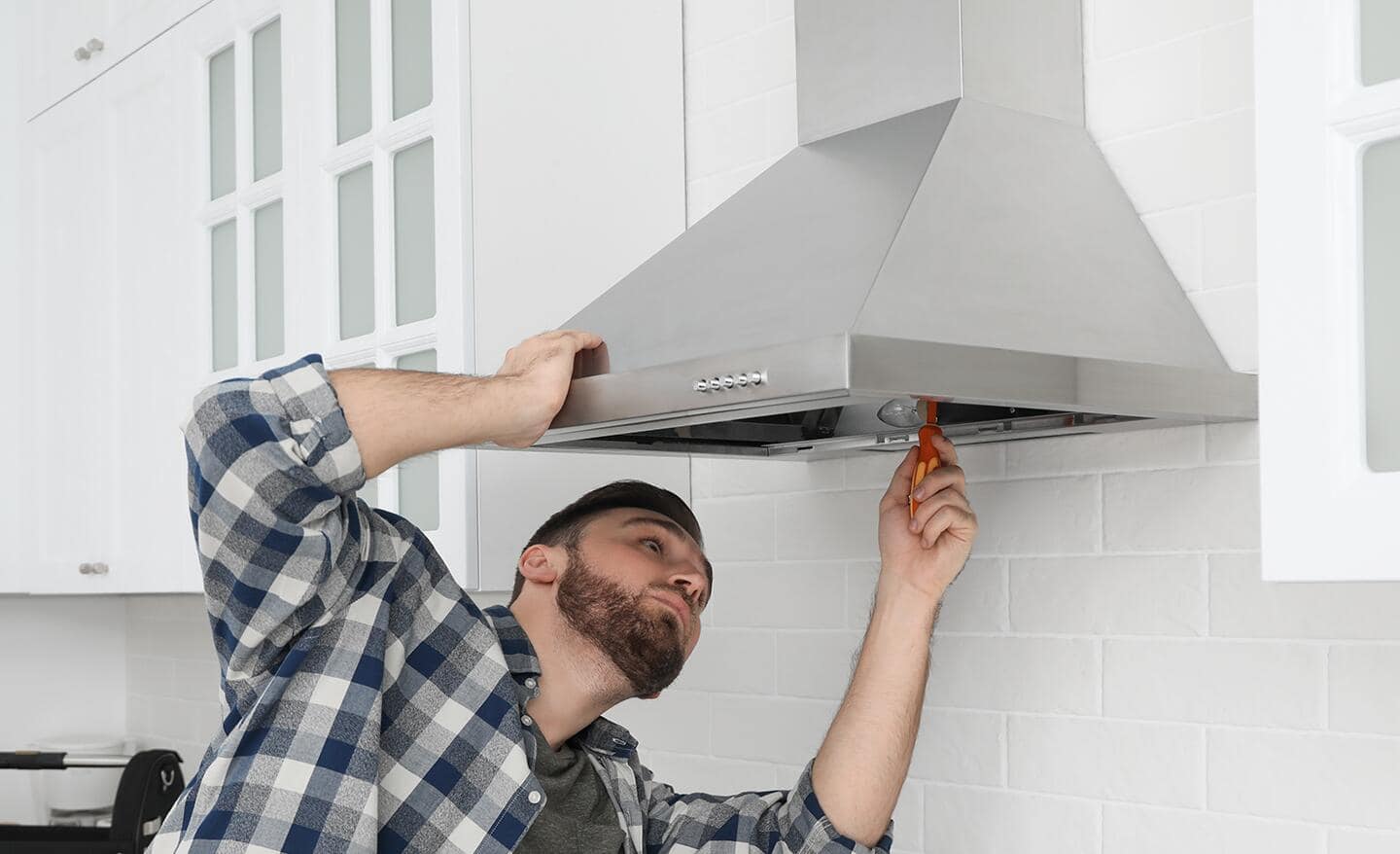
Installing a range hood is a manageable DIY project for handy homeowners, but there are a few things to keep in mind. If you are going the ducted route, shorter and straighter duct runs perform better — every bend and extra foot of duct length reduces airflow efficiency. Use rigid metal ductwork rather than flexible foil ducts, which can sag, accumulate grease, and restrict airflow over time. Make sure your exterior vent cap includes a backdraft damper to prevent outside air, insects, and moisture from entering when the hood is not running.
For maintenance, the single most important habit is regular filter cleaning. Aluminum mesh filters should be washed every two to four weeks if you cook frequently — most are dishwasher-safe, making this quick and painless. If your hood uses charcoal filters (ductless setup), replace them on the schedule recommended by the manufacturer, usually every three to six months. Wipe down the exterior and interior of the hood with a mild degreaser monthly to prevent buildup.
Check the fan and blower motor annually for any unusual noises or vibrations. A well-maintained range hood should last 10 to 15 years or more. Investing a few minutes in regular upkeep will keep it performing at peak efficiency throughout its life.
Find Your Ideal Range Hood at Backyard Provider
The right range hood transforms your kitchen from a smoky, greasy space into a clean and comfortable environment where cooking is a genuine joy. Whether you need whisper-quiet operation for an open-plan layout, raw CFM power for serious culinary work, or a sleek insert design that disappears into custom cabinetry — there is a range hood perfectly suited to your needs. Explore our curated selection and breathe easier in your kitchen.
Awoco RH-IT06 Range HoodThis article is provided for informational purposes. Product specifications and availability are subject to change. Always verify details on the product page before purchasing.