


 Damage
  Loss
Loss  Theft
Theft 


Best Range Hoods for Home Use in 2026: Quiet, Powerful & Stylish Kitchen Ventilation

Table of Contents
- ●Key Summary
- ●Quick Overview (TL;DR)
- ●Kitchen Ventilation 101: The Importance of Range Hoods
- ●Ducted vs. Ductless Range Hoods
- ●How to Choose the Right Range Hood for Your Home
- ●Quiet Range Hoods: Minimizing Kitchen Noise
- ●Top Manufacturer Spotlight for Home Kitchens
- ●Installation & Maintenance Tips from the Pros
- ●Conclusion: Your Path to a Fresher, Quieter Kitchen
Key Summary
Range hoods serve a critical purpose — they pull smoke, grease, odors, and excess moisture out of your kitchen air. For homes with gas stoves, proper ventilation is particularly vital for maintaining healthy indoor air quality.
Ducted vs. ductless options: Ducted (vented) hoods exhaust air outdoors and deliver superior performance and quieter operation. Ductless hoods use filters to recirculate air and work well where exterior venting is not an option. Convertible models give you the flexibility of both.
Key buying factors: Match the hood to your cooking habits and kitchen layout. Consider the hood's size (at minimum as wide as your cooktop), mounting type (wall, under-cabinet, island, or insert), CFM ventilation power, and noise level (sones) for comfortable everyday use.
Quiet operation matters: Today's premium hoods can run as low as 1–3 sones — roughly the volume of a whisper or the hum of a refrigerator. Features such as variable-speed fans, insulated housings, and remote blowers make a significant difference in keeping noise down.
Quality brands stand out: Leading manufacturers are known for premium stainless-steel construction, powerful performance, lifetime motor warranties, and a variety of mounting styles — from wall-mount chimney designs to flush ceiling-mounted units — that suit virtually any kitchen setup.
Installation & upkeep tips: Position your hood 24–36 inches above the cooktop for optimal smoke capture. Use the largest compatible duct with the shortest, straightest run. Clean or replace filters every 3–6 months, and routinely wipe down the fan and interior to ensure long-lasting, safe performance.
Quick Overview (TL;DR)
Investing in a quality range hood is one of the smartest moves you can make for a clean, odor-free kitchen. The top-performing range hoods for home use pair high CFM airflow with whisper-quiet operation, giving you a comfortable cooking environment every single day. Ducted models are the gold standard for removing smoke and humidity, though ductless options remain a practical choice when exterior venting is not feasible. The best brands deliver dependable, high-performance units crafted from premium materials — engineered and built in North America — that are widely recommended for both U.S. and Canadian households. In this comprehensive guide, we walk through ducted vs. ductless considerations, how to select the ideal size and power, noise-level ratings (sones), and real-world installation and maintenance advice, so you can find the perfect kitchen ventilation solution for your home.
Kitchen Ventilation 101: The Importance of Range Hoods
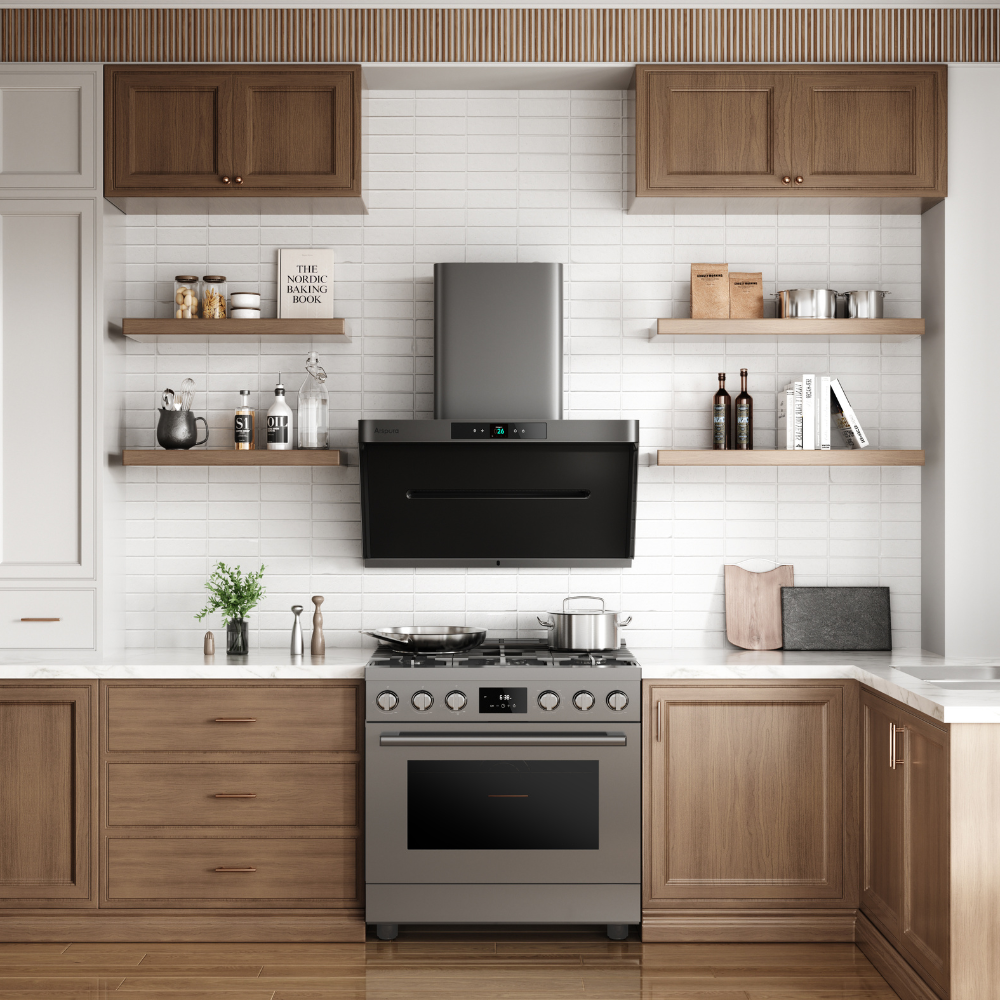
A range hood is far more than a decorative fixture hanging above your stove — it is an essential component of a healthy kitchen. Every time you fire up a burner, especially a gas range, your cooktop generates smoke, steam, grease particles, and combustion byproducts. Without proper ventilation, those contaminants linger in the air, settle on your cabinets and walls, and can compromise the indoor air quality your family breathes daily.
Health authorities have raised growing concerns about pollutants emitted by gas stoves, and several U.S. cities now require adequate ventilation — or even prohibit gas cooking — in the absence of a proper venting system. Running your range hood every time you cook is one of the simplest kitchen ventilation solutions available, ensuring harmful contaminants are pulled out of your home rather than inhaled by your household.
Beyond the health angle, range hoods keep your kitchen cleaner and more comfortable. By trapping grease in metal filters and drawing moisture out of the room, a hood stops sticky residue from coating your surfaces, reduces excess heat while cooking, and eliminates lingering food odors. Think of a quality range hood as your kitchen's chimney — quietly whisking away smoke and smells so you can cook in comfort. If you prepare meals at home regularly, it is genuinely a must-have appliance.
Ducted vs. Ductless Range Hoods
One of the first choices you will face when shopping for a range hood is whether to go with a ducted (vented) or ductless (recirculating) model. Each approach has distinct advantages, and the right pick depends on your kitchen layout and ventilation options.
Ducted Range Hoods
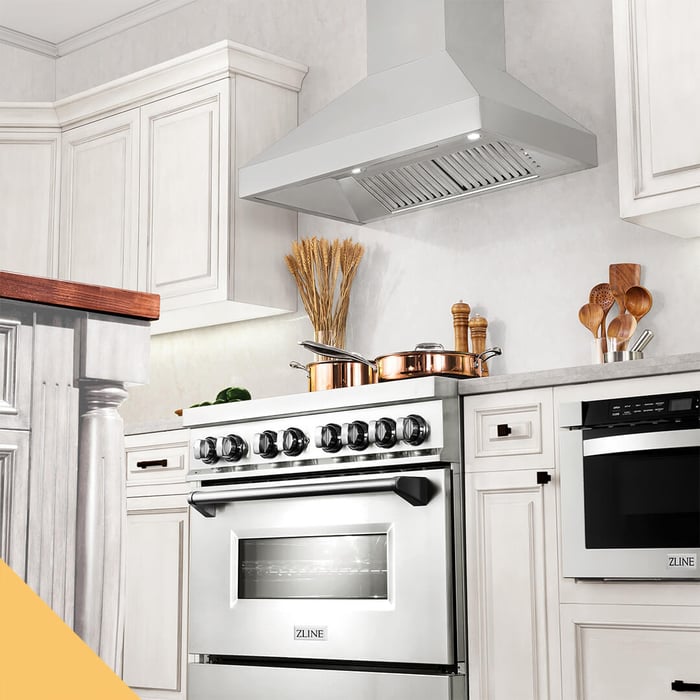
A ducted hood channels cooking air through a pipe or duct and expels it outdoors — essentially acting as a true kitchen chimney. Because the contaminated air leaves your home entirely, ducted hoods are extremely effective at removing pollutants, heat, and humidity. They also tend to run quieter, since the airflow moves freely without pushing against filter resistance. The trade-off is that you need ductwork routed through a wall or ceiling to the outside, which can make installation more complex and costly if your kitchen lacks an existing vent. Wall-mounted chimney hoods and under-cabinet models are the most common ducted styles. If you are renovating or already have a duct in place, a ducted hood is widely regarded as the gold standard for kitchen ventilation.
Ductless Range Hoods
A ductless (recirculating) hood does not vent air outdoors. Instead, it pulls cooking air through a combination of grease filters (metal mesh or baffle) and charcoal filters (to neutralize odors), then releases the cleaned air back into the kitchen. The major advantage is installation flexibility — you can place one anywhere without worrying about running ducts through walls or ceilings. That makes ductless hoods ideal for apartments, condos, kitchen islands, and retrofit situations. On the other hand, recirculating hoods are less effective at handling heavy smoke or humidity, since the air never truly leaves the room. You may notice the kitchen feeling warmer or slightly smoky during intense cooking. The filters also demand regular replacement — charcoal filters every 3–6 months, and grease filters cleaned frequently — to keep the unit performing well.
Which Should You Choose?
If you have the option, go ducted for the best performance. The ability to completely vent smoke and irritants outside is especially worthwhile for frequent cooks and high-heat cooking. Ducted hoods also tend to require less maintenance — just the occasional filter cleaning and keeping the duct clear. However, if exterior venting is impossible — for example, in a rental or high-rise condo — a ductless hood is significantly better than no ventilation at all. Simply be diligent about replacing filters on schedule.
Worth noting: many hoods are convertible, meaning they can operate as either ducted or ductless with an optional recirculation kit. This gives you flexibility if you plan to renovate later. Wall-mounted chimneys and under-cabinet hoods are typically ducted, while island hoods and ceiling-mounted flush hoods may be ductless if routing a vent is difficult. Choose the type that fits your kitchen — either way, your air quality will improve — but ducted systems offer the stronger long-term solution.
How to Choose the Right Range Hood for Your Home
No two kitchens are identical, and "best" is entirely relative to your specific needs. Here are the most important factors to weigh when selecting the best range hood for home use in your kitchen:
Size & Coverage
Your hood should be at least as wide as your cooking surface — matching or slightly exceeding your stove's width is ideal. Common residential sizes include 30-inch (standard range), 36-inch, 42-inch, and 48-inch (pro-style). Larger cooktops or multiple burners call for a wider hood to capture smoke from every angle. Also pay attention to mounting height: the general recommendation is 24 to 36 inches above the stovetop. Too low and you risk bumping your head (and concentrated heat can damage the hood); too high and smoke may escape capture. Many hoods feature adjustable chimney extensions to accommodate varying ceiling heights, and some inserts can be installed at custom heights inside cabinetry. Always follow the manufacturer's clearance guidelines for safe, effective installation.
Ventilation Power (CFM)
A range hood's strength is measured in CFM (cubic feet per minute) — the volume of air it can move each minute. Higher CFM translates to greater smoke-clearing ability, but also potentially more noise and energy use. A widely used guideline for gas ranges is 100 CFM for every 10,000 BTUs of burner output. So a 45,000-BTU stove would call for roughly 450 CFM or more. For electric ranges, you can estimate by cooktop width: 30-inch ranges pair nicely with 250–350 CFM, while a 36-inch professional gas range may need 600+ CFM, especially for heavy searing or wok cooking. Keep in mind that your ductwork affects real-world performance — long or restrictive runs reduce effective airflow. When uncertain, a slightly higher CFM is a smart bet because most hoods offer multiple speed settings, letting you run at a lower, quieter level for everyday cooking and ramp up only when needed. Look for HVI-certified ratings, which verify performance under real conditions. For typical home kitchens, under 300 CFM suits light cooking, 300–500 CFM covers average family use, and 600+ CFM handles heavy or high-heat cooking. High-end outdoor grills or wok stations may warrant 1000+ CFM hoods.
Mounting Style & Design
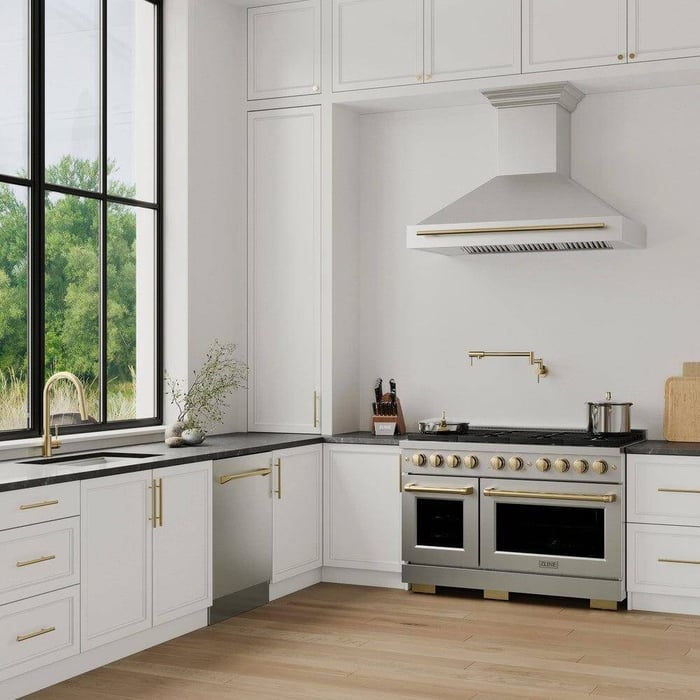
Range hoods come in several mounting configurations: wall-mounted chimneys, under-cabinet hoods, island hoods, and built-in inserts or liners designed to sit inside custom cabinetry. Wall-mount and island hoods tend to be decorative statement pieces — visible stainless steel or custom enclosures that double as focal points. Under-cabinet and insert models are more discreet, blending seamlessly into existing cabinetry. Wall-mount and under-cabinet units typically vent through the wall behind or up through the soffit, while island hoods hang from the ceiling and generally require higher CFM (smoke drifts more freely in open air). Ceiling-mounted flush hoods — cassette or panel styles that sit flush in the ceiling — are an increasingly popular choice for sleek, minimalist kitchens. Prioritize function over form: a beautiful hood that is too small or too weak for your cooking habits will disappoint in the long run. That said, you can absolutely have both — a decorative chimney in stainless steel, copper, or custom wood can elevate your entire kitchen design.
Noise Level
A roaring fan can discourage you from using your hood at all, so noise level is a practical concern. Hood sound is measured in sones. For context, 1 sone is roughly equivalent to a quiet refrigerator hum, while a normal conversation registers around 4–5 sones. Many range hoods top out at 6–8 sones on their highest setting — noticeable, but comparable to a running microwave. The quietest kitchen range hoods on the market achieve 1–3 sones on low and medium speeds, making them comfortable enough for conversation. When comparing models, check the sone specification at both maximum and lower speeds. If silence is a top priority, look for hoods with special baffle designs, dual blowers that split the airflow, or a remote blower option that moves the motor to the attic or exterior wall, dramatically cutting in-kitchen noise.
Features & Convenience
Modern range hoods come loaded with useful extras. Built-in LED lighting illuminates your cooking surface, multiple fan speeds (typically 3–6 on premium models) let you fine-tune airflow, and some units feature heat sensors that automatically activate the fan when temperatures rise. Timers and auto shut-off delays allow the hood to continue clearing air for a set period after you finish cooking. Filter maintenance indicators remind you when it is time to clean. Controls range from simple push buttons to touch panels and remote controls. Above all, make sure the filters are easily removable and cleanable — most quality hoods use stainless steel baffle filters that are dishwasher-safe. Finally, check the warranty: a longer warranty (especially on the motor) is a solid indicator of manufacturer confidence. Top brands offer lifetime motor warranties, which is a significant reassurance.
By weighing all of these factors — size, power, venting type, noise, and features — you can narrow down the field quickly. As a general rule: a casual cook with an electric range may do well with an affordable 30-inch ductless hood around 200–300 CFM. A dedicated home chef with a powerful gas stove will want a larger, ducted hood rated at 600+ CFM, good lighting, and a quiet design. Always match the hood to your cooking style.
And do not overlook aesthetics — you will see this appliance every day. The good news is there are countless attractive options available, from minimalist modern designs to striking commercial-style stainless canopies. You absolutely can find a hood that delivers both form and function.
Quiet Range Hoods: Minimizing Kitchen Noise
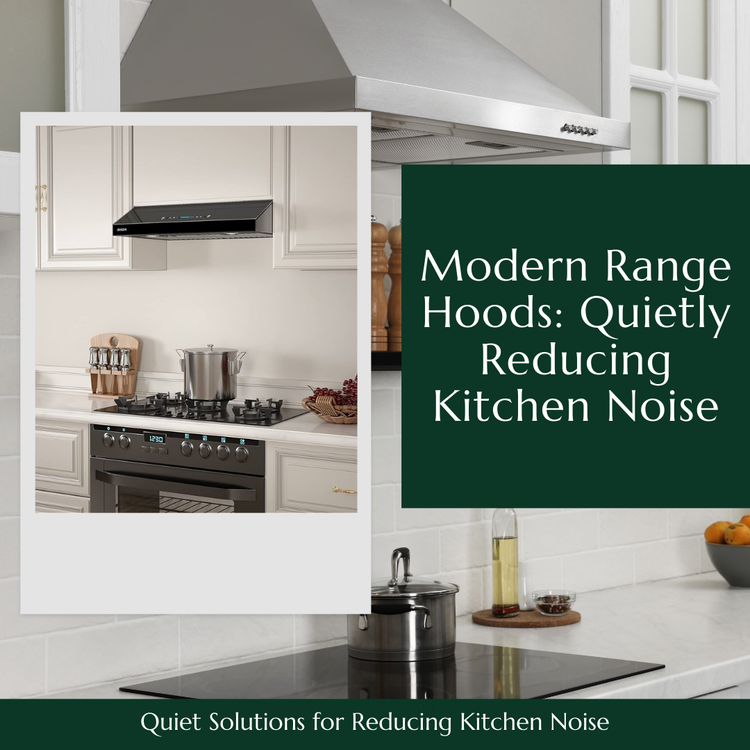
A quiet kitchen range hood is one of the most common requests from homeowners — nobody wants a ventilation fan so loud it drowns out conversation or turns cooking into a stressful chore. So how do you make sure your range hood keeps things peaceful? Here are proven strategies:
1. Pay Attention to Sone Ratings
Sones are the standard measure of hood noise. Many manufacturers publish sone ratings at different speed settings. A high-quality hood might register around 1–2 sones on low and roughly 5–6 sones at full blast. For reference, 2–3 sones is about as quiet as a running refrigerator or calm conversation, while 6–7 sones is closer to a dishwasher or shower. If you are especially noise-sensitive, seek out models labeled "ultra quiet" that specify low sone levels. Some premium wall-mount hoods achieve as little as 1.0 sone on their lowest setting — impressively hushed for a unit with a powerful blower. Many under-cabinet models similarly operate at 1–2 sones during normal use. Remember, you will typically use low or medium speed for everyday cooking, so that is where quiet really counts.
2. Consider a Remote or External Blower
For the ultimate in quiet operation, look into hoods that support an external blower. This means the fan motor is installed in the attic, on an exterior wall, or in-line within the duct — rather than directly above your stove. By relocating the motor, in-kitchen noise drops significantly. You will mostly hear the gentle rush of air instead of the motor itself. Remote blowers are a popular choice in professional-grade installations, and several leading brands offer models specifically designed with remote blower configurations for homeowners who prioritize a peaceful cooking environment. The trade-off is a slightly more complex installation and added cost, but for a truly quiet range hood experience, it can be well worth it.
3. Use Lower Speeds Whenever Possible
A practical everyday tip: you do not always need to blast your hood at the highest setting. Most newer hoods have 3–4 speed options. Reserve the top speed for burnt food or heavy smoke situations, and use medium or low for regular simmering and sautéing. On low, many quality hoods are barely audible. In fact, it is often smarter to buy a higher-CFM hood and run it at a lower setting than to push a smaller hood to its max capacity all the time. A 900-CFM hood at low speed may move 300–400 CFM whisper-quietly, while a 300-CFM hood maxed out could be noticeably louder and still not clear smoke as effectively. Oversizing slightly can genuinely contribute to quieter operation in practice.
4. Choose Quality Brands with Quiet Technology
Certain premium manufacturers engineer their products specifically for minimal noise. Features like dual inlet blowers (which move the same volume of air at lower speeds), enhanced sound insulation, dampers, and smoothly designed internal airflow pathways all help minimize turbulence — which is a primary source of fan noise. Top-tier brands use all-metal, well-balanced blower wheels and solid construction to reduce vibration, plus the option of larger ducts (8 inches) to cut air resistance. Real customer and installer feedback consistently gives these hoods high marks for power, excellent lighting, and low noise. When reading reviews, pay special attention to comments about noise satisfaction.
5. Install Properly
Installation quality directly impacts noise. Mount the hood securely with no rattling parts, and use any included dampening pads or brackets as directed. Use the recommended duct size — if a hood calls for an 8-inch duct, using a 6-inch duct will choke airflow and increase noise. Smooth metal ducting is quieter than flexible duct because it creates less turbulence. And keep the duct run as straight as possible; every turn or obstruction adds both airflow loss and noise. Following best practices for ductwork (short, straight, proper diameter) ensures your hood runs as quietly as it was engineered to be.
The bottom line: quiet operation is absolutely achievable. By choosing a well-designed hood (or adding an external blower) and installing it correctly, you can enjoy the sizzle of your pan far more than the sound of your fan. Many homeowners are genuinely surprised at how silent a high-quality range hood can be on low settings — you might double-check that it is even running. And when you do crank it up to higher speeds, the best hoods keep the noise to a comfortable level while clearing your kitchen in seconds.
Top Manufacturer Spotlight for Home Kitchens
When discussing the best range hoods, it is worth shining a light on what top-tier manufacturers bring to the table. The most respected brands in the kitchen ventilation space have built loyal followings among homeowners and professionals for good reason.
Leading manufacturers typically share a few key traits. They use high-grade stainless steel (18 or 19 gauge) for durability, pair it with all-metal enclosed blower motors for long-lasting reliability, and back their products with lifetime motor warranties along with generous parts coverage. While many brands offer only a one-year warranty, these top companies clearly stand behind the quality of their craftsmanship — and customer reviews consistently praise the fit, finish, and premium feel of these hoods.
Performance-wise, the best range hoods are designed to deliver high CFM airflow that can handle serious cooking. Powerful insert and under-cabinet models can push 600 to 1200+ CFM depending on size, clearing heavy smoke in moments. Even more compact 30-inch under-cabinet models from top brands provide a solid 600 CFM with remarkably quiet operation — as low as 1.0 sone on the lowest setting. In everyday use, that means you can clear a smoke alarm situation quickly without ever having to endure a roaring fan for routine cooking.
What truly sets premium brands apart is how quiet their hoods run despite that power. Many models feature dual blower or larger blower designs that allow high airflow at lower speeds. Units frequently earn praise for their "quiet yet powerful motor." Wall-mount chimney hoods from leading manufacturers, for instance, might run between 1.0 and 4.5 sones — an excellent noise profile for a hood capable of 750 CFM.
Top-tier manufacturers also offer a wide range of styles and configurations to fit any kitchen. Their lineups include traditional wall-mounted chimney hoods, sleek under-cabinet models, island hoods, flush ceiling-mounted units, and built-in inserts for custom cabinetry. Whether you want a dramatic statement piece above a range or a hidden insert behind a custom mantel, premium brands have you covered — including outdoor BBQ hoods with extra-deep canopies and ultra-high CFM for patio kitchens. Every product is designed with a blend of function and modern aesthetics: clean lines, bright LED lighting, easy-to-use controls, and professional-style baffle filters.
Standout Product Types to Know
Ceiling-Mount Flush Hoods: These sit up in the ceiling, making them perfect for open-concept kitchens or island installations where you want zero visual obstruction. A sleek panel look that installs between joists without framing modifications — effective ventilation that virtually "disappears" into the ceiling. An excellent option for minimalist design lovers.
Built-In Inserts: A go-to for custom cabinetry builds. Known for high-quality mechanical switches, quiet dual blowers, and easy-to-clean stainless steel baffle filters. These inserts protect your cabinets from grease and moisture damage while remaining completely hidden from view — a favorite for custom range hood enclosures.
Under-Cabinet Hoods: Designed for kitchens with standard upper cabinets, these pro-grade hoods tuck neatly beneath your cabinetry for a seamless look. Despite their compact footprint, they pack powerful motors with sleek front control panels — ideal for homeowners who want strong performance without a large visible hood.
Wall-Mount Chimney Hoods: The showpiece of the lineup. Deep canopies cover the entire cooking area for maximum smoke capture, while a tapered design combines striking aesthetics with serious function. Expect strong blower options (600–750+ CFM), dishwasher-safe baffle filters, a grease tray, bright LED lighting, and simple controls. These are centerpiece hoods that will satisfy even a serious home chef.
The best manufacturers also prioritize customer service and satisfaction, maintaining knowledgeable support teams and earning consistently high review ratings. In-home installers frequently note exceptional performance compared to competing brands. For U.S. and Canadian homeowners who want a high-performance, durable, and quiet range hood, these top-tier brands marry commercial-grade specifications with homeowner-friendly features — like plug-in power cords, easy-install designs, and stylish finishes — all at a reasonable price for the quality you receive.

Installation & Maintenance Tips from the Pros
Picking a great range hood is only step one — installing and maintaining it properly is how you get the best results. Here are field-tested practical tips to make sure your kitchen ventilation performs at its peak:
Proper Installation Height & Position
Mount the hood at the manufacturer's recommended height above the cooktop — typically 24–36 inches for full-size hoods. Too high and capture efficiency drops; too low and you risk heat damage or discomfort. If you are replacing a microwave vent or older hood, double-check the height and consider adjusting cabinetry to accommodate the new design. Center the hood over your cooking surface precisely — even a few inches of misalignment can reduce performance and spoil the visual. For island installations, make sure the hood sits directly above the cooktop and consider going a few inches wider, since there is no wall to help funnel air.
Use the Right Ductwork
For ducted installations, proper ducting is critical. Always use the duct size the hood calls for (or larger) — never smaller. Downsizing from an 8-inch to a 6-inch outlet will choke airflow and generate more noise. Use smooth galvanized steel or stainless steel ducts rather than flexible foil or plastic — smooth ducts deliver better airflow and are fire-safe. Keep the run as short and straight as possible; long runs and multiple elbows sharply diminish performance. When bends are unavoidable, use gradual 45-degree elbows (two 45° turns are gentler than a single 90°). Always vent to the outdoors — never terminate a hood duct in an attic or crawlspace, as that invites moisture and grease problems. Use a proper exterior vent cap with a damper to block back-drafts, seal all duct joints with HVAC foil tape, and insulate the duct if it runs through unheated spaces. A well-installed duct ensures you get the full rated CFM from your hood and keeps it running quietly and efficiently.
Electrical Considerations
Most residential range hoods either plug into a standard 120V outlet or are hardwired. Many top-brand hoods come with a convenient standard 3-prong plug. If your model plugs in, you will need an accessible outlet in the cabinet above or behind the chimney. If it is hardwired, shut off power and follow local electrical codes — you may want to hire an electrician. Use the correctly sized circuit as specified (most hoods draw under 5 amps, but high-CFM dual blower models or units with heating lamps may require a dedicated 15–20A circuit). Always connect the ground wire for safety.
Routine Filter & Surface Cleaning
To keep your hood running well, clean the filters regularly. Metal mesh or baffle grease filters trap splatters and particles over time. Remove and clean them every couple of months — or monthly if you fry or sauté frequently. Wash metal filters by hand with hot soapy water or put them in the dishwasher (most stainless baffle filters are dishwasher-safe; use a gentle cycle). Clean filters not only maintain airflow but reduce fire risk from grease buildup. If your hood has charcoal filters (for ductless use), mark your calendar to replace them every 3–6 months, as saturated charcoal no longer absorbs odors. For the hood itself, wipe down the underside and interior every few months with a degreaser or warm soapy water (power off first). Clean any grease cups or trays, and use an appropriate exterior cleaner — stainless steel cleaner for stainless hoods, glass cleaner for glass components. Keeping everything clean not only looks better but prevents grease from dripping or smoking on the next use.
Ensure Sufficient Makeup Air (for Powerful Hoods)
This is an often-overlooked but important tip for anyone installing a very high-CFM hood (generally 600 CFM and above). Your home needs to replace the large volume of air the hood expels — this replacement air is called makeup air. In a tightly sealed house, a powerful hood can create slight negative pressure, causing back-drafting of chimneys or pulling outside air in through undesirable openings. Some building codes require a makeup air system for hoods over approximately 400 CFM. Practically speaking, you can crack a nearby window while running the hood at high power, or have an HVAC professional install a makeup air vent that opens automatically when the hood runs. This is mostly a concern for newer, well-sealed homes or situations where you also run a furnace or fireplace simultaneously. For most average homes running a 300–500 CFM hood, it is not typically an issue, but once you get into the 900+ CFM range, it is wise to plan for it.
Final Checks After Installation
Once your hood is installed, test all speeds and lights. Make sure the damper (flap in the duct or on the exterior cap) opens freely and is not blocked. Go outside and feel for air flowing from the vent cap to confirm the system is working. Listen for any vibrations — if the hood rattles, check that it is solidly screwed into studs or blocking, and use any rubber washers provided to isolate vibration. A properly installed range hood should run smoothly with nothing more than a gentle whoosh of air.
By following these installation and maintenance best practices, you will extend the life of your range hood and keep it performing at peak efficiency. A little extra care during the installation — correct ducting, secure mounting, proper electrical — pays off with a quieter, more effective kitchen fan for years to come. And like any appliance, a bit of regular cleaning prevents problems down the road. A well-maintained quality range hood can easily serve you for 10–15+ years and still look and work like new.

Conclusion: Your Path to a Fresher, Quieter Kitchen
Upgrading or installing a range hood is one of the most worthwhile investments you can make for your kitchen's comfort and your home's indoor air quality. The best range hoods for home use deliver a balance of strong ventilation performance, a design that fits your space, and quiet operation that you will appreciate every single day. By understanding the differences between ducted and ductless systems, selecting the right size and CFM for your needs, and prioritizing features that reduce noise, you can confidently choose a model that keeps your kitchen air fresh and clean.
For homeowners across the U.S. and Canada, there are many outstanding options on the market. The best brands combine exceptional build quality, local North American assembly, the power to handle heavy cooking, and the quietness to maintain a peaceful home — all at a fair price for the quality you receive. Of course, the right hood for you also depends on your kitchen layout and personal style preferences, and the good news is that reputable manufacturers offer a wide variety — from slim under-cabinet units to dramatic island hoods — so you never have to sacrifice function for form.
We hope this guide has given you the knowledge and confidence to find the ideal range hood for your home. Whether you are outfitting a brand-new kitchen or replacing an outdated unit, investing in good ventilation pays dividends in cleaner air, a more comfortable cooking environment, and a kitchen that stays fresher for longer. Happy cooking — and happy breathing!
Disclaimer: This article is intended for informational purposes only. Always follow the manufacturer's installation instructions, local building codes, and consult a qualified professional for electrical or HVAC work. Product specifications, availability, and pricing are subject to change.