


 Damage
  Loss
Loss  Theft
Theft 


How Many CFMs Do I Need for a 36” Range Hood?
Getting the right range hood for your kitchen is not just about looks — it is about performance. If you have ever wondered how many CFMs your 36-inch range hood actually needs, you are not alone. Choosing the correct airflow capacity ensures grease, smoke, and cooking odors are properly removed, keeping your kitchen air fresh and your home comfortable. In this guide, we will walk you through everything you need to know about range hood CFMs so you can make a confident purchase.
What Does "Range Hood CFM" Mean?
What Does CFM Stand For?
C
Cubic
F
Feet
M
per Minute
CFM stands for Cubic Feet per Minute, and it measures the volume of air a range hood can move in sixty seconds. Think of it as the breathing power of your ventilation system — the higher the CFM, the more air your hood can cycle out. For a standard home kitchen with a 36-inch cooktop, this number is critical because an undersized hood simply will not keep up with heavy cooking, while an oversized one may waste energy and create excessive noise.
Most range hood manufacturers list CFM ratings prominently in their specs. However, the advertised number only tells part of the story. Real-world performance depends on several factors we will cover below, including your stove type, cooking habits, ductwork, and mounting height.
Does the Type of Range Hood Matter?
Absolutely. The style of range hood you choose has a direct impact on how effectively it ventilates your kitchen. Different mounting types create different airflow dynamics, so your CFM needs can shift depending on which design you go with.
Wall-Mount and Under-Cabinet Range Hoods
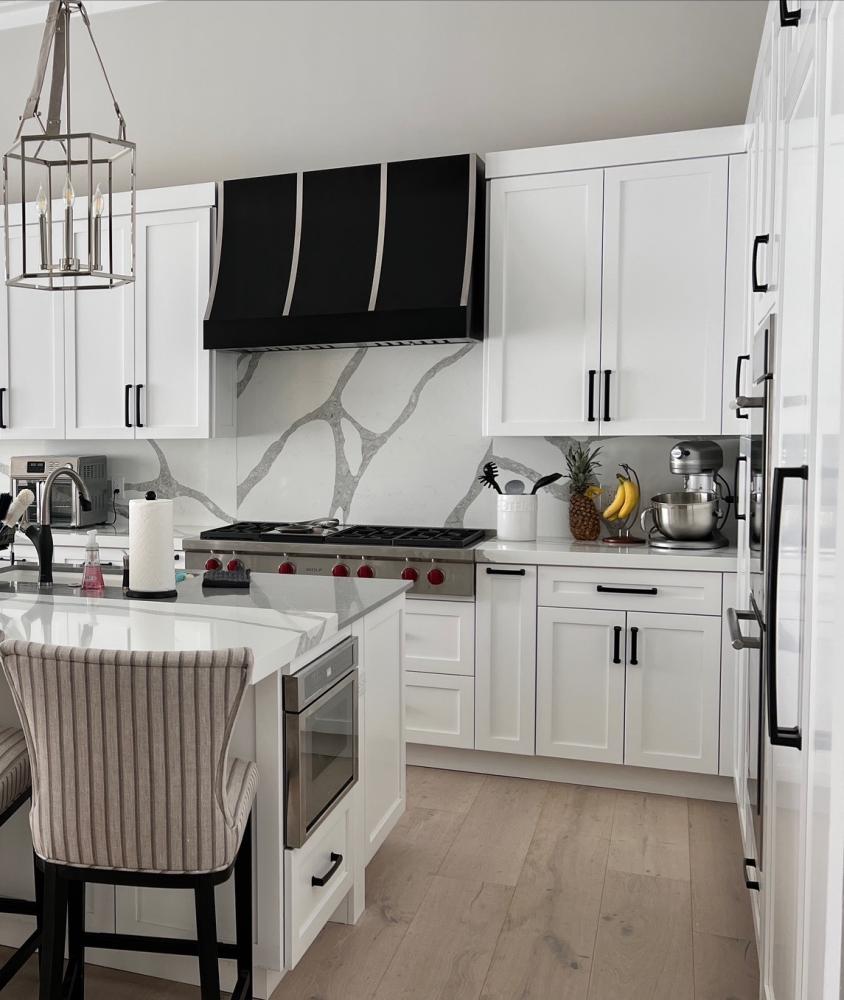
Wall-mount and under-cabinet models are the most popular styles found in residential kitchens. They sit directly above your cooktop, either anchored to the wall or tucked beneath your cabinetry. Because they are positioned close to the cooking surface, they generally capture smoke and grease more efficiently.
These hoods benefit from having a back wall that acts as a natural barrier, funneling rising fumes directly into the filtration area. As a result, you can often get away with a slightly lower CFM rating compared to open-concept installations. For a 36-inch gas range, a wall-mount hood in the 600 to 900 CFM range is typically a solid choice, while electric stove users may find 350 to 600 CFM sufficient.
They come in a wide variety of finishes and shapes, from sleek stainless steel canopies to discreet under-cabinet inserts that blend seamlessly into your kitchen layout. Regardless of style, the key is making sure the hood covers the full width of your cooktop for maximum capture efficiency.
Island Range Hoods

Island hoods hang from the ceiling above a freestanding cooktop, which means they are exposed on all four sides. Without a back wall to contain airflow, cooking fumes can drift away in every direction before the hood gets a chance to capture them.
Because of this open exposure, island range hoods generally require a higher CFM rating than their wall-mounted counterparts. Plan on adding roughly 150 extra CFM to whatever you would normally need for a wall-mount setup. So if a wall-mount model at 700 CFM would suffice, an island version should be closer to 850 CFM or more to deliver the same level of performance.
What Other Factors Should I Consider for the Right CFMs?
The effectiveness of any range hood depends on its total airflow capacity, measured in CFM. But CFM alone does not tell the whole story. Kitchen size, stove type, ducting quality, cooking style, and mounting height all play important roles in determining whether your hood will perform as expected.
Kitchen Size
Larger kitchens have more air volume that needs to be cycled, which means a small range hood may struggle to keep up. A good rule of thumb is that your range hood should be able to exchange the air in your kitchen at least fifteen times per hour. To estimate the volume, multiply your kitchen's length by its width by the ceiling height, then multiply by fifteen and divide by sixty to arrive at a minimum CFM figure.
For example, if your kitchen is 12 feet long, 10 feet wide, and has 9-foot ceilings, the total volume is 1,080 cubic feet. Multiplied by fifteen and divided by sixty, you get 270 CFM as a bare minimum. Open-plan kitchens that flow into dining or living areas may need even more since the effective air volume is significantly larger.
Cooking Habits
Your cooking style is one of the biggest variables in choosing the right CFM. Light cooking like simmering sauces or boiling water produces minimal grease and smoke, so lower CFMs will do. But if you regularly sear steaks, stir-fry at high heat, or deep-fry foods, you will produce far more airborne grease and smoke particles. Heavy-duty cooking demands at least 600 to 900 CFM to keep the air clean and prevent grease buildup on your kitchen surfaces.
Quality of Ducting
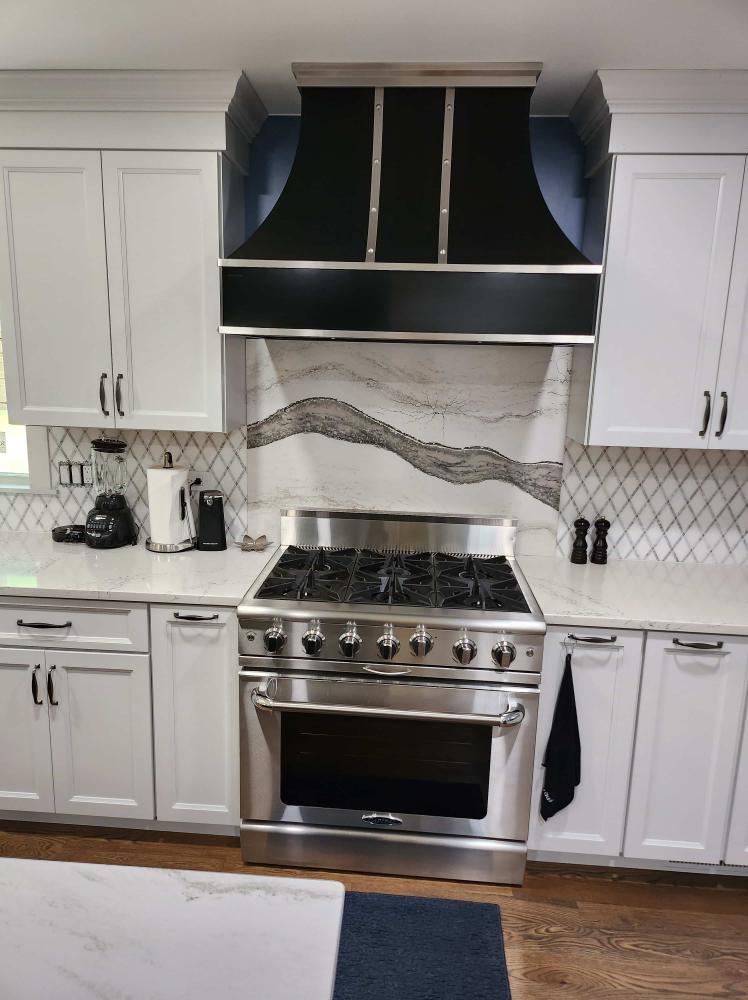
★ The shape, size, turns, and total length of your ductwork directly influence real-world performance. Even a high-CFM range hood will underperform if the ducting is undersized, overly long, or riddled with sharp bends.
Ductwork is one of the most overlooked aspects of range hood performance. Even if your hood boasts an impressive CFM number on paper, poor ductwork can cut that figure dramatically. Every 90-degree turn, extra length of pipe, or reduction in duct diameter creates resistance that reduces effective airflow.
Smooth, rigid metal ducts perform better than flexible ones, and shorter, straighter runs always outperform long, winding paths. If your ductwork includes multiple elbows or extends more than about eight to ten feet, consider bumping up your CFM requirements by 100 to 150 CFM to compensate for the lost efficiency.
Standard duct sizes for residential range hoods are typically six inches or eight inches in diameter. Larger hoods with higher CFMs generally need wider ducting. Always match your duct size to the manufacturer's recommendation to avoid creating a bottleneck that limits performance.
Length of Vent Pipe
The total distance between your range hood and the exterior exhaust point matters more than most homeowners realize. Longer vent pipes create greater resistance, which forces the blower to work harder and reduces the actual CFM output at the cooking surface. As a general guideline, keep your vent run as short and direct as possible. If your installation requires a run longer than ten feet with turns, factor in additional CFM capacity so your hood can still deliver adequate performance at the point of capture.
Height of Mounting
Mounting height directly affects how well your range hood captures smoke and steam. Most manufacturers recommend installing the hood between 24 and 36 inches above the cooktop surface. Gas stoves usually require a bit more clearance — around 30 to 36 inches — while electric stoves can sit closer at 24 to 30 inches.
Mounting the hood too high weakens its ability to catch rising fumes before they disperse into the room. If you need to install your hood higher than the recommended range for aesthetic or clearance reasons, increase your target CFM by roughly 100 for every additional six inches of height to maintain effective ventilation.
How Many CFMs Are Needed for My 36-Inch Range Hood?
Electric Stove
350–600 CFM
Suitable for light to moderate cooking
Gas Stove
600–900 CFM
Recommended for higher heat output
Heavy / Pro Cooking
900+ CFM
For serious searing, frying, and wok cooking
What Determines How Many CFMs Are Needed?
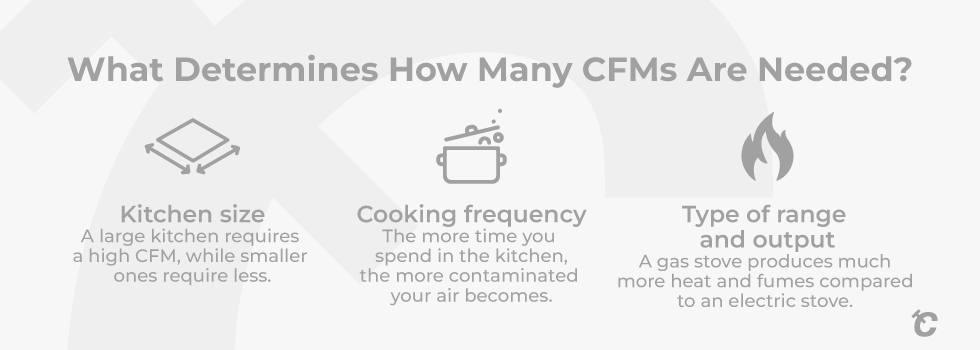
The ideal CFM for your 36-inch range hood depends on a combination of everything we have discussed — your stove type, kitchen size, cooking habits, ducting setup, and mounting height. There is no single magic number because every kitchen is different.
Electric Stove
Electric cooktops produce less heat per burner compared to gas, which means less thermal updraft and fewer airborne particles. For a standard four-burner electric range, the general recommendation is roughly 100 CFM per ten inches of cooktop width. That puts a 36-inch electric stove in the 350 to 400 CFM range as a baseline. If you cook frequently at high temperatures or have an open kitchen layout, aim closer to 500 or 600 CFM for a comfortable margin.
Gas Stove
Gas burners produce significantly more heat and also release combustion byproducts that electric stoves do not. The standard industry guideline is one CFM for every 100 BTUs your stove produces. A typical 36-inch gas range can put out anywhere from 40,000 to 60,000 BTUs across all burners, which translates to a need of 400 to 600 CFM at a minimum. High-performance gas ranges with burners exceeding 15,000 BTUs each may push your total requirements to 800 CFM or more.
It is always better to slightly oversize your CFM for a gas stove rather than undersize it, since the combustion gases need to be properly exhausted for both air quality and safety reasons.
Ready to Upgrade Your Kitchen Ventilation?
Shop Our Top-Rated Range Hood
Awoco RH-IT06 800CFM Range HoodConclusion
Choosing the right CFM for your 36-inch range hood comes down to understanding your specific kitchen setup and cooking needs. Electric stove owners can generally work comfortably in the 350 to 600 CFM range, while gas stove users should target 600 to 900 CFM or higher depending on BTU output. Factor in your kitchen size, ducting quality, mounting height, and cooking intensity to fine-tune the number.
Remember that it is always better to have a bit more CFM capacity than you think you need. A slightly oversized hood running on a lower speed will be quieter and more effective than an undersized one straining at maximum power. Investing in the right ventilation setup protects your kitchen, your air quality, and ultimately your comfort while cooking.
We hope this guide has helped you figure out the ideal CFM for your range hood. If you are ready to shop, check out the high-performance options available at Backyard Provider and find the perfect match for your kitchen.