


 Damage
  Loss
Loss  Theft
Theft 


Your Complete Guide to Quiet Range Hoods & Kitchen Ventilation
At the core of every well-designed kitchen sits a reliable range hood — a crucial appliance that safeguards your indoor air quality by whisking away smoke, steam, grease, and odors. Yet for many homeowners, the constant hum or roar of a range hood can turn a relaxing evening of cooking into an unpleasant experience. Whether you are building a brand-new kitchen or upgrading an older setup, understanding how range hoods work, why makeup air matters, and how to achieve whisper-quiet ventilation will transform the way you cook. This comprehensive guide walks you through every detail so you can make an informed decision.
![A kitchen range hood sucks air out of a house. Do you need a range hood makeup air system to go with it? [photo by LG, CC2.0]](https://www.energyvanguard.com/wp-content/uploads/2023/04/kitchen-range-hood-full-cropped.jpg)
Why Kitchen Ventilation Matters
Cooking is one of the leading contributors to poor indoor air quality in residential homes. Every time you sear a steak, boil pasta, or fry an egg, your stovetop releases a cocktail of airborne pollutants — including carbon monoxide, nitrogen dioxide, and volatile organic compounds. Without adequate ventilation, these particles linger in your living space, potentially causing respiratory irritation and leaving stubborn grease residue on your walls and cabinets.
A properly sized range hood addresses this problem head-on by capturing pollutants right at the source. The key is selecting a unit with enough airflow — measured in cubic feet per minute (CFM) — to handle your cooktop's heat output while keeping noise levels tolerable. The best ventilation systems strike a balance between powerful extraction and quiet operation so that you can hold a conversation, listen to music, or simply enjoy the process of preparing a meal without shouting over a roaring fan.
Quick Fact
An exhaust rate of 100 CFM per linear foot of cooktop is generally recommended for standard residential cooking. High-output gas ranges and commercial-style burners may require 800 CFM or more to ventilate effectively.
The Noise Problem With Range Hoods
Excessive noise coming from your range hood has the power to turn your kitchen into a space you dread spending time in. When the sound level climbs too high, many people simply stop using the hood altogether — defeating its primary purpose of protecting air quality. In more extreme cases, prolonged exposure to loud fan noise can even contribute to hearing fatigue and elevated stress levels.
A practical way to identify whether your range hood is excessively loud is to pay attention to warning signs: difficulty hearing others in the kitchen, discomfort in your ears, or a persistent ringing sensation after cooking. Some individuals are also naturally more sensitive to certain sound frequencies, making even moderately noisy hoods feel intrusive. Understanding how noise is measured and what contributes to it is the first step toward solving the problem.

Understanding Range Hood Noise Levels
Range hood noise is typically quantified in decibels (dB), a standardized unit that represents sound intensity. The average range hood can produce anywhere from 40 dB to 70 dB or higher, depending on factors such as the hood's design, the size of the blower, fan speed settings, and the brand. Manufacturers usually print the noise rating on the product label or include it in the specification sheet.
When evaluating noise levels, specific testing conditions generally apply. The measurement is taken from a set distance — often about one metre (roughly three feet) — from the hood's outlet. Readings are captured at multiple fan speeds, from the lowest to the highest setting, to provide a complete noise range. Reputable manufacturers follow standardized testing protocols established by organizations such as the European Union or HVI (Home Ventilating Institute) to ensure consistency across products.
Low Fan Speed
Typically ranges from 40 dB to 55 dB — comparable to a quiet library or a gentle rainfall. Ideal for light simmering and everyday cooking tasks.
Medium Fan Speed
Usually falls between 55 dB and 65 dB — similar to a normal conversation. Suitable for moderate stovetop heat and standard meal preparation.
High Fan Speed
Can reach 65 dB to 70 dB or above — approaching the volume of a vacuum cleaner. Reserved for heavy-duty cooking like wok stir-frying or deep frying.
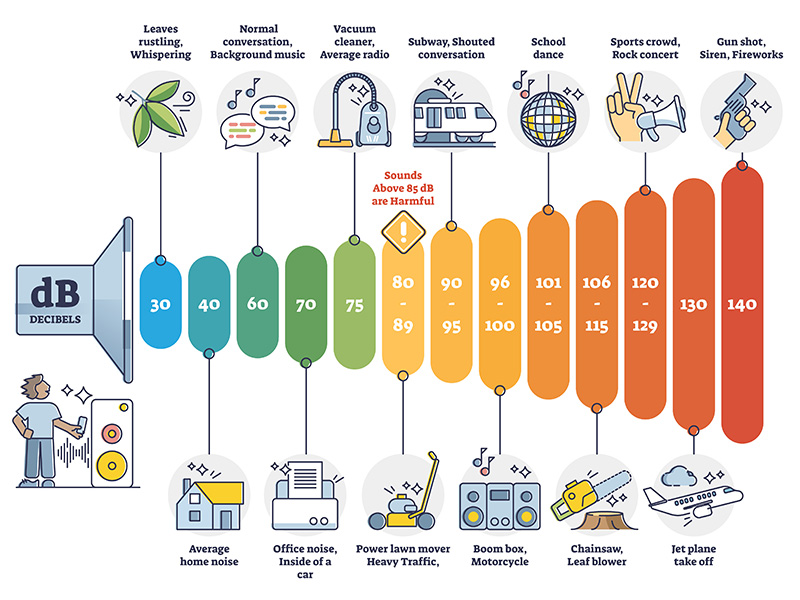
It is worth noting that quieter range hoods are frequently engineered with advanced noise-reduction features such as improved insulation around the motor housing, specially designed impeller blades that minimize turbulence, and optimized airflow channels that prevent air from rattling through the ductwork. When comparing models, always review the published noise specifications at each speed setting and choose the one that aligns with your tolerance for sound in the cooking environment.
Range Hood Makeup Air — The Basics
Here is a concept that catches many homeowners off guard: when your range hood pushes air outside, something has to replace it. That replacement air is called "makeup air." Without a proper makeup air strategy, your range hood creates negative pressure inside the house, which can cause a host of problems — from back-drafting gas appliances and fireplaces to difficulty opening exterior doors, whistling sounds through window seals, and even drawing polluted air from attics or crawl spaces into your living areas.
Modern building codes — including the International Residential Code (IRC) — generally require a makeup air solution for any range hood exhausting more than 400 CFM. The typical exhaust rate of a residential home is usually low enough that natural infiltration through gaps and cracks handles the balance. But once you step up to a powerful 800 CFM blower or higher, natural leakage simply cannot keep pace, and a dedicated makeup air system becomes essential.
What Exactly Is Makeup Air?
When a volume of air — say a cubic foot — exits your home through the exhaust vent, an equal volume of air from outside must flow in to replace it. If this process happens naturally through cracks and gaps, it is called "infiltration." If it requires a dedicated mechanical system, it is called a "makeup air unit." In the HVAC industry, cfm stands for cubic feet per minute, and maintaining balanced airflow is the goal.
Passive vs. Active Makeup Air Systems
Once you decide that your range hood is powerful enough to warrant a makeup air solution, the next question is whether to go with a passive or active setup. Each approach has distinct advantages and trade-offs, and the best choice depends on your climate, your hood's CFM rating, and the design of your home.
Passive Makeup Air
A passive system uses a duct with a motorized or gravity-operated damper that connects the kitchen to the outdoors. When the range hood turns on, the negative pressure created inside the home pulls the damper open and draws outside air in. There is no separate fan — the range hood itself generates the airflow differential. This approach is straightforward and affordable, but it relies on the hood running to function and may allow unconditioned outside air into the house, which can be uncomfortable in extreme climates.
Active Makeup Air
An active system uses its own dedicated blower to push replacement air into the kitchen. Rather than relying on negative pressure to pull air in passively, the unit actively forces conditioned or tempered air through a separate duct. Active systems offer better control over temperature and airflow volume. They are the preferred solution for high-capacity range hoods (800 CFM and above) and come as complete packages including wall caps, filters, dampers, and blower units.
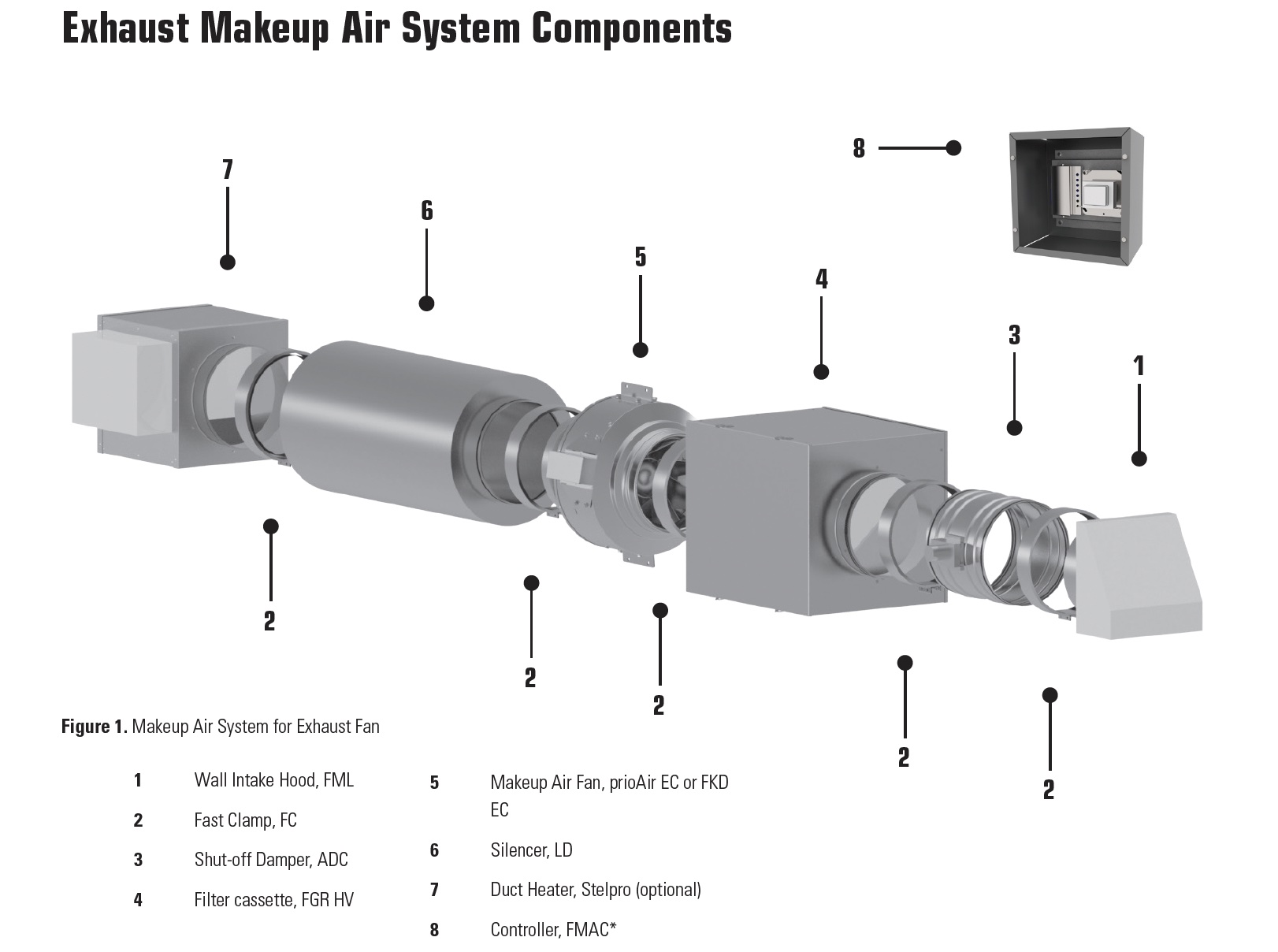
Deciding between passive and active ultimately depends on the CFM output of your range hood and the tightness of your home's building envelope. Newer, energy-efficient homes with robust insulation and minimal air leakage almost always need an active makeup air system because natural infiltration alone cannot keep up. Older homes with more natural gaps and drafts may get by with a passive solution for moderate-CFM hoods, but an active system still provides superior comfort and control.
Where Should Makeup Air Be Introduced?
Once you have settled on a system type, the next step is figuring out exactly where to bring the replacement air into your home. The most logical location is the kitchen itself, somewhere reasonably close to the range hood. Kitchen exhaust makeup air that is discharged directly into the room where it is needed can be routed through a ceiling or wall register positioned so it does not create an uncomfortable draft across the cooking area.
That said, the intake does not strictly have to terminate in the kitchen. Some installers route it to an adjacent room or a hallway to avoid blowing unconditioned air directly onto the cook. One effective strategy is to direct a portion of the makeup air into the return plenum of your HVAC system, allowing the furnace or air handler to temper it before distributing it throughout the home. This keeps the kitchen from feeling like an open window on a cold winter night while still satisfying the airflow balance requirement.
How to Reduce Range Hood Noise
To minimize the noise level of your range hood and create a calmer cooking environment, consider implementing these practical strategies:
Choose a Quieter Model: When shopping for a new range hood, prioritize models specifically engineered for low-noise operation. Look for features such as insulated motor housings, aerodynamic fan blades, and multi-speed controls that let you dial in just the right amount of extraction without excessive volume.
Maintain Filters Regularly: Keep your range hood running at peak performance by cleaning or replacing mesh and baffle filters on a consistent schedule. Clogged filters restrict airflow, forcing the motor to work harder and produce more noise.
Inspect for Loose Components: Over time, screws, brackets, and mounting bolts can loosen from vibration. Periodically tighten every fastener on the hood assembly to eliminate rattles and mechanical buzzing.
Use the Right Fan Speed: Many people default to the highest setting out of habit. Instead, match the fan speed to what you are actually cooking. Low speed handles light sautéing; reserve high speed only for intense, high-heat tasks.
Ensure Proper Installation: A range hood that is not installed correctly will vibrate against the cabinet or wall, amplifying noise significantly. Follow the manufacturer's installation guidelines precisely, or hire a qualified professional to ensure a secure, level mount.
Add Soundproofing Material: Applying acoustic panels, foam padding, or rubber isolators around the inside of the surrounding cabinet can significantly dampen vibrations and absorb sound before it reaches your ears.
Consider a Ducted System: If possible, choose a ducted range hood that vents air outside rather than recirculating it through charcoal filters. Ducted hoods are generally quieter because they move air through a direct path with less resistance and turbulence.
Cook During Off-Peak Hours: If noise sensitivity is a major concern in your household, try to schedule heavier cooking sessions during times when the sound is least likely to disturb others — such as midday rather than late evening.
Call a Professional: If persistent noise remains an issue despite your best efforts, consult a qualified appliance technician or HVAC installer who can diagnose the root cause — whether it is a failing motor bearing, improper duct sizing, or structural resonance — and recommend the right fix.
Choosing the Right Range Hood for Your Kitchen
If you are installing a standard residential range or cooktop, a unit rated between 300 and 600 CFM is usually sufficient. That is the sweet spot where most homeowners land — enough airflow to handle daily cooking without requiring a complex makeup air system or producing excessive noise. But if you have upgraded to a commercial-style gas range with high-BTU burners, you will likely need 800 CFM or more to keep up with the heat output, which is where split-insert designs with remote or separated blower units truly shine.
A split-insert range hood is an excellent option for homeowners who want powerful ventilation without the noise penalty. Because the blower motor is separated from the hood insert — often located in the attic, on the roof, or at the end of the duct run — the noise source is physically removed from the kitchen. You get all the extraction power at a fraction of the sound level. Pair that with stainless steel mesh filters for easy maintenance, built-in LED lighting for task illumination, and multiple speed settings for granular control, and you have a ventilation system that checks every box.
Featured Product
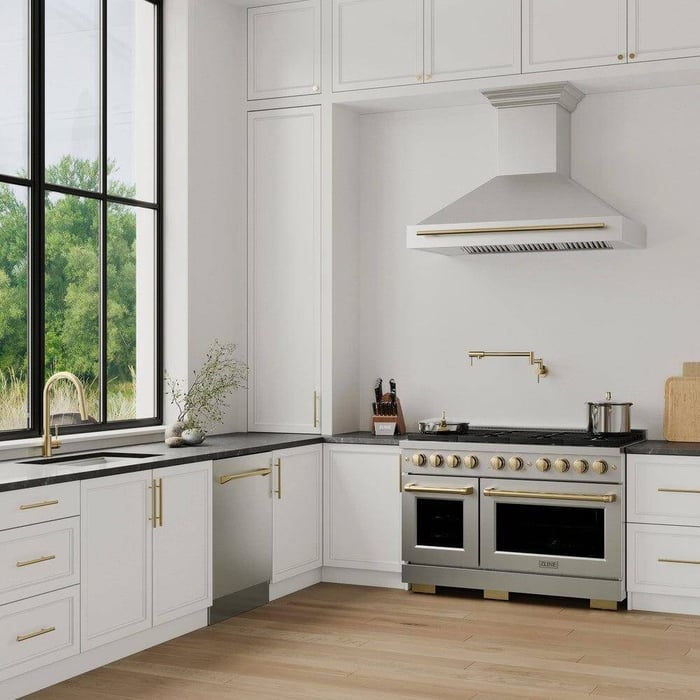
Awoco RH-IT06 Super Quiet Split Insert Range Hood
Featuring 800 CFM extraction power, four fan speeds, a separated 6-inch blower unit, dishwasher-safe mesh filters, and energy-efficient LED lighting — all housed in durable stainless steel. Experience the perfect balance of performance and silence.
Awoco RH-IT06 Range HoodAdditional Things to Consider
Beyond noise and makeup air, there are a few more factors that deserve your attention when planning a range hood installation. First, always consider the filter type. Stainless steel mesh filters are the easiest to maintain — most are dishwasher-safe — and they do not restrict airflow as aggressively as dense charcoal filters found in recirculating models. A good set of mesh filters will keep your indoor air quality high without forcing the motor to strain.
Second, think carefully about duct routing. Every bend, elbow, and extra foot of ductwork creates resistance that reduces effective CFM and can introduce additional noise from turbulent airflow. The shortest, straightest duct run to the exterior wall or roof is always the best approach. Use smooth-wall rigid duct rather than flexible corrugated duct wherever possible — the smooth interior surface allows air to flow with far less friction and turbulence.
Finally, do not overlook the importance of the makeup air filter. A quality intake filter prevents outdoor debris, insects, and pollen from entering your kitchen while the makeup air system is active. This small detail protects both your indoor air quality and the longevity of your HVAC equipment, keeping everything running cleanly for years to come.
Ready to Upgrade Your Kitchen Ventilation?
A quiet, powerful range hood paired with the right makeup air strategy will transform your cooking experience. Browse our selection at Backyard Provider to find the perfect solution for your home.
Awoco RH-IT06 Range Hood