


 Damage
  Loss
Loss  Theft
Theft 


The Complete Guide to Deer Feeders
Essential tools for wildlife management, hunting success, and attracting deer to your property year-round.
Deer feeders serve as crucial equipment for wildlife enthusiasts and hunters alike. They help establish consistent feeding patterns, support antler development, and create reliable opportunities for observation. This comprehensive guide explores the different feeder types available to help you select the ideal option for your specific needs.
Featured Image
 Understanding Deer Feeder Types
Placing feed directly on the ground is generally considered ineffective. Exposed feed quickly becomes contaminated with moisture, insects, and debris—creating an unhealthy situation for wildlife. This is precisely why experienced property managers rely on proper deer feeders to protect their investment and maintain herd health.
High-quality feeders shield food from environmental factors while providing consistent access throughout different seasons. They support crucial biological processes including antler development, nursing doe nutrition, and overall herd vitality. Additionally, well-designed feeders help establish predictable visiting patterns that benefit both observation and management objectives.
When it comes to selecting equipment, property owners generally choose between three main categories: gravity-fed units, trough-style dispensers, and automatic spin-cast systems. Each design offers distinct advantages depending on your goals, budget, and property characteristics.
Gravity Deer Feeders
Gravity feeders represent the most straightforward approach to supplemental feeding. Feed is stored in an elevated container and flows downward through ports or openings as deer consume it. The concept is elegantly simple—deer access food whenever they visit, and the supply naturally replenishes through gravitational force alone.
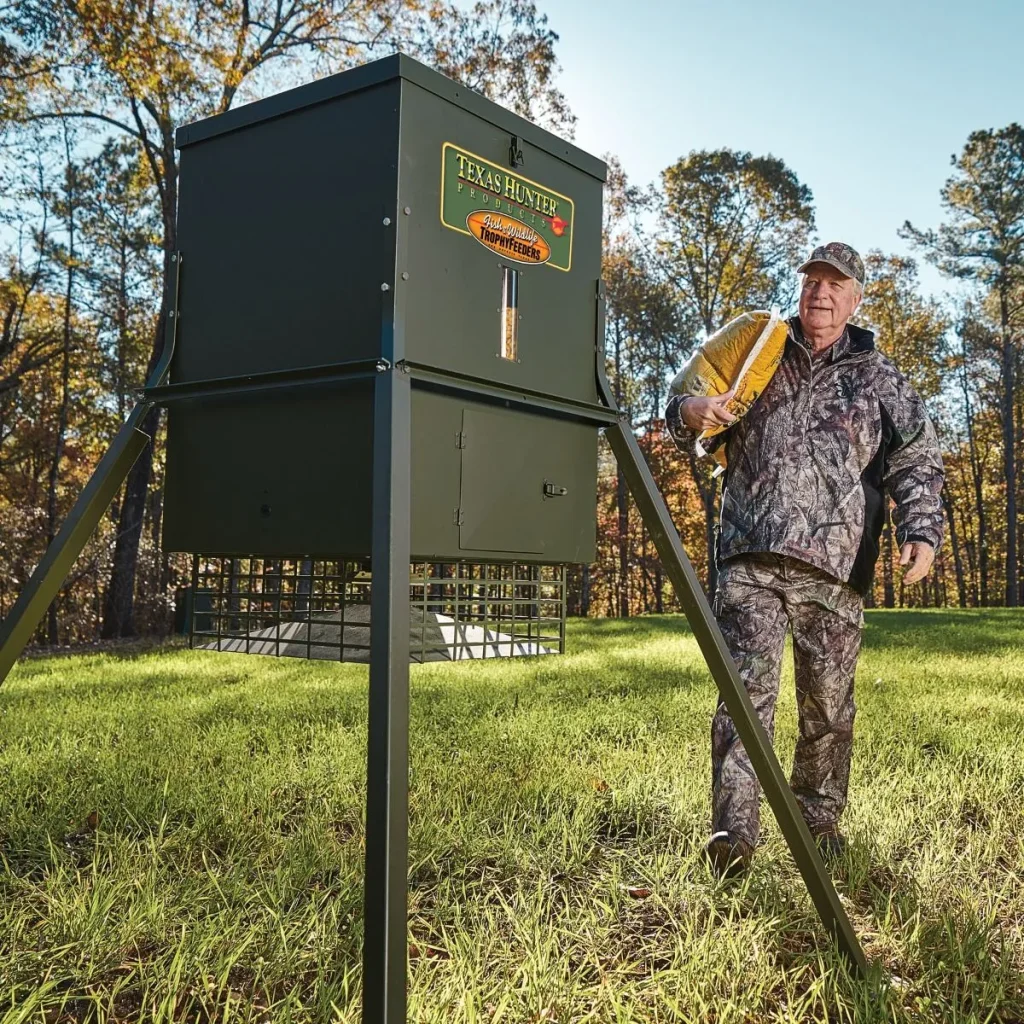
Among gravity feeders, the classic tripod design remains exceptionally popular. These units typically feature a cylindrical hopper supported by three or four sturdy legs, with feed ports positioned at a height comfortable for deer. The elevated design keeps contents dry while allowing natural feeding behavior.
The primary advantage of gravity systems lies in their reliability. Without motors, batteries, or timers to malfunction, these feeders deliver consistent performance season after season. Maintenance requirements are minimal—simply refill when empty and occasionally clean the feeding ports to prevent buildup or blockages.
For landowners focused on building body mass and supporting antler growth, gravity feeders excel by providing unlimited access. Deer can consume as much nutrition as they need without artificial restrictions, which proves particularly beneficial during critical growth periods in late spring and summer.
Featured Product
Reliable gravity-fed design for consistent deer nutrition
FeedBank 300 Gravity FeederTrough Deer Feeders
Trough feeders offer another dependable option characterized by their open-top, elongated basin design. These units resemble traditional livestock troughs and allow multiple deer to feed simultaneously along their length. The straightforward construction makes them easy to manufacture, install, and maintain.
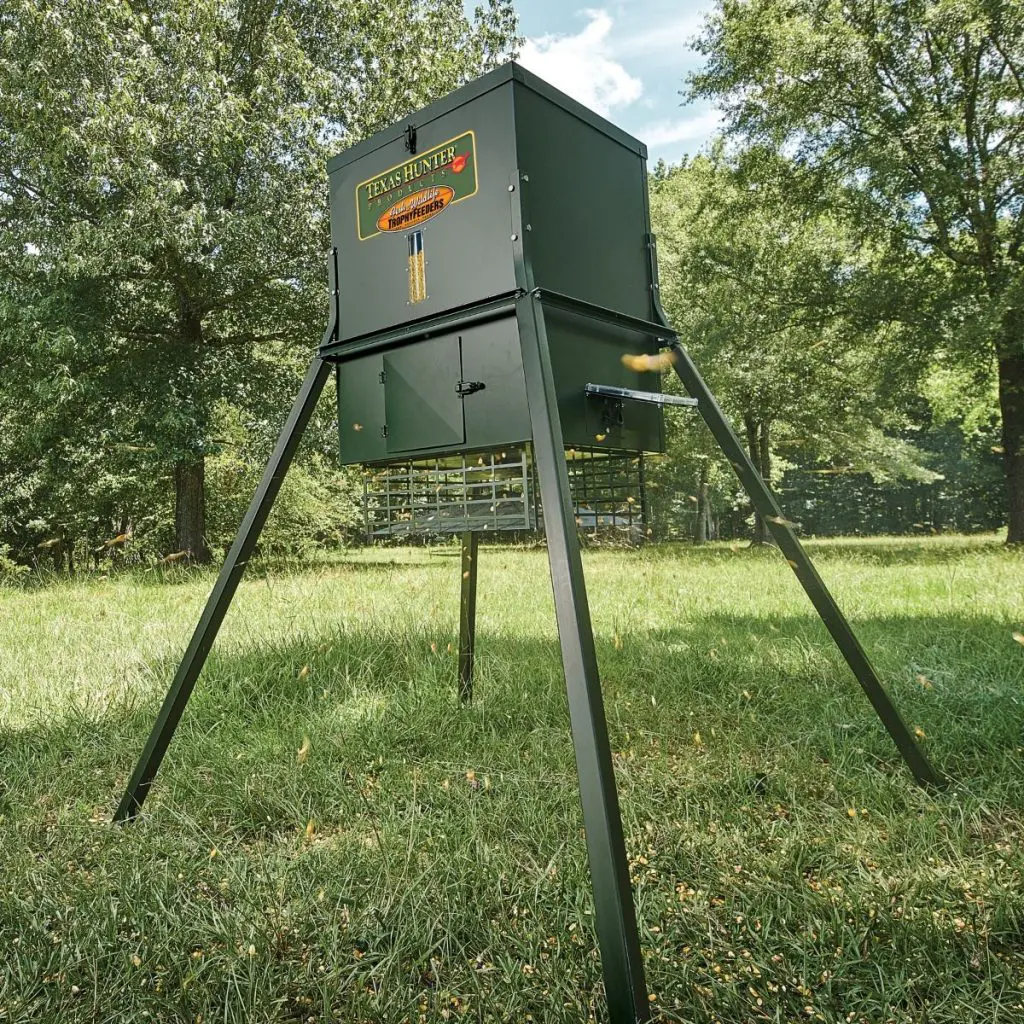
The simplicity of trough systems represents both their greatest strength and potential weakness. On the positive side, there are virtually no mechanical components to fail. Deer instinctively understand how to use them, and the feeding area accommodates animals of various sizes comfortably.
However, the open design does present challenges. Feed remains exposed to precipitation, potentially leading to spoilage during wet periods. Some property owners address this by positioning troughs beneath natural cover or constructing simple roof structures overhead. Additionally, open troughs may attract unwanted visitors including raccoons, birds, and rodents.
Despite these considerations, trough feeders remain popular for situations requiring high-capacity feeding with minimal complexity. They work exceptionally well in covered areas or regions with consistently dry climates where moisture contamination poses less concern.
Automatic Spin-Cast Deer Feeders
Automatic feeders represent the most sophisticated category, incorporating timers and motorized dispensing mechanisms to distribute feed at predetermined intervals. These systems typically feature a hopper mounted above a spinning plate that broadcasts feed across a wide area when activated.
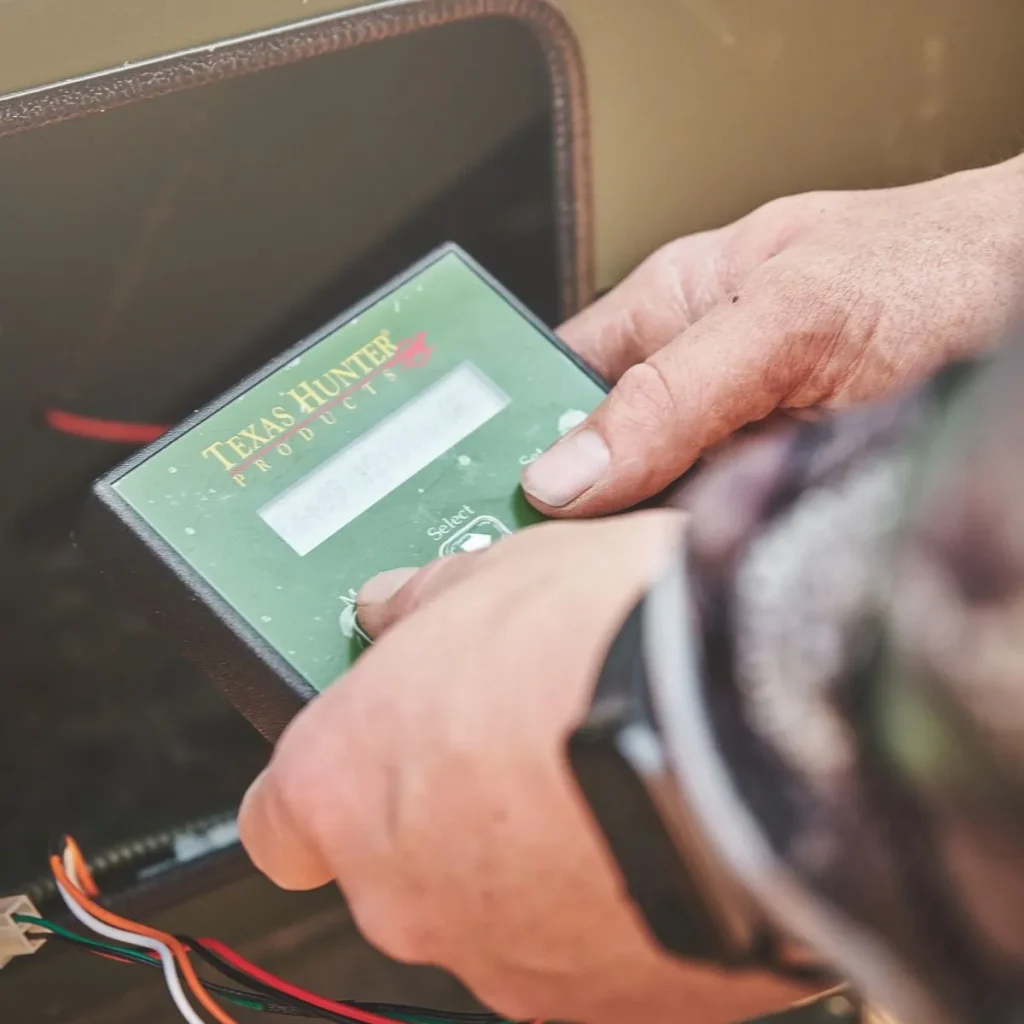
The programmable nature of automatic feeders provides significant advantages for certain applications. Hunters particularly appreciate the ability to establish precise feeding schedules that condition deer to arrive at specific times. By programming dispensing during legal shooting hours, users can dramatically improve hunting success rates.
Automatic systems also excel at feed conservation. Rather than allowing unlimited consumption, timed dispensing controls exactly how much feed deer receive daily. This proves economically beneficial over time and ensures your supply lasts throughout the season without premature depletion.
Precision Scheduling
Program exact feeding times to establish predictable deer movement patterns on your property.
Feed Conservation
Controlled dispensing prevents overconsumption and extends your supply throughout the season.
Wide Distribution
Spinning mechanisms broadcast feed over large areas, reducing competition at feeding sites.
The primary drawback of automatic feeders involves their reliance on batteries and electronic components. These elements require regular maintenance and can fail in extreme temperatures or harsh conditions. Additionally, the initial investment exceeds simpler designs, though many users consider the enhanced functionality worth the premium.
Strategic Feeding Practices
Regardless of which feeder type you select, implementing proper feeding strategies maximizes your results. Understanding deer behavior and nutritional requirements throughout the year helps optimize both wildlife health and your management objectives.
Location selection proves critical for feeder success. Position units near natural travel corridors, water sources, and bedding areas where deer already feel comfortable. Avoid placing feeders in completely open areas where approaching animals might feel vulnerable. Edge habitats between timber and fields often produce excellent results.
Timing your feeding program around seasonal needs delivers maximum benefit. Spring and early summer represent peak nutritional demand as bucks develop antlers and does nurse fawns. Protein-rich feeds during these periods support optimal growth and herd health. Transitioning to energy-dense options in autumn helps deer accumulate fat reserves for winter survival.
Consistency matters tremendously once you establish a feeding program. Deer quickly learn reliable food source locations and incorporate them into daily routines. Interrupting this pattern through irregular refilling or moving equipment can temporarily displace deer from your property as they search for alternative nutrition.
Selecting Your Ideal Feeder
Choosing between feeder types ultimately depends on your specific situation and goals. Several factors warrant consideration during the decision-making process, including intended use, budget constraints, maintenance preferences, and local conditions.
Hunters focused on establishing specific visiting patterns often prefer automatic feeders despite higher costs. The ability to condition deer arrival times around legal shooting hours provides substantial tactical advantages that simpler systems cannot replicate.
Conversely, property owners primarily interested in herd nutrition and general wildlife enjoyment frequently find gravity feeders perfectly adequate. Their lower cost, minimal maintenance requirements, and exceptional reliability make them ideal for supplemental feeding programs without specific timing objectives.
Build quality deserves attention regardless of category. Durable construction from weather-resistant materials ensures years of reliable service. Metal components should feature powder coating or galvanization to prevent rust. Examine how securely lids seal to protect contents from moisture infiltration during storms.
Finally, consider capacity requirements based on local deer density and how frequently you can realistically refill the unit. Remote properties may benefit from larger hoppers that extend intervals between maintenance visits, while easily accessible locations can utilize smaller, more economical options.
Ready to Enhance Your Wildlife Management?
Explore our selection of premium deer feeders designed for performance and durability.
Shop FeedBank 300