


 Damage
  Loss
Loss  Theft
Theft 


Why Consider Adding Soft Washing
 The customer is always right. Alright, that may be a slight exaggeration. Still, the customer has strong preferences, and giving them the widest range of choices is what puts a contractor at the top of the list.
"Consumers are hungry for information and ready to learn more about soft washing and the benefits it brings through friends, social channels, and online publications," says Linda Chambers, brand and sales manager at GCE/Soap Warehouse Brand in Norcross, GA. That is an influential point.
"It really is the customers themselves who are driving the demand on contractors to offer soft washing or risk losing the work," says Chambers. That is a persuasive argument coming straight from buyers.
Doing the best possible job for the customer, Ferrell notes, is the signature of a contractor's overarching purpose.
Soft washing requests may earn a boost from a variety of clients, but the method pays back in benefits as well.
"Soft washing is not only a genuinely effective approach to cleaning, it will keep your crew safe as well," says Ferrell. "Say you are new to pressure washing and are offering only soft washing — soft washing remains a great next-level step to take in your business."
The Case for a Gentler Clean
The list of positive outcomes attached to soft washing rewards contractors willing to weigh the possibilities. Ferrell highlights several of them, starting with stronger safety on site.
Operating on a job site while keeping a clear line of sight and directing water at organic growth — and often being able to remove spots that pressure washing will not — explains Ferrell. He adds that the delicate finishes soft washing handles easily are far more forgiving than pressure cleaning.
Crew Safety
Lower-pressure operation lets technicians stay grounded, reducing ladder time and fall risk across the job.
Surface Protection
Soft finishes — from shingles to painted siding — tolerate the chemical-first method far better than hammer-blast pressure.
Expanded Services
A new line of work for contractors who already own a truck, hoses, trailers, and a steady client roster.
Lasting Results
Soft washing doesn't only clean — it lengthens the gap between service visits, a benefit customers pay attention to.
Any reduction in pressure used, within working limits, makes the job safer. Soft washing relies on pressure in the range of 150 psi for the appropriate chemical to flow across a surface. A pressure washer, by comparison, could be running at 8 or 10 times that pressure to get the job done.
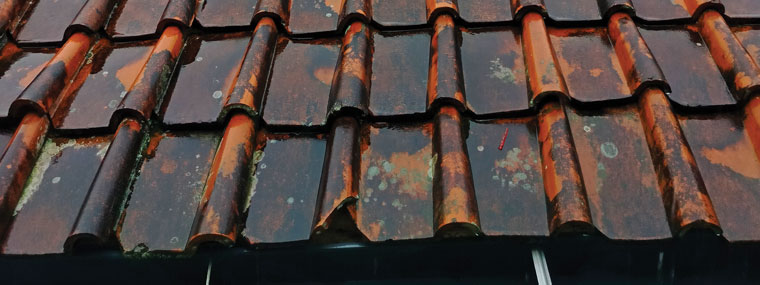
While soft washing is unlikely to replace concrete cleaning, it is an exceptional fit for substrates like roofs that are relatively fragile. (Refer to the fundamentals of soft washing — one method and its contrast with pressure washing — in the April 2022 article on these pages here.)
BE Power 11.0 GPM — 300 PSI Gas Soft Wash Unit
Powered by a Honda GX200 engine and Comet diaphragm pump — the PowerGen USA SW1165HA delivers the low-pressure, high-volume output soft washing specialists rely on.
Shop PowerGen SW1165HAMany Interested Parties
While much of the momentum to fold soft washing in may come from customers, there are other forces pressing contractors in that direction. "Many shingle manufacturers now require soft washing to maintain the warranty," says Pete Gustin, Comet/HPP product manager at Valley Industries in Paynesville, MN.
It is not only shingle manufacturers working to safeguard the lifespan of their products. Manufacturers of products built to extend the service life of a roof have expectations that will lead to more service calls.
"Soft washing is required as a prep step with many new roof rejuvenators," says Gustin. "The rejuvenators are growing in popularity because they are a far less expensive option than full roof replacement."
It is also a comparatively simple service to begin offering. "Most painters, roofers, pest control, lawn care, and power washing professionals already own the gear, vehicles, trailers, and field skills to fold soft washing into their existing service menu with ease," says Gustin.
If power washing contractors are not already adding soft washing, others in parallel sectors will. Adding it now will ensure the niche is not left open for someone else to claim.
(In practice, contractors in our industry have been on this track for a long while, but new tools and methods make the goal that much easier to reach.)
Gustin offers up an example. "Soft washing gives you more control over the volume of water being applied by using a surfactant to allow the chemical to stay put in place and finish its job properly."
Beyond that, Gustin points out, chemical use is also kept low. "Soft washing uses a very small volume of bleach, which is one of the most effective cleaning ingredients available."
Over time, the rewards of soft washing build. Reduced water volume translates into an instant savings in water use. Because the effectiveness of a soft wash stretches the gap between cleanings, fewer service calls per year are needed — a meaningful gain in productivity.
Energy costs line up with water-use savings as well. Lighter pressure and longer service cycles mean the demands on power drop. Less power required over a year translates into less fuel burned and lower emissions over the long run.
Gustin notes that one way the outcome with soft washing is expressed is "best pest control" because soft washing targets organisms on the surface — algae, mold, etc. — and removes them. "Water by itself may briefly clean a surface, but it does nothing to end the organism," he explains.
(Spores, of course, will live on, get blown in by the wind, or hitchhike on the claws or feet of birds and rodents. Surfaces will be reclaimed and require more cleaning at some point in the future.)
Supporting evidence for changes in environmental factors comes in several forms. One of the most notable is the growing spread of lichens or a reduction in their numbers. It all depends on the part of the country. (The record of the link between lichens and the climate is growing.)
Lichens are symbioses. Put differently, what we label as a lichen is actually a close and mutually beneficial partnership between an alga and a fungus. Rock formations along north-facing slopes in forests are the most obvious place to find lichens, though a noticeable role in breaking down rock over time is also one of their contributions.
But lichens are equally present on tree bark, on houses, and on roofs. Whether it is a swelling of the numbers or a decrease in nitrogen or a different factor, a larger lichen population is only going to mean more calls on residential and commercial surfaces.
More lichen growth translates into more requests for removal. And soft washing is a sound route to use.
Back to the financial side of soft washing, though, there is real scale to the marketplace. "Currently 80 percent of the area east of the Mississippi River is regarded as wash territory, and the number keeps rising," says Gustin.
Future Interest
No interested collective has dominion over what the coming push is going to be for a shift in methods or tools in an industry. Ideas come from those using the gear, those making the gear, those engineering it, and those served by the results.
Dramatic shifts are taking place in the types of materials being used to clad the outsides of buildings. Design professionals are pushing to cut heat loss during cold months, lessen heat retention during hot months, and so on.
Consider roofs. The U.S. Department of Energy is emerging as a sharp voice focused on what labeled "cool roofs" — those that cool more rapidly. According to the DOE, a standard roof can reach a peak temperature of 150°F on a sunny afternoon. A cool roof sends the figure back to 100°F.
The DOE is partnering with roofing producers to push changes in the roofing marketplace. We've all seen the reports about how roofing producers are reshaping the way color is used in tile or to make a roof a touch lighter overall. That's not a scheme we will cope with — it will bring in real work from existing homeowners.
Building-it-in from inception is now the focus of bringing dwellings to greater coolness — energy conservation — roofs. These changes in materials need a matching shift in how cleaning is tackled.
For example, the spray polyurethane foam rooftops must be reinforced with a safeguarding cover, and spray polyurethane foam itself is open to being damaged by dampness, mechanical pressure, and the sun's UV rays. Yes, they are exceptional at keeping a home efficient for heat. But a gentle-wash plan to keep them in check must be built so as to not compromise the rooftop.
Cool roofs are being championed in new residential construction, particularly in the hottest belts of the country. Getting acquainted with how to clean them prepares a contractor for a pipeline that will simply expand.
Guidance on how to care for photovoltaic installations — solar panel arrays with the producer (and the precise mix of the film), for the gentlest point of the band — is also widespread. Manual washing with a sponge and soapy water, but with a degree of input from producers in certain soft washing situations.
Down the path, it is likely some contractors may even discover themselves asked to clean a lime-washed ("whitewashed") surface. As government authorities pursue options to trim energy demand, older methods of completing things have received another look.
The National Park Service (NPS) National Center for Preservation Technology and Training (NCPTT) has worth in lime-based buildings. Whitewashing, by the NPS NCPTT, is a flame retardant, germicidal, and mold-resistant finish.
Many of the substances that have gone into holding calcium hydroxide — hydrated calcium oxide from scorched limestone or different operations — alongside insert casein (milk curds), tallow, pine gum, and yet more. The NPS uses limewash to cover the less-exposed areas of tree runs, though rarely structures themselves.
With renewables being embraced, it is not chance that below or sheaths could make their way into coatings for exteriors and roofing. Soft washing within the framework of the renewables to come may represent the cutting edge of a rising wave.
Ready to Step Into Soft Washing?
The BE Power 11.0 GPM — 300 PSI Gas Soft Wash Unit with Honda GX200 engine and Comet diaphragm pump is engineered for crews serious about expanding their service offering.
Shop PowerGen SW1165HA