


 Damage
  Loss
Loss  Theft
Theft 


What Are the Engine Components of a Pressure Washer and What Do They Do?
Pressure Washer Engine Components
Most residential and prosumer pressure washers rely on a compact gas engine that drives the pump. Knowing what each component does — and how to maintain it — helps extend the life of the machine and keeps cleaning performance consistent. Below is a breakdown of the essential parts you'll find on a typical unit.
Engine Type
- Most residential pressure washers use a 4-stroke engine — no fuel/oil mixing required.
- Engine size is typically matched to the unit's PSI rating.
- Common displacement range spans roughly 196cc to 420cc.
- Refer to the product spec sheet for your model's exact engine details.
On/Off Switch
- Also called the kill switch, power switch, or rocker switch.
- 0 indicates OFF and I indicates ON.
- Must be flipped to the ON position before the engine will start or run.
Engine Oil
- Use the correct oil viscosity for your operating temperature range.
- Inspect the oil level before every use — most engines have a low-oil shutdown feature.
- Always place the unit on a level surface when checking or topping off oil.
No Oil Filter
- OHV-style small engines on pressure washers typically do not include an oil filter.
- This makes regular oil changes especially important for engine longevity.
Spark Plug
- Responsible for igniting the fuel and air mixture inside the cylinder.
- Confirm the spark plug boot is fully seated and secure.
- Inspect for wear and set the gap according to manual specifications.
Valve Adjustment / Valve Lash
- Intake and exhaust valves should be checked and adjusted at the recommended service intervals.
- The intake valve sits closer to the carburetor.
- The exhaust valve is positioned nearer the muffler.
 Fuel System Components
The fuel system delivers clean, properly mixed gasoline to the combustion chamber. Each part plays a role in starting performance, running stability, and off-season storage readiness.
Fuel
- Gasoline has a shelf life of roughly 30 to 90 days — always use a stabilizer for longer storage.
- Only use fresh fuel when filling the tank.
- Choose a minimum of 87 octane with no more than 10% ethanol.
Fuel Shut Off Valve
- Controls the flow of gasoline from the tank into the carburetor.
- Set it to ON before starting and while running the unit.
- Turn it OFF whenever transporting or storing the washer.
Carburetor
- Blends fuel and air in the correct ratio for combustion.
- Use carburetor cleaner to remove gum, varnish, or dirt buildup.
- Run the carburetor dry before long-term storage to prevent clogs.
Choke Lever
- Limits the amount of air entering the engine during cold starts.
- Move to the CLOSE position when starting a cold engine.
- Shift to OPEN once the engine is warm and running smoothly.
Air Intake & Electrical
Air Filter
- Dirty or restricted airflow can noticeably reduce engine performance.
- Clean or replace the air filter on a regular schedule based on usage.
Battery
- Only required on models equipped with electric start.
- Follow the manual's charging instructions to maintain battery health.
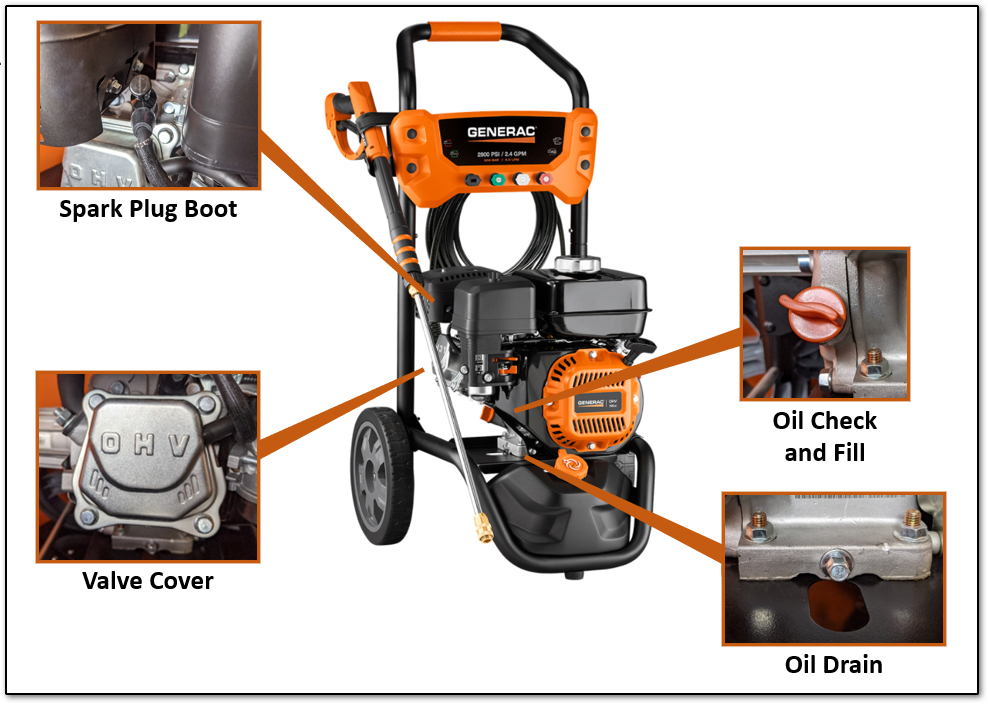 Quick Reference: Key Component Locations
When working on or maintaining your pressure washer, it helps to know where each major component sits on the machine. Most units group the air filter housing, fuel fill, choke, fuel shutoff, on/off switch, and recoil start in easily accessible locations around the engine shroud. The spark plug boot, valve cover, oil check/fill port, and oil drain are usually found along the side or underside of the engine for easy servicing.
Caring For Your Pressure Washer Engine
Keeping these components in good working order is the single best way to extend the life of your pressure washer. Stick to the manufacturer's service intervals for oil changes, spark plug inspection, air filter cleaning, and valve lash adjustment. Always use fresh, properly stabilized fuel, and drain the carburetor before any extended storage period. A few minutes of routine maintenance goes a long way toward preventing the most common starting and running issues.
Ready To Upgrade Your Pressure Washer?
Looking for a dependable, residential-grade pressure washer built around a solid 4-stroke engine? Check out the BE Power Equipment 196cc 2500 PSI unit — a great match for driveways, siding, decks, and everyday outdoor cleaning tasks.
Shop BE 2500 PSI Pressure Washer