


 Damage
  Loss
Loss  Theft
Theft 


How to Size a Heat Pump for Your Pool
- Pool volume in gallons is the foundation for selecting the right BTU output.
- A simple rule of thumb: allow 4 BTU per gallon for summer heating, and 5 BTU per gallon for year-round use.
- Sizing too small leads to long heat-up times, poor recovery, and constant runtime.
- Sizing slightly larger is the smarter, safer choice for consistent water temperature.
- Real-world output varies with weather — local climate and pool environment both matter.
Pool heat pumps work with the gallons you're heating, so knowing your pool volume is the essential first step. Whether you're in a warm climate running your pool through summer or a cooler region pushing the season into spring and fall, this guide walks you through the exact sizing process — so you choose a unit that heats efficiently, holds temperature reliably, and serves you for years.
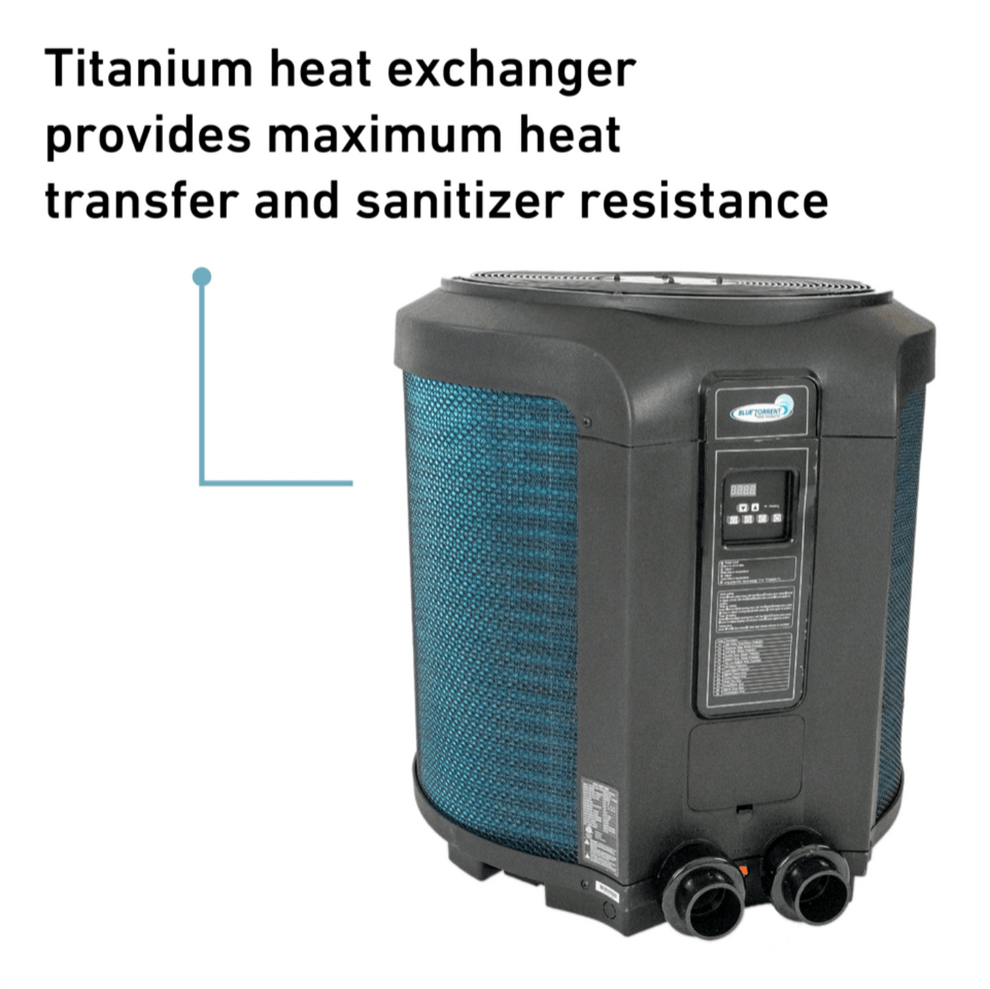
What Heat Pump BTU Do You Actually Need?
Most pool heat pumps fall somewhere between 50,000 and 140,000 BTU. The right number for your pool depends on three things: total gallons, your local climate, and the time of year you plan to swim. If you're between two sizes, always choose the larger model — you'll get faster warm-ups, fewer runtime hours, and better performance in cooler or cloudy conditions.
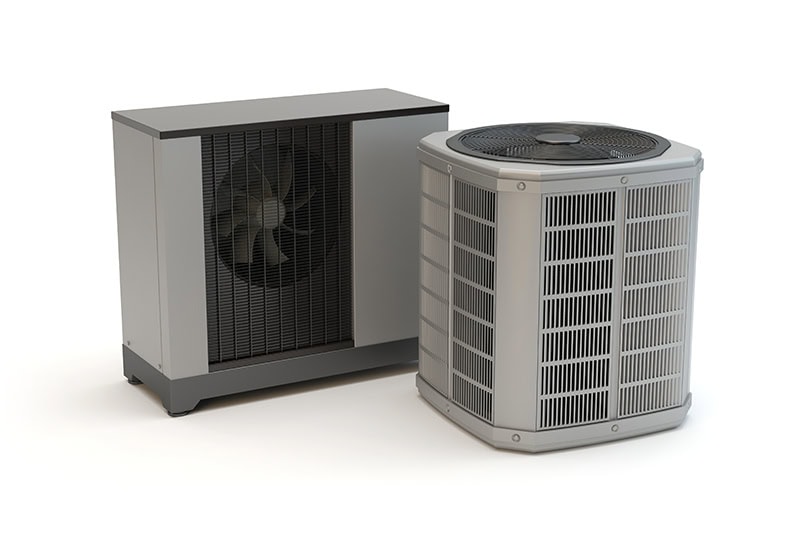
The Basics of Pool Heat Pump Sizing
Sizing your heat pump correctly determines how well your pool reaches and holds its target temperature. A unit that's too small creates a cycle of frustration:
- It takes a very long time to heat up, especially on cool nights or after you first start the season.
- It runs for extended periods because it's constantly working to keep up with heat loss.
- It may never reach your target temperature on overcast days — even though the unit appears to be working.
- It struggles noticeably in cloudy or cooler conditions, making performance feel unpredictable.
A properly sized unit — or one slightly oversized — avoids all of these problems. It heats faster, holds temperature with less runtime, and handles changing weather without strain.
Step One: Calculate Your Pool Volume
Heat pump capacity is tied directly to how many gallons you're heating. Start here — everything else follows from this number.
Rectangular or Lap Pools
Length (ft) × Width (ft) × Average Depth (ft) × 7.5 = gallons
Round Pools
Diameter (ft) × Diameter (ft) × Average Depth (ft) × 5.9 = gallons
Oval or Freeform Pools
Length (ft) × Width (ft) × Average Depth (ft) × 5.9 = gallons
Average depth = (shallow end depth + deep end depth) ÷ 2
Once you have your gallon count, you have the foundation you need for the next step.
Step Two: Choose a BTU Range Using the Rule of Thumb
With your pool volume calculated, applying the standard BTU guideline is straightforward:
~4 BTU per gallon → Typical summer heating in warm climates
~5 BTU per gallon → Reliable heating in cooler parts of the season, spring/fall use, or windier locations
Example: 25,000-Gallon Pool
Cooler weather sizing: 25,000 × 5 = 125,000 BTU
→ Choose the model closest to or above that range.
If you're comparing heating options — gas, electric resistance, or heat pump — a heat pump BTU finder can help you cross-reference models across fuel types for your specific pool volume.
Factors That Push You Toward a Larger Unit
The standard rule assumes average conditions. In practice, several variables increase the effective load on your heat pump — meaning a slightly larger unit will serve you far better:
- Windy or exposed backyards — wind dramatically accelerates surface heat loss.
- Limited or no pool cover use — an uncovered pool loses heat overnight at a significant rate.
- High sun exposure and higher target temperatures — warmer target temps require more consistent output.
- Larger pool surface area relative to volume — more exposure means more heat escaping.
If you're planning to add a solar cover, it's one of the best investments alongside a heat pump — it cuts overnight heat loss dramatically and lets a smaller unit punch well above its rated capacity.
Why Sizing Up Is Usually the Smarter Choice
A slightly oversized heat pump costs more upfront — but it pays back quickly through the season:
Faster Start of Season
It heats up more quickly when you first open the pool, getting you swimming sooner without waiting days.
Fewer Daily Runtime Hours
It reaches target temperature and shuts off. Less runtime means lower electricity consumption over the season.
Better Cold Weather Comfort
It handles temperature drops more gracefully, maintaining your set point even on overcast or windy days.
Longer Equipment Life
Running fewer hours per day means less compressor wear — your unit lasts longer with fewer service calls.
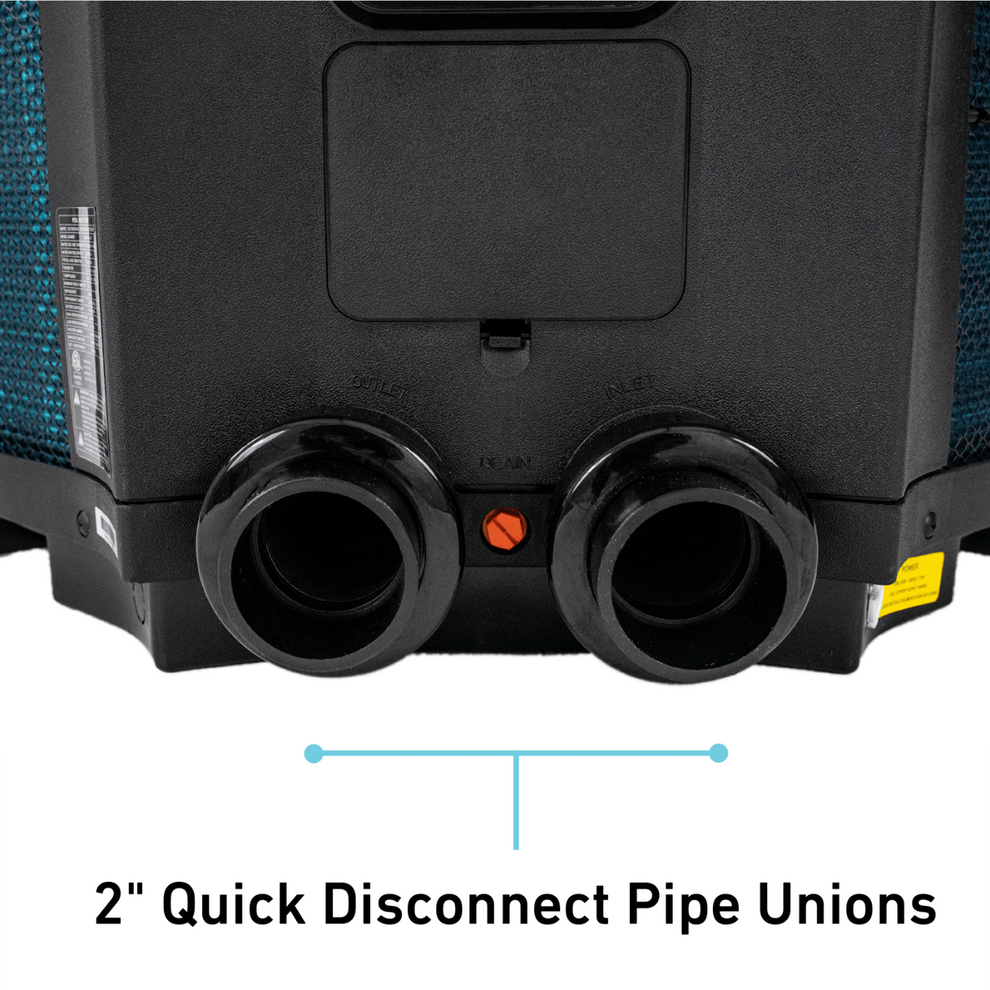
A Note on Ratings and Real-World Output
Heat pump BTU ratings are measured under standardized test conditions defined by AHRI Standard 1160. These reflect performance at a specific air temperature and humidity level — not your actual backyard on a random Tuesday in October.
In cooler or drier air, output naturally decreases. This is expected behavior across all heat pump brands and models. It's one more reason to size slightly above the minimum — a unit rated at exactly your calculated BTU will be running at capacity when conditions are less than ideal. A unit sized one step up will handle those days with room to spare.
Sizing Examples at a Glance
Summer Use · 15,000 Gallons
Target temp: 82°F
4 BTU/gal → 60,000 BTU
5 BTU/gal → 75,000 BTU
Recommended range: 60,000–80,000 BTU
Cooler Month Use · 25,000 Gallons
Target temp: 84°F
4 BTU/gal → 100,000 BTU
5 BTU/gal → 125,000 BTU
Recommended range: 100,000–130,000 BTU
These examples are meant to give you a fast ballpark — not a precise specification. Use them alongside your pool's actual gallon count and local climate to zero in on the correct model size.
Frequently Asked Questions
How do I size a heat pump for my pool?
Start by calculating your pool volume in gallons, then apply the 4–5 BTU per gallon guideline based on your climate and season. If you're between sizes, go larger — you'll heat faster, run fewer hours, and stay comfortable even when conditions aren't ideal.
How many BTUs does a pool heat pump need?
A common rule is 4 BTU per gallon for summer and 5 BTU per gallon for cooler conditions. For an 18,000-gallon pool that means roughly 72,000–90,000 BTU. The right unit depends on your pool size, local temperature, and how extended your swim season is.
Is it better to oversize a pool heat pump?
Yes — sizing up slightly is almost always the better long-term decision. A larger unit heats faster, runs fewer hours, and handles cold or cloudy weather far more reliably. The performance difference in marginal conditions is significant.
What happens if my pool heat pump is too small?
An undersized unit will run almost constantly, struggle to reach your target temperature, and fall short on cooler or overcast days — even if it's technically functional. Over time this also increases wear on the compressor.
How many BTUs do I need for a 20,000-gallon pool?
For a 20,000-gallon pool, the standard calculation gives you 80,000 BTU (summer) to 100,000 BTU (cooler season). Choosing a 95,000–100,000 BTU unit gives you reliable performance across the full swim season.
The Bottom Line
Pool heat pump sizing comes down to three inputs: your pool volume in gallons, your target temperature, and the conditions you'll be swimming in. The 4–5 BTU per gallon guideline gives you the right range fast — and when in doubt, the larger size always delivers a better, more consistent experience.
Blue Torrent CFT 95 — 95,000 BTU