


 Damage
  Loss
Loss  Theft
Theft 


How Often Should You Run a Pool Heater in Cold Climates? (Expert Guide)
Picture this: it's a crisp October morning, you're stepping outside with a hot mug of coffee, looking across your backyard at the pool. The water is calling, but you pause — is it really worth switching the heater on? And if you do, how long should it run? Will the energy bill make you regret it?
 For pool owners in colder regions — from Minnesota and Montana to Ontario and Scotland — this is the recurring dilemma that crops up every fall and spring. Running a pool heater in cold weather is genuinely different from running one in Florida. Heat loss happens faster, energy costs add up quicker, and the wrong setup can quietly drain your utility bill.
The good news: with the right approach, you can absolutely enjoy a warm, swim-ready pool even in cooler conditions. This guide walks through exactly how often you should be running your heater, what shapes that decision, and how to keep costs without sacrificing comfort.
Understanding Pool Heating in Cold Weather
Before you can decide how often to run your heater, it helps to understand why cold-climate pool heating is fundamentally harder. The reason boils down to basic physics and a stubborn battle against your environment.
How Temperature Differential Drives Heat Loss
The wider the gap between your target pool temperature and the surrounding air, the harder your heater has to work. A pool warmed to 82°F (28°C) loses heat roughly 2 to 3 times faster on a 40°F (4°C) night than it does on a milder 65°F (18°C) evening. That means your heater compensates by working disproportionately harder just to hold temperature steady.
Wind, Evaporation, and Night Cooling
Three other forces work against a heated pool, and in cold weather they hit even harder:
- Evaporation is responsible for 70 to 80% of total pool heat loss. As water molecules escape from the surface, they carry massive amounts of thermal energy with them.
- Wind accelerates evaporation dramatically. A 10 mph breeze across an uncovered pool can push heat loss up by as much as 300% or more.
- Radiative cooling at night means an uncovered pool radiates heat straight into a cold, clear sky. On a typical northern night, an uncovered pool can lose 5°F to 8°F overnight.
Want to dig deeper? Explore our range of pool and spa heat pumps built around the same thermodynamic principles that make efficient cold-weather heating possible.
Daily or As-Needed Pool Heating — Which Is Better?
This is the central question most cold-climate pool owners struggle with. Should you keep the heater ticking over continuously, or should you flip it on only before you actually plan to swim?
The straight answer: it depends on how often you swim and the type of heater you own. Here's a framework to help you think it through.
Running the Heater Daily (Continuous Maintenance)
With this approach, you keep the pool sitting at your target temperature around the clock. The heater cycles on and off as needed to maintain that setpoint.
Works best for: Households that swim 4 to 7 days a week, or anyone with a heat pump (since heat pumps raise water temperature gradually but very efficiently).
On-Demand Heating (Before Swimming Only)
Here, you fire up the heater 12 to 48 hours before you plan to swim, let it bring the water up to temperature, then shut it back off when you're done. The pool cools between sessions.
Works best for: Occasional swimmers (1 to 2 days a week), or anyone with a gas heater that can rapidly reheat water.
Comparison Table: Daily vs As-Needed Heating
| Factor | Daily (Continuous) | As-Needed (On-Demand) |
|---|---|---|
| Energy Use | Lower per day. Smaller temperature swings to recover. | Higher per session. Large reheat load each time. |
| Monthly Cost | Higher total (runs more days) | Lower total (only when swimming 3 or fewer times a week) |
| Comfort | Pool always swim-ready | Requires advance planning |
| Best Heater Type | Heat pump | Gas heater |
| Pool Cover Required? | Strongly recommended | Essential between uses |
| Works Below Freezing? | Yes, with a cold-climate heat pump | Yes (gas); limited (standard heat pump) |
If you swim 4 or more times per week, continuous maintenance heating almost always costs less overall because you're avoiding the repeated heavy reheat cycles. If you only swim once or twice a week, on-demand heating with a gas heater typically wins on cost.
Factors That Determine How Often You Should Run Your Pool Heater
No two pools are quite the same. Here are the key variables that directly shape your ideal heating schedule.
Pool Size and Volume
A 20,000-gallon pool holds roughly twice the thermal mass of a 10,000-gallon pool. Bigger pools lose more BTUs per degree of temperature drop, but they also hold their heat longer once warmed.
- Pools under 15,000 gallons cool down quickly and reheat relatively fast.
- Pools from 30,000 gallons and up can take 24 to 48 hours to reheat from cold, making continuous maintenance heating more practical.
Heater Type and Output
Your heater's output fundamentally shapes how often and how long it has to run. A 400,000 BTU gas heater can raise a 20,000-gallon pool by 10°F in roughly 4 to 5 hours. A 60,000 BTU heat pump might take 24 to 36 hours to do the same job in cool conditions — but at a fraction of the operating cost per BTU.
Check out the inverter pool heat pump technology overview to see how modern variable-speed systems adapt their output to changing conditions.
Climate Severity
The colder and windier your local climate, the more often your heater will cycle. A pool owner in Vancouver (mild, oceanic) can run a much smaller heating schedule than someone in Minneapolis or Calgary. Things to weigh:
- Average overnight low temperatures during your swim season
- Typical wind exposure at the pool location
- Number of overcast versus sunny days (solar gain meaningfully reduces heating needs)
How Often You Actually Swim
Be honest. If your pool gets used twice a week in spring and fall, continuous heating is likely wasted money. If your family swims daily, the math practically does itself. Track your real usage for a couple of weeks before committing to a heating routine.
Pool Cover Usage
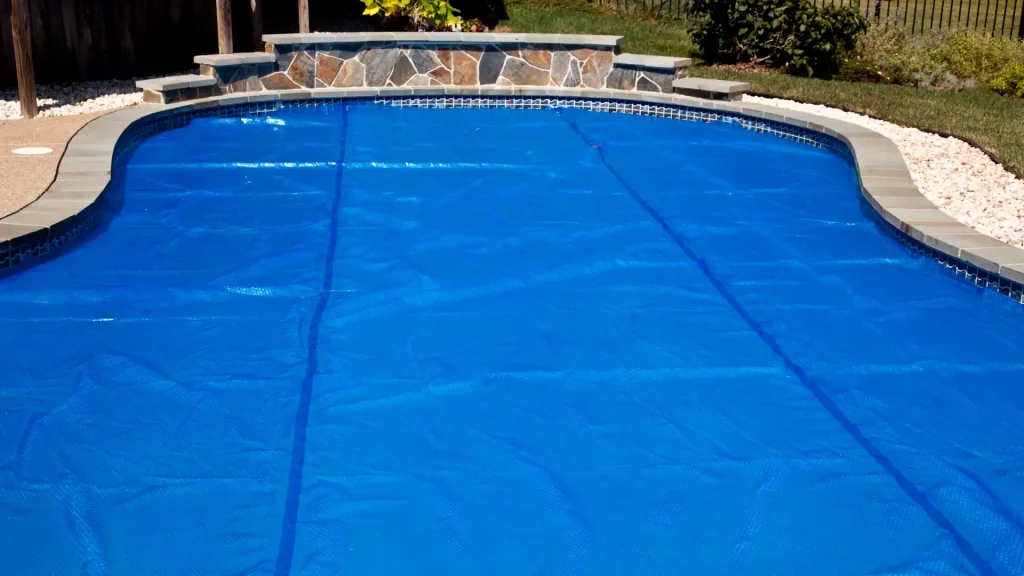
This one variable alone can slash your heating bill by 50 to 70%. A quality solar cover or thermal blanket dramatically reduces evaporation and radiative cooling. If you're not using one, you're effectively heating the air above your pool just as much as the water itself.
 Ideal Pool Temperature in Cold Climates
Knowing your target temperature is essential both for comfort and for figuring out how hard your heater needs to work.
Recommended range: 78°F to 82°F (25°C to 28°C) — the sweet spot for recreational swimming in cool conditions. Most adults find 78°F perfectly comfortable for active swimming, while households with children or elderly swimmers usually prefer 82°F.
Balancing Comfort and Energy Cost
Each 1°F (0.6°C) bump in target pool temperature lifts heating energy consumption by roughly 10 to 30%, depending on ambient conditions.
Set to 84°F
Versus 78°F doesn't feel 6°F warmer — but it can drive 60% to 80% more cost to maintain in cold weather.
Drop to 78°F
From 82°F during stretches when you're not actively using the pool can produce major savings.
Lap or Fitness Pools
78°F is ideal. For soaking or just lounging in the water, 80°F to 82°F is the sweet spot.
Cost Breakdown of Running a Pool Heater in Cold Weather
Let's get into the actual numbers. Pool heating costs vary enormously based on heater type, pool size, and local energy prices — but these estimates give you a realistic picture.
Estimated Daily and Monthly Costs (20,000 Gallon Pool)
| Heater Type | Daily Cost | Monthly Cost | Best For |
|---|---|---|---|
| Gas Heater (Continuous) | $15 – $40 | $400 – $900 | Rapid heat-up, occasional use |
| Cold-Climate Heat Pump | $3 – $8 | $90 – $250 | Daily use, seasonal climates |
| Solar (Supplemental) | ~$0 | ~$0 | Sunny climates only; supplemental |
*Estimates assume natural gas at roughly $1.20/therm and electricity at $0.14/kWh. Actual costs vary by region and provider.
Gas vs Heat Pump: The Long-Term Math
Gas heaters cost less upfront (around $3,000 to $5,000) but operate substantially pricier. A cold-climate heat pump runs $3,000 to $6,000 installed but operates at 3 to 5 times the efficiency of gas. For cold-climate owners who swim seasonally (3 to 5 months), a heat pump typically recoups its premium within 3 to 5 swim seasons through energy savings.
Explore the full range of pool and spa heat pumps and our free heat pump sizing tool to find the right capacity for your pool.
Ready to upgrade to efficient, cold-climate-ready pool heating?
Shop Blue Torrent CFT 65Expert Tips to Reduce Pool Heating Costs in Cold Climates
You don't have to pick between a warm pool and a manageable energy bill. These five evidence-based strategies can shave heating costs by 40 to 70%.
1. Use a Solar Cover Every Single Night
A solar blanket or thermal cover eliminates up to 97% of evaporative heat loss and adds passive solar gain during daylight hours. For a pool in a cool climate that runs 4 months out of the year, a quality cover can save you $300 to $800 annually.
2. Run Your Heater During Off-Peak Electricity Hours
If you're running a heat pump, schedule it to operate primarily during off-peak hours (typically overnight or mid-morning), depending on your utility) and you can shrink electricity costs by 20 to 40% on time-of-use rate plans.
3. Install a Windbreak
A fence, hedge, or windbreak panel around the pool can reduce wind-driven evaporation dramatically. Even cutting wind speed from 15 mph to 5 mph can trim heating energy 30 to 50% in exposed locations.
4. Use a Smart or Programmable Thermostat
Set your pool controller to schedule temperature setbacks during low-use periods. Dropping the setpoint by 6°F to 8°F overnight, especially when paired with a cover, creates substantial savings without sacrificing comfort when you swim.
5. Maintain Your Heater Annually
A heat pump or gas heater running at less than peak efficiency costs extra money every hour it operates. Annual servicing keeps clean coils, proper refrigerant charge, and efficient combustion. This can recover 10 to 20% in efficiency every year.
6. Right-Size Your Heater
An undersized heater runs constantly and still can't maintain temperature in cold weather. Use a proper heat load calculation for your pool, climate, and usage pattern.
In climates that regularly see overnight lows below 40°F (4°C), a standard heat pump will lose efficiency rapidly and some models will shut down entirely. A proper cold-climate heat pump with EVI (Enhanced Vapor Injection) technology continues running efficiently well below freezing. This is essential for northern pool owners who want to extend their swim season.
Best Pool Heater Types for Cold Climates
Not all pool heaters are designed for cold-weather use. Here's an honest assessment of your options.
| Heater Type | Cold-Climate Rating | Notes |
|---|---|---|
| Cold-Climate Heat Pump (EVI) | Best | COP 3 to 6. Operates down to -15°C (5°F). Highest upfront cost, lowest running cost. Ideal for frequent swimmers. |
| Gas Heater | Great On-Demand | Reheats fast, works in any temperature, but with higher upfront cost. Best for occasional cold-weather use. |
| Solar Heating | Limited in Cold | Free to run; largely ineffective in cloudy or cold conditions. Best used as supplemental heating only. |
For cold-climate pool owners specifically, the EVI DC inverter technology in Arctic's cold-climate heat pumps maintains strong output even in sub-zero conditions, where conventional heat pumps stall completely.
Equipped to heat your 13,000-gallon pool through cold-climate seasons.
Shop Blue Torrent CFT 65Conclusion: Finding Your Ideal Pool Heating Rhythm
The best heating schedule for your cold-climate pool is the product of your usage habits, heater type, pool size, and the climate you're planning around. The evidence consistently points toward a few core principles:
- Use a pool cover every time the pool isn't in use. Nothing else delivers close in terms of cost-per-dollar-saved.
- Match your heating strategy to your usage frequency. Daily swimmers should keep continuous maintenance with a heat pump. Occasional swimmers should heat on-demand with gas.
- Invest in the right heater for your climate. In genuinely cold regions, a standard heat pump won't cut it. A cold-climate EVI inverter model is worth the premium.
- Set it and optimize it. Use programmable controls, schedule setbacks, and review your energy use seasonally.