


 Damage
  Loss
Loss  Theft
Theft 


What Will A 3000 Watt Solar Generator Run?
A 3000 watt solar generator is one of the most versatile portable power units available today. Whether you need reliable backup energy during a storm, off-grid electricity for a remote cabin, or dependable power on the job site, a 3,000W system can handle a surprisingly wide range of devices and appliances.
The real question most buyers face is simple: what exactly can a 3,000 watt solar generator actually power? That depends on several key factors — including the difference between watts and watt-hours, the types of appliances you plan to run, and how long you need them to operate.
Keep in mind, though, that while a 3,000W generator can deliver serious output, you'll still need to plan your energy usage carefully to get the most value from it. Fortunately, these units have become incredibly efficient and user-friendly in recent years.
Difference Between 3000 Watt & 3000 Watt-Hour
This is one of the most commonly misunderstood concepts when shopping for a portable power station. Many people assume that a 3,000 watt generator and a 3,000 watt-hour generator are the same thing. They are not — and the distinction matters significantly when you're deciding which unit best fits your needs.
3,000 Watts (W)
Refers to the maximum power output at any given moment. Think of it as how much electrical load the generator can handle simultaneously.
3,000 Watt-Hours (Wh)
Refers to the total energy storage capacity. This tells you how long the generator can sustain power delivery before needing a recharge.
To put it plainly: watts tell you what devices you can run, while watt-hours tell you how long you can run them. A generator rated at 3,000W can power appliances that draw up to 3,000 watts of electricity. A generator with 3,000Wh of capacity stores enough energy to run a 100-watt device for approximately 30 hours.
The two metrics work hand in hand. A unit with both high wattage output and substantial watt-hour capacity will give you the greatest flexibility and runtime.
What Is A Watt?
A watt is the standard unit used to measure electrical power. It represents the rate at which energy is consumed or produced at any given instant. When you see an appliance rated at 1,500W, that means it uses 1,500 watts of power while operating.
The calculation is straightforward: Watts = Volts × Amps. Understanding this relationship helps you determine whether a specific device is compatible with your generator's output rating.
What Is A Watt-Hour?
A watt-hour measures the total amount of energy consumed over a period of time. If a 100-watt light bulb operates continuously for one hour, it uses exactly 100 watt-hours of energy. If the same bulb runs for 10 hours, it consumes 1,000 watt-hours (or 1 kilowatt-hour).
This metric is crucial when evaluating solar generators because it determines your total available runtime. The higher the watt-hour rating, the longer your generator can supply power before it needs recharging.
What About Amp Hours?
Amp hours (Ah) measure the amount of electrical charge a battery can store. While watts and watt-hours relate to power and energy, amp hours describe the flow rate of electricity over time.
You can convert between the two using a simple formula: Energy (Wh) = Amp Hours (Ah) × Voltage (V). For example, a battery rated at 50Ah with a voltage of 12V would store 600 watt-hours of energy. This conversion is helpful when comparing generators that list their specifications differently.
Quick Tip: Always convert specifications to watt-hours when comparing generators side by side. This gives you the most reliable apples-to-apples comparison of actual energy capacity.
What Can A 3000 Watt Solar Generator Power?
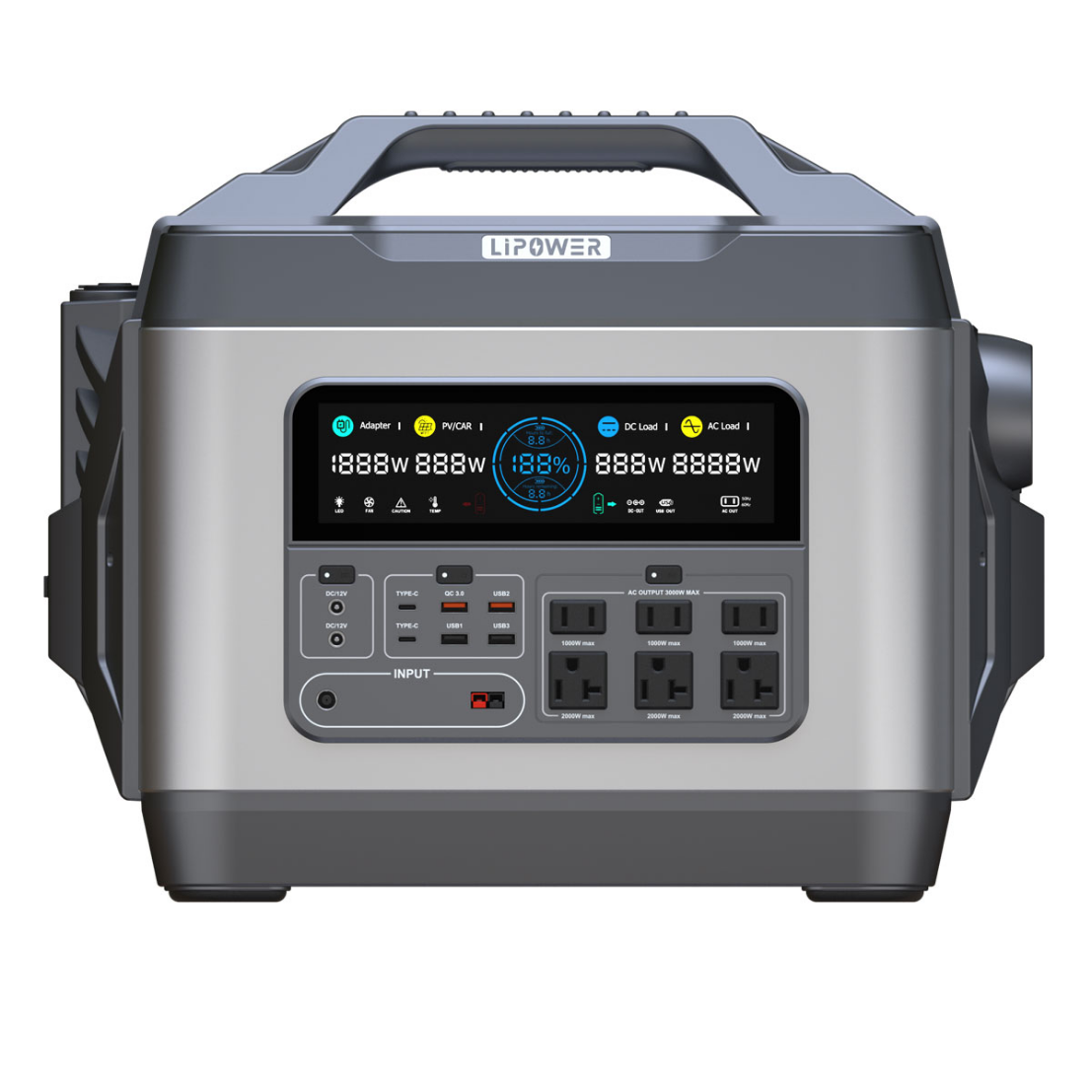
Now for the practical question — what can you realistically run with a 3,000 watt solar generator? The answer is: quite a lot. A system at this power level is capable of running most standard household appliances, power tools, and outdoor equipment either individually or in combination, so long as the total draw doesn't exceed 3,000 watts.

Here is a general breakdown of common devices and their approximate wattage requirements:
| Appliance / Device | Estimated Wattage |
|---|---|
| LED Light Bulbs (x10) | 100W |
| Laptop Computer | 50–100W |
| Smartphone Charger | 5–25W |
| Television (50") | 100–200W |
| Refrigerator | 100–400W |
| Microwave Oven | 600–1,200W |
| Electric Drill | 300–800W |
| Coffee Maker | 800–1,200W |
| Space Heater (Small) | 750–1,500W |
| Window Air Conditioner | 500–1,500W |
| CPAP Machine | 30–60W |
| Electric Grill | 1,200–1,800W |
The key takeaway is that a 3,000W generator can handle multiple low-draw devices simultaneously, or a single high-demand appliance comfortably. Planning your usage thoughtfully will ensure you always have power when it matters most.
Pro Tip: Always account for startup surge wattage when calculating your load. Many appliances — particularly those with motors like refrigerators and air conditioners — draw significantly more power during startup than during continuous operation. Make sure your generator's surge rating can accommodate these brief spikes.
A Powerful 3000 Watt Solar Generator Worth Considering
AC300 Inverter Module'

The AC300 is a modular inverter-based power station designed for serious energy needs. Rated at 3,072 watts of pure sine wave output, it pairs seamlessly with expansion batteries to deliver scalable storage — making it ideal for whole-home backup, extended off-grid stays, or heavy-duty work applications.
Unlike traditional all-in-one units, the AC300 uses a modular approach that lets you customize your total capacity by connecting compatible battery modules. This means you only pay for the storage you actually need — and you can expand later as your requirements grow.
Another Excellent Option: The EP500 Pro
EP500 Pro

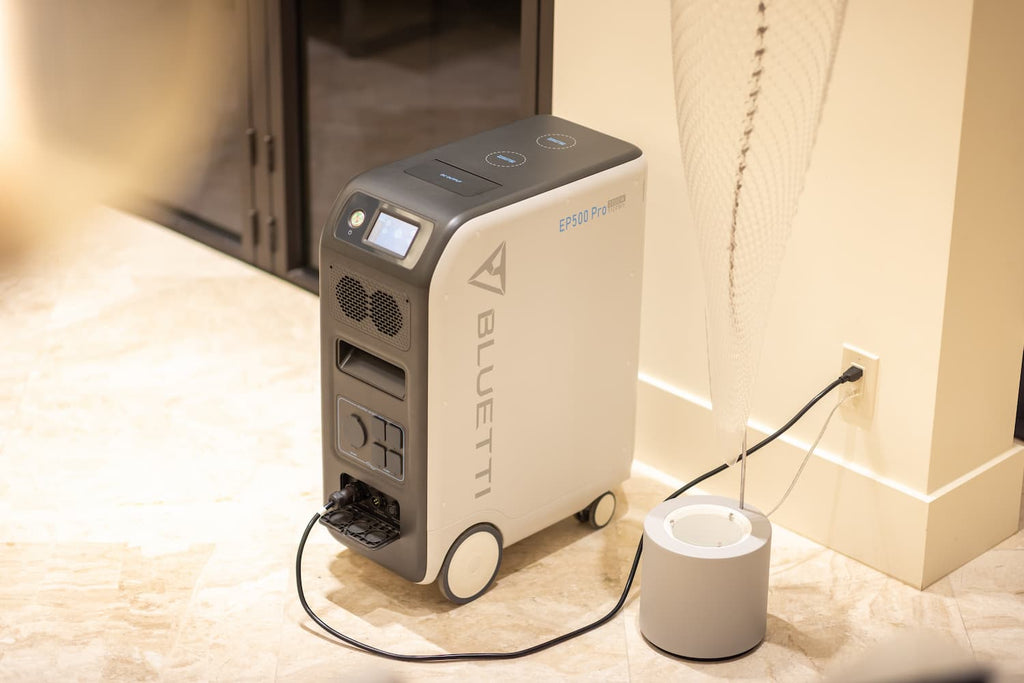
The EP500 Pro represents a fully integrated power station designed for those who want an all-in-one solution. With a massive built-in battery and 3,000W continuous output, it provides a self-contained system that can serve as a true home energy hub — complete with rolling casters for easy mobility.
This unit supports seamless UPS functionality, meaning it can automatically switch to battery power during an outage — keeping your essential systems running without interruption. It's also compatible with solar panel arrays for sustainable off-grid recharging.
What To Look At When Buying A Solar Generator
With so many options available on the market today, narrowing down the right generator can feel overwhelming. Here are the most important factors to evaluate before making your decision:
Battery Capacity (Wh)
Battery capacity determines how much total energy the generator can store. It's measured in watt-hours and directly affects how long you can power your devices. Bigger capacity means longer runtime — but it also usually means a heavier and more expensive unit. Consider your actual usage patterns carefully: a compact 2,000Wh battery might serve a weekend camper perfectly, while a homeowner preparing for outages may want 5,000Wh or more.
Power Output (Watts)
This is the maximum load the generator can handle at one time. Make sure the rated continuous output meets or exceeds the wattage of the most demanding appliance you plan to run. Don't forget to factor in surge wattage requirements as well — particularly for motorized equipment like refrigerators, power tools, and air conditioning units.
Run Time
Run time depends on both the battery capacity and the total load you're drawing. A helpful formula to estimate runtime: Battery Capacity (Wh) ÷ Device Wattage (W) = Approximate Hours of Operation. Keep in mind that real-world performance may vary slightly due to inverter efficiency and environmental conditions like temperature.
Charging Speed
How quickly can the generator recharge? This is especially critical if you're relying on solar panels in variable weather. Look for units that support multiple simultaneous charging inputs — such as AC wall power combined with solar panels — for the fastest recharge times. Some premium generators can reach full charge in under two hours when using dual-input methods.
Formula: Capacity ÷ Combined Charge Rate = Estimated Charge Time. Always verify the manufacturer's stated charge speeds under real-world conditions.
Battery Type
Modern solar generators predominantly use lithium iron phosphate (LiFePO4) batteries. These offer exceptional longevity — often rated for 3,500 or more charge cycles — along with superior thermal stability and safety. Older lithium-ion (NMC) batteries are still found in some units but generally offer fewer cycle ratings and slightly less chemical stability.
Outlets & Ports
Consider the variety and number of output options. A well-equipped generator should feature standard AC outlets, USB-A and USB-C ports, a 12V car-style outlet, and potentially a wireless charging pad. The more versatile the port selection, the more devices you can power simultaneously without adapters.
Final Thoughts
A 3,000 watt solar generator opens up a world of possibilities — from keeping your home essentials running during a blackout to powering a fully equipped campsite deep in the backcountry. The technology has advanced to a point where these units deliver clean, reliable, and virtually silent power that rivals traditional gas-fueled generators.
Before purchasing, take the time to calculate your actual energy needs, understand the difference between watts and watt-hours, and prioritize features like battery type and charging speed that align with how you plan to use the system.
If you're ready to explore a powerful and dependable option, the AC300 Inverter Module is an outstanding choice. Its modular design, impressive 3,072W output, and expandable capacity make it suitable for virtually any scenario — from emergency preparedness to full-time off-grid living.