


 Damage
  Loss
Loss  Theft
Theft 


12V Fridge vs. 2-Way Propane Fridge
When you're outfitting a truck camper, few decisions carry as much daily impact as your refrigeration choice. For years, the 2-way propane fridge was the default—reliable, fuel-efficient, and battle-tested by generations of overlanders. But today, 12V compressor fridges have surged in popularity and are quickly becoming the new standard for serious campers.
So which one earns a spot in your build? We're breaking down how each works, where each one wins, and who each one is really built for.
How They Work
12V Compressor Fridge
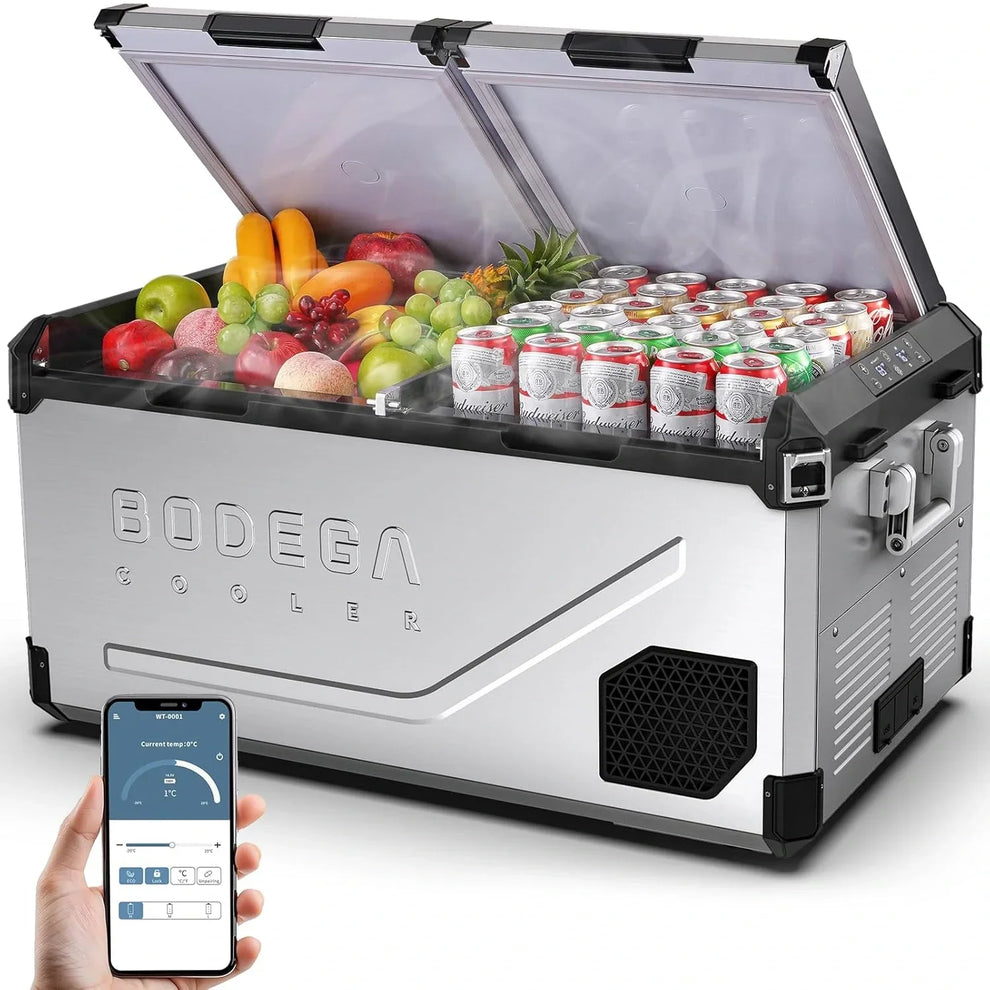
Think of it as a miniaturized version of your home refrigerator—engineered for life on the road. It uses an electric compressor to actively maintain your set temperature, drawing power directly from your camper's 12V battery system. Efficient, fast-cooling, and completely silent in the way compressor hum barely registers versus engine noise.
2-Way Propane Fridge
These are absorption-style refrigerators that use heat—either from burning propane or from a 120V shore power element—to drive refrigerant through a cooling cycle. There's no compressor, no moving parts, which means near-silent operation. Propane mode is where this technology truly excels, sipping from a tank for weeks without drawing a single amp.
Pros of a 12V Fridge
Rock-Solid Temperature Control
Whether you're parked on a slope, crawling a gravel road, or sitting at 7,000 feet, the compressor locks onto your set temperature and holds it. Dial it down to 35°F for groceries or push it to freezer territory for ice cream—it simply doesn't care.
Cools Down Fast
No pre-cooling required. Load it up and a 12V compressor fridge reaches temperature within hours—not a full day before your trip like many propane units demand.
Safe While You Drive
Running purely on electricity means no open propane flame burning while you're in transit. No tunnels to worry about, no ferry restrictions, no propane regulations at campgrounds.
Off-Grid Friendly with Solar
Pair a 12V fridge with a solid lithium battery bank and a solar array and you can run cold food indefinitely without ever touching a propane tank. This is the setup serious overlanders are moving toward.
Flexible Installation
No combustion means no need for exterior venting, clearance gaps, or exhaust routing. Slide it into tighter spaces and simplify your build significantly.
Cons of a 12V Fridge
Power Hungry (Sort Of)
They're more efficient than absorption fridges running on electric mode, but they still draw steady amps. A small battery bank without solar can go flat after a day or two of heavy use.
Higher Upfront Cost
Quality compressor fridges cost more than most propane units, particularly at larger capacities. Factor in the cost of an adequate battery and solar system and the investment adds up.
No Backup Fuel Option
If your batteries go flat, you're out of cold storage until you recharge. Unlike a propane unit where you can simply swap in a fresh tank, electricity requires a charging source.
Pros of a 2-Way Propane Fridge
Extraordinary Fuel Efficiency on Propane
This is the propane fridge's crown jewel. A single 20 lb tank can keep food cold for weeks. If you camp in one spot for extended periods without solar, it simply cannot be beaten on running costs.
Dual Fuel Flexibility
Toggle between propane and 120V shore power depending on where you're parked. At campgrounds with hookups, plug in. In the backcountry, burn propane. That flexibility is genuinely useful.
Whisper-Quiet Operation
No compressor cycling means zero mechanical noise. For campers who sleep close to their fridge, this is a genuine quality-of-life benefit.
Decades of Proven Reliability
Absorption refrigerators have been cooling RVs for generations. The technology is mature, well-understood, and trusted by veteran RVers who've run these units for years without issue.
Cons of a 2-Way Propane Fridge
Must Park Level
Absorption cooling requires gravity to work properly. Park on too steep a slope and the refrigerant cycle struggles—or stops entirely. For truck campers that park on uneven terrain, this is a real limitation.
Slow to Cool
Pre-chill your propane fridge the night before you leave. These units take many hours to reach target temperature—patience you don't need with a compressor fridge.
Struggles in the Heat
Absorption fridges lose efficiency as ambient temperatures climb. In summer conditions at high temperatures, keeping food safely cold becomes a challenge.
Safety & Restriction Concerns
Running a propane flame while driving is a safety consideration. Many tunnels, ferries, and some campgrounds prohibit or restrict propane appliances in use.
Complex Installation
Proper combustion venting, clearances, and exhaust routing are required. That means cutting into your camper shell and adding complexity to your build.
Which One Is Right for Your Camper?
The honest answer is: it depends entirely on how you camp. Here's a quick guide to point you in the right direction.
- You're investing in a lithium battery bank and solar setup
- You move campsites frequently or drive daily
- You want consistent, reliable cooling in all climates
- You prefer a modern, flexible, vent-free installation
- Parking on uneven terrain is a regular part of your trips
- You camp in one location for extended periods without solar
- You already rely on propane for your stove and heater
- Minimizing upfront electrical investment is a priority
- You're okay managing level parking as part of your routine
- Silent operation while sleeping is non-negotiable for you
Ready to Go 12V?
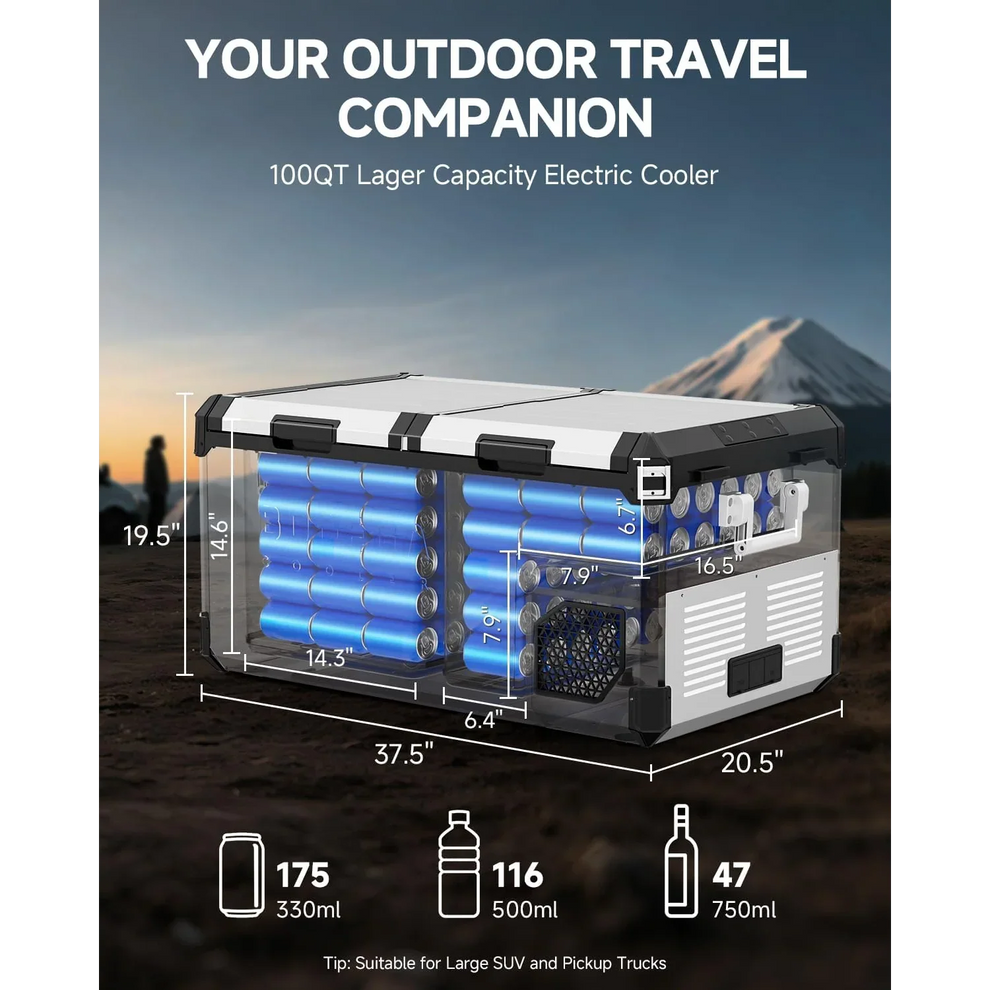
The BodegaCooler 100QT dual-zone compressor fridge is one of the most capable 12V units on the market—built for serious off-grid truck camper builds with dual-zone control and rugged hard insulation.
BodegaCooler 12V 100QTFinal Thoughts
For most modern truck camper builds, the 12V compressor fridge is rapidly becoming the go-to choice—especially for campers pairing it with lithium batteries and solar. The consistent performance, flexible installation, and off-grid capability are hard to argue with once you've experienced it firsthand.
That said, don't write off propane just yet. If you're a weekend warrior, camp in fixed spots, or simply want to keep your electrical system simple, a 2-way propane fridge still makes a compelling case. Few things in camping beat the economics of weeks of cold food from a single propane tank.
At the end of the day, your refrigeration choice should reflect your camping style, your power setup, and how much you value convenience versus simplicity. Either way, you'll come back to camp to cold drinks and fresh food—and that's always the goal.