


 Damage
  Loss
Loss  Theft
Theft 


The Science Behind Freezers: Your Complete Guide to Cooling Systems
Whether you're outfitting an outdoor kitchen, stocking up for large backyard gatherings, or managing food storage for your off-grid retreat, understanding freezer technology empowers you to make smarter decisions. This guide breaks down the fundamentals of how freezers operate—from core scientific principles to the essential components that keep your food fresh and safe.
Fundamental Principles of Refrigeration
At the heart of every freezer lies a straightforward yet elegant concept: extracting thermal energy from the interior compartment and expelling it into the surrounding environment. This heat transfer mechanism relies on well-established thermodynamic laws governing energy movement, conservation, and the behavior of matter at different temperature states.
The entire process hinges on manipulating a special substance—refrigerant—through various pressure and temperature changes, forcing it to absorb warmth from inside the unit and release it externally. This continuous cycle maintains the sub-zero temperatures necessary for long-term food preservation.
Essential Components of a Freezer System
1. The Compressor
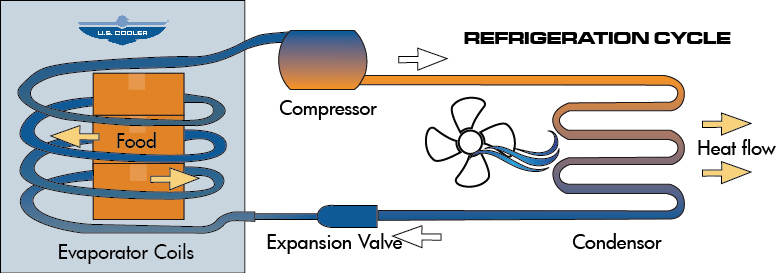
Often called the engine of the refrigeration system, the compressor initiates the cooling sequence by pressurizing the refrigerant gas. When this substance enters the compressor as a cool, low-pressure vapor, it exits as a heated, high-pressure gas—primed and ready for the subsequent cooling stages.
2. Condenser Coils
These coiled tubes serve as the system's primary heat exchanger, receiving the superheated refrigerant vapor directly from the compressor. As the hot gas flows through these coils, it releases its thermal energy to the outside air, gradually transforming from a high-temperature vapor into a cooler liquid state through a process known as condensation.
3. Expansion Valve
This precision component regulates refrigerant flow by creating a dramatic pressure reduction. As the liquid refrigerant passes through this narrow restriction, it experiences rapid depressurization—causing it to partially vaporize and drop significantly in temperature. This flash cooling prepares the refrigerant for maximum heat absorption.
4. Evaporator Coils
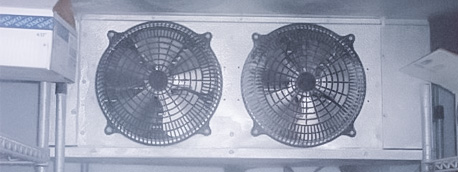
Located inside the freezer cabinet, the evaporator coils perform the critical cooling function. The cold, low-pressure refrigerant mixture flows through these coils while internal fans circulate air across them. This allows the refrigerant to draw heat from stored items, gradually bringing temperatures down to freezing levels before returning to the compressor.
5. Refrigerant
The refrigerant is the lifeblood of the entire operation—a specially engineered fluid capable of transitioning between liquid and gaseous states at temperatures ideal for residential and commercial cooling applications. Its unique thermodynamic properties enable efficient heat capture and release throughout each complete cycle.
How the Refrigeration Cycle Works
The cooling process operates as a continuous closed-loop system. It begins when the compressor squeezes the refrigerant gas, dramatically increasing its pressure and temperature. This superheated vapor then travels to the condenser coils, where exposure to ambient air causes it to shed heat and transform into a warm liquid.
Next, this liquid refrigerant passes through the expansion valve, experiencing a sudden pressure drop that chills it rapidly. The resulting cold mixture enters the evaporator coils inside the freezer compartment. Here, it absorbs warmth from the interior air and stored goods, evaporating back into a gas before returning to the compressor to begin the cycle anew.
Key Factors Affecting Freezer Performance
Multiple variables influence how effectively a freezer maintains optimal temperatures while minimizing energy consumption. The type of refrigerant used, door seal integrity, insulation thickness and quality, and the ambient temperature of the installation location all play significant roles.
Contemporary commercial freezers often incorporate advanced features such as digital temperature management systems, automatic defrost technology, and high-efficiency compressor designs. These innovations work together to deliver superior cooling performance while reducing operational costs—essential considerations for any serious backyard chef or outdoor entertaining enthusiast.
Final Thoughts
Grasping the mechanics behind freezer operation equips you to select the ideal unit for your specific requirements and maintain it properly for years of reliable service. By understanding the intricate dance between components and the refrigeration cycle they execute, you gain appreciation for these remarkable appliances that make outdoor kitchens, large-scale entertaining, and off-grid food storage possible. As technology continues advancing, expect even greater efficiency, smarter controls, and enhanced environmental sustainability in the freezers of tomorrow.