


 Damage
  Loss
Loss  Theft
Theft 


Rotary vs. Orbital Floor Scrubbers: What's the Difference?
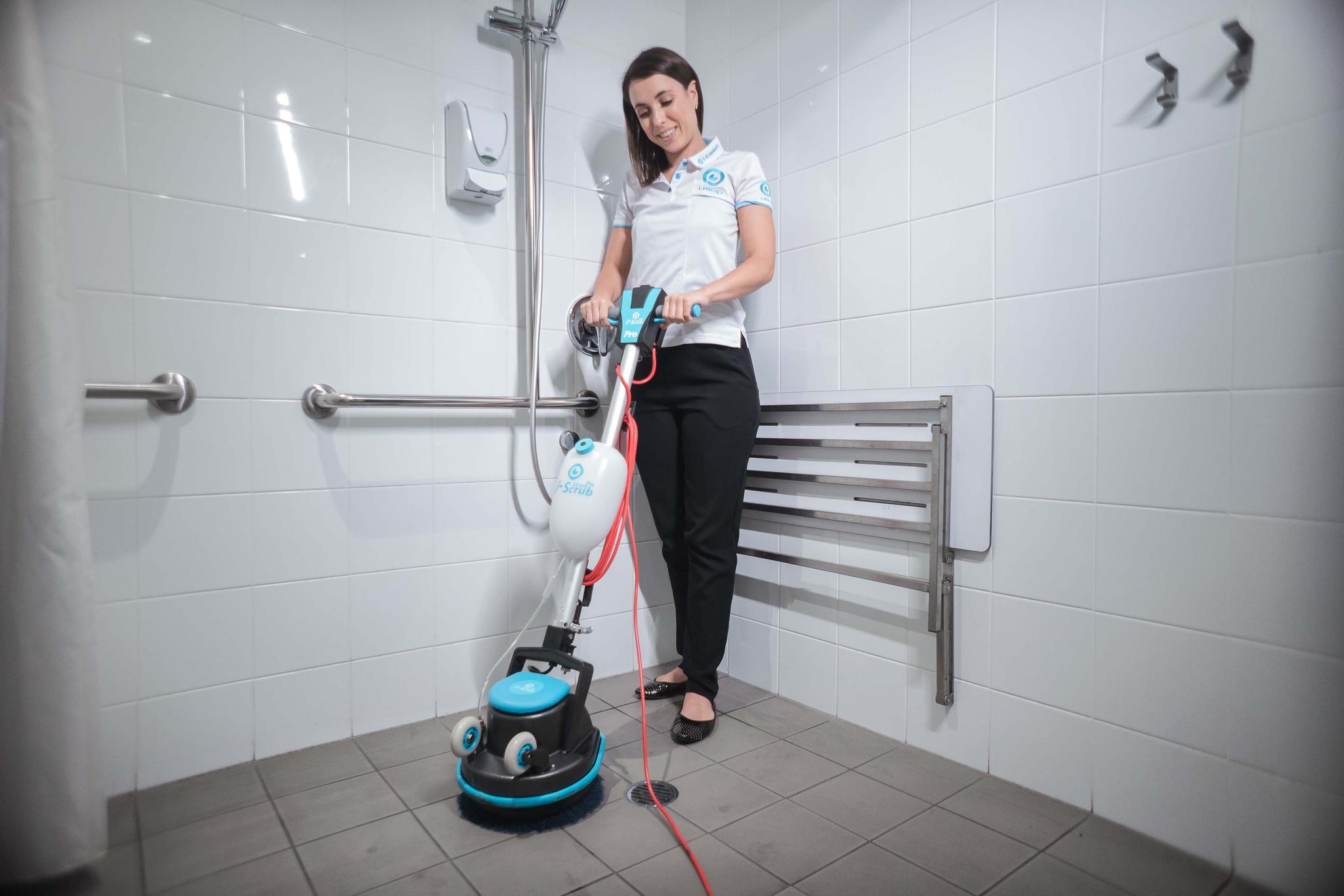
Rotary and orbital scrubbers are both widely used for floor maintenance across commercial and residential settings, yet each one brings something completely different to the table. Rotary machines use a single spinning disc to power through grime, while orbital scrubbers move their pads in a rapid rectangular pattern to cover surfaces more evenly. Both have loyal followings among cleaning professionals, and for good reason — they each excel in certain situations.
In this guide, we'll take an in-depth look at what sets rotary floor scrubbers apart from orbital models. We'll examine how each one works, where they shine, and what factors you should weigh before making a purchase. Whether you're outfitting a warehouse, maintaining a retail space, or simply keeping your garage floor spotless, understanding these differences will save you time, effort, and money.
Rotary Scrubbers
Single rotating disc • High-speed buffing • Deep scrubbing power • Great for stripping and polishing
Orbital Scrubbers
Rectangular oscillating motion • Even coverage • Less user fatigue • Ideal for delicate surfaces
Introduction to Floor Scrubbers
Keeping floors in top condition is essential for any business, institution, or well-maintained home. Over time, foot traffic, spills, and dust take their toll on every type of flooring — from polished concrete and vinyl tile to hardwood and natural stone. That's where floor scrubbers come in. These purpose-built machines make short work of cleaning tasks that would otherwise demand hours of manual labor.
Floor scrubbers generally fall into two major categories: rotary and orbital. While they share the same fundamental goal — thoroughly cleaning hard floor surfaces — they go about it in very different ways. Rotary machines spin a single circular pad or brush at varying speeds, making them incredibly versatile. Orbital machines, on the other hand, move a rectangular pad in a rapid back-and-forth oscillating pattern, distributing pressure more evenly across the surface.
Understanding which approach works best for your particular floors, cleaning frequency, and maintenance goals is the key to getting results that last. Let's dig into the specifics.
How Do Rotary Floor Scrubbers Work?
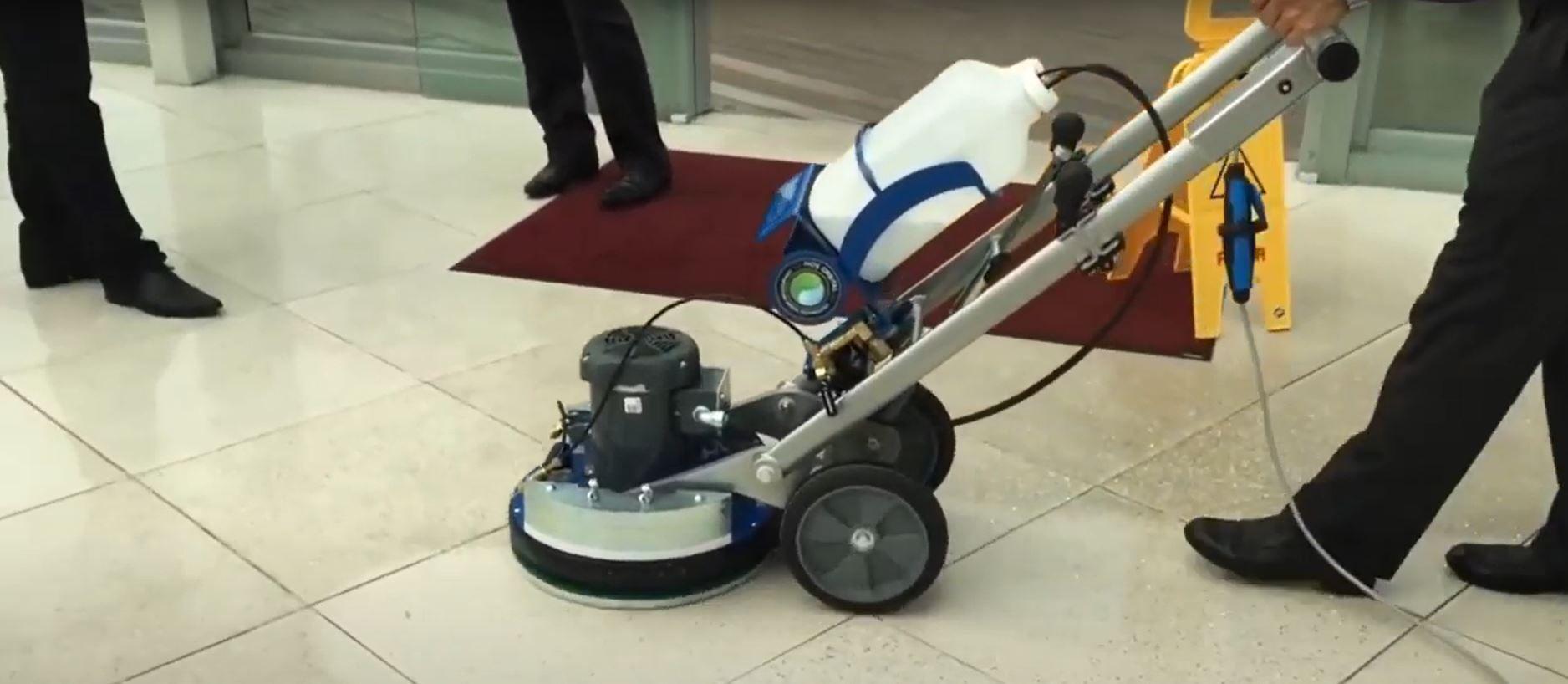
The concept behind a rotary scrubber is refreshingly straightforward. A powerful motor drives a single disc that spins at a controlled speed. You attach different pads or brushes to the disc depending on the job — soft pads for light buffing, aggressive pads for stripping wax, or stiff bristle brushes for textured surfaces like concrete or tile grout.
When the machine is running, the rotating action generates friction against the floor surface. That friction is what does the actual cleaning, scrubbing, or polishing. The operator guides the machine by angling the handle slightly to the left or right, which shifts the weight distribution and steers the unit across the floor. It takes a bit of practice to master, but once you get the feel for it, a rotary scrubber can be extremely efficient.
Rotary scrubbers typically operate at speeds that can be broadly classified into two ranges. Standard-speed models run between 175 and 350 RPM, making them the workhorse choice for scrubbing, stripping, and general-purpose cleaning. High-speed and ultra-high-speed burnishers spin at 1,000 RPM or more, and they're designed specifically for bringing a mirror-like gloss to finished floors.
Quick Tip
If you're only going to own one floor machine, a standard-speed rotary buffer in the 175–300 RPM range offers the most flexibility. You can scrub, strip, polish, and even clean carpets with the right attachments — making it a true multi-purpose investment.
Some rotary models also come equipped with solution tanks, letting you apply cleaning chemicals or water directly to the floor as you work. This is particularly helpful for scrubbing jobs where you need consistent moisture across the surface. Other accessories, such as dust skirts and vacuum attachments, can be added to manage debris and improve indoor air quality during operation.
One thing to keep in mind is that rotary scrubbers do require a steady hand. Because the single disc spins in one direction, the machine tends to pull to one side. Operators need to apply opposing pressure to keep the unit moving in a straight line. This is less of a concern with practice, but it can make the machine tiring to use over long shifts if you're not accustomed to it.
How Do Orbital Floor Scrubbers Work?
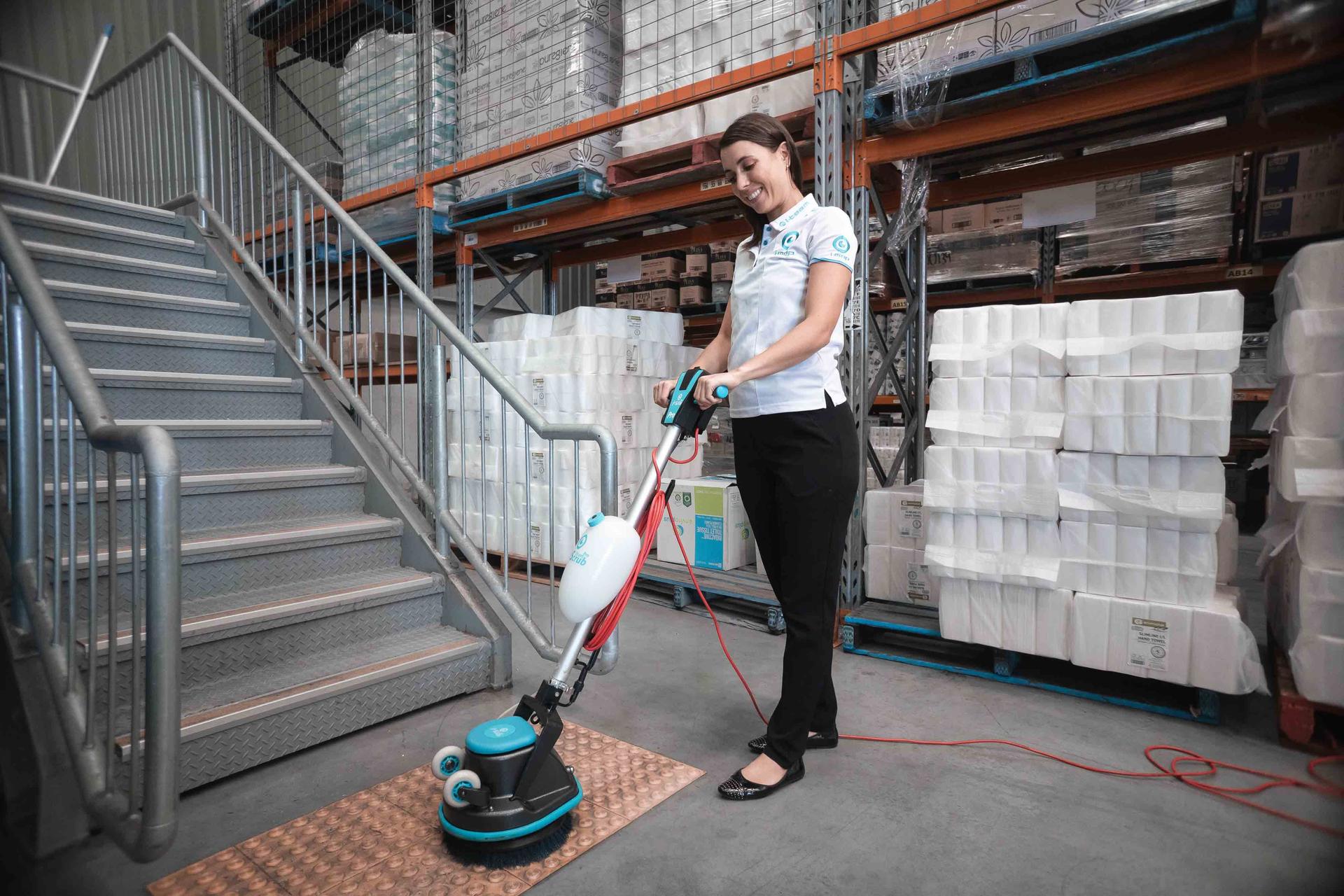
Orbital floor scrubbers take a fundamentally different mechanical approach. Instead of spinning a circular disc, they use a rectangular or square pad head that oscillates in a tight, rapid pattern — moving in tiny orbits rather than continuous rotation. Think of it like sanding wood with an orbital sander: the pad vibrates in small, overlapping circles rather than spinning in one direction.
This oscillating motion creates several practical advantages. Because the pad isn't spinning in a single direction, there's virtually no torque pulling the machine to one side. That makes orbital scrubbers significantly easier to control, especially for operators who don't have a lot of experience with floor equipment. You can essentially walk behind the machine and guide it with minimal physical effort.
The even distribution of pressure across the rectangular pad also means that orbital scrubbers tend to deliver more consistent results. There are no hot spots or uneven wear patterns like you can sometimes get with a rotary disc. This makes orbital machines particularly well-suited for delicate floor surfaces — things like luxury vinyl tile, engineered hardwood, or marble — where uneven pressure could cause scratches or damage.
Orbital scrubbers operate at a high number of oscillations per minute — typically around 3,200 or more — which provides effective cleaning power without the aggressive friction of a rotary unit. The rapid micro-movements are gentle enough for sensitive surfaces yet vigorous enough to remove ground-in dirt, scuff marks, and old floor finish when paired with the right pad or chemical.
Many orbital models feature built-in solution dispensing systems, making them practical for wet scrubbing applications. You can also find compact, lightweight orbital scrubbers that are perfect for smaller areas like offices, clinics, and retail stores where maneuverability and quiet operation are priorities.
Applications of Floor Cleaning Equipment
Both rotary and orbital scrubbers find use across a broad spectrum of settings. Commercial facilities like hospitals, schools, hotels, and supermarkets rely on these machines daily to maintain hygienic, safe, and visually appealing floors. Industrial environments — think manufacturing plants, distribution centers, and automotive shops — demand heavy-duty scrubbing to keep up with grease, oil, and constant heavy traffic.
In residential applications, floor scrubbers have become increasingly popular among homeowners with large tiled areas, finished basements, or workshop spaces. If you have a sizable concrete patio, a multi-car garage, or an enclosed porch, a floor scrubber can cut your cleaning time dramatically compared to a mop and bucket.
Rotary machines tend to dominate in situations where you need aggressive cleaning — stripping multiple layers of old wax, deep-scrubbing textured concrete, or polishing VCT to a high gloss. Orbital models are often preferred when the job calls for a gentler touch, such as refinishing hardwood floors, cleaning natural stone, or maintaining decorative epoxy coatings that could be marred by rotary friction.
Features to Consider
When shopping for a floor scrubber, there are several practical factors that should shape your decision beyond just the rotary-versus-orbital question.
Cleaning Path Width
Consider how large your floor area is. Wider cleaning paths (17"–20") cover more ground per pass, which is crucial for large commercial or industrial spaces. Smaller widths are better for tight areas.
Motor Power
The motor's horsepower directly affects how effectively the machine can scrub or strip. For heavy-duty tasks, look for at least 1.5 HP. Lighter maintenance jobs can be handled with less.
Weight & Ergonomics
A heavier machine applies more downward pressure, which can help with stripping tasks. But it also means more physical effort to maneuver. Consider who will operate the machine and for how long.
Pad Versatility
Check what kind of pads and brushes are compatible with the machine. A scrubber that accepts a wide range of attachments gives you more flexibility to tackle different cleaning tasks over time.
Budget is also a practical reality. Rotary floor buffers tend to be more affordable upfront, and replacement pads are widely available at low cost. Orbital scrubbers can carry a higher price tag, but many users find the reduced labor cost and gentler operation well worth the premium, especially when working with expensive flooring materials.
Maintenance and Care
Regardless of which type of floor scrubber you choose, maintaining the equipment properly will extend its lifespan and keep it performing at its best. Routine maintenance is simple and doesn't require any special tools or expertise, but it does need to be done consistently.
After each use, remove and inspect the pad or brush. Rinse pads thoroughly if they've been used with cleaning solution, and replace them once they show significant wear. Check the pad driver and mounting hardware for looseness or damage. Wipe down the machine housing, paying special attention to the solution tank if your model has one — standing water or leftover chemicals can cause buildup and corrosion over time.
Periodically inspect the power cord (or battery connections on cordless models) for fraying or damage. Lubricate moving parts as recommended by the manufacturer, and store the machine upright or on a pad holder so the weight doesn't flatten the brush bristles or deform the pad driver. If your machine needs service beyond basic maintenance, always rely on an authorized service center to preserve your warranty.
So, Which Is Better?
The honest answer is that neither one is universally better — it depends entirely on your specific needs. If you're looking for a reliable, budget-friendly machine that can handle heavy-duty stripping, aggressive scrubbing, and high-gloss burnishing all in one unit, a rotary floor buffer is hard to beat. It's the classic choice for a reason, and with the right pads, there isn't much it can't do.
On the other hand, if you're dealing with delicate floor surfaces, need something that's easier for staff to operate without extensive training, or you value even, consistent results without the physical demands of controlling a spinning disc, then an orbital scrubber is the smarter pick. The ease of use alone makes it a favorite in environments with high employee turnover.
For businesses that maintain a wide variety of floor types — say, polished concrete in the warehouse, VCT in the hallways, and hardwood in the front office — owning one of each gives you the best of both worlds. However, if you can only choose one, consider the type of flooring you have the most of, and match your machine to that.
| Feature | Rotary Scrubber | Orbital Scrubber |
|---|---|---|
| Motion Type | Single spinning disc | Oscillating rectangular pad |
| Ease of Use | Requires practice | Beginner-friendly |
| Best For | Stripping, heavy scrubbing, polishing | Delicate surfaces, even coverage |
| Price Point | Generally more affordable | Higher upfront cost |
| Operator Fatigue | Higher over long shifts | Minimal fatigue |
| Versatility | Extremely versatile with pad changes | Versatile for light to medium tasks |
Common Questions Answered
What are the key advantages of rotary floor scrubbers compared to orbital models?
Rotary scrubbers offer superior stripping power, unmatched versatility through pad changes, and the ability to achieve a high-gloss burnished finish. They're also widely available and generally more affordable. Their single-disc design has been the industry standard for decades, so finding parts, pads, and accessories is never an issue.
In what situations would an orbital floor scrubber be a better choice than a rotary?
Orbital scrubbers are the preferred option when you're working on delicate or expensive flooring such as hardwood, marble, luxury vinyl, or decorative epoxy. They're also the smarter pick for facilities where multiple staff members need to operate the equipment, since orbital machines require virtually no training and don't pull to one side like rotary units.
How do maintenance and operating costs compare between rotary and orbital scrubbers?
Rotary scrubbers generally have lower purchase prices and their replacement pads are inexpensive. However, orbital scrubbers can reduce labor costs thanks to their ease of use and lower operator fatigue. Over time, the total cost of ownership can be comparable depending on your usage patterns and staffing situation.
Can I use the same pads on both rotary and orbital scrubbers?
No — the pad shapes are different. Rotary machines use circular pads that mount to a round pad driver, while orbital scrubbers use rectangular or square pads designed for their flat oscillating base. Always check the manufacturer's recommendations for compatible pads and never try to force a pad designed for one machine type onto the other.
Ready to Upgrade Your Floor Cleaning?
Get the industry-trusted CleanFreak rotary floor buffer — built for performance, priced for value.
CleanFreak 20" Rotary Floor Buffer