


 Damage
  Loss
Loss  Theft
Theft 


Conduit & Pipe Storage Racks: Your Key to Building a Leaner Warehouse
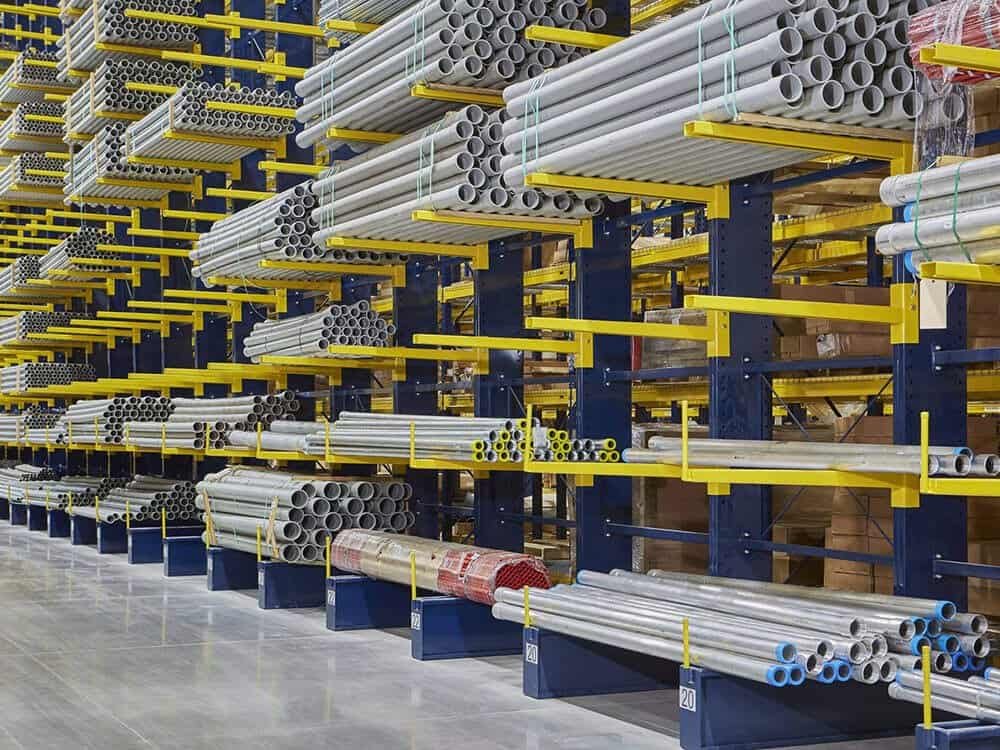
Selecting the ideal conduit or pipe storage rack for your warehouse is a crucial decision. These systems provide a safe, well-organized method to hold and move bulky materials with confidence. Whether you opt for horizontal, vertical, cantilever, or other heavy-duty models, every rack configuration brings a unique set of features tailored to distinct operational needs.
In this guide, we will walk you through the fundamentals of industrial pipe and conduit storage racks — covering their construction, real-world applications, and primary benefits. We will also highlight five popular rack designs and discuss the critical factors to weigh before making your final purchase.
Table of Contents
1. Conduit & Pipe Storage Rack Essentials
2. Top 5 Pipe & Conduit Rack Designs Explained
3. Key Factors for Choosing the Right Rack
4. Installation & Maintenance Best Practices
5. Can Pipe Racks Work Outdoors?
6. Conclusion
Conduit & Pipe Storage Rack Essentials
A conduit or pipe storage rack is a purpose-built inventory system designed to efficiently store, manage, and handle large quantities of pipes, tubes, and conduits. Its core objective is to maintain a tidy, damage-free warehouse layout where materials remain accessible at all times and the risk of harm is minimized.
A wide variety of rack designs exist to accommodate pipes of different dimensions, lengths, and weights in a structured manner. The sections below explore these details — from how they are built to how they perform across various industries.
How These Racks Are Built
Commonly known as warehouse pipe racks, these storage structures are made up of horizontal beams that span the full length of the pipe, steel uprights, and evenly spaced separators — typically positioned around 20 feet apart. The separators create individual compartments for vertical or horizontal storage of various pipe diameters, making excellent use of warehouse floor space while keeping everything within reach. Structural struts connect the beams for added stability and stiffness.
Where They Are Used
Pipe and conduit storage racks serve a broad range of industries, from petrochemical plants to power generation facilities. In these environments, racks securely support pipes, cable trays, insulation layers, and heavy equipment — keeping operations safe and running smoothly. They are equally valuable in general industrial warehouses where orderly routing and storage of cables, conduits, and pipes is a daily requirement.
Primary Benefits at a Glance
Space Optimization
Harness vertical space to free up floor area for other essential warehouse processes and improve overall organization.
Fast Retrieval
Systematically arranged materials let workers quickly identify and retrieve items, reducing downtime and boosting efficiency.
Safety Enhancement
Reduce trip-and-slide hazards on the warehouse floor, creating a safer working environment for your entire team.
Pipe Protection
Keep pipes elevated and secure, minimizing dents, scratches, and surface damage that compromise material integrity.
Customizability
Configure racks to hold pipes of varying lengths, diameters, and weights — adapting the system to your unique requirements.
High Capacity
Constructed from industrial-grade steel, these racks hold heavy loads and deliver long-lasting performance with minimal upkeep.
Top 5 Pipe & Conduit Rack Designs Explained
With a solid understanding of what conduit storage racks are, it is time to explore the five most popular configurations used in warehouses worldwide. Each design solves specific storage challenges, so understanding the differences is essential before investing.
#1 — Vertical Pipe Storage Racks
Vertical racks are an excellent choice for storing longer materials — like pipes and sheet metal — in an upright position. By leveraging vertical height, these racks dramatically boost storage capacity while enabling rapid, ladder-free selection of individual items.
Warehouse professionals appreciate vertical racks because they are cost-effective and straightforward to assemble. They maximize floor space, allow clear line-of-sight inventory, and incorporate dividers that prevent product-to-product contact damage.
#2 — Horizontal Pipe Storage Racks
Horizontal racks use level beams and supports to create a flat platform for storing long pipes side by side. These steel structures typically feature several parallel compartments running the full width, allowing pipes to lay flat for easy identification and retrieval.
Though they demand more floor space than vertical alternatives, horizontal racks offer effortless organization and no-ladder access. They are ideal for facilities where rapid recovery of lengthy pipes is a priority and footprint constraints are less pressing.
#3 — Cantilever Pipe Storage Racks
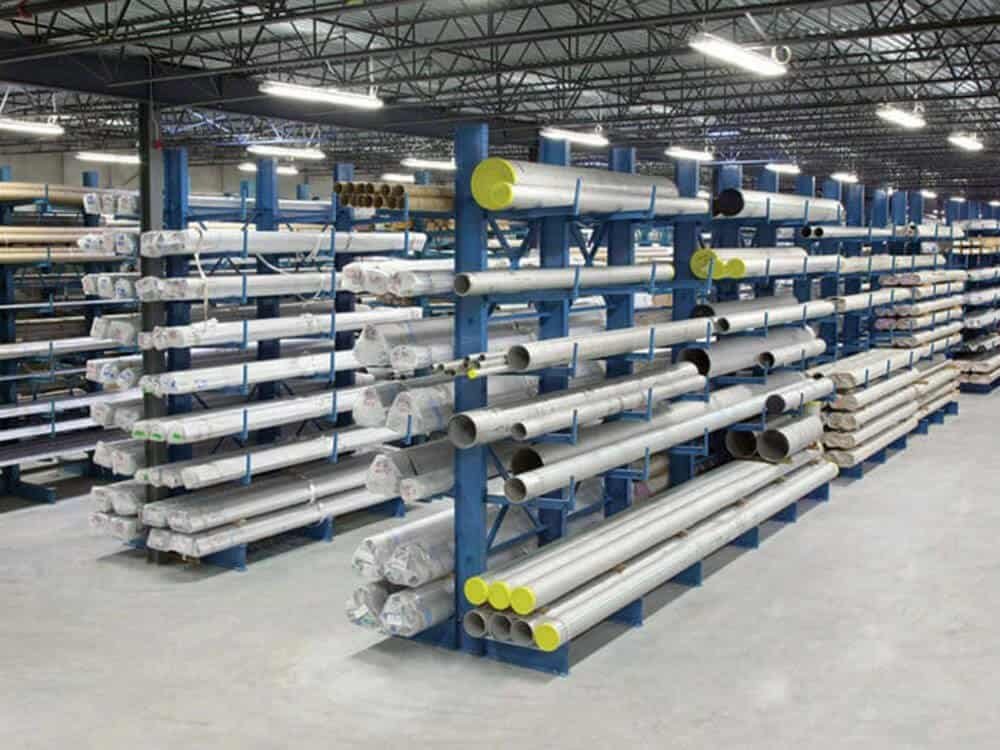
Built with vertical columns and adjustable horizontal arms, cantilever racks accommodate long pipes of varying lengths, weights, and materials — including PVC conduit. The arms adjust up or down to fit a broad range of pipe sizes, and loading from one side simplifies both storage and retrieval.
Their standout advantage is exceptional load-bearing capacity, making them the go-to choice for heavy-duty industrial environments. The trade-off is a higher installation cost compared to other rack types, which reflects their robust and customizable construction.
#4 — Stackable Pipe Racks
While stackable racks are limited by maximum stacking height, they deliver impressive advantages for warehouses pressed for floor space. Their defining feature — a modular stacking mechanism — lets you grow storage capacity upward instead of outward, conserving valuable real estate on the warehouse floor.
Another major benefit is portability. Stackable racks can be easily repositioned throughout the facility, adapting quickly to shifting inventory requirements — a top reason why many warehouse managers prefer them over fixed alternatives.
#5 — Rolling Pipe Storage Racks
When mobility and adaptability top your priority list, rolling racks are the answer. Equipped with casters or wheels, they let you conveniently move materials from one area to another — an ideal setup for facilities where pipes are constantly in transit between workstations.
The trade-off is reduced stability. The very wheels that provide mobility can make these racks less steady than bolted-down alternatives, particularly under heavy loads. Proper weight management and locking mechanisms are essential to mitigating that risk.
Key Factors for Choosing the Right Rack
Understanding the available rack types is only part of the equation. To make a truly informed decision for your warehouse, you must evaluate several practical factors that directly influence which rack style will deliver the best return on investment.
Available Floor Space
Begin by measuring your warehouse footprint carefully. This single factor can immediately narrow your options. Vertical and stackable racks work best in tight spaces because they capitalize on ceiling height rather than floor area. Cantilever and horizontal racks need more room but offer faster access to long pipes and tubes. Accurate measurements of your layout make the selection process considerably simpler.
Pipe Dimensions & Weight
Pay close attention to the size and mass of the pipes you need to store. Long, heavy materials are best suited to heavy-duty solutions like cantilever racks, whereas shorter, lighter pipes do well in vertical or stackable configurations. Always confirm that the rack's weight capacity exceeds your actual load — overloading a storage system can lead to serious safety hazards and structural failure.
Loading & Unloading Needs
Consider how frequently pipes are moved in and out. If turnover is high, rolling racks streamline the process. For steady-state storage with periodic access, cantilever or horizontal designs offer the best combination of stability and reach. Where floor space is tight and access frequency is moderate, vertical racks trade some convenience for a dramatically smaller footprint.
Environmental Conditions
The environment where your racks will operate matters significantly. Outdoor setups demand weather-resistant materials such as galvanized steel or powder-coated finishes that resist corrosion from rain, snow, and UV exposure. Even for indoor applications, sturdy construction and protective coatings help preserve both the rack and the pipes it holds.
Safety Compliance & Standards
Safety should sit at the top of every purchasing decision. Verify that your selected rack meets all applicable load capacity, stability, and construction quality standards. Proper labeling of stored pipes — by size, material, and intended use — further enhances safety by allowing workers to identify and retrieve items correctly every time.
Budget & Long-Term Value
Cost is always a factor, but look beyond the sticker price. High-quality racks built from industrial-grade steel may cost more upfront, but their durability and low maintenance requirements translate to significant savings over the product's lifetime. Choose a solution that balances quality with affordability — cutting corners on storage infrastructure can be costly in the long run.
Installation & Maintenance Best Practices
Once you have settled on the ideal rack, investing a little extra effort in proper setup and ongoing care will reward you with years of safe, reliable service. Here are the essential practices every warehouse team should follow.
Site Preparation & Assembly
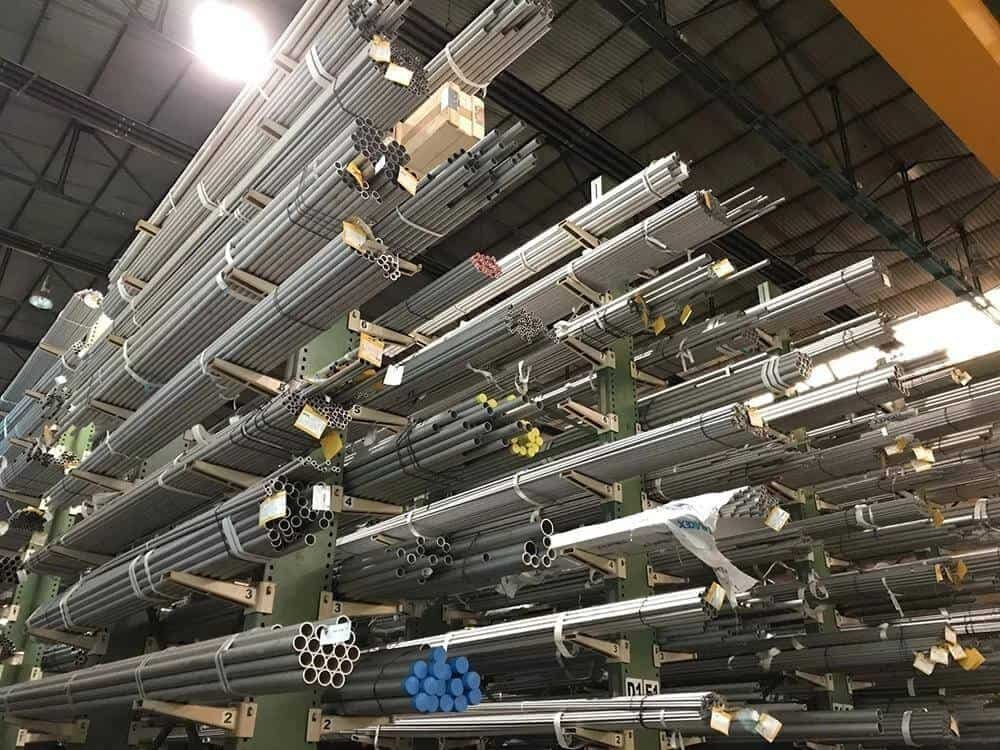
Careful planning is the foundation of a successful installation. Survey your warehouse to identify the optimal placement — factoring in accessibility, weight capacity of the floor, and workflow patterns. Clear the installation area of debris, then follow the manufacturer's assembly instructions precisely, paying special attention to bolt alignment and tightening. Anchor the completed structure firmly to the floor or wall for maximum stability, and perform a load-bearing test before putting the rack into active service.
Safe Loading & Unloading Techniques
Train your entire warehouse team on proper handling procedures, emphasizing the importance of respecting weight limits and distributing loads evenly across the rack. A proven best practice is to place heavier pipes on lower tiers and lighter ones above, ensuring structural stability at all times. Use appropriate equipment — forklifts or cranes — when loading and unloading heavy items to reduce accident risk and extend the rack's working life.
Routine Inspections
Schedule regular checkups to catch early signs of wear, corrosion, bent components, or loosened fasteners. Inspect anchor points to confirm they remain secure, and periodically re-test load-bearing capacity to verify the rack can still handle its rated weight.
Maintain detailed records of every inspection and maintenance action. This documentation lets you track system health over time and address potential problems before they escalate into safety hazards or expensive failures.
Can Pipe Storage Racks Work Outdoors?
Absolutely. Pipe storage racks are well-suited to outdoor deployment. That said, standard steel — while incredibly strong — is not fully weatherproof. Prolonged exposure to rain, wind, and snow can erode the surface finish, compromise hardness, and shorten the rack's useful life.
The solution is simple: opt for racks constructed from stainless steel or treated with protective coatings. Powder-coating and hot-dip galvanizing form a barrier against oxidation, allowing your outdoor racks to withstand harsh conditions while keeping stored pipes secure and accessible season after season.
Conclusion
Conduit and pipe storage racks are indispensable assets for any warehouse that handles tubes and pipes of varying sizes. They deliver a cost-effective, space-efficient storage solution that also strengthens workplace safety by keeping materials organized and off the floor.
When making your selection, weigh the types and sizes of pipes you store, the available space in your facility, total weight capacity, and any environmental challenges the rack may face. Each of these factors points toward a different optimal configuration.
To keep your racks performing safely over the long haul, familiarize yourself with the manufacturer's load ratings and compliance standards. Pair that knowledge with regular inspections and proactive maintenance, and your storage system will serve your operation reliably for years to come.