


 Damage
  Loss
Loss  Theft
Theft 


EMT vs. Rigid vs. IMC Conduit
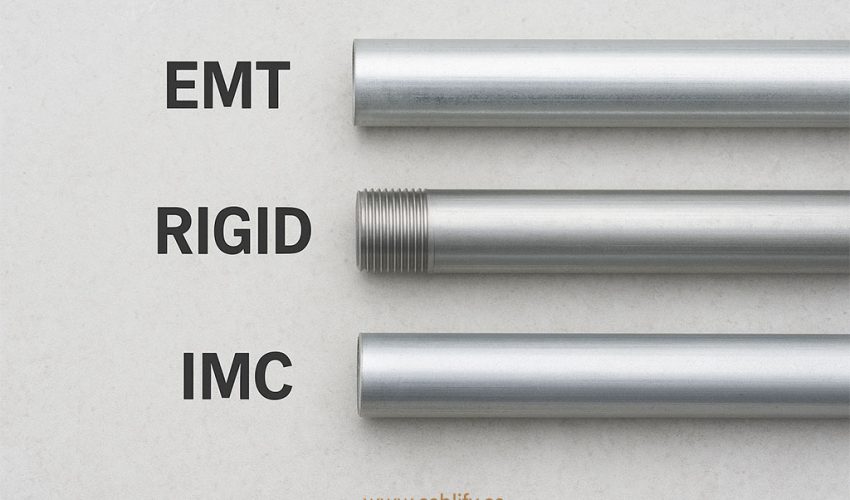
Electrical conduit is the backbone of every commercial building's wiring infrastructure. It is the pathway that shields and routes electrical conductors safely throughout a structure. Choosing the correct conduit type can directly impact installation speed, long-term reliability, and overall project cost. Among the three most widely specified options for commercial work—Electrical Metallic Tubing (EMT), Rigid Metal Conduit (RMC), and Intermediate Metal Conduit (IMC)—each brings its own combination of strengths and trade-offs to the table. This guide breaks down exactly what sets them apart so that contractors, electricians, and project managers can make the right call every time.
Overview of Each Conduit Type
Electrical Metallic Tubing (EMT)
EMT is the thinnest and lightest of the three conduit families. It is made from uncoated steel or aluminum and connects using set-screw or compression fittings—no threading required. That makes it fast to install and easy to work with, which is exactly why it dominates in interior commercial applications where physical damage risk is minimal.
Best suited for: Interior walls, above-ceiling runs, and protected indoor environments. EMT is the go-to choice for projects where budget and installation speed matter most, without sacrificing basic mechanical protection.
Rigid Metal Conduit (RMC)
RMC is the original heavy-duty threaded conduit. It features the thickest walls of any standard metallic conduit, which gives it outstanding crush resistance and makes it suitable for the harshest environments. Because each joint is threaded, connections are extremely secure, and the conduit itself can serve as an equipment grounding conductor.
Best suited for: Exposed outdoor locations, underground direct-burial applications, hazardous classified areas, and any environment where maximum physical protection is non-negotiable. Its primary drawback is weight and labor cost.
Intermediate Metal Conduit (IMC)
IMC was developed as a practical middle ground between EMT and RMC. It uses threaded connections just like Rigid, yet it features thinner walls that reduce both weight and material cost. NEC recognizes IMC as an acceptable substitute for RMC in almost every application, which makes it an attractive alternative when full Rigid-level protection is not strictly necessary.
Best suited for: Commercial projects that need threaded-connection reliability without the extra weight of Rigid. IMC shines in exposed runs, rooftop installations, and scenarios where code demands more than EMT but full RMC is overkill.
Electrical Conduit Comparison: EMT vs. IMC vs. RMC
Selecting the right conduit type means understanding how each option stacks up in terms of cost effectiveness, physical toughness, and code suitability for your specific project. The comparison below covers the essential differences at a glance.
Installation and Code Considerations
The National Electrical Code (NEC) lays out specific requirements for the installation and use of each conduit type. Understanding these rules is just as important as understanding the physical differences between the products.
NEC Articles to Know
EMT (Article 358): Approved for both exposed and concealed work in most commercial environments. It can be used to connect to different conduit types at junction points. However, it is generally not permitted in locations where it is subject to severe physical damage, corrosive atmospheres, or in hazardous classified areas unless specifically listed for such use.
RMC (Article 344): Accepted in virtually all environments, including direct burial, concrete embedment, hazardous locations, and areas where extreme physical damage is expected. RMC is the conduit of choice when codes demand maximum mechanical protection.
IMC (Article 342): NEC-approved as an equivalent to RMC for nearly every application. It shares the same permitted uses as Rigid but at roughly one-third less weight. This makes it an increasingly popular alternative for new commercial construction and renovation projects.
Grounding Requirements
Both RMC and IMC are recognized as equipment grounding conductors under NEC 250.118, which can eliminate the need for a separate ground wire. EMT relies on its fittings for grounding continuity, and many jurisdictions require an additional equipment grounding conductor as an extra measure of safety.
Conduit Fill Capacity
Because RMC and IMC have different internal diameters from EMT at the same trade size, wire fill calculations must be checked carefully. Switching from one conduit type to another can change the number of conductors you can legally pull through a given run.
Support and Fastening
Each conduit type has unique support spacing requirements per NEC. EMT must be secured within 10 feet of each box and at intervals no greater than 10 feet. RMC and IMC allow slightly wider spacing. Always verify local amendments, as requirements can vary by jurisdiction.
Transition Fittings
It is common in commercial construction to use more than one conduit type in the same system. Transition fittings allow EMT to connect to threaded IMC or RMC at junction points, enabling contractors to use lighter conduit where protection is adequate and heavier conduit where it is required.

Choosing the Right Conduit for Your Project
There is no single "best" conduit. The right choice depends on the environment, local code requirements, and project budget. Here is a practical framework for making the decision:
Assess the Environment
Indoor, dry, and well-protected areas are ideal candidates for EMT. Exposed outdoor runs, rooftop equipment connections, or areas with moderate risk call for IMC. Underground burial, corrosive settings, or hazardous classified locations demand the full strength of RMC.
Check Local Code Requirements
NEC sets the baseline, but local authorities having jurisdiction (AHJ) may impose stricter rules. Some jurisdictions require RMC in specific occupancy types or locations. Always verify before specifying materials.
Weigh Budget Against Longevity
EMT delivers the lowest up-front material and labor costs. IMC offers a solid middle ground with meaningful savings over RMC. RMC is the most expensive option but delivers the longest service life in demanding conditions—often making it the most cost-effective choice over 20+ year time horizons.
Consider Installation Logistics
Large commercial projects can involve thousands of feet of conduit. Weight differences between EMT, IMC, and RMC have real implications for structural support requirements, transportation, and how much a crew can install per day. Factor labor productivity into your total installed cost calculation.
Real-World Use-Case Scenarios
Office Buildings & Retail
EMT is the standard choice for office interiors, retail fit-outs, and above-ceiling distribution. Its light weight, low cost, and fast installation make it the most economical solution for protected indoor runs where physical damage is unlikely.
Industrial & Manufacturing
RMC is typically the requirement in industrial environments where heavy machinery, chemical exposure, and constant vibration are present. When code allows, IMC can reduce material weight significantly while still providing the threaded-connection security these environments demand.
Outdoor & Rooftop Equipment
Rooftop HVAC connections, parking structure lighting, and exposed exterior runs are prime territory for IMC. It withstands weather and UV exposure far better than EMT, yet it is lighter and more cost-effective than full RMC for these moderately demanding applications.
Underground & Hazardous Locations
Direct-burial applications and hazardous classified areas (Class I, II, and III divisions) almost always require RMC. Its thick walls, superior corrosion protection, and robust threaded connections provide the level of safety and durability these critical environments require.
Keeping Your Conduit Organized on the Jobsite
Regardless of which conduit type you choose, proper storage and organization on the jobsite directly impacts productivity. Conduit that rolls around or is stacked haphazardly leads to damage, delays, and wasted time. A dedicated conduit rack system keeps material sorted by type and trade size, which means faster pulls and fewer trips to the supply house.

Current Tools 505 Stackable Conduit Rack
Keep every stick of EMT, IMC, and RMC neatly sorted and easily accessible with a purpose-built stackable conduit rack. Designed for heavy commercial use, this rack system saves floor space, reduces material damage, and keeps your crew moving efficiently.
Stackable Conduit RackThe Electrician's Quick Reference
EMT
Best For
Indoor commercial spaces where cost efficiency and fast installation are priorities.
Avoid When
Physical damage risk is high, outdoors exposed to weather, or in hazardous classified areas.
IMC
Best For
Exposed commercial runs, rooftop connections, and moderate-duty outdoor applications.
Avoid When
Local code specifically mandates RMC or the environment involves direct burial in corrosive soil.
RMC
Best For
Underground, hazardous locations, industrial facilities, and any setting demanding maximum protection.
Avoid When
Budget is constrained and the environment does not justify the added weight, labor, and material cost.
Final Thoughts
EMT, IMC, and RMC each serve a distinct purpose in commercial electrical systems. The smartest approach is rarely to pick one and use it everywhere—it is to understand the strengths and limitations of each type and deploy them strategically throughout the project. Use EMT where it is code-compliant and cost-effective, step up to IMC where added protection or threading is needed, and reserve RMC for the toughest environments that demand its unmatched durability.
Proper conduit selection protects the wiring infrastructure of your building for decades. Taking the time to evaluate each run individually—considering environment, code, cost, and logistics—is the hallmark of a well-planned electrical installation.