


 Damage
  Loss
Loss  Theft
Theft 


Tankless Water Heaters: Point-of-Use vs. Whole House Systems
Key Takeaways
- Tankless water heaters provide hot water on demand without storage tank limitations
- Point-of-use systems excel for single fixtures and remote locations
- Whole house units supply hot water to multiple outlets simultaneously
- Energy savings of 24-34% compared to conventional tank heaters
- Lifespan exceeds 20 years with proper maintenance
Selecting the right water heating system represents one of the most impactful decisions homeowners and outdoor enthusiasts face. Whether you're outfitting a permanent residence, a backyard workshop, or an off-grid cabin, understanding the differences between point-of-use and whole house tankless water heaters empowers you to make an informed choice. This guide explores both options in depth, helping you identify which system aligns with your specific hot water requirements.
What Are Tankless Water Heaters?
Tankless water heaters, also referred to as on-demand or instantaneous water heaters, revolutionize how we access hot water. Unlike conventional storage tank systems that continuously heat and store large volumes of water, tankless units activate only when you turn on a hot water tap. This fundamental difference delivers significant advantages in efficiency, space utilization, and long-term operating costs.
How Do Tankless Water Heaters Work?
When you open a hot water faucet, cold water travels through a pipe into the tankless unit. Either a gas burner or electric heating element rapidly heats the water as it passes through the heat exchanger. This process delivers a continuous supply of hot water without the standby energy losses associated with maintaining a heated tank. The result is hot water precisely when needed, eliminating the wait for a storage tank to refill and reheat.
Advantages of Tankless Water Heaters
- Superior Energy Efficiency: Operating only when hot water is required eliminates standby heat loss, reducing energy consumption by 24-34% for most households
- Unlimited Hot Water Supply: Continuous heating means you'll never run out of hot water during extended showers or consecutive uses
- Compact Design: Wall-mounted installation frees valuable floor space compared to bulky storage tanks
- Extended Lifespan: Quality tankless units typically last over 20 years, nearly double the lifespan of conventional tanks
- Reduced Water Damage Risk: No storage tank means no risk of catastrophic tank failures and flooding
Considerations to Keep in Mind
- Higher Initial Investment: Purchase and installation costs exceed those of traditional tank heaters
- Flow Rate Limitations: Simultaneous high-demand applications may challenge single-unit capacity
- Possible Retrofitting: Existing homes may require electrical or gas line upgrades
- Cold Water Sandwich Effect: Brief temperature fluctuations can occur between consecutive uses
Point-of-Use Tankless Water Heaters
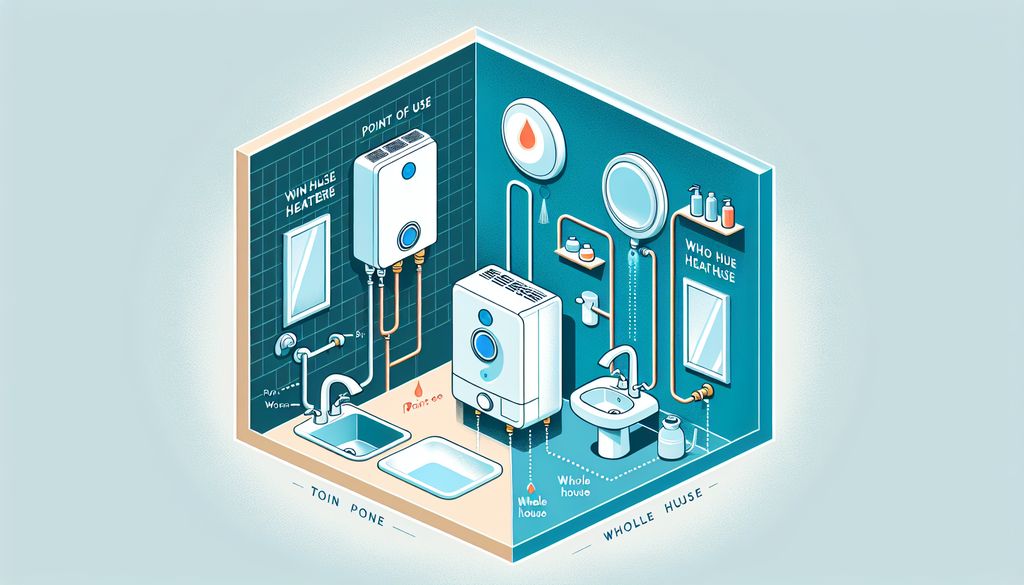
Point-of-use (POU) tankless water heaters install directly at or near the fixture they serve. These compact units provide instant hot water to a single sink, shower, or appliance without the delay caused by long pipe runs from a central heater. Their focused approach makes them ideal for specific applications where immediate hot water access matters most.
Benefits of Point-of-Use Systems
Instant Delivery
Hot water arrives immediately without waiting for it to travel through lengthy pipe runs
Water Conservation
Eliminates water waste from running the tap while waiting for hot water to arrive
Easy Installation
Compact size and straightforward setup make DIY installation feasible for many models
Lower Upfront Cost
More affordable initial investment compared to whole house systems
Installation Considerations
Point-of-use tankless heaters offer flexibility in placement. Electric models typically require a dedicated circuit, while gas-powered units need proper venting and gas supply lines. Consider the following when planning your installation:
- Proximity to the fixture for optimal efficiency
- Available electrical capacity or gas supply
- Adequate ventilation for combustion models
- Accessibility for future maintenance
- Local building code requirements
Ideal Applications for Point-of-Use Units
These systems shine in scenarios including remote bathroom additions, outdoor kitchens, workshops, garages, RVs, boats, and vacation cabins. They also serve as excellent supplements to existing whole house systems, boosting hot water delivery to fixtures located far from the main heater.
Whole House Tankless Water Heaters
Whole house tankless water heaters serve as the primary hot water source for an entire residence. These powerful units deliver high flow rates capable of supplying multiple fixtures and appliances simultaneously. When sized correctly, a whole house system provides endless hot water throughout your home.
Advantages of Whole House Systems
- Centralized Solution: One unit handles all hot water needs throughout your property
- High Flow Capacity: Designed to serve multiple outlets running at the same time
- Consistent Temperature: Advanced controls maintain steady output temperatures
- Space Efficiency: Replaces bulky storage tanks with compact wall-mounted units
- Long-Term Savings: Energy efficiency translates to lower monthly utility bills
Factors to Consider When Choosing a Whole House System
Selecting the appropriate whole house tankless heater requires evaluating several key factors. Consider your household's peak hot water demand, incoming water temperature, fuel type availability, and the unit's flow rate measured in gallons per minute (GPM). Proper sizing ensures the system meets your needs without strain.
Quick Sizing Reference
Calculate your needs by adding the flow rates of fixtures you expect to use simultaneously:
- Bathroom faucet: 0.5 - 1.5 GPM
- Kitchen sink: 1.0 - 2.2 GPM
- Shower: 1.5 - 3.0 GPM
- Dishwasher: 1.0 - 2.5 GPM
- Washing machine: 1.5 - 3.0 GPM
Installation Requirements
Whole house installations typically demand professional expertise. Gas models require appropriately sized gas lines, proper venting configurations, and adequate combustion air supply. Electric versions may necessitate electrical panel upgrades to accommodate their substantial power requirements. Always consult with a qualified professional to ensure safe, code-compliant installation.
Professional Recommendation: Consulting with a qualified plumber or HVAC technician ensures proper sizing, installation location, and compliance with local building codes. They can assess your specific requirements and recommend the optimal system configuration.
Comparing Point-of-Use and Whole House Systems
Understanding the distinctions between these two approaches helps identify which solution best matches your requirements. Below we examine critical comparison factors to guide your decision.
Energy Efficiency
Point-of-Use
Maximum efficiency by eliminating pipe heat loss entirely. Hot water travels mere inches to the fixture.
Whole House
Highly efficient operation with minor heat loss through distribution pipes to distant fixtures.
Cost Comparison
Point-of-Use
Lower unit cost ranging from $100-$500. Installation often achievable as a DIY project.
Whole House
Higher investment of $500-$2,000+ for the unit. Professional installation adds additional cost.
Performance
Point-of-Use
Optimized for single fixture use. Limited flow rate serves one application at a time.
Whole House
High capacity supports multiple simultaneous uses throughout the entire property.
Recommended Tankless Water Heater
Upgrade your hot water system with a reliable, high-performance propane tankless water heater perfect for homes, cabins, and outdoor applications.
Eccotemp 6.8 GPM Propane HeaterFrequently Asked Questions
Are tankless water heaters more energy efficient than traditional models?
Yes, tankless water heaters typically achieve 24-34% greater energy efficiency than conventional storage tank heaters. By heating water only when needed, they eliminate the standby energy losses associated with maintaining a heated tank around the clock.
Can tankless water heaters supply hot water to multiple fixtures simultaneously?
Whole house tankless systems are specifically designed for multi-fixture operation. When properly sized, they deliver adequate hot water to showers, sinks, and appliances running at the same time. Point-of-use units serve single fixtures by design.
Do tankless water heaters require regular maintenance?
Annual maintenance extends the life and efficiency of your tankless water heater. This typically includes descaling to remove mineral buildup, cleaning inlet filters, and inspecting the burner or heating elements. Areas with hard water may require more frequent descaling.
What is the expected lifespan of a tankless water heater?
Quality tankless water heaters typically last 20 years or more with proper maintenance. This significantly exceeds the 10-15 year average lifespan of conventional storage tank heaters, providing better long-term value despite higher initial costs.
Are tankless water heaters more expensive to install than traditional water heaters?
Initial installation costs for tankless systems generally exceed those of traditional tank heaters. However, the combination of longer lifespan, reduced energy consumption, and lower operating costs often results in substantial savings over the unit's lifetime.
Can tankless water heaters be installed in any home?
Most homes can accommodate tankless water heaters, though some may require infrastructure upgrades. Gas models might need larger gas lines or new venting, while electric units may require electrical panel upgrades. A professional assessment determines specific requirements for your property.
Conclusion
Both point-of-use and whole house tankless water heaters offer compelling advantages over traditional storage tank systems. Point-of-use units excel in targeted applications where instant hot water delivery and simple installation matter most. Whole house systems provide comprehensive hot water solutions for properties requiring simultaneous multi-fixture operation.
Your optimal choice depends on specific factors including hot water demand patterns, property layout, budget considerations, and whether you need localized or whole-property coverage. Many homeowners find that combining a whole house system with strategically placed point-of-use units delivers the best overall performance and efficiency.
Explore our selection of tankless water heaters and find the perfect solution for your home or outdoor space.