


 Damage
  Loss
Loss  Theft
Theft 


How Much Electricity Does a Solar Panel Produce?
If you're looking at adding solar panels to your home, one of the first questions people ask is: how much power can a single panel actually produce? The honest answer depends on several variables — but understanding them gives you a major advantage when sizing your system correctly.
- Power ratings explained
- What efficiency means
- Factors affecting output
- Monocrystalline vs. Polycrystalline
- Daily & annual production
- Panel size & wattage
- How array size affects output
- FAQ
Understanding Solar Panel Power Ratings
Every solar panel carries a wattage rating — typically between 150W and 400W for modern residential models. This rating is measured under controlled lab conditions called Standard Test Conditions (STC). In practice, real-world performance will vary depending on your location, climate, roof angle, and the age of the panel.
A solar panel rated at 400 watts under STC can generate up to 400 watt-hours (Wh) of electricity per hour of peak sunlight. Over a full day receiving 5 peak sun hours, that single panel could produce up to 2,000 watt-hours — or 2 kilowatt-hours (kWh).
What Does "Efficiency" Actually Mean?
Panel efficiency refers to how effectively a solar cell converts sunlight into usable electricity. A panel rated at 20% efficiency converts 20% of all incoming sunlight into power. While that might sound modest, modern premium panels are achieving efficiency levels that were once considered cutting-edge for commercial installations.
Higher efficiency matters most when you have limited roof space. Two panels of identical physical dimensions can have very different outputs depending on their efficiency ratings. A panel with 22% efficiency will outperform a 17% panel on the same surface area every single day.
Factors That Affect Panel Efficiency
No panel operates at its rated output every hour of every day. Understanding what shapes real-world performance helps you predict your actual electricity generation more accurately.
- Type of solar cell — Monocrystalline cells consistently outperform polycrystalline cells in both efficiency and longevity.
- Cell purity — Higher purity silicon translates directly into better electron flow and greater output per square foot.
- Temperature coefficient — Panels operate less efficiently in extreme heat. A lower temperature coefficient means less performance loss on hot days.
- Shading and obstructions — Even partial shading of a single cell can reduce a panel's output significantly.
- Manufacturing quality — Premium panels maintain a more consistent output over time compared to lower-grade alternatives.
Monocrystalline vs. Polycrystalline Solar Panels
Monocrystalline Panels
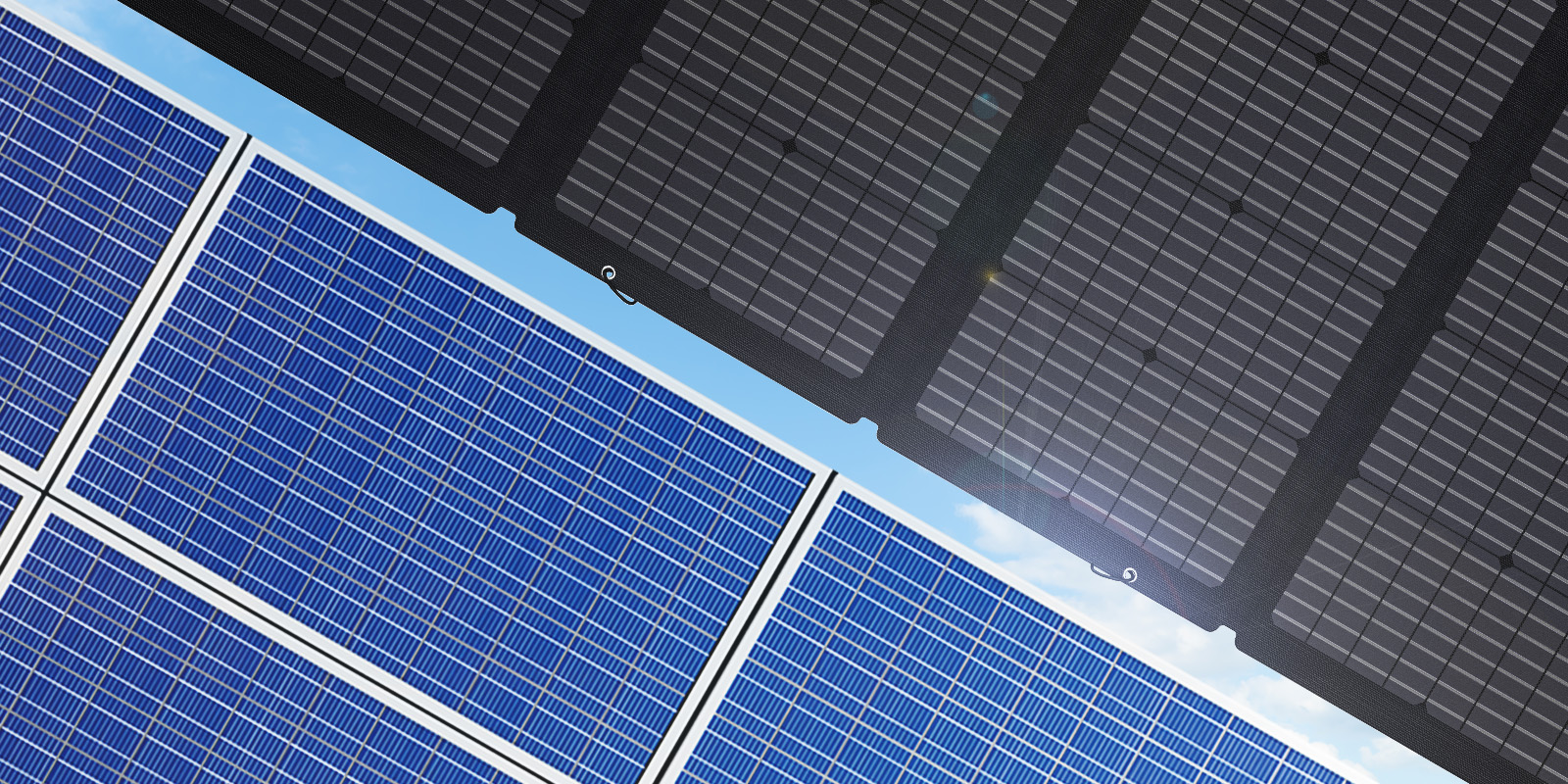
Monocrystalline panels are made from a single continuous crystal structure, which allows electrons to move more freely and deliver higher efficiency — typically from 17% to 22%. They perform better in low-light conditions and tend to last longer, making them the preferred choice for homeowners who prioritize long-term value over upfront cost.
Polycrystalline Panels
Polycrystalline panels are manufactured from multiple fragments of silicon melted together. This production method is more affordable, but the result is a panel with slightly lower efficiency — usually 13% to 17%. They are a cost-effective option for large open installations where space is not a constraint.
| Feature | Monocrystalline | Polycrystalline |
|---|---|---|
| Efficiency Range | 17% – 22% | 13% – 17% |
| Low-Light Performance | Excellent | Moderate |
| Cost per Watt | Higher | Lower |
| Lifespan | 25–30 years | 20–25 years |
| Appearance | Uniform dark black | Speckled blue |
| Best For | Space-limited rooftops | Large open arrays |
How to Estimate Daily and Annual Production
Calculating your expected solar output is straightforward once you know your panel's wattage and your location's peak sun hours. Peak sun hours refer to the number of hours per day during which sunlight intensity averages 1,000 watts per square meter — the standard used in STC testing.
Annual Output (kWh) = Daily Output (Wh) × 365 ÷ 1,000
Example: 400W panel × 5 peak hours = 2,000 Wh/day → ~730 kWh/year
Most U.S. locations receive between 4 and 6 peak sun hours per day. Southern states like Arizona and Texas average toward the higher end, while the Pacific Northwest and Northeast often average closer to 4 hours. Use your local sun hours to refine the estimate for your specific installation.
Panel Size, Physical Dimensions, and Wattage

Physical size and watt output are related but not the same thing. A larger panel doesn't automatically mean higher output — efficiency plays an equally important role. That said, residential panels typically fall within a standard size range of roughly 65 × 39 inches, regardless of whether they're rated at 300W or 400W.
Commercial panels are noticeably larger — sometimes exceeding 78 × 43 inches — and are optimized for utility-scale installations where output volume matters more than footprint constraints. For most homeowners, the standard residential panel format is the practical choice.
When comparing panels of the same physical size, always compare efficiency ratings side by side. A 400W panel from a premium manufacturer in the same footprint as a 320W budget panel is a significantly better long-term investment — particularly on rooftops with limited usable area.
How Array Size and Panel Count Affect System Output
A single panel rarely powers an entire home on its own. Most residential systems are designed as arrays — multiple panels wired together to meet a household's total energy demand. The right array size depends on your monthly kWh consumption, your location's sun hours, and how many panels your roof can accommodate.
Example: 10,000 kWh/year ÷ (2 kWh/day × 365) ≈ 14 panels at 400W each
Offset percentage also matters. A 100% offset system means your panels generate as much electricity annually as you consume. Many homeowners target 80–90% offset to balance system cost with energy savings, supplementing with grid power during peak demand periods.
Why Efficiency Changes Over Time
Solar panels degrade gradually over their lifespan. Most premium manufacturers guarantee that their panels will retain at least 80% of their original rated output after 25 years — a degradation rate of roughly 0.5% per year. Budget panels can degrade at rates closer to 0.8–1% annually, resulting in meaningfully lower energy production over the life of the system.
That 0.3% annual difference may seem trivial, but compounded over 25 years it represents a measurable gap in total lifetime electricity generation — and in the financial return on your solar investment. Choosing panels with a strong performance warranty is one of the most important decisions in any solar installation.
A high-quality 400W panel retaining 82% output at year 25 still produces ~328W — more than many budget panels produce when brand new. Buy quality once and let the system pay for itself over decades.
Frequently Asked Questions
For a typical U.S. household consuming around 10,000–11,000 kWh per year, you would generally need between 14 and 20 panels rated at 400W each, depending on your local sun hours and roof orientation.
A 400W panel receiving 5 peak sun hours will produce approximately 2 kWh per day. In sunnier locations this can reach 2.5 kWh or more; in cloudier regions it may average closer to 1.4–1.6 kWh.
Using the same 400W panel at 5 peak sun hours, monthly output would be approximately 60–65 kWh. Multiplied across a 14-panel array, that's roughly 840–910 kWh per month — covering most average households.
Yes, but at reduced capacity. Solar panels generate electricity from ambient daylight, not direct sunlight alone. On overcast days, output typically falls to 10–25% of rated capacity depending on cloud density.
Most premium residential panels are warranted for 25 years and can continue operating productively for 30 years or more. Performance degrades slowly at roughly 0.5% per year under quality manufacturers' guarantees.