


 Damage
  Loss
Loss  Theft
Theft 


3 Best Mini-Splits of 2026: Tested and Reviewed
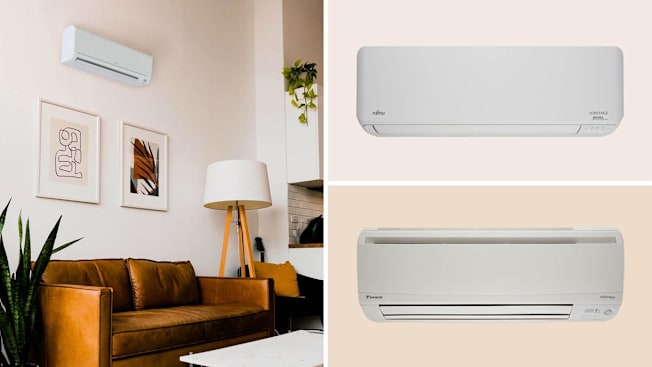
If your home isn't equipped for central air conditioning, mini-splits may be an outstanding alternative. They're particularly beneficial when you don't want to install ductwork or need to manage climate control in specific areas with unique cooling requirements. Mini-splits, also referred to as ductless air conditioners, can effectively cool individual rooms quickly and quietly.
Mini-splits function as a type of heat pump system. They work by extracting heat from indoor air and transferring it outside. They absorb heat from the indoor environment and move it outdoors. The heat is transported between the inside and outside units through refrigerant lines.
These systems consist of two main components. The first is an outdoor compressor unit, commonly called a condenser. The second component is an indoor unit (or multiple units), known as air handlers. There are various types of air handlers, including wall-mounted units that can be attached to walls, ceiling-mounted options, and floor-standing models. Some mini-split systems feature heat pump capability that can both heat and cool your space. This means you can have air handlers serving different rooms with just one outdoor compressor unit. If you want multiple zones served by a single outdoor unit, you can do that as well. You can also create a system tailored to your home's needs, for example, placing one unit in a small apartment or in an open-concept living area.
💰 Investment Considerations
The industry's range for mini-split systems spans from $750 to more than $2,200, not including installation costs. These prices tend to exceed those of portable or window air conditioners, but mini-splits are engineered for larger spaces and for long-term use. They excel at effectively controlling indoor climate. According to our research, they can often outperform traditional heating/cooling systems.
Most mini-split systems need professional installation, though some models on the market are designed for DIY setup. Given the multiple steps involved—correctly positioning equipment, running an indoor line set through an outside wall, connecting refrigerant lines, electrical wiring, and condensate drain piping—a mini-split installation generally requires HVAC expertise. In some cases, you may also need supplementary accessories.
Best Mini-Splits
We evaluated 10 mini-split models for their cooling and heating performance. All of the models we tested feature air handlers designed to mount on a wall (as opposed to the floor or ceiling).
Best DIY Mini-Split
Seven of the models we tested require professional installation, and these are DIY. Our experts recommend installation by an HVAC professional in most cases. Even DIY mini-splits require some expertise, given the multiple steps involved with properly placing and installing an indoor unit, outdoor compressor, copper line set, refrigerant lines, electrical wiring, and condensate drain piping. A mini-split should also have a dedicated electrical line.
One of the DIY models we tested is a MrCool option that comes with a copper line pre-filled with refrigerant from the factory. That eliminates the step of evacuating the line to clear it of any moisture or impurities before installation. But keep in mind that you'll still need to follow other steps above.
⚡ Quick Take: DIY Installation
- Pre-charged refrigerant lines simplify setup
- Still requires basic electrical and construction knowledge
- Dedicated electrical circuit recommended
What Size Mini-Split Do You Need?
When researching mini-splits and determining the system you'll need, consider this: How much cooling do you want?
If you're looking to cool several different rooms, you will want to talk to an installer about a multi-zone system, where one compressor can support multiple indoor air handlers. And whether you're looking to cool a few rooms or just one, you need to consider the space itself.
"It's not just the square footage, but what goes on in that space. Think about whether you have high ceilings or open doorways, if you have a kitchen nearby, or if the room gets a lot of sunlight. These are all things that are going to contribute to the overall heat in that room."
— HVAC Industry Expert
Outputs are measured in Btu (British thermal units). Most units range from 9,000 Btu, on the smaller end, to 24,000 Btu and higher. An installer can help you determine what capacity mini-split will work for your space. All of the mini-splits in our tests are 12,000 Btu, which could cover rooms from about 350 to 550 square feet, depending on the room features that affect cooling requirements.
Mini-Split vs. AC Unit: Which Is Better?
Window and portable air conditioners are still some of the least expensive and simplest ways to keep rooms cool on hot days. They very capably air condition on a modest budget. We have ratings for 76 window and portable ACs and guidance on how to choose the one that's right for you.
But those units are also noisy, loud, and nonpermanent compared with mini-splits and central air. Do you want the exterior beauty? Window ACs weigh about 45 to 90 pounds or more. If you're storing them every year in the off-season, plan on moving them around at least twice yearly.
| Feature | Mini-Split | Window/Portable AC |
|---|---|---|
| Energy Efficiency | ★★★★★ | ★★★☆☆ |
| Noise Level | Quiet | Noticeable |
| Installation | Professional | DIY Friendly |
| Upfront Cost | Higher | Lower |
| Long-term Value | ★★★★★ | ★★★☆☆ |
Mini-splits offer a more fixed solution for cooling. The units are set in place, slide in neatly embedded space, and you operate them with a remote. Like central AC, a mini-split system is designed to run for long periods and chill spaces quite efficiently. They work quickly to lower a room's temperature and do so rather quietly. During testing, we could barely tell whether some of them were working when running on lower fan speeds.
How We Test Mini-Splits
We run tests using two temperature-controlled chambers in our labs. To test the cooling mode, the outdoor compressor is placed in a chamber set at 95°F with high humidity, simulating a hot and muggy summer day. The indoor air handler is mounted in a second chamber at a starting temperature of 90°F. We evaluate how quickly the mini-split lowers the temperature of the room to 75°F. We test the mini-split at 77°F and evaluate how well the unit can maintain that temperature over a 2-hour stretch, averaging results over multiple runs. We also measure the total kilowatt hours of electricity used over that time period to determine the mini-split's energy consumption.
To test the heating mode, we put the compressor in a chamber set to 47°F and the indoor unit in a chamber set to 68°F. We measure how much the mini-split can increase the temperature of the room over 15 minutes. The DIY models still require relatively precise installation work, which we describe below, Keep in mind that for either type, check your local building codes and make sure you obtain the necessary permits for installation.
🌱 Energy Savings Potential
Mini-splits are also more energy-efficient than central air because heat is absorbed directly where it's needed instead of traveling through ductwork. These energy factors account for about 30 percent of a central air system's energy consumption, according to the Department of Energy.
DIY Installation Considerations
If you're a homeowner trying to achieve a more uniform temperature in your home, then mini-splits may be a good investment. A reliable manufacturer can last about 10 to 15 years, possibly longer. The key is proper sizing and proper installation—a job best left to a professional who can ensure the system fits your specific space and that you avoid installation mistakes that could cause problems. Because you don't have to pay to put in ductwork, Mini-splits are also more energy efficient than central air because heat is absorbed directly where it's needed instead of traveling through energy losses associated with the ductwork in forced-air systems.
🛒 Shopping Tips
When shopping for installers, be recommended that you find one who may stick with one mini-split manufacturer and gain expertise in its models. You'll also want to have the installer help you visualize how the unit will be mounted in your space and explain the installation process so you're expecting changes to your home's exterior as well. Different mini-splits are pretty similar in specs pretty low compared to how they're sized, but the indoor units in our tests vary in their external dimensions about 32 to 40 inches wide, by 11 to 14 inches tall.
Power Your Mini-Split Setup
Looking to go off-grid or reduce your energy bills? Pair your mini-split with reliable solar power.

EcoFlow 400W Rigid Solar Panel
High-efficiency rigid panel with included mounting hardware
EcoFlow 400W Solar PanelThe Bottom Line
Mini-split systems represent an excellent investment for homeowners seeking efficient, quiet, and targeted climate control. While the upfront cost exceeds that of portable or window units, the long-term energy savings, improved comfort, and aesthetic benefits make them a worthwhile consideration for any home improvement project. Whether you opt for professional installation or a DIY-friendly model, proper sizing and installation are key to maximizing your system's performance and longevity.