


 Damage
  Loss
Loss  Theft
Theft 


Chop Saws vs. Mitre Saws: The Complete Breakdown
Whether you're outfitting a professional fabrication shop or setting up a home workshop, chop saws and mitre saws rank among the most widely used cutting tools in the world. They share a similar silhouette and even overlap in certain applications, but make no mistake — these are fundamentally different machines built for very different jobs. In this guide, we'll walk you through what sets them apart so you can invest in the right tool for your next project.
What Is a Chop Saw?
Heavy-Duty Straight Cuts
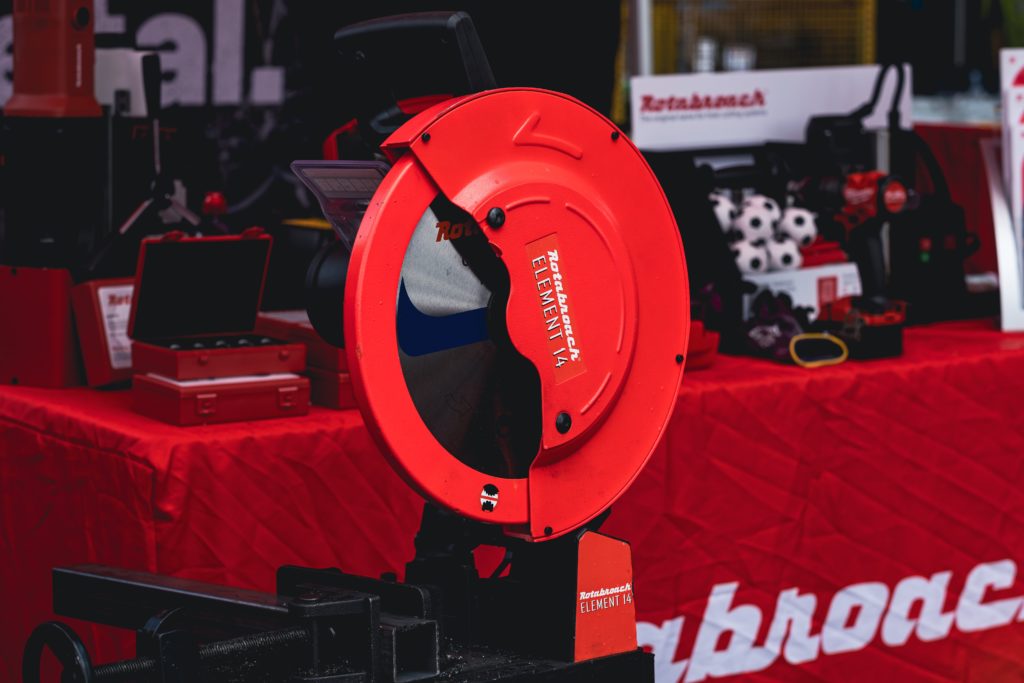
A chop saw — sometimes called a cut-off saw — is a powerhouse tool designed to slice through tough materials with brute efficiency. You'll find it most often in metal fabrication shops, construction sites, and industrial settings where speed and raw cutting force matter more than finesse. It uses a large abrasive or toothed blade, generally around 14 inches in diameter, mounted on a fixed pivot arm that drops straight down onto the workpiece.
The operation is straightforward: the material sits on a flat base, secured by a built-in vice or clamp, and the spinning blade is brought down in a single, decisive motion. This makes chop saws exceptionally fast at producing clean, perpendicular cuts through steel pipe, angle iron, rebar, and other dense materials. However, because the blade only moves in one plane, you're limited to straight 90-degree cuts — there's no option to swing the blade to an angle.
Safety is built into the design. Most chop saws come equipped with a blade guard to deflect sparks and debris, along with a sturdy clamping mechanism that keeps the material locked in place throughout the cut. Higher-end models, especially those using cermet-tipped or TCT blades, generate remarkably little heat — so the workpiece stays cool enough to handle almost immediately after cutting.
A chop saw is purpose-built for straight, high-volume cuts on tough metals. While it's limited to 90° angles, that focused capability makes it indispensable in fabrication shops and construction sites around the world.
What Is a Mitre Saw?
Precision Angled Cuts
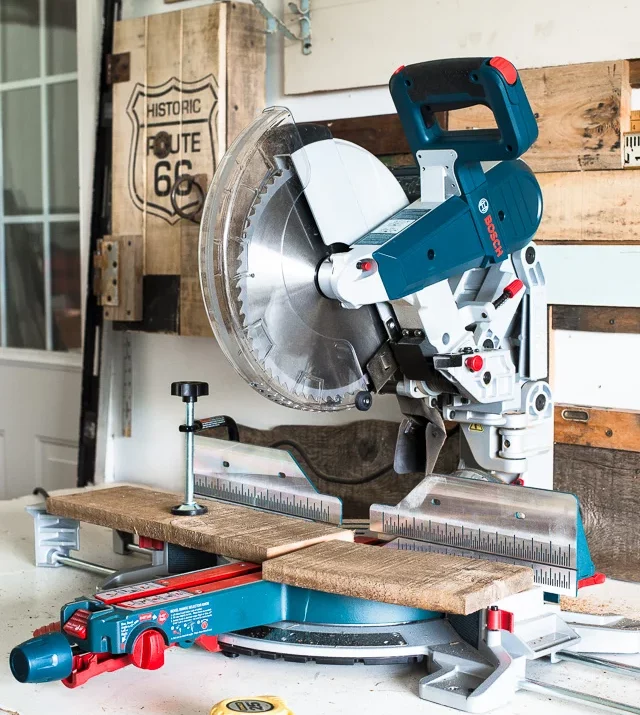
The mitre saw takes a different approach entirely. While it shares the drop-down cutting arm of a chop saw, its defining feature is a rotating table that allows the blade to be angled left, right, and — on compound models — tilted for bevel cuts. This makes it the go-to tool for woodworkers, trim carpenters, and anyone who needs precise angled cuts on a regular basis.
Mitre saws typically use blades between 8 and 12 inches in diameter and excel at cutting lumber, molding, baseboards, picture frames, and similar materials where exact angles are critical. Need a perfect 45-degree joint for crown molding? A clean compound mitre for a door frame? This is the machine that delivers. Some models even offer dual-bevel capability, meaning you can tilt the blade in both directions without flipping your workpiece.
Because the material rests against a fence rather than being clamped in a vice, mitre saws are designed for lighter materials. They generally don't include the heavy-duty clamping systems found on chop saws, relying instead on the fence and the operator's hand placement for stability. Blade guards and electric brakes are standard safety features on most quality mitre saws.
It's worth noting that mitre saws are not intended for metalworking. Their lighter construction and blade types are optimized for wood and composite materials — pushing them into heavy-gauge steel territory would be asking for trouble. Where they truly shine is in delivering the kind of repeatable, angle-perfect cuts that make fine woodworking and professional finish carpentry possible.
Key Differences at a Glance
Application & Usage
Chop saws are engineered for industrial-grade, straight-line cuts through metals and dense materials. Mitre saws are designed for precise angled cuts in woodworking, trim, and finish carpentry.
Versatility
Mitre saws take the versatility crown with adjustable mitre angles, bevel tilts, and compound-cut capability. Chop saws trade flexibility for unmatched power and speed on straight cuts.
Precision & Accuracy
When it comes to angle accuracy and repeatable precision, mitre saws are hard to beat. Chop saws deliver excellent accuracy on perpendicular cuts but don't offer angular adjustment.
Safety Features
Both tools include blade guards and debris protection. Chop saws add heavy-duty vices for secure material clamping, while mitre saws rely on fence systems with electric brake technology.
Making the Right Call: Chop Saw or Mitre Saw?
Choosing between these two tools really comes down to the work you do most. If your projects revolve around cutting metal stock, steel tubing, or heavy construction materials in straight lines at high volume, a chop saw is your best bet — nothing matches its power and throughput for that kind of work.
On the flip side, if your days are filled with framing, trim installation, cabinetry, or any task requiring accurate angled cuts in wood and composite materials, a mitre saw will quickly become the most valuable tool in your shop. Its ability to dial in exact angles and produce repeatable results makes it essential for finish work.
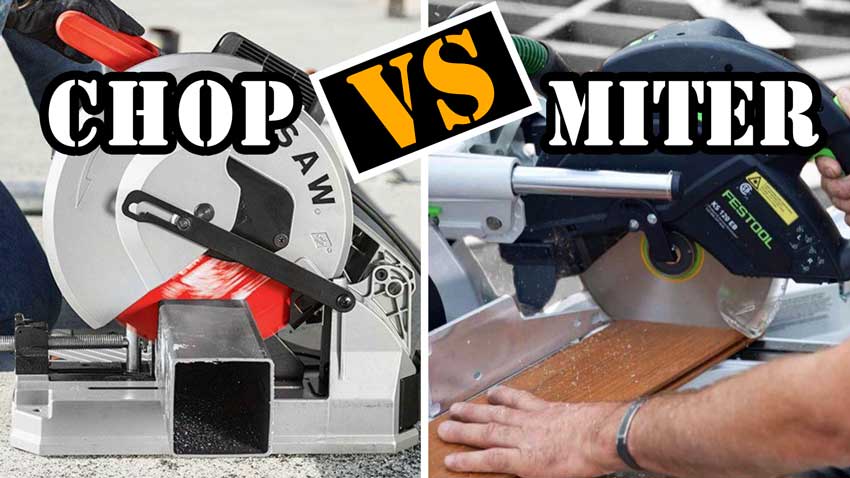
Whichever direction you lean, remember that both tools demand respect. Proper training, appropriate safety gear, and adherence to the manufacturer's guidelines are non-negotiable. Take the time to understand your tool's capabilities and limitations, and you'll be rewarded with clean, efficient cuts — project after project.
Both chop saws and mitre saws are indispensable in construction, woodworking, and DIY. The chop saw dominates when raw power and straight-line cutting speed are the priority. The mitre saw excels when versatility and angular precision take center stage. Understanding these distinctions ensures you pick the tool that truly fits your workflow.
Shop EVOLUTION S380CPS