


 Damage
  Loss
Loss  Theft
Theft 


How to Cut Steel Pipes and Tubes: 14 Methods You Should Know
Cutting steel pipes and tubes is one of the most fundamental tasks in metalworking, plumbing, construction, and fabrication. Whether you are trimming conduit for an electrical project, building a steel frame for a backyard pergola, or fabricating custom exhaust systems, having the right cutting method makes all the difference. A clean, precise cut ensures proper fitment, reduces waste, and saves time on finishing work.
The method you choose depends on several factors: the diameter and wall thickness of the pipe, the type of steel (mild, stainless, or galvanized), the precision required, and the volume of cuts you need to make. In this guide, we break down 14 proven methods for cutting steel pipes and tubes — covering everything from simple hand tools to high-tech industrial solutions — so you can pick the best approach for your specific project.
Table of Contents
1. Hacksaw
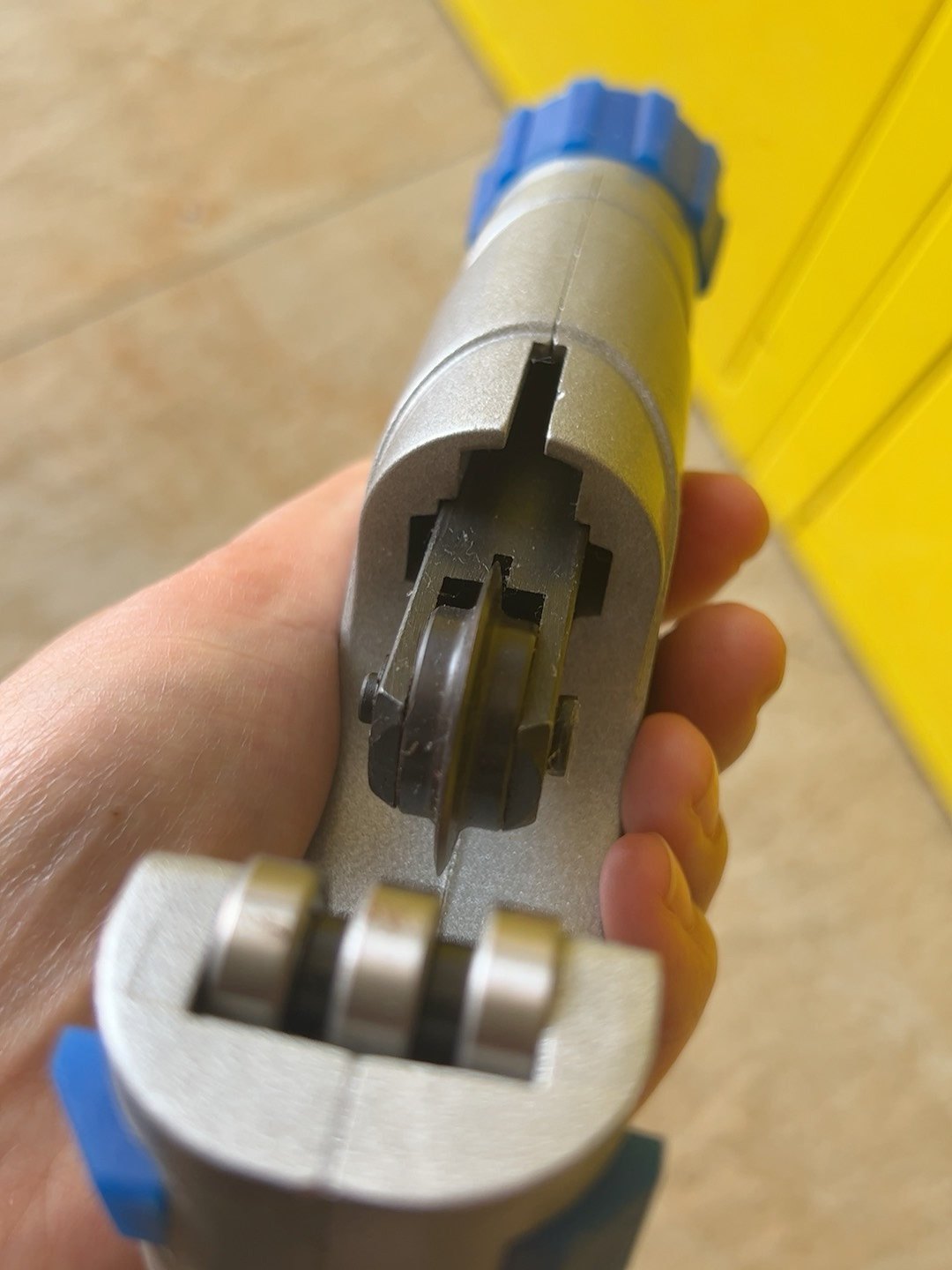
2. Pipe & Tube Cutter
3. Reciprocating Saw
4. Angle Grinder
5. Chop Saw
6. Cold Saw
7. Band Saw (Horizontal)
8. Band Saw (Vertical)
9. Portable Band Saw
10. Miter Saw (with Metal Blade)
11. Plasma Cutter
12. Oxy-Acetylene Torch
13. Pipe Cutting Machine
14. Laser Tube Cutting Machine
Manual & Handheld Cutting Methods
These tools are accessible, affordable, and ideal for smaller jobs or on-site work where portability matters.
Hacksaw
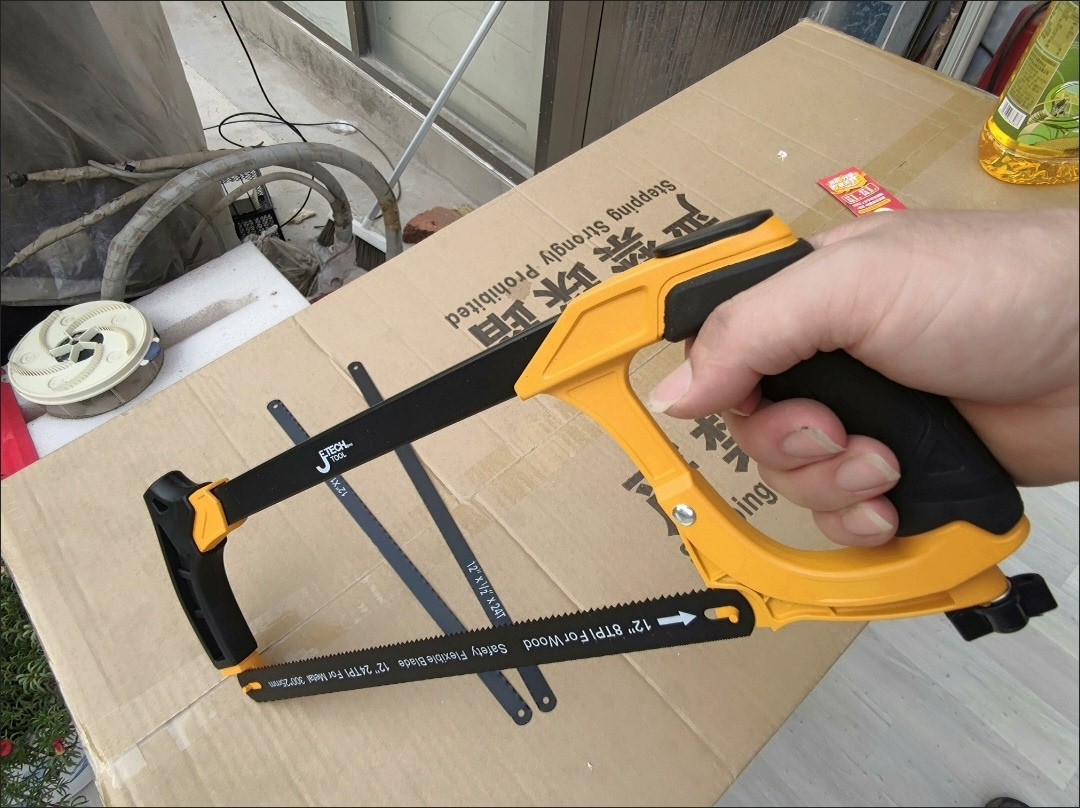
The hacksaw is one of the most basic and widely available tools for cutting steel pipe. It consists of a fine-toothed blade held in a C-shaped frame. While it requires manual effort and takes longer than power tools, a hacksaw is extremely affordable, highly portable, and doesn't need electricity — making it perfect for quick field cuts or working in tight spaces where power tools can't reach.
For best results, choose a blade with 18 to 32 teeth per inch (TPI) — finer tooth counts work better on thin-walled tubing, while coarser blades handle thicker pipe walls more efficiently. Secure the pipe firmly in a vise or clamp before cutting, mark your cut line clearly, and use long, steady strokes to maintain a straight path. Hacksaws are best suited for occasional cuts on smaller-diameter pipes, typically under 2 inches.
Best for: Small-diameter pipes, quick field repairs, tight budgets, and locations without power access.
Pipe & Tube Cutter
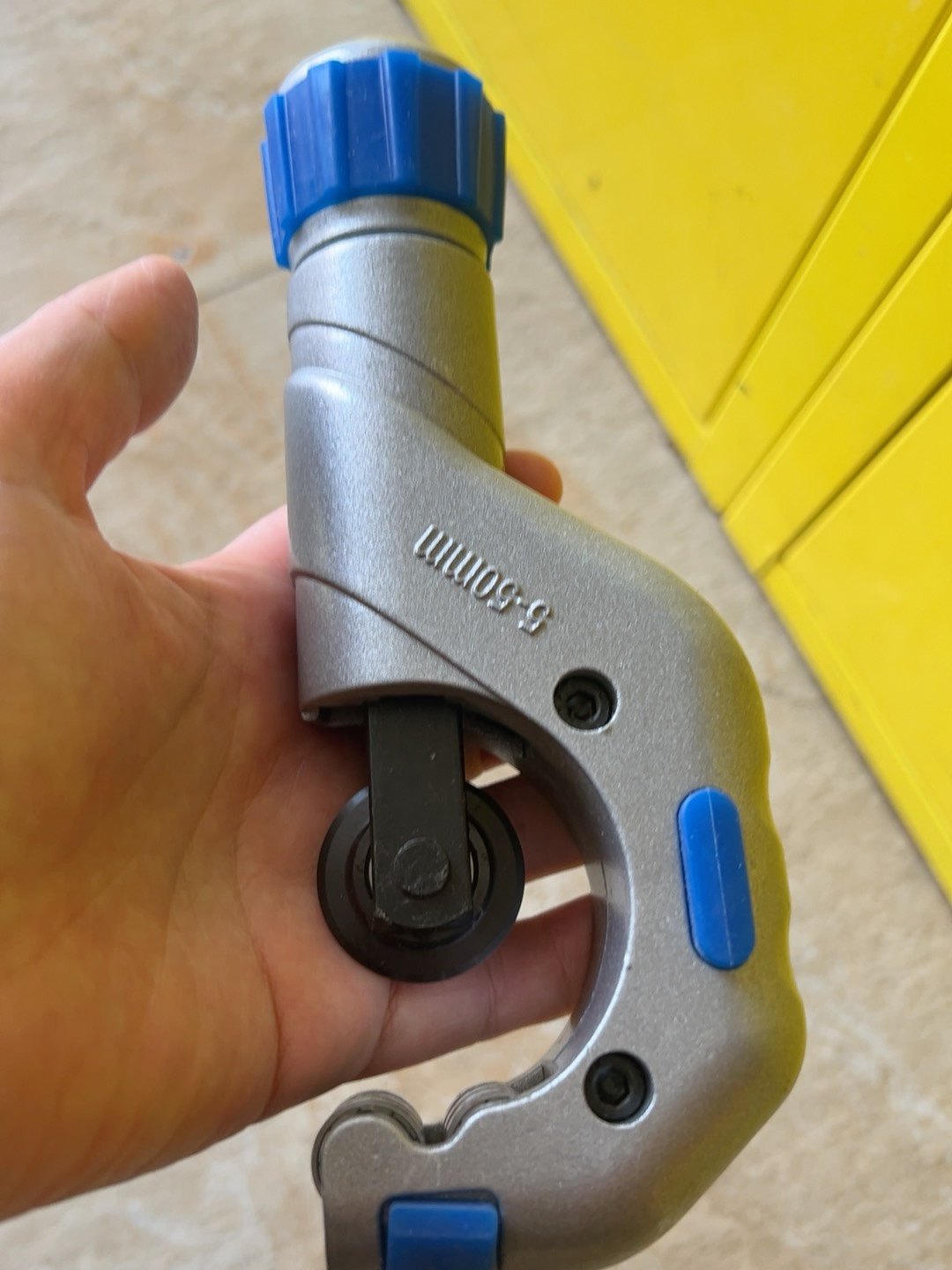
A dedicated pipe and tube cutter uses a sharp cutting wheel that rotates around the circumference of the pipe, scoring deeper with each revolution until it slices cleanly through the material. These compact, handheld tools produce remarkably clean, burr-free cuts with a perfectly square edge — something that's difficult to achieve with saws.
To use one, you simply clamp the cutter around the pipe, tighten the knob so the wheel contacts the surface, and rotate the tool around the pipe while gradually increasing pressure. Most handheld models work on pipes ranging from 1/8 inch to about 2 inches in diameter. Larger ratcheting or chain-style cutters can handle bigger pipes. These tools are a staple for plumbers and HVAC technicians who need consistently clean cuts without sparks or noise.
Best for: Clean, square cuts on round pipe; plumbing and HVAC work; spark-free environments.
Reciprocating Saw
Often called a "Sawzall" (a popular brand name), the reciprocating saw is one of the most versatile power tools for cutting steel pipe on the job site. Its aggressive back-and-forth blade motion chews through metal quickly, and with the right metal-cutting blade installed, it can handle a wide range of pipe sizes and wall thicknesses.
Reciprocating saws are particularly useful for demolition work, in-place cutting of installed pipes, and situations where the pipe cannot be easily moved to a workstation. They are handheld, portable, and available in both corded and cordless configurations. The trade-off is that cuts tend to be rougher than those from dedicated pipe cutters or saws — so plan for some deburring or grinding afterward if a smooth edge is needed.
Best for: Demolition, in-place pipe removal, rough cuts, and general-purpose job site work.
Angle Grinder
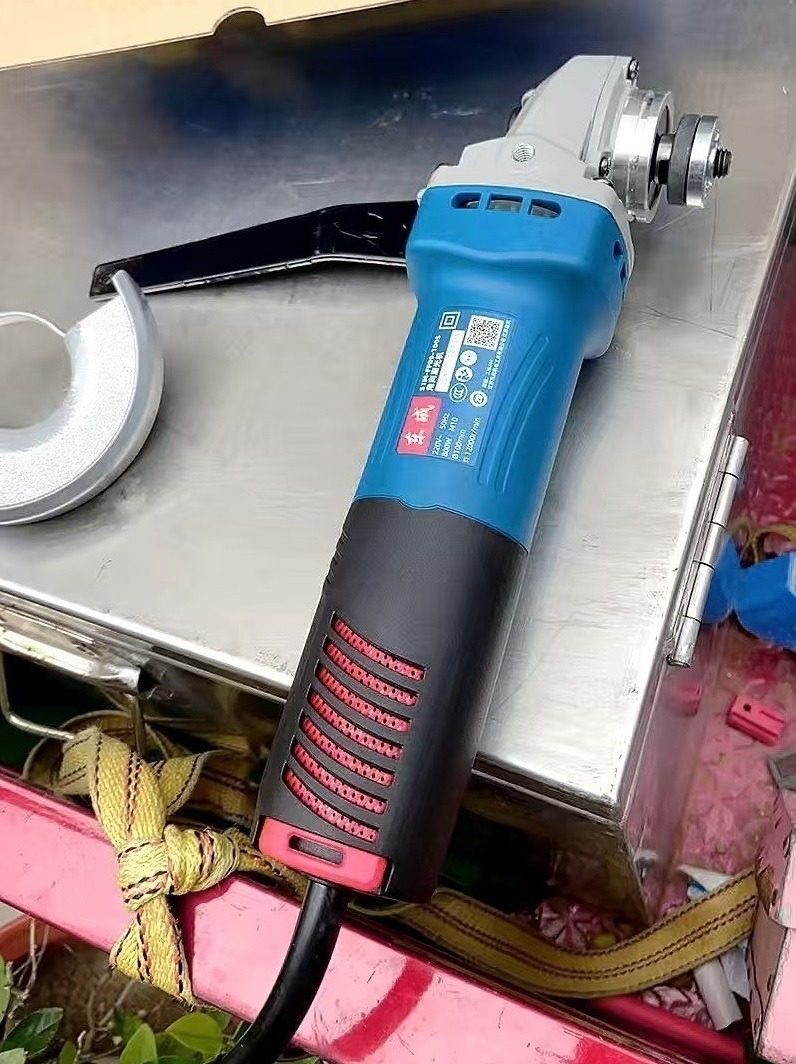
The angle grinder fitted with an abrasive cut-off disc is one of the fastest handheld methods for slicing through steel pipe. These tools spin a thin abrasive wheel at high RPM, allowing you to cut through most steel pipes in seconds. Angle grinders are highly portable, relatively inexpensive, and extremely common on construction sites, in metal shops, and in home workshops.
The key consideration with angle grinders is safety. They produce a shower of hot sparks and the cut-off discs can shatter if used improperly. Always wear eye protection, a face shield, gloves, and hearing protection. Secure the pipe firmly, and let the disc do the work without forcing it. While cuts from an angle grinder aren't as precise as a chop saw or cold saw, they're perfectly adequate for most structural and fabrication work where minor finishing is acceptable.
Best for: Fast cuts in the field, versatility (cutting, grinding, deburring with disc changes), accessibility.
Workshop & Bench-Mounted Saws
For higher volume, greater precision, and repeatable results, these stationary and semi-portable saws are essential shop equipment.
Chop Saw (Abrasive Cut-Off Saw)
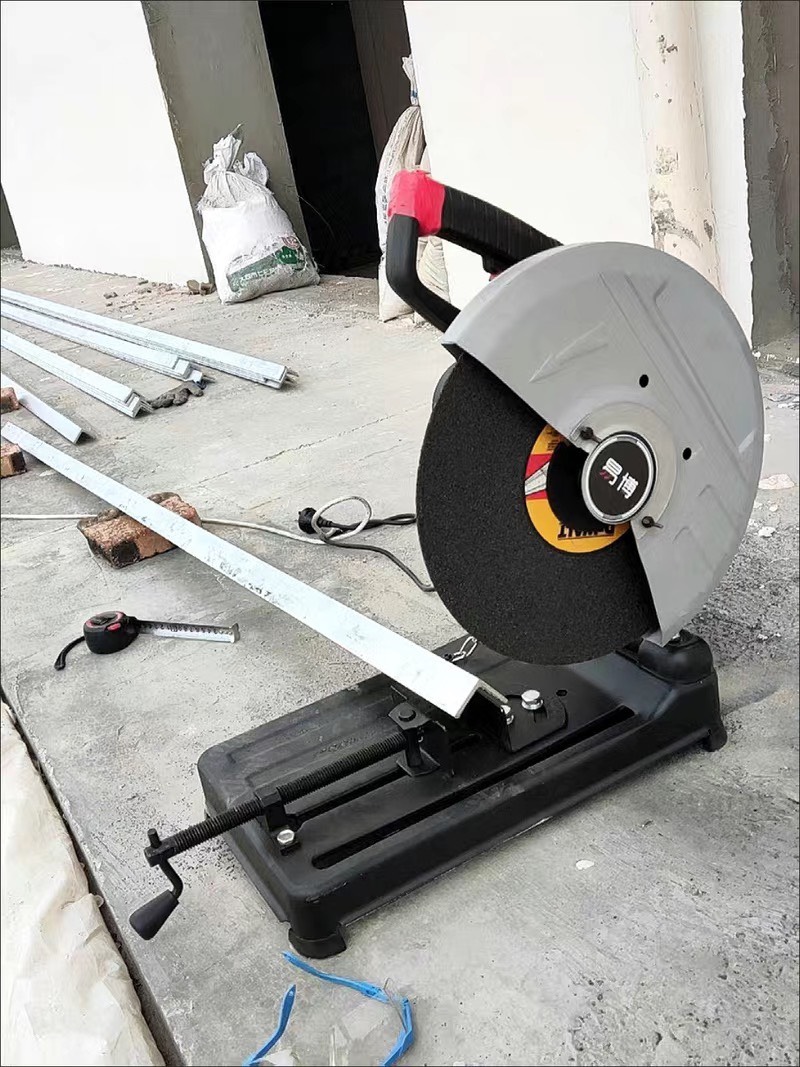
A chop saw — also known as an abrasive cut-off saw — is essentially a larger, bench-mounted version of an angle grinder. It uses a large abrasive disc (typically 14 inches in diameter) that pivots down onto the workpiece clamped in a built-in vise. Chop saws are a workhorse in metal fabrication shops, construction sites, and serious home workshops because they cut steel pipe quickly and consistently.
The built-in clamp and pivot design provide significantly more control and accuracy than a freehand angle grinder. Chop saws handle larger pipe diameters with ease and can rip through heavy wall steel in seconds. Some advanced models, like the Evolution S380CPS, use multi-material TCT (tungsten carbide tipped) blades instead of abrasive discs — these produce cleaner cuts with less heat, fewer sparks, and no burrs, while the blade lasts far longer than traditional abrasive wheels.
Best for: High-volume shop cutting, steel fabrication, construction, and general-purpose metal cutting where speed matters.
Cold Saw
Cold saws operate at much lower blade speeds than abrasive chop saws and use a toothed circular blade — usually made from high-speed steel (HSS) or carbide-tipped material. The slow speed means heat is transferred into the chips rather than the workpiece, which is why they are called "cold" saws. This results in cuts that are clean, accurate, and burr-free, with no heat discoloration or warping of the metal.
Cold saws are more expensive than abrasive chop saws, but the blade life is dramatically longer and the cut quality is far superior. They are the preferred choice in production environments, machine shops, and anywhere that precise, repeatable cuts are critical. If your project demands tight tolerances or your cut edges will be visible in the finished product, a cold saw is hard to beat.
Best for: Precision cutting, production runs, clean finishes without secondary processing, and applications requiring tight tolerances.
Horizontal Band Saw
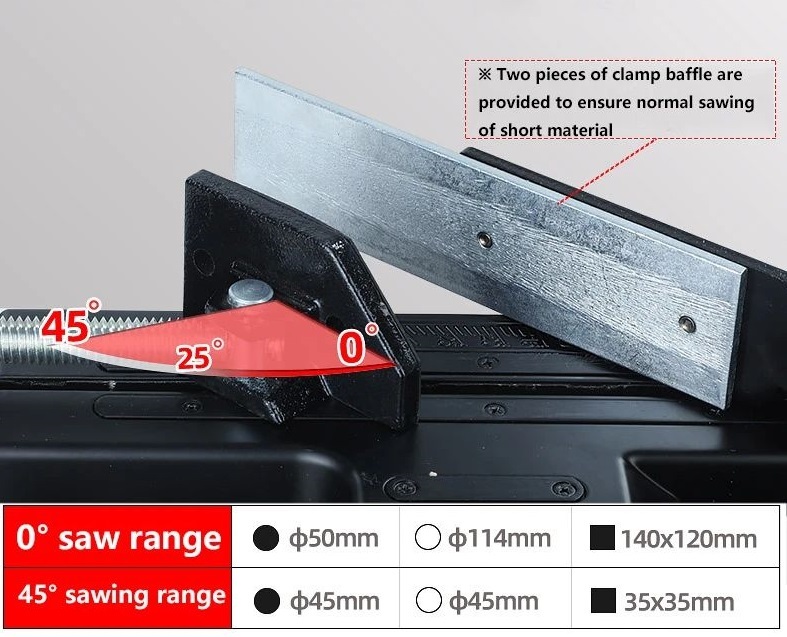
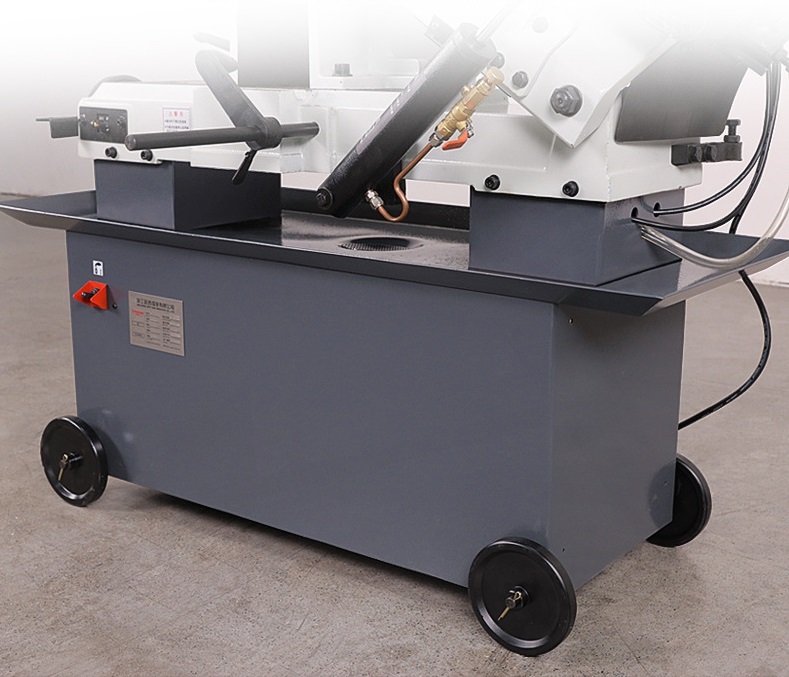
A horizontal band saw uses a continuous looped blade that travels in a horizontal plane, descending slowly through the workpiece held in a vise below. This is one of the most popular methods for cutting steel pipe and solid bar stock in fabrication shops. The slow, controlled feed rate produces clean, straight cuts with minimal material waste due to the thin blade kerf.
Many horizontal band saws feature automatic shut-off when the cut is complete, allowing the operator to set up a cut and walk away. They can handle a wide range of pipe sizes — from small tubing to large structural pipe — depending on the machine's capacity. Coolant systems are often used to prolong blade life and improve cut quality. For shops that process steel pipe regularly, a horizontal band saw is an indispensable investment.
Best for: Shop cutting of pipe and bar stock, medium to high volume, minimal material waste, and hands-free operation.
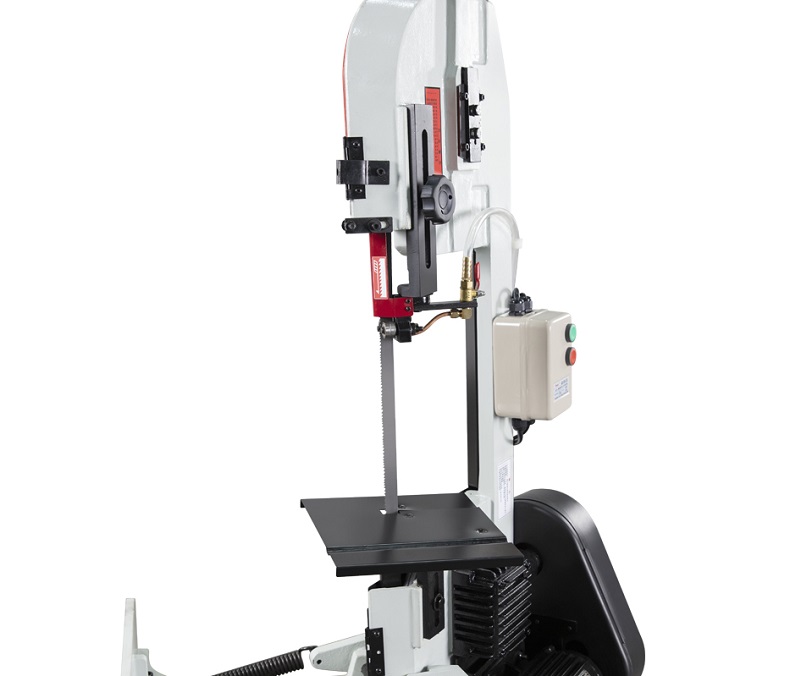
Vertical Band Saw
Unlike its horizontal counterpart, a vertical band saw has the blade running vertically through a flat table surface. The operator feeds the workpiece into the blade by hand, which provides excellent control for making curved, angled, or irregular cuts. While vertical band saws are more commonly associated with cutting plate and sheet metal, they can also be used for cutting pipe — especially when non-straight cuts are needed.
Vertical band saws are ideal for tasks like cutting cope joints (saddle cuts) on pipe, trimming pipe to custom angles, or cutting notches and openings. The ability to follow a marked line freehand gives you flexibility that fixed-clamp saws simply cannot match. For straight crosscuts on pipe, a horizontal band saw is generally faster and more accurate, but for custom shapes and angles, the vertical band saw has the edge.
Best for: Curved and angled cuts, cope joints, custom shapes, and operations requiring freehand control.
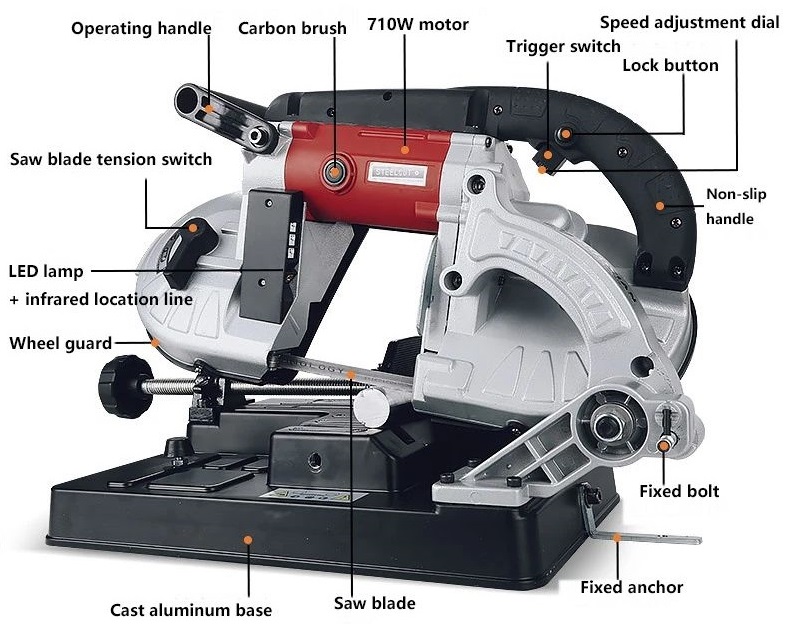
Portable Band Saw
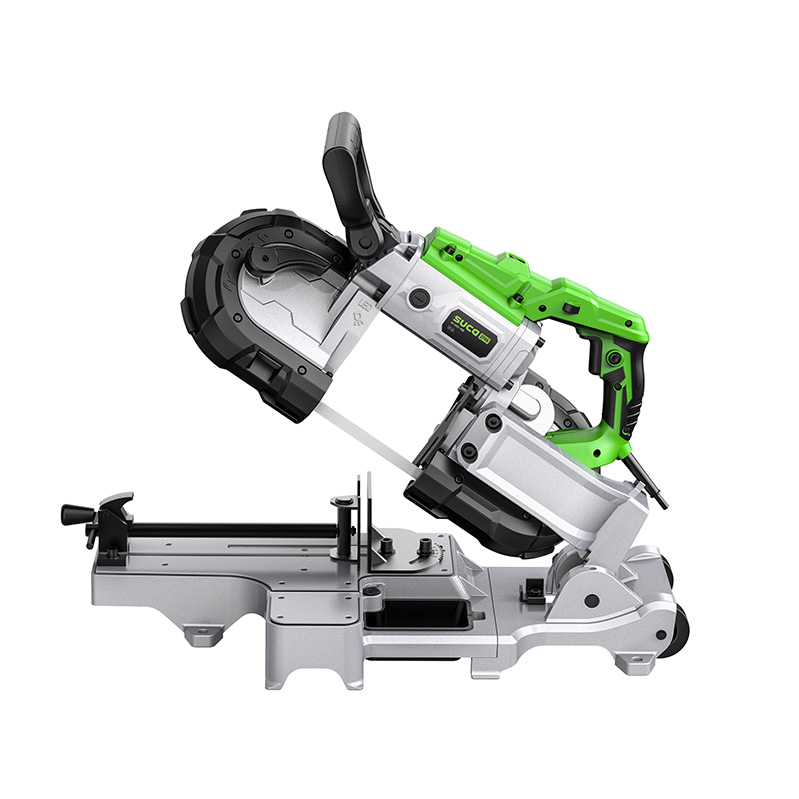
A portable band saw combines the clean cutting action of a band saw blade with the portability of a handheld tool. These compact, powerful tools have become extremely popular among metalworkers, plumbers, electricians, and ironworkers who need to make precise cuts in the field. Unlike a reciprocating saw, the continuous band blade produces a smoother, more controlled cut with less vibration.
Portable band saws can handle pipe up to about 5 inches in diameter (depending on the model) and are available in both corded and battery-powered versions. Many tradespeople consider them the ideal compromise between the portability of a reciprocating saw and the cut quality of a bench-mounted band saw. Some models can even be mounted in a stand to convert them into a small benchtop band saw for shop use.
Best for: Field work requiring clean cuts, plumbing and electrical trades, ironwork, and situations where portability and cut quality both matter.
Miter Saw (with Metal-Cutting Blade)
While most people think of miter saws as woodworking tools, certain models — especially those designed for multi-material cutting — can handle steel pipe effectively when fitted with the right blade. A carbide-tipped metal-cutting blade on a miter saw delivers clean, accurate crosscuts and can be set to precise angles, making it ideal for projects that require angled pipe cuts.
The key advantage of a miter saw for pipe cutting is the ability to dial in exact angles — 45 degrees, 22.5 degrees, or any angle in between — and repeat that cut consistently across multiple pieces. This is invaluable for handrail fabrication, structural framing, and any project where steel pipe meets at angles. Just make sure you're using a saw and blade rated for metal cutting — never use a standard wood-cutting miter saw and blade on steel.
Best for: Precise angle cuts, repeatable crosscuts, handrail and structural fabrication, and multi-material workshops.
Thermal & Flame Cutting Methods
These methods use heat, electricity, or focused light to melt or vaporize steel — often the only practical option for very thick material or complex shapes.
Plasma Cutter
Plasma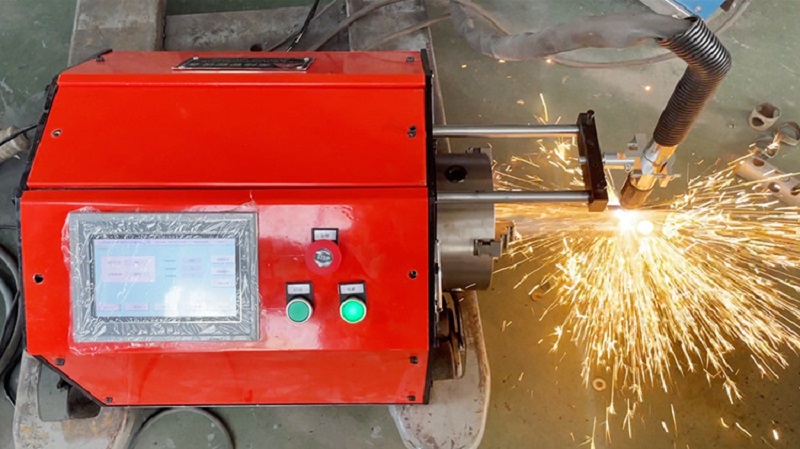 cutting uses a high-velocity jet of ionized gas (plasma) to melt and blow away metal at extremely high temperatures. A plasma cutter can slice through steel pipe of virtually any thickness with remarkable speed. Handheld plasma cutters are widely available and can cut steel up to an inch thick or more, while CNC plasma tables can automate the process for production work.
Plasma cutters produce a narrow kerf (cut width), minimal heat-affected zone compared to oxy-fuel, and can cut virtually any electrically conductive metal — including stainless steel and aluminum, which oxy-acetylene cannot. The equipment does require compressed air and an electrical power source. For cutting heavy-wall pipe, stainless pipe, or making freehand cuts on large-diameter pipe, plasma cutting is one of the fastest and most efficient methods available.
Best for: Thick-wall pipe, stainless and alloy steel, fast freehand cuts, and CNC-automated cutting.
Oxy-Acetylene Torch
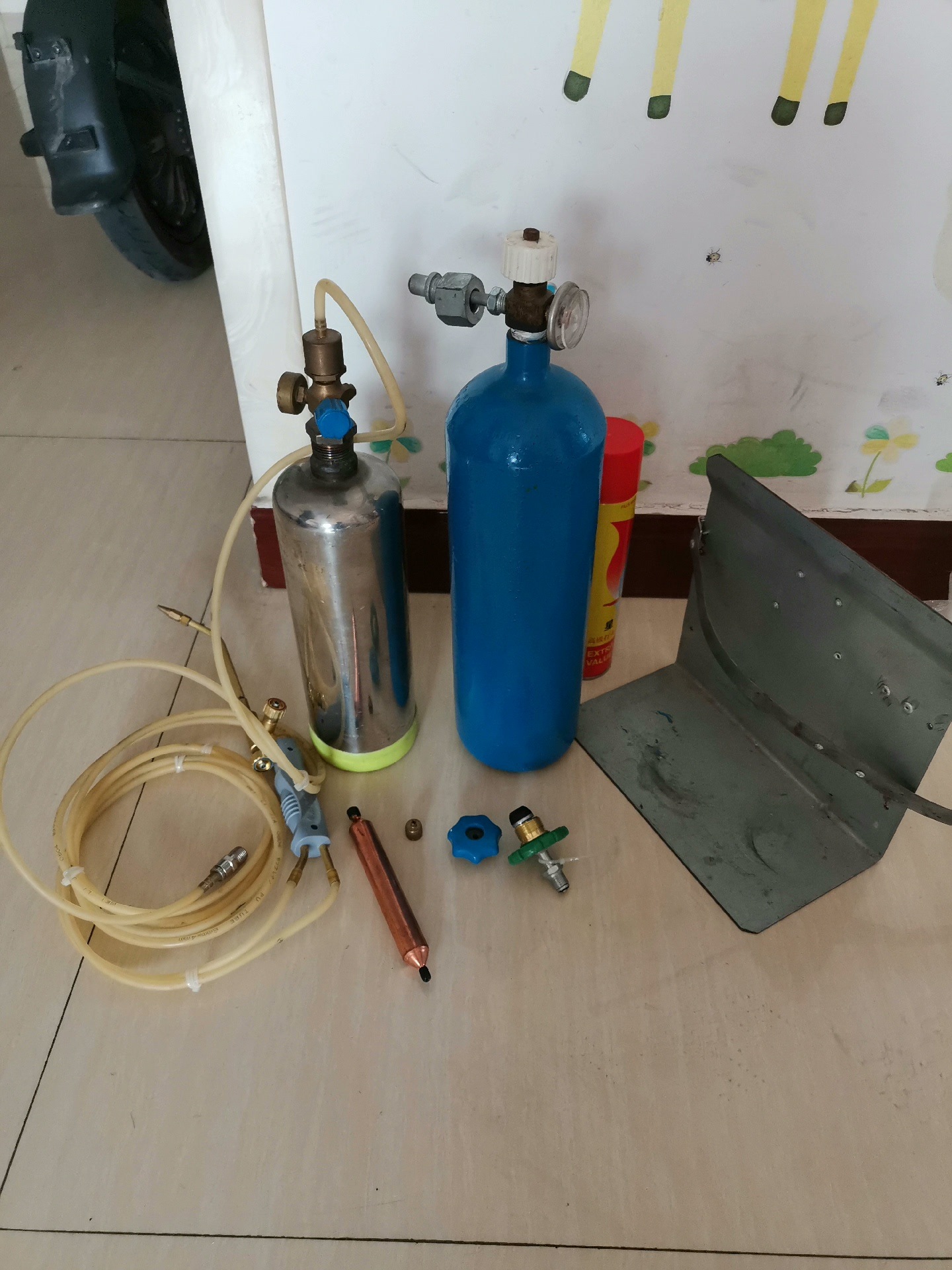
Oxy-acetylene (or oxy-fuel) cutting is one of the oldest and most established thermal cutting methods. It works by heating the steel to its ignition temperature with a flame, then directing a stream of pure oxygen onto the heated area to oxidize (burn) through the metal. This process works on carbon steel and low-alloy steel pipes of virtually unlimited thickness — from thin wall to several inches thick.
Oxy-acetylene setups are completely portable and require no electricity, which makes them ideal for fieldwork, demolition, and remote locations. The same equipment can be used for welding, brazing, and heating, making it highly versatile. However, it does not work on stainless steel or aluminum (they don't oxidize the same way), the heat-affected zone is larger than plasma, and the cut quality tends to be rougher — usually requiring grinding or machining to clean up the edge.
Best for: Very thick carbon steel pipe, field work without electricity, demolition, and multi-process versatility (cut, weld, heat, braze).
Industrial & Automated Cutting Methods
These high-end methods are designed for production environments where speed, precision, and automation are paramount.
Pipe Cutting Machine
Dedicated pipe cutting machines are purpose-built for one job: cutting pipe efficiently and accurately. These machines come in many configurations — orbital cutters that rotate a cutting tool around the pipe, power-driven rotary cutters, and automatic feeding systems that index and cut pipe to programmed lengths. They are commonly found in pipeline fabrication shops, industrial plants, and large-scale construction projects.
Orbital pipe cutting machines are particularly useful for in-place cutting of installed pipe in refineries, power plants, and processing facilities. They clamp around the pipe and rotate a cutting tool or blade around the circumference, producing a perfectly square, clean cut without the pipe needing to be removed. For high-volume shop production, automatic pipe cutting machines can measure, feed, and cut pipe continuously with minimal operator involvement.
Best for: High-volume production, in-place cutting of installed pipe, pipeline fabrication, and industrial maintenance.
Laser Tube Cutting Machine
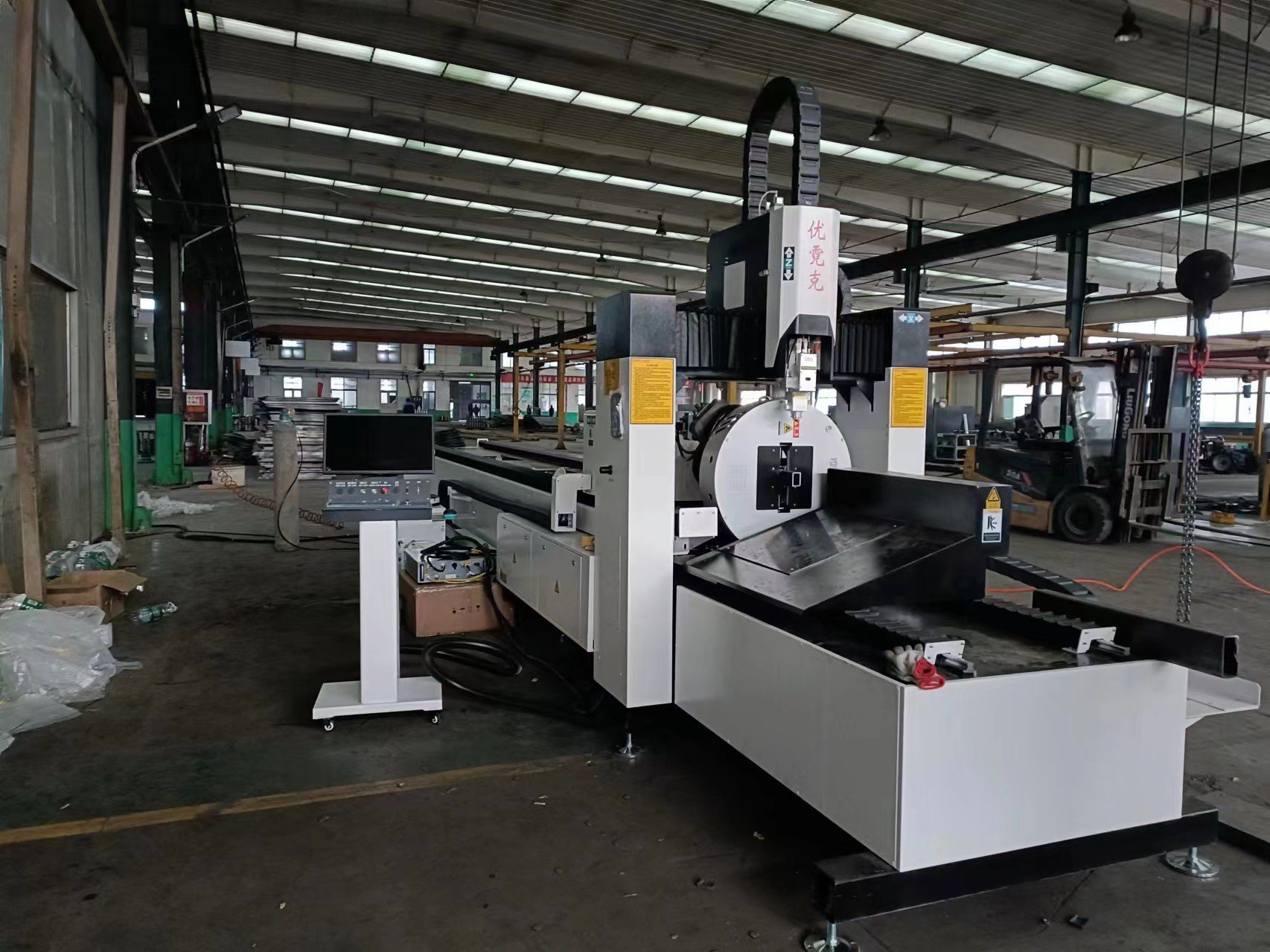
Laser tube cutting represents the pinnacle of pipe and tube cutting technology. These CNC-controlled machines use a focused laser beam — typically a fiber laser — to cut through steel tubing with extraordinary precision. Laser cutters can produce complex shapes, holes, slots, notches, and contours directly in the tube wall, all from a digital file, with tolerances as tight as a few thousandths of an inch.
The speed of laser cutting is remarkable, especially on thinner-wall tubing. A fiber laser machine can cut intricate patterns in seconds that would take minutes or hours with conventional methods. The cut edges are smooth and typically require no secondary finishing. The major trade-off is cost — laser tube cutting machines represent a significant capital investment. However, for companies producing custom furniture, architectural metalwork, automotive components, or any product requiring complex tube fabrication, the productivity gains are transformative.
Best for: Complex shapes and patterns, high-precision production, architectural and decorative metalwork, and automated manufacturing.
How to Choose the Right Cutting Method
Selecting the right method comes down to matching your specific needs to the strengths of each tool. Here are the key factors to consider:
Pipe Size & Thickness
Thin-wall tubing under 1 inch can be cut with almost any method. Thick-wall pipe over 2 inches usually calls for power saws, plasma, or oxy-fuel.
Cut Quality Needed
If the cut edge will be visible or needs to be welded without prep, choose cold saws, pipe cutters, or laser cutting. For rough structural work, a chop saw or grinder is fine.
Volume of Cuts
A few cuts per week? A hacksaw or portable band saw works. Hundreds per day? You need a horizontal band saw, chop saw, or automated pipe cutting machine.
Location & Portability
Working on a construction site or in the field? Prioritize handheld tools like reciprocating saws, portable band saws, angle grinders, or oxy-acetylene setups.
Final Thoughts
There is no single "best" way to cut steel pipe — the right method depends entirely on your project, your budget, and the results you need. For most home workshops and small fabrication setups, a combination of two or three tools will cover the vast majority of situations. A good angle grinder for quick rough cuts, a chop saw for consistent shop work, and a portable band saw for clean field cuts make an excellent trio.
For professional and production environments, investing in higher-end equipment like cold saws, horizontal band saws, or even laser cutting systems pays for itself through faster throughput, reduced material waste, and less time spent on secondary finishing operations. Whichever methods you choose, always prioritize safety — wear appropriate PPE, secure your workpiece, and use the right blade or consumable for the material you're cutting.
Explore our full range of metal cutting equipment at BACKYARD PROVIDER to find the tools that match your needs.