


 Damage
  Loss
Loss  Theft
Theft 


Chop Saw vs Miter Saw: What's the Real Difference
Walk into any trade supply store and you'll hear the terms "chop saw" and "miter saw" used almost interchangeably — but they are fundamentally different tools, designed for different jobs and different materials. Whether you're framing a deck, trimming molding, or cutting structural steel, choosing the wrong saw can cost you time, money, and a perfectly good blade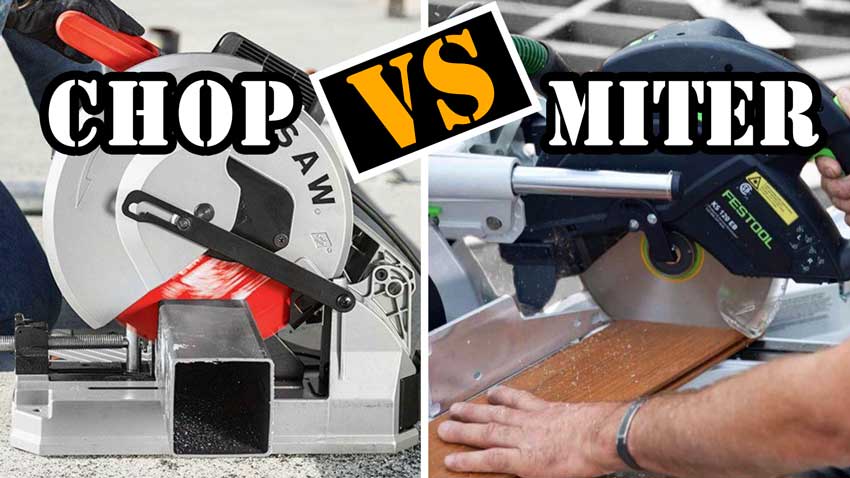
.
What Exactly Is a Chop Saw?
A chop saw — sometimes called a cut-off saw or cold saw — is a stationary power tool that delivers straight, 90-degree downward cuts. Its defining feature is the type of blade it uses. Most chop saws are fitted with either an abrasive grinding disc or a special cold-cut carbide-tipped blade designed specifically for slicing through ferrous and non-ferrous metals: steel pipe, angle iron, tube, rebar, and aluminum extrusions.
The name "chop" comes from the motion itself — the arm pivots straight down onto the material in a single, decisive stroke. There's no swivel, no bevel angle, and no complex fence adjustment. It does one thing, and it does it extremely well.
What Exactly Is a Miter Saw?
A miter saw is a precision woodworking tool built for making angled cross-cuts, miter cuts, and — on compound models — bevel cuts. The blade is a circular carbide-tipped disc designed exclusively for wood, MDF, and similar materials. The saw head swings left and right on a rotating base, allowing you to set a miter angle, typically up to 45°–52° depending on the model. Compound miter saws also tilt the head sideways for bevel cuts, making them the go-to tool for crown molding, stair stringers, and detailed trim work.
Breaking Down the Core Differences
Blade Type
Chop saws use abrasive or cold-cut metal blades. Miter saws use toothed carbide-tipped wood blades. Never swap them.
Cut Direction
Chop saws cut only at 90°. Miter saws pivot to create precise angled cuts from 0° to 45°+.
Material
Chop saws handle steel, iron, pipe, and aluminum. Miter saws handle wood, MDF, laminate, and soft composites.
RPM & Power
Chop saws run slower RPMs with more torque. Miter saws spin faster and rely on blade sharpness over raw power.
Safety Profile
Chop saws throw sparks and require full PPE. Miter saws produce fine dust — a respirator and eye protection are essential.
Cost Range
Entry-level chop saws start around $100. Quality miter saws range from $150 to $700 for sliding compound models.
Quick-Reference Comparison Table
| Feature | Chop Saw | Miter Saw |
|---|---|---|
| Primary Material | Metal (steel, iron, aluminum) | Wood, MDF, trim |
| Blade Type | Abrasive disc or cold-cut carbide | Carbide-tipped wood blade |
| Cut Angles | 90° straight cut only | 0° – 45°+ miter & bevel |
| Typical Motor | 1,800 – 3,800 RPM | 3,500 – 5,000 RPM |
| Spark Production | Yes (abrasive models) | No |
| Dust vs Sparks | Metal shavings & sparks | Fine wood dust |
| Portability | Heavy — typically stays on-site | Moderate — bench or stand |
| Price Range | $100 – $500+ | $150 – $700+ |
| Best Use Case | Structural metal fab & plumbing | Carpentry, cabinetry, trim |
Wait — What Is a Mitering Chop Saw?
Here's where it gets interesting. Manufacturers like Evolution Power Tools have engineered a third category: the mitering chop saw. This hybrid combines the metal-cutting capability of a chop saw with the angled cutting versatility of a miter saw. Fitted with a multipurpose cold-cut carbide blade, it can handle steel, aluminum, wood, and even plastic — and it pivots to cut miter angles just like a traditional miter saw.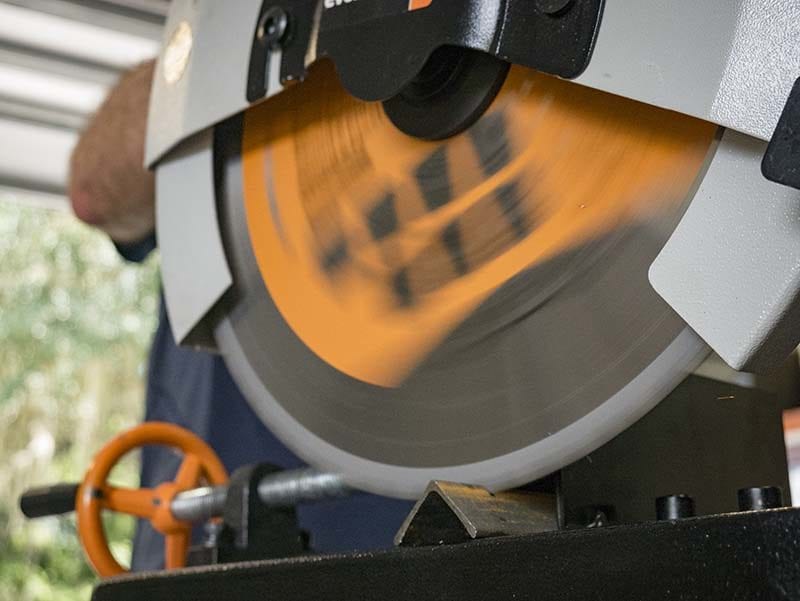
If you work in construction, fabrication, or DIY projects that involve both metal and timber, a mitering chop saw can genuinely replace two tools on your bench.volution 14" Mitering Chop Saw
Chop Saw — Pros & Cons
✦ Pros
- Purpose-built for cutting metal quickly and cleanly
- Cold-cut versions leave burr-free edges — no grinding needed
- Extremely durable and low maintenance
- Handles heavy structural steel with ease
- Consistent, repeatable 90° cuts every time
✦ Cons
- Abrasive models throw a shower of sparks
- Limited to straight cuts only — no miter angle
- Heavy and large footprint on your workbench
- Abrasive blades wear down quickly and need frequent replacement
- Not suitable for wood or finish materials
Miter Saw — Pros & Cons
✦ Pros
- Exceptional angle versatility for trim and carpentry
- Clean, smooth cuts on wood and MDF
- Sliding models handle wide stock and panels
- Relatively quiet compared to metal saws
- Laser guides and fences improve precision
✦ Cons
- Cannot cut metal — wrong blade, wrong RPM
- Generates large volumes of fine wood dust
- Sliding compound models are expensive
- Limited depth of cut on thicker lumber
- Carbide blades need periodic sharpening or replacement
Safety First — Using Either Saw Responsibly
Both tools carry real risk if used carelessly. The hazards are simply different. Metal saws send sparks flying, while miter saws fill the air with fine particulate. Respecting each tool's specific dangers keeps your worksite safe and your equipment running longer.
Chop Saw Safety
Always wear full-face protection, flame-resistant gloves, and keep flammables well away from the cutting zone. Never use a worn or cracked abrasive disc. Secure all workpieces in the clamp before making a cut — free-hand cutting with a chop saw is never acceptable.
Miter Saw Safety
Use a P100 dust respirator and connect the saw to a shop vacuum whenever possible. Keep fingers a minimum of 6 inches from the blade path. Always wait for the blade to come to a complete stop before lifting the head. Use a blade guard — never remove or defeat it.
- Inspect your blade before every session — cracks, missing teeth, or worn edges are a hazard.
- Clamp your material securely and ensure it won't shift mid-cut.
- Let the blade reach full speed before contacting the workpiece.
- Never stand directly in line with the blade — stand to the side.
- Allow the blade to stop completely before repositioning or clearing debris.
Choosing the Right Blade — It Matters More Than You Think
The blade is the single most important factor determining what your saw can — and cannot — cut. Using the wrong blade doesn't just ruin your workpiece. It can shatter the blade and cause serious injury. Always match the blade to both the saw and the material.
Cold-cut carbide blades — like those used on the Evolution S355MCS — are worth the premium price. They cut cooler, leave virtually no burr, and don't deform the cut edge from heat. For metal fabrication, pipe fitting, or any project where the end finish matters, cold-cut technology is the clear choice over a standard abrasive disc.Buying Guide
Which Saw Should You Actually Buy?
The honest answer depends entirely on what you're cutting and how often. Below is a straightforward guide to help you decide without second-guessing.
| Your Situation | Best Choice |
|---|---|
| Cutting steel pipe, angle iron, or rebar regularly | Chop Saw |
| Building decks, framing, or trimming lumber | Miter Saw |
| Installing crown molding or baseboards | Compound Miter Saw |
| Mixed-use: metal and wood on the same job site | Mitering Chop Saw |
| Fabricating aluminum frames or profiles | Cold-Cut Chop Saw |
| Home workshop for general DIY & renovation | Sliding Miter Saw |
Need Metal Cutting Power with Miter Versatility?
The Evolution 14" Mitering Chop Saw delivers clean, cold-cut results on steel, aluminum, and wood — with a swivel base that opens up angled cuts without a second machine on your bench.
Evolution 14" Mitering Chop SawThe Bottom Line
Chop saws and miter saws are not the same tool — and the difference isn't just semantics. A chop saw is a heavy-duty metal cutter that excels at one task and does it better than anything else on the market. A miter saw is a precision wood-cutting instrument that gives carpenters and cabinet makers an indispensable edge on angled work.
If your work involves metal cutting — even occasionally — a cold-cut mitering chop saw is the smartest investment you can make. It handles metal and wood, cuts at angles, and produces finished edges that don't require secondary clean-up. For pure woodworking, a quality compound or sliding miter saw remains unmatched.
Buy for the material you cut most. Buy once, buy right.