


 Damage
  Loss
Loss  Theft
Theft 


Cold Saw vs. Chop Saw What's the Real Difference?
Cutting Applications
Both cold saws and chop saws are built to cut steel, stainless steel, and aluminum — but that's roughly where the similarities end. Chop saws extend their reach to wood, plastic, masonry, and composites, giving them a broader role on mixed-use job sites.
When precision is the priority, cold saws hold a clear advantage. Their controlled cutting action generates minimal heat, eliminates aluminum chips from sticking to the surface, and delivers cleaner finished edges. This makes them the go-to for cutting thick sections or dimensionally accurate pieces.
Chop saws, on the other hand, thrive on speed. They can generate more heat and noise, but they work reliably on light-duty or less demanding applications. Whether you're cutting aluminum, steel, or masonry, understanding your project demands will guide you to the right tool.
Price of Equipment
Upfront cost is one of the first things buyers notice. Entry-level chop saws are available starting at just a few hundred dollars, with professional-grade models priced moderately higher — making them an accessible starting point.
Cold saws require a larger initial investment, but that cost reflects a significant difference in engineering: superior construction, tighter tolerances, precision components, and enhanced cutting capability. Over time, this investment pays back through lower operating costs, longer blade life, and consistently better cut quality.
Blade Shape

Cold Saw Blade
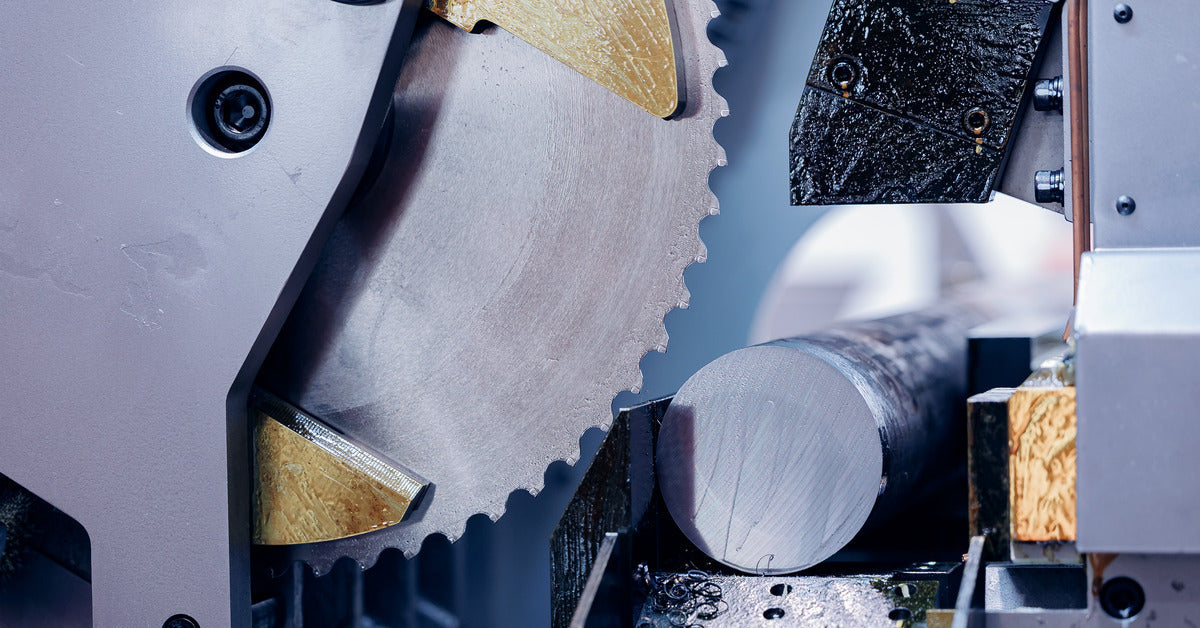
Features thick, robust construction with large, widely spaced teeth designed to resist deflection. The thicker blade body maintains straight, accurate cuts, while the tooth design minimizes heat generation and optimizes chip removal for a superior quality finish.
Chop Saw Blade
Many models use abrasive wheels rather than toothed blades. These wheels grind through material at high speed, generating more heat and friction during operation. This approach trades precision for versatility and lower upfront blade cost.
Cutting Method
The fundamental approach each tool takes to cutting differs significantly — and that difference defines the result. Cold saws use a rotary cutting motion at low speeds, with the blade moving through material in a controlled, deliberate arc that generates minimal heat throughout the process.
Chop saws employ an abrasive cutting action at high speeds, essentially grinding through the material. This aggressive method cuts pieces quickly but generates significant heat and sparks, which can alter the metal's structural properties near the cut edge.
Cold cutting preserves the material's original properties from start to finish. The absence of heat keeps the metal's temper, hardness, and grain structure fully intact — critical in precision metalworking.
Why Operating Temperature Matters
Heat generated during cutting doesn't just affect the cut surface — it can alter the metallurgical properties of the material near the edge. Cold saws preserve material integrity throughout the entire process, eliminating the need for post-cut cooling, deburring, or edge treatment before use.
The Saw's Speed
Cold saws operate at low revolutions per minute, typically ranging between 20 and 150 RPM with a recommended operating speed of 120 RPM. This slower, deliberate pace enables greater operator control and allows precise cut parameters to be dialed in and consistently repeated.
Chop saws spin at considerably higher speeds, often exceeding 5,000 RPM. That speed amplifies cutting force and friction significantly. The tradeoff is reduced precision and a higher likelihood of heat-related surface effects on the workpiece.
Heat Generation
Heat is one of the most visible distinctions between these two tools during active use. Cold saws keep temperatures low throughout the cut by combining a slow cutting action with efficient chip removal — the chips carry heat away from the blade and the workpiece simultaneously.
Chop saws generate considerable heat through their abrasive action. Sparks fly during operation, and cut edges often need to cool before they can be safely handled or passed to the next stage of fabrication. Hot cuts frequently require additional steps — deburring, edge treatment, or cooling time — before the piece is ready to use.
Each Saw's Level of Precision
Cold saws are built for dimensional accuracy. Their controlled cutting action and rigid blade construction maintain consistent tolerances across the entire cut, making them ideal for applications where components must fit together without adjustment or rework.
Chop saws sacrifice some precision in exchange for speed and versatility. Blade deflection, vibration, and heat expansion can affect cut accuracy, which may be acceptable for general construction but falls short in precision metalwork or tight-tolerance applications.
When your cuts must fit together perfectly the first time — with no room for misalignment — cold saws deliver the reliability that professional metalworking demands.
Clean, Ready-to-Use Surfaces
Cold saws produce smooth, clean surfaces that frequently require no additional finishing. The controlled cutting action leaves cut faces ready for welding, hardware installation, or final assembly without any intermediate processing steps.
Chop saw cuts often come out rough, with visible grinding marks and heat-affected zones along the edges. These surfaces typically need deburring, grinding, or additional finishing operations before they are suitable for professional use — adding time and cost to each piece.
In professional applications, surface quality is rarely optional. Cold cutting eliminates the need for secondary operations and ensures consistent quality across every cut, which is critical when both appearance and precision matter.
How to Sharpen the Blades
Blade maintenance requirements differ notably between these two cutting systems. Cold saw blades can be resharpened multiple times before replacement is necessary. Professional sharpening services restore the blade's original cutting geometry, which greatly extends blade life and keeps per-cut costs low over time.
Chop saw blades typically require replacement rather than sharpening. Because their abrasive nature wears down the cutting surface gradually and evenly, there's no recoverable edge to restore — when performance drops, the blade is replaced entirely.

Choosing the Right Blades for Your Projects
Your tool selection has a direct impact on project success, operating costs, and long-term productivity. Understanding the core differences between cold saws and chop saws simplifies the decision: chop saws offer versatility and lower initial cost, while cold saws deliver superior precision, finish quality, and long-term value for metalworking applications.
For professional construction, fabrication, and demanding metalworking environments, cold saws are the clear choice. Their blades are engineered to deliver the precision, longevity, and performance that professionals require — especially when working with specialty alloys where blade selection directly determines the outcome.
Invest in Precision Cutting Performance
The right cutting tool pays for itself in quality, consistency, and time saved. Explore our cold saw selection and find the blade that's built for your specific application.
Evolution 14" Mitering Chop Saw