


 Damage
  Loss
Loss  Theft
Theft 


Miter Saw vs Chop Saw
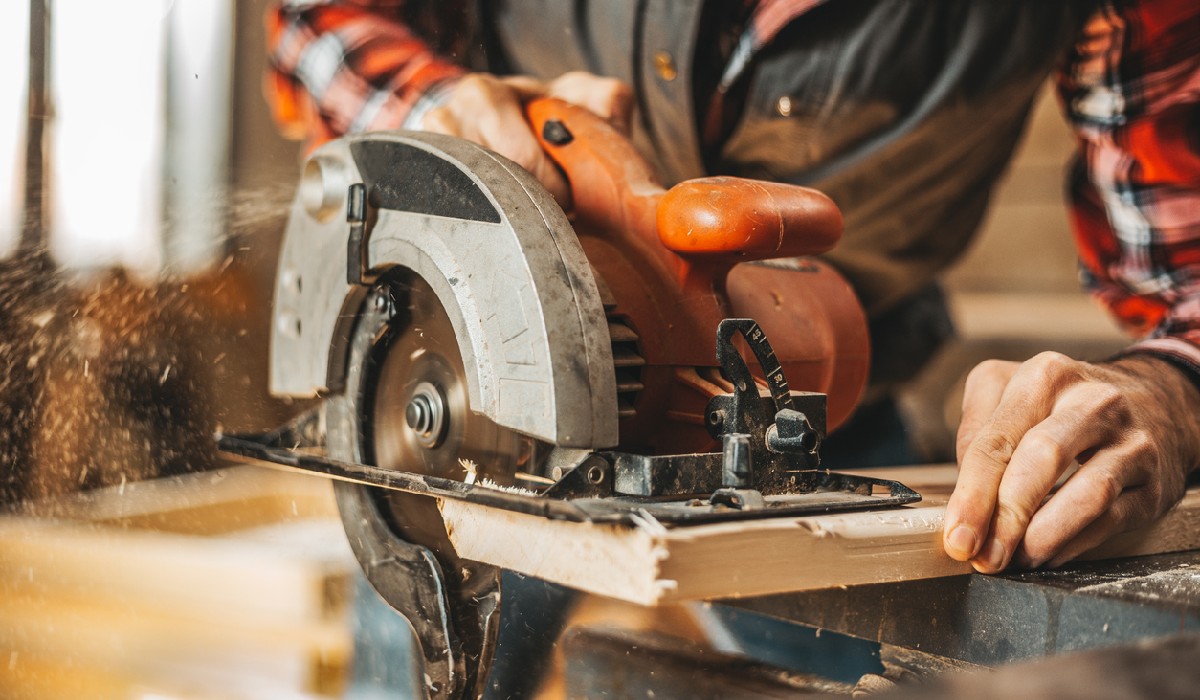
You've probably been in the hardware aisle — or scrolling a product page — and asked yourself: what's the actual difference between a miter saw and a chop saw? They look similar, they both cut things, and they're often talked about in the same breath. But reach for the wrong one on a job site and you'll understand the difference pretty fast. This guide cuts through the confusion.
The Core Differences
At first glance, a miter saw and a chop saw look like close cousins. Both drop a spinning blade downward through material. Both sit on a bench or workstation. But the way they move — and what they're built to cut — is where the story changes.
A chop saw moves in one direction only: straight down. No angles, no tilts, no rotation. It is a pure power tool — designed to deliver blunt, repeatable 90-degree cuts through hard materials like steel pipe, rebar, and angle iron. The blade is typically abrasive rather than toothed, generating heat and sparks as it grinds through metal.
A miter saw, on the other hand, is built for finesse. It can rotate left and right to cut miters, and compound models also tilt the blade for bevel cuts. This makes it the go-to for woodworkers, finish carpenters, and trim installers who need precise, clean angles.
| Feature | Chop Saw | Miter Saw |
|---|---|---|
| Cut Direction | Straight down only | Straight, angled, beveled |
| Primary Material | Metal, masonry | Wood, PVC, trim |
| Blade Type | Abrasive disc | Toothed blade |
| Miter Angles | No | Yes (up to 45°+) |
| Bevel Cuts | No | Yes (compound models) |
| Portability | Heavier, jobsite focused | Varies, many are portable |
| Typical Users | Metalworkers, fabricators | Carpenters, contractors |
Chop Saws: Built for Straight Cuts
The chop saw earns its reputation on the metal side of the job. If you're working through steel studs, conduit, structural tubing, or rebar all day long, this is your tool. The abrasive disc chews through tough materials that would ruin a standard toothed blade. It's fast, it's loud, and it gets the job done without ceremony.
Some newer models — like cold-cut or mitering chop saws — do add a degree of angle adjustment, blurring the line with miter saws. These hybrid-style machines can handle both heavy metal cutting and some angular work, making them genuinely versatile for mixed jobsite conditions.
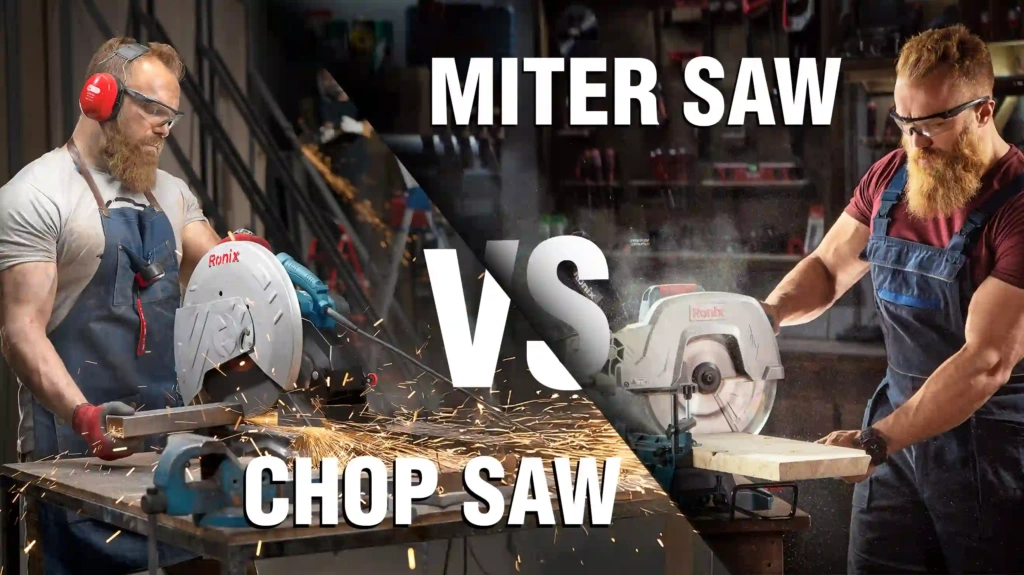
A Chop Saw is Ideal for Cutting Metal
If you're regularly cutting structural steel, angle iron, heavy pipe, or sheet metal — the chop saw is purpose-built for that environment. Its powerful motor and abrasive or carbide-tipped blade is optimized for ferrous and non-ferrous metals without the blade-dulling issues you'd get from a miter saw.
Pro Tip: When using a chop saw for metal, always secure your workpiece firmly with the built-in clamp before cutting. Metal stock can grab or kick if it shifts mid-cut. Wear eye protection and a face shield — sparks are inevitable with abrasive blades.
Miter Saws: Built for Precise, Clean Cuts
Where the chop saw is a bulldozer, the miter saw is a surgeon. It's designed to deliver clean, accurate cuts across a wide range of angles — perfect for door casings, crown molding, baseboards, picture frames, and any woodworking project where the cut quality actually matters. The blade is sharp and toothed, leaving a smooth edge that doesn't need grinding down.
Compound miter saws add bevel capability on top of miter rotation, allowing you to cut complex angles in a single pass — essential for crown molding installations. Sliding compound models extend that range further by letting the blade travel across wider boards.
Features at a Glance
Chop Saw Features
High-Torque Motor
Delivers the raw power needed to push through structural metals without bogging down mid-cut.
Abrasive or Carbide Disc
Optimized for metal, masonry, and hard materials — replaceable and widely available.
Integrated Clamp
Locks workpieces firmly in place for repeatable, safe straight cuts.
Spark Shield
Deflects sparks away from the operator when cutting metal with abrasive wheels.
Miter Saw Features
Miter Detents
Click-stop angle positions make repeatable miter cuts fast and accurate — no measuring every time.
Bevel Adjustment
On compound models, the head tilts for bevel and compound bevel cuts.
Dust Port
Connects to a shop vacuum to keep your workspace clean during long cutting sessions.
Laser Guide / LED
Many models include a light or laser for shadow-line cut accuracy before the blade drops.
Strengths Side by Side
Miter Saw Strengths
- Multiple cut angles in one tool
- Clean, smooth cut edges
- Excellent for finish carpentry
- Wide variety of blade options
- Compatible with dust collection
- Sliding models cut wider boards
Chop Saw Strengths
- Handles heavy metal stock
- Simple, repeatable operation
- Extremely durable build
- Lower cost for basic work
- Faster through thick material
So, Which One Do You Need?
If your work is rooted in metalwork, fabrication, or construction where straight cuts through tough stock are the daily reality — go with a chop saw. If you're doing finish work, framing, trim carpentry, or anything that demands angles and clean cuts in wood — the miter saw is your tool. When in doubt, look at models like the Evolution S355MCS that bridge both worlds with mitering capability in a heavy-duty metal-cutting package.
Evolution 14" Mitering Chop SawFrequently Asked Questions
Can I use a chop saw to cut wood?
Technically yes, but it's not recommended. Abrasive chop saw blades will burn wood rather than cut it cleanly. If you need to cut both metal and wood, consider a cold-cut or mitering chop saw with the appropriate blade, or use a miter saw for wood tasks separately.
Can a miter saw cut metal?
With the right blade, a miter saw can cut non-ferrous metals like aluminum. However, it is not designed for the rigors of heavy steel cutting. For structural metal work, a dedicated chop saw or cold-cut saw is safer and more effective.
What does "mitering chop saw" mean?
A mitering chop saw combines the power and durability of a standard chop saw with the ability to rotate the head for angled cuts — similar to a miter saw. This makes it a versatile option for metalworkers who also need some angular cutting capability on the job.
Is a chop saw dangerous?
Like all power cutting tools, chop saws require proper safety practices. Always use the work clamp, wear eye and face protection, keep bystanders clear of the spark zone, and never freehand material. Follow the manufacturer's safety guidelines at all times.
What size chop saw should I buy?
For most professional and heavy-duty applications, a 14-inch chop saw covers the widest range of material sizes. Smaller 9- or 12-inch models work for lighter cutting tasks. Match the saw capacity to the largest stock diameter you typically cut.