


 Damage
  Loss
Loss  Theft
Theft 


Chop Saw vs. Miter Saw: Metal vs. Wood Cutting Explained
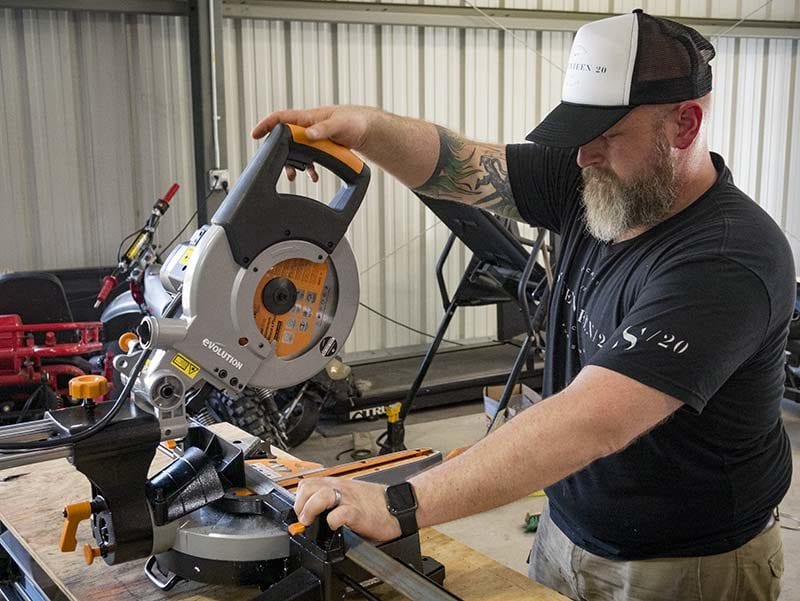
Walk into any workshop, job site, or hardware store and the chop saw and the miter saw are easy to confuse. They look similar at a glance — both feature a pivoting arm, a circular blade, and a solid base. But put them side by side on a real project and the differences become crystal clear, fast. This guide cuts through the noise and gives you everything you need to make the right call.
What Exactly Is a Chop Saw?
A chop saw — sometimes called an abrasive cut-off saw or cold saw — is a power tool built for one thing above all else: cutting hard materials, primarily metal, with brute efficiency. The blade drops straight down in a single fixed vertical plane, which is why "chop" is exactly the right word. There is no bevel, no miter, no angling — just a clean, repeatable perpendicular cut.
Most chop saws use abrasive grinding discs or specialized carbide-tipped metal-cutting blades. The motors are large and powerful, generating the torque needed to slice through steel rebar, angle iron, pipe, structural tubing, and aluminum extrusions without bogging down. They create heat and sparks, so they are purpose-built for rough, industrial-grade work rather than fine finish cuts.
Key identity of a chop saw: Fixed blade angle, high torque motor, designed predominantly for metal and masonry cutting. It chops straight — nothing more, nothing less.
What Exactly Is a Miter Saw?
A miter saw is engineered for precision wood cutting with adjustable angles. Unlike the chop saw, the miter saw's head can pivot left and right to make angled cuts — called miter cuts. On compound and sliding compound models, the blade also tilts on a bevel axis, enabling complex compound-angle cuts that are essential in carpentry, trim work, and cabinetry.
Miter saws use sharp, fine-toothed carbide-tipped blades designed to produce smooth, splinter-free cuts in wood, MDF, molding, and PVC. The emphasis is on accuracy, repeatability, and clean finish — not raw metal-slicing power.
Chop Saw vs. Miter Saw — Head to Head
Here is where the two tools truly diverge. Let's compare them directly across the most important categories.
⚙️ Chop Saw
- Cuts metal, rebar & pipe
- Fixed 90° blade angle only
- Abrasive disc or cold-cut blade
- High torque, heavy-duty motor
- Produces sparks and heat
- Coarse, rough cut finish
- Larger, heavier footprint
- Used on job sites & fabrication
🪚 Miter Saw
- Cuts wood, MDF & trim
- Pivots left/right for miter angles
- Fine carbide-tipped blade
- Precision motor, smooth delivery
- Minimal sparks, clean dust
- Fine, finish-quality cut
- More compact workbench size
- Used in carpentry & finishing
Quick Comparison Table
| Feature | Chop Saw | Miter Saw |
|---|---|---|
| Primary Material | Metal, steel, pipe | Wood, MDF, trim, PVC |
| Blade Type | Abrasive disc / cold saw | Fine carbide-tipped |
| Miter Angle | None — 90° only | Yes — adjustable |
| Bevel Cut | No | Yes (compound models) |
| Cut Finish | Rough / industrial | Smooth / finish-grade |
| Sparks Generated | Yes (abrasive blade) | Minimal |
| Motor Power | Very high torque | Moderate, precise |
| Typical Use | Fabrication, construction | Carpentry, trim, framing |
| Portability | Heavy, less portable | Lighter, easier to move |
| Price Range | Mid to high | Mid to high |
Can a Miter Saw Cut Metal?
This is one of the most searched questions in the tool world — and the short answer is: sometimes, with the right blade. Standard wood miter saw blades should never be used on metal. However, with a dedicated non-ferrous metal cutting blade (designed for aluminum, copper, and thin-walled steel sections), a miter saw can handle lighter metalwork reasonably well.
For heavy structural steel, thick rebar, or anything requiring significant cutting depth and heat resistance, a proper chop saw is not optional — it is mandatory. Trying to force a miter saw into heavy metal cutting risks blade shatter, motor burnout, and serious injury.
Always match your blade to your material. Using the wrong blade on a saw is the leading cause of tool-related workshop injuries. Check manufacturer specifications before every cut.
Spotlight: The Evolution S355MCS — A True Heavy-Duty Metal Cutting Chop Saw
When the job calls for cutting steel, structural sections, rebar, box tubing, or angle iron with consistency and speed, the Evolution 14" Mitering Chop Saw S355MCS is one of the most capable tools available at this price point. Built for serious metal cutting, it bridges a rare gap: delivering the raw power of a chop saw while adding miter functionality for angled cuts — something most standard chop saws completely lack.
Why the S355MCS Stands Apart
- 14" blade capacity tackles large structural steel, box section, and rebar in a single pass
- Mitering capability at multiple angles — not just a fixed 90° chop
- Cold-cut technology means no heat distortion, no sparks, no hardened edges
- High-torque motor delivers consistent cutting power without bogging down mid-cut
- Robust clamping vice secures material firmly for repeatable, accurate cuts
- Bevel-cut ready, enabling complex angled metal fabrication work
- Designed for professional fabricators, serious DIY builders, and construction crews
- Produces burr-free cuts, reducing the need for grinding or finishing after the cut
Ready to cut steel like a professional? The Evolution S355MCS delivers precision and power in one heavy-duty package.
Evolution S355MCS Chop SawWhich Saw Do You Actually Need?
The answer depends entirely on what you are cutting and how precise you need the result to be. Here is a simple breakdown to guide your decision.
Choose a Chop Saw When:
- You are cutting steel, iron, rebar, or structural metal regularly
- Your cuts only need to be square and repeatable — not fine-finished
- You are working on construction, fencing, fabrication, or metalwork
- You need maximum motor power and cut depth
- Sparks and noise are not a concern in your work environment
Choose a Miter Saw When:
- You are primarily cutting wood, MDF, molding, or trim
- You need angled or compound cuts for carpentry and framing
- Cut finish quality and smoothness matters to your project
- You are setting up a workshop or indoor cutting station
- You want a lightweight, versatile saw for general woodworking
Corded vs. Cordless — Does It Matter for These Saws?
For both chop saws and miter saws, corded models remain the dominant choice in professional and heavy-use settings. The power demands — especially for metal cutting — are significant, and battery technology still has limitations when it comes to sustained high-torque cutting over long periods. Cordless miter saws are increasingly capable for wood cutting applications, but a cordless heavy-duty metal chop saw is still an exception rather than the rule.
Bottom line: For metal cutting with a chop saw, always go corded for reliable, consistent performance. For woodworking miter cuts, cordless models are a strong option if mobility matters on your job site.
Final Verdict
The chop saw and the miter saw are fundamentally different tools — not competitors. The chop saw is a workhorse built for metal, delivering power and reliability where finesse would fail. The miter saw is a craftsman's instrument, built for wood, angles, and clean results.
If your backyard, workshop, or job site has metal cutting on the agenda, a dedicated chop saw is not optional — and the Evolution S355MCS is one of the smartest investments you can make at its class. For woodworking and trim work, a quality miter saw is equally indispensable.
Know your material. Match your tool. Cut smarter.
Upgrade your metal-cutting capability with the Evolution 14" Mitering Chop Saw — engineered for the toughest jobs.
Shop Evolution S355MCS