


 Damage
  Loss
Loss  Theft
Theft 


How Hot Do Pizza Ovens Really Get: And Why Temperature Is Everything
A great gourmet pizza begins with a thoughtful recipe, but it lives or dies by the cooking environment. The freshest dough, the brightest tomatoes, hand-torn basil, and silky fresh mozzarella will only take you so far if your oven cannot deliver the heat that pizza was designed for. Restaurant-quality results need restaurant-level temperatures — and that is exactly where a real pizza oven changes the game.
Professional kitchens and pizzerias do not rely on a standard kitchen oven, and there is a clear reason for that. So just how hot does a brick pizza oven get? The best units can climb to roughly 1,000°F, and they are engineered specifically to bake a pie to perfection in only a few minutes. Their dome shape, dense materials, and heat-retentive build are not styling choices — they are precisely what allows extreme temperatures to do their work.
Why Pizza Ovens Need To Run So Hot
Customers frequently ask the same thing at pizzerias: how hot does a pizza oven actually get? The answer matters for two big reasons. The first is pure efficiency. Baking pie after pie in a conventional home oven would stretch into hours, because the oven loses heat with every door swing. A proper pizza oven, by contrast, can run pizza after pizza without skipping a beat — each one cooked at the same blistering temperature as the one before, with zero waiting for the oven to recover. Thermal mass and heat retention are at the very heart of why a real pizza oven performs.
The second reason is even more important to the eater: taste and texture. A pizza oven needs to be hot enough that you never end up with the classic home-baked problem — scorched in one spot, doughy in another. The intense, evenly radiating heat produces a crackling, blistered crust with a soft, airy interior and toppings that finish at exactly the right moment. High heat for a short burst of time is what gives you light, fluffy, beautifully charred pizza instead of a heavy, uneven bake.
 Conventional Ovens vs. Pizza Ovens
The differences run deeper than temperature alone. A conventional oven uses electric coils or gas burners inside what is essentially a metal box with a large hinged door. Every time that door opens, heat escapes fast. Most kitchen ovens top out around 500°F, and even when they get there, they struggle to hold that level under real cooking conditions. The shape and the materials simply were not built for it.
The Pizza Oven Advantage
- Reaches 700–1,000°F with ease
- Dome shape circulates heat evenly
- Refractory materials lock in temperature
- Cooks a pizza in 60–120 seconds
- Holds heat for hours after the fire dies down
The Conventional Oven Limit
- Typically maxes out at 500°F
- Heat escapes every time the door opens
- Uneven hot spots and cool zones
- Long preheat, slow recovery
- Cannot produce true Neapolitan crust
Pizza ovens are a different animal. Instead of a box with a door, they take advantage of a domed chamber, a refractory floor, and a single arched opening. The dome bounces radiant heat back down onto the pie, the floor conducts heat directly into the crust, and the small opening keeps the chamber sealed in heat. The result is a cooking environment that is dramatically more efficient — and dramatically more effective — than anything a conventional appliance can match.
How Hot Does A Wood-Fired Pizza Oven Get?
Wood-fired ovens are the gold standard, and for good reason. Once the fire is properly built and burning, a wood-fired pizza oven can comfortably reach up to 850°F, and at peak some can push beyond it. You don't actually want to exceed the heat capacity your oven is engineered for — pushing too hard risks damaging the materials. But once that fire is roaring and the dome is saturated with heat, the oven will hold cooking temperature for hours, well after the flames have died down.
There's also a flavor story here that no electric or gas appliance can replicate. Real wood adds a subtle, smoky character to the crust and toppings that serious cooks chase relentlessly. It is the kind of detail you taste immediately and can't get from a kitchen oven. The type of wood matters too — different species burn at different temperatures and bring different flavor profiles, so the choice of fuel becomes part of the recipe.
How Hot Does A Commercial Pizza Oven Get?
When you step into the commercial side of the conversation, one of the first specs that matters is exactly how hot the oven will run. In a restaurant setting, temperature is non-negotiable: you need an oven that climbs high, holds steady, and recovers fast while pies go in and out at a rapid pace. Commercial pizza ovens can readily reach 950°F, although the sweet spot for a 3–5 minute bake tends to sit closer to 800°F.
What separates a true commercial oven from a souped-up home appliance is insulation and heat retention. Those two factors are what let an oven get extraordinarily hot inside while remaining safe and manageable on the outside — and what keeps the kitchen from turning into a furnace. The heat stays where it is supposed to: locked in around the pie.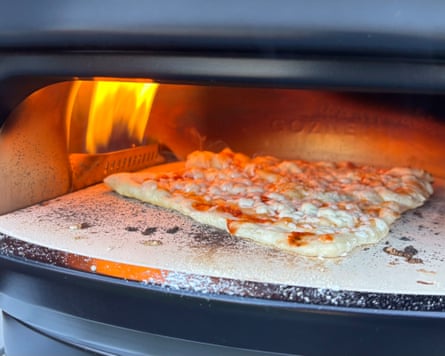
Built For Backyard, Engineered Like A Restaurant
Forno Piombo brings authentic Italian wood-fired craftsmanship straight into your outdoor kitchen — restaurant performance, residential design.
Forno Piombo Casa 90 Pizza Brick Oven
Hand-built in the Italian tradition with a domed refractory chamber that reaches true pizzeria heat. Engineered for fast, even bakes, hours of held temperature, and that unmistakable wood-fired flavor — right in your backyard.
What's The Exact Temperature To Cook Pizza?
So how hot should the oven actually be for pizza? It honestly depends on the oven in your hands. If you are working with a standard home oven, preheat to 400–450°F and let the stone or steel come fully up to temperature first — that is the best you can ask of a kitchen oven. If you are working with a commercial-style pizza oven, you can comfortably push the interior up to 900°F, but a target around 800°F is generally the sweet spot for a textbook pie. At those temperatures, the cook time is short, so once that pizza goes in, do not wander off.
Final Thoughts On Pizza Oven Temperatures
If you want to cook the very best pizza of your life, the single most important investment you can make is in the right oven — one with the heat capacity to do what a regular kitchen oven simply cannot. What temperature do you cook your pizza at right now? It might just be time to turn things up a few hundred degrees. Step into the world of true wood-fired baking and you will never look back.