


 Damage
  Loss
Loss  Theft
Theft 


Pipe Inspection Cameras: A Complete Guide for Pool Leak Detection
Underground pipe leaks beneath swimming pools rank among the trickiest problems for pool owners and service professionals. Identifying the precise location of a leak before it escalates into a costly repair project is essential. Different detection methods come with their own strengths and drawbacks, and understanding them helps you select the right approach for each situation.
Pipe inspection cameras offer the unique advantage of letting you physically see inside underground plumbing to pinpoint leaks with precision. Although alternative methods can sometimes work faster or yield higher success rates, inspection cameras serve a vital role in swimming pool leak detection when deployed in the right circumstances.
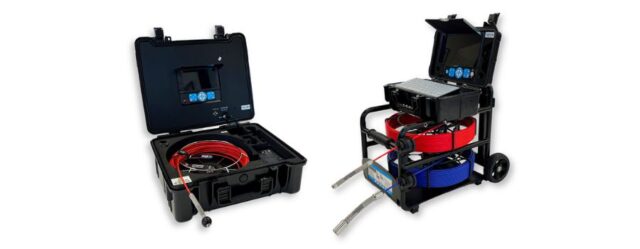
When to Use Pipe Inspection Cameras
In most scenarios, pipe inspection cameras function as a secondary confirmation tool — used when a primary sonic leak detection method falls short or when you need visual verification of a suspected leak location. Cameras are especially useful when dealing with large leaks, suction-side failures, or plumbing configurations with limited elbows and T-fittings. One particularly valuable application is when air bubbles are being drawn into the pump through a suction line, which points toward a clear entry point worth inspecting visually.
The built-in sonde transmitter on many camera heads also adds versatility. It can be used to trace the path of plumbing lines below ground and, when combined with a sonic locator, can help narrow down the exact position of the camera head above the surface. This dual-use capability makes the camera a powerful addition to any leak professional's toolkit.
The Inspection Process
Operating a pipe inspection camera is straightforward: guide the camera head through the plumbing line to visually examine the interior of the pipe. Standard inspection cameras feature a compact camera mounted to the end of a flexible push rod, which you feed through an access point into the plumbing. The camera transmits a live video feed of the pipe's interior to a display screen on the deck or nearby surface.
Once a problem area is found, a transmitter on the camera head allows you to locate it from above ground using a compatible locator, helping you identify the precise position of the camera head and the issue.
As you advance the camera through the pipe, watch closely for:
Challenges You May Encounter
Reaching the Leak Location
Navigating the numerous 90-degree elbows and T-fittings found in swimming pool plumbing can be a real challenge for camera systems. Fortunately, many newer compact inspection cameras can push through several elbows with enough force. This tends to work best when the camera enters close to an elbow, but the further the camera travels down a line, the more likely it is to catch on a fitting. Feeding a stiff wire or guide through bends ahead of time can help prevent the camera head from jamming at these transitions.
Even with design improvements and accessories, there are still limitations when accessing cameras deep into plumbing. Long plumbing runs, multiple jets sharing a single line, and spa configurations can be particularly difficult or impossible to inspect with this method alone.
Durability of Pool Plumbing Inspections
Feeding cameras through narrow pool plumbing is demanding work for the equipment. Over the years, camera build quality has improved considerably, and most modern units handle the rigors of pool plumbing better than older models. Even so, it's critical to keep the connection between the camera head and cable in top shape, as this junction is especially susceptible to damage when retracting the camera through tight plumbing. And while getting a camera head stuck in a pipe is uncommon, it does occasionally happen.
Some Leaks Are Not Visible on Camera
Inspection cameras excel at detecting large-scale water loss such as cracked or severed pipes and significant cracks. However, smaller leaks — like those caused by a poorly glued fitting that still looks intact — can be nearly impossible to spot visually. A crack on the outside of an elbow, or a tiny gap hidden by the camera's angle, can go undetected. In these cases, introducing leak-locating dye through a tester extension tube ahead of the camera and then feeding the camera into the line allows you to check for dye displacement around suspected areas, even at joints as small as a quarter inch.
Detecting Air Bubbles During Suction-Side Inspections
One of the clearest visual indicators you can capture on camera is air bubbles being drawn into the suction-side plumbing while the pump is operating. If air is entering the line through a breach, the camera will often show bubbles streaming through the pipe in real time. Inserting the camera through a skimmer or main drain access point makes it easier to observe exactly where air is entering the system.
Time-Intensive Process
While the camera method has clear benefits, quick results are not one of them. You might find the leak immediately, or you might spend considerable time feeding the camera through multiple lines and scanning every inch of footage. There are also many conditions inside pool plumbing that can resemble leaks but aren't actually causing water loss. This means that once you identify a suspected leak on camera, you'll often want to verify it using a secondary method to confirm it's the real source of the problem.
![Inspection Cameras: An In-Depth Guide [New for 2026]](https://mfe-is.com/wp-content/uploads/2025/04/inspection-camera-hero-1024x512.jpg)
Key Equipment Features to Look For
With numerous pipe inspection cameras available on the market, here are the most important characteristics to consider when purchasing a unit for swimming pool applications:
The Bottom Line
Pipe inspection cameras aren't always necessary for locating underground pool leaks, but when the situation calls for one, their value is undeniable. The ability to visually confirm a leak's location and trace the exact path of buried plumbing using the sonde transmitter is something no other tool offers. On top of that, capturing photos and video of the issue adds documentation that enhances professionalism and helps communicate findings to clients.
While inspection cameras may not be the first tool you reach for in every situation, their versatility and precision make them a justified addition to any serious leak detection toolkit. Paired with other methods, they provide the visual confirmation that can make the difference between a confident diagnosis and guesswork.