


 Damage
  Loss
Loss  Theft
Theft 


Best Corner Vanity Setups for Small Rooms and Apartments

Introduction
A corner vanity represents one of the smartest furniture investments for compact living spaces. By positioning functional storage in angles that typically go unused, these pieces convert overlooked corners into practical grooming stations. This approach proves especially valuable in studio apartments, tiny bedrooms, and powder rooms where every square inch counts.
Whether you need a dedicated space for makeup application or a bathroom sink solution that preserves walking room, corner vanities deliver both style and substance. The right configuration keeps floors open while maintaining organized routines, making your daily rituals smoother and more efficient.
What Is a Corner Vanity? Types for Bedrooms and Bathrooms
Corner vanities fall into two primary categories based on function and placement. Understanding the distinction between bathroom vanities and makeup vanities helps you select the appropriate piece and ensures proper installation in your compact space.
Corner Bathroom Vanity vs. Corner Makeup Vanity
A corner bathroom vanity incorporates plumbing connections and moisture-resistant cabinetry designed to withstand humid environments. These units require access to drainage and water supply lines and are permanently installed in bathrooms or powder rooms. In contrast, a corner makeup vanity functions as a dry furniture piece designed for cosmetics application and personal grooming accessories.
The bathroom variant includes integrated sinks, requires professional installation, and demands careful waterproofing considerations. The makeup version can be positioned anywhere in a bedroom or dressing area and offers portability when you relocate.
| Aspect / Feature | Corner Bathroom Vanity (with sink) | Corner Makeup Vanity |
|---|---|---|
| Typical Location | Bathroom or powder room | Bedroom, closet, or dressing area |
| Main Function | Handwashing, teeth brushing, basic toiletries | Makeup application, skincare, styling |
| Plumbing Required | Yes – needs water supply and drain | No plumbing needed |
| Installation | Usually fixed, professional recommended | Freestanding, easy to move |
| Space Benefit | Uses corner to fit sink without encroaching on bathroom | Creates dedicated beauty station in unused corner |
| Storage Style | Under-sink cabinet, sometimes drawers or medicine cabinet above | Drawers, tabletop trays, open shelves, mirror storage |
| Comfort & Experience | Functional, focus on ventilation and bathroom ergonomics | Personal retreat, comfortable seating, ideal lighting |
| Best For | Tiny bathrooms, powder rooms needing compact storage solution | Small bedrooms wanting a glamorous grooming nook |
Common Corner Vanity Configurations
Corner vanities typically come in three primary shapes: triangular designs that fit snugly into 90-degree angles, L-shaped configurations that extend along two adjacent walls, and diagonal units positioned at a 45-degree angle. Compact triangular models maximize countertop space while keeping plumbing centered, whereas L-shaped designs offer greater surface area for storage and organization.
Some corner vanity desks combine workspace with storage, offering laptop space on one side and drawer organization on the other. This versatility makes them particularly valuable in studio apartments where every furniture piece must serve multiple purposes.
How to Plan Your Corner Vanity Layout in a Small Space
Measuring Your Corner and Clearance Space
Begin by measuring the length of each wall adjacent to your chosen corner. Take note of baseboards, outlets, or trim that might interfere with placement. Determine the available depth from the corner into the room and ensure the unit can protrude without blocking doors or passageways. Most experts recommend maintaining 30-36 inches (approximately 76-91 cm) of clearance in front of the vanity to comfortably access doors, drawers, and pull up a stool.
In compact bedrooms and micro-apartments, pay attention to bed placement, closet doors, and window clearance. A corner near natural light creates an airy, pleasant atmosphere, but avoid positioning the vanity where seating becomes a tripping hazard. Consider marking the footprint on the floor with painter's tape to visualize the final arrangement before purchasing.
Plumbing, Power, and Lighting Considerations
Existing or new plumbing rough-ins must be accessible if you plan to install a corner bathroom vanity with a sink. Verify that the location of supply and drain lines corresponds with your chosen model. Electrical outlets should be positioned at least 12 inches away from water sources and ideally along the surrounding walls rather than directly behind the fixture. For lit mirrors, hair tools, and chargers, corner vanity installations should have at least one outlet close by.
Space-Saving Corner Vanity Ideas for Small Bedrooms
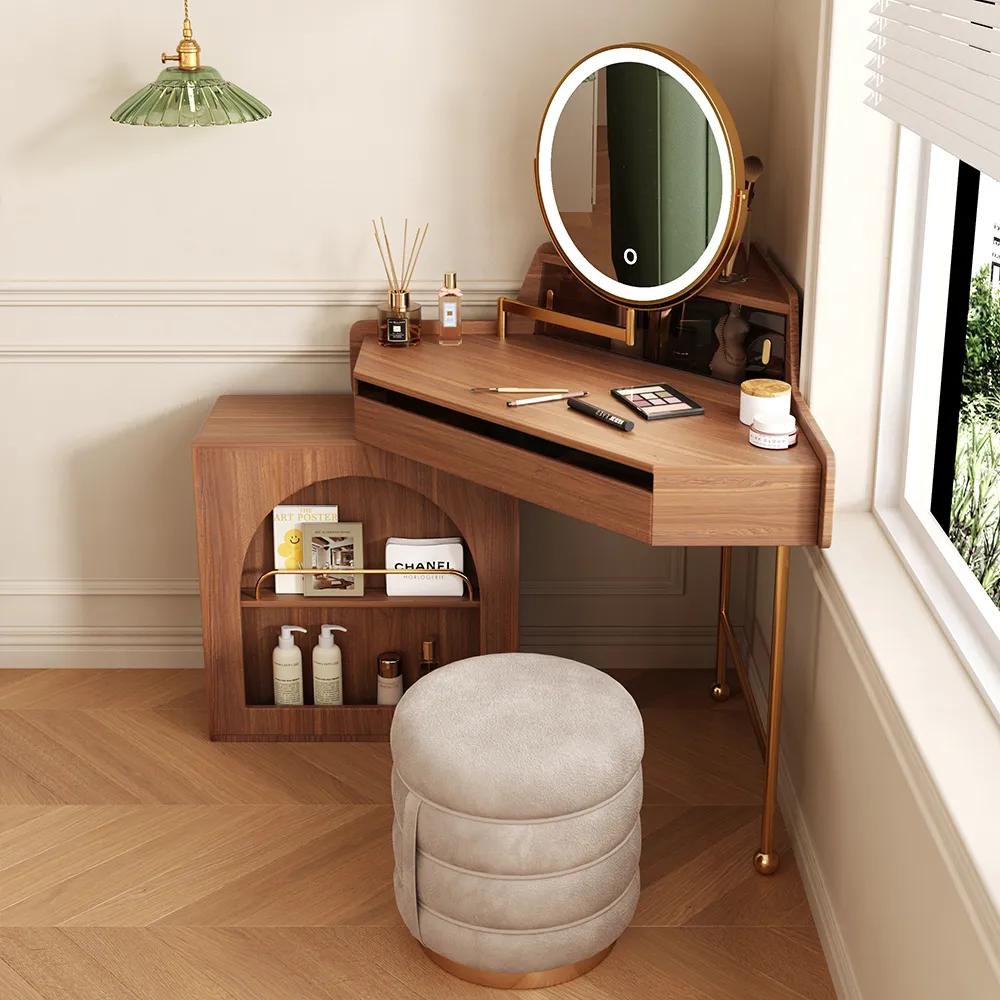
In a small bedroom, a corner makeup vanity can double as a grooming station and a compact office area. Floating designs mount directly to the wall, keeping the floor clear and making the space feel lighter and more open. If you prefer a narrow floor-standing unit, consider tall legs that allow visibility underneath so the room does not feel cramped.
To conceal clutter, use organizers, cubbies, and drawer dividers that keep essentials hidden yet accessible. Shallow drawers keep daily cosmetics, skincare products, and brushes within easy reach without consuming excessive counter surface. A small ottoman with hidden storage beneath the seat provides additional room for hair equipment or extra supplies. To create a dual-purpose setup, pair a vanity with laptop-friendly depth (around 18-20 inches) with a lighted mirror you can move aside during work hours.
Corner Bathroom Vanity Ideas for Tiny Bathrooms and Powder Rooms
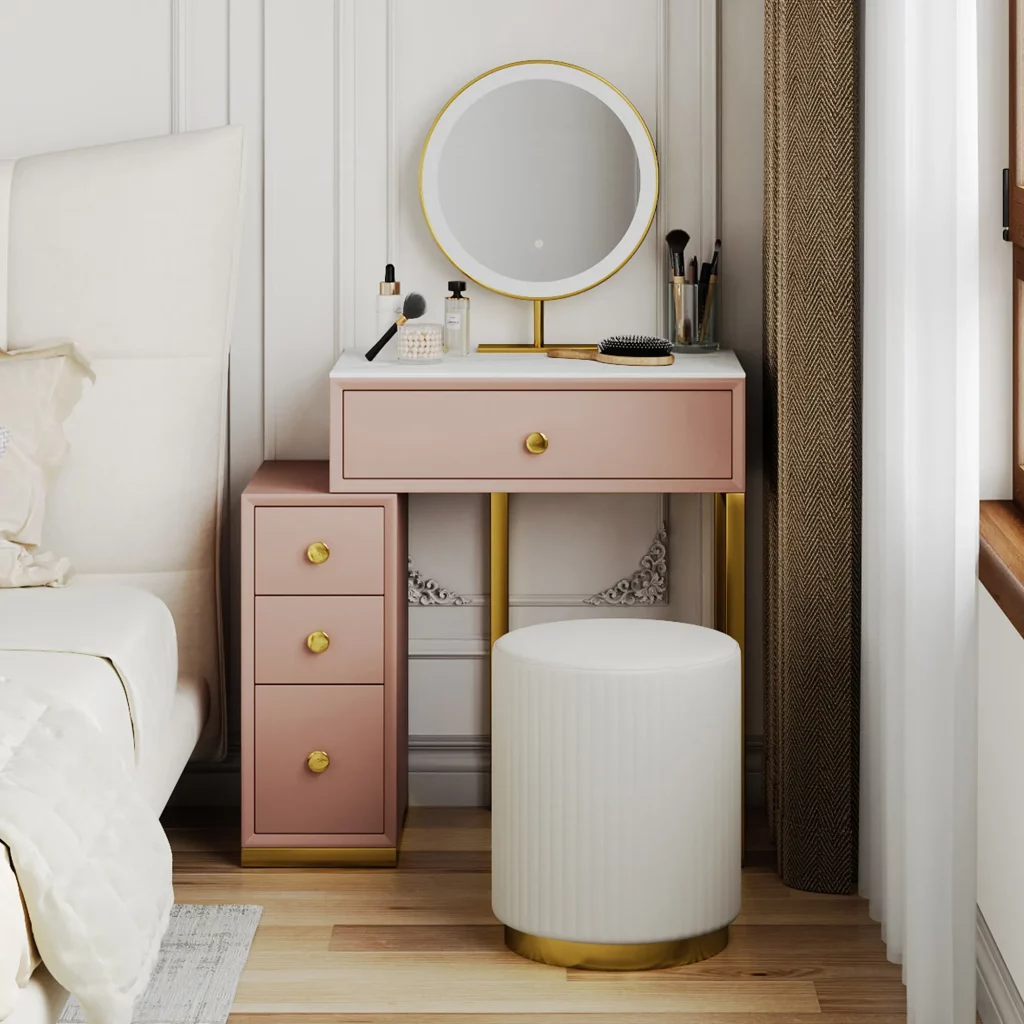
Tiny bathrooms and powder rooms often struggle to accommodate standard fixtures without sacrificing elbow room. Corner solutions position the sink at an angle, freeing up central floor space while preserving precious walking area.
Corner Bathroom Vanity with Sink for Tight Floor Plans
Typically measuring 24 to 30 inches along each wall, these compact vanities fit neatly into areas where a full-width cabinet would block the entrance. Look for corner bathroom vanity designs with vessel sinks or integrated bowls – placing the bowl slightly forward increases usable counter space behind for soap dispensers and hand soap. Corner vanities are perfect for meeting the National Kitchen and Bath Association's (NKBA) requirement that powder rooms maintain at least 21 inches of clearance space in front of fixtures for comfortable use.
Although you may forfeit some storage capacity, pedestal corner sinks create an open, airy feel by removing large cabinets below. To make up for lost storage, consider mounting a thin wall cabinet on a nearby wall.
Floating Corner Vanity Bathroom Designs
Floating corner vanities for bathrooms mount directly to the wall, keeping the floor open and generating an illusion of additional space. This design also simplifies mopping and decreases visual clutter, especially in bathrooms with busy tile patterns or dark hues. When picking corner bathroom vanity cabinets for your bathroom, match finishes with existing fixtures – brushed nickel, matte black, or soapstone counters, or choose white quartz for a bright, harmonious design.
Styling and Organizing Your Corner Vanity for Maximum Function
Vertical Storage, Shelves, and Hidden Organizers
When floor space is tight, think vertical. Add floating shelves above your corner makeup vanity to accommodate jars, perfume, or baskets. Slender shelf towers can be arranged in a bedroom without taking up much footprint. Position a decorative ladder next to your corner makeup vanity for hanging accessories, or opt for cabinets with opaque doors to hide visual clutter so the room stays neat.
Inside the vanity, utilize stackable bins, drawer dividers, and lazy Susan turntables for deep corners. Under-sink organizers that pull out from a small corner bathroom vanity perform like magic, keeping your everyday necessities straightforward to find rather than scattered all over the place.
How to Make the Room Feel Bigger
A well-chosen mirror can double the perceived size of a small room. Corner vanity mirrors that bounce light around and draw the eye upward work beautifully. A wraparound mirror that slightly wraps onto each wall in a bedroom or bathroom creates a well-lit alcove in the corner. In bathrooms, frameless mirrors with beveled edges look clean and open.
To prevent harsh shadows, combine overhead lighting with sconces or LED strips mounted at face level. Soft, warm-white bulbs are flattering for grooming while creating a cozy vibe. Don't overdo the decor; a framed picture or small plant adds personality without overwhelming the space. Too many artifacts will make a tiny location feel cluttered rather than curated.
How to Choose the Right Corner Vanity (Size, Material, and Budget)
Selecting the best corner vanity requires balancing dimensions, material quality, and budget. Start by carefully measuring the available space and ensure there is enough clearance – at least 30 inches in front for makeup vanities and similar clearance for bathroom models. For corner bathroom vanities, prioritize moisture-resistant materials like solid wood with waterproof finishes or engineered materials suitable for humid conditions. Avoid untreated MDF, as it swells and decays quickly in humid environments.
The average cost of mass-produced stock bathroom vanities ranges from $200 to $800, while custom-built options can run between $500 and $2,800 for construction and installation. More material options are available for bedroom vanities, ranging from high-quality hardwood to budget-friendly laminate. Custom work justifies its premium in uniquely shaped spaces where standard solutions just won't fit, but a well-chosen ready-made unit can often perform flawlessly at a lower expense.
Common Mistakes to Avoid with Corner Vanities in Small Spaces
A few design missteps can cancel out the space-saving benefits of a corner vanity:
• Oversized units that block doors, windows, or walkways – making the room feel cramped and hard to navigate.
• Pretty countertops with almost no storage underneath – leaving daily items cluttered and frustrating to use.
• Ignoring lighting requirements, leaving your corner vanity dim and impractical for grooming tasks.
• Choosing delicate finishes for wet bathroom environments – moisture will warp or stain poor-quality materials.
• Skipping measurements and ending up with a unit that doesn't fit properly or blocks essential room functions.
Conclusion
Corner vanities for bedrooms and bathrooms represent smart design decisions for small spaces, turning overlooked angles into functional grooming areas that streamline your daily activities. Whether you install a sleek corner bathroom vanity with an integrated sink or add a lovely corner cosmetics vanity with a mirror to your bedroom, these pieces help you recover important floor space while getting ready with style.
Treat your nook as a mini sanctuary – well-organized, properly lit, and adapted to your personal needs. The right corner vanity can give both flair and substance to even the smallest room.
FAQ about Corner Vanities in Small Bedrooms and Apartments
What size corner vanity is best for a small bedroom or studio apartment?
For most small bedrooms and studios, a corner vanity measuring 24-30 inches along each wall provides ample surface and storage space. Ensure at least 30 inches of clearance in front for comfortable seating and access to drawers.
How can I turn my existing corner desk into a functional corner vanity desk?
Add a tabletop or wall-mounted mirror at sitting height, incorporate drawer dividers for beauty products, and ensure adequate lighting with a desk lamp or clip-on LED lights. This creates a dual-purpose station that works for both productivity and personal grooming.
Can I install a corner vanity myself, or do I need professional help?
Corner makeup vanities and corner vanity desks usually require only basic tools for assembly and wall mounting. Consider pre-assembled corner vanities for bedrooms – just unpack and position. However, corner bathroom vanities with plumbing should be installed by a professional to ensure proper water connections, drainage, and code compliance.
How do I choose between a triangular and an L-shaped corner vanity?
Triangular units fit true corner angles and save space in extremely tight rooms. L-shaped corner vanities extend along two walls, providing more surface area and storage but requiring more wall length – choose based on your room's dimensions and whether you prioritize compactness or capacity.
Ready to transform your corner into a functional vanity space?
Shop James Martin Regent 41" Vanity