


 Damage
  Loss
Loss  Theft
Theft 


How to Choose the Perfect Utility Sink for Your Home
Utility sinks are the true workhorses of the household. Engineered for resilience and versatility, these heavy-duty basins go far beyond simple handwashing. Unlike standard kitchen or bathroom sinks, a quality utility sink is designed to withstand stains, extreme temperatures, and the kind of grimy messes that come with real life — think muddy boots, paint-splattered brushes, and pet bath time.
While many people associate them with the laundry room, utility sinks are incredibly useful in garages, basements, mudrooms, workshops, and even outdoor spaces. They provide a dedicated station for all the tasks you would rather not do in your primary kitchen or bathroom sink.
With so many options on the market today, choosing the right utility sink can feel overwhelming. This guide will walk you through everything you need to consider — from sink styles and sizing to materials and faucet pairings — so you can find the ideal match for your home.
Utility Sink Uses
A utility sink goes by many names — laundry sink, garage sink, basement sink, slop sink, mud sink, wash sink, or mudroom sink. Regardless of the label, its core purpose remains the same: handling the tough cleanup jobs that other sinks simply were not built for.
From hand-washing delicate garments and pre-treating laundry stains to bathing the family pet, scrubbing garden tools, rinsing muddy boots, and even filling mop buckets, utility sinks are built for it all. Their deep basins and durable construction make them indispensable in any home that values practicality.
Before you start shopping, take a moment to think about how you plan to use your utility sink most often. Knowing your primary use case will guide every other decision — from the type and size to the material and faucet pairing.
Types of Utility Sinks
Just like kitchen and vanity sinks, utility sinks come in a range of installation styles. Each has its own advantages depending on your space, cabinetry, and intended use. Here are the most popular types to consider.
Drop-In
Drop-in utility sinks are the simplest to install. They sit directly into a pre-cut countertop opening with a visible rim that rests on top of the surface. This style works great for DIY installations and pairs well with standard laundry room cabinetry. Just be sure to reinforce the cabinet below if the sink is made from a heavier material like cast iron or fireclay.
Undermount
Undermount sinks attach beneath the countertop, creating a sleek, seamless look with no rim to catch dirt or snag threads. They are secured with clips and adhesive to the underside of the counter surface. This makes wiping debris directly into the sink effortless, although professional installation is often recommended.
Wall-Mount
Wall-mounted utility sinks, sometimes called flush-mount sinks, attach directly to the wall. This design is a space-saving solution ideal for areas where there is no room for a full cabinet setup, such as a compact garage or mudroom. They keep the floor clear underneath, making cleaning around them simple.
Farmhouse
If you want a touch of classic charm along with serious functionality, an apron-front farmhouse sink is a beautiful option. These spacious sinks feature an exposed front panel that adds visual appeal while providing excellent depth and basin capacity for heavy-duty use.
Freestanding
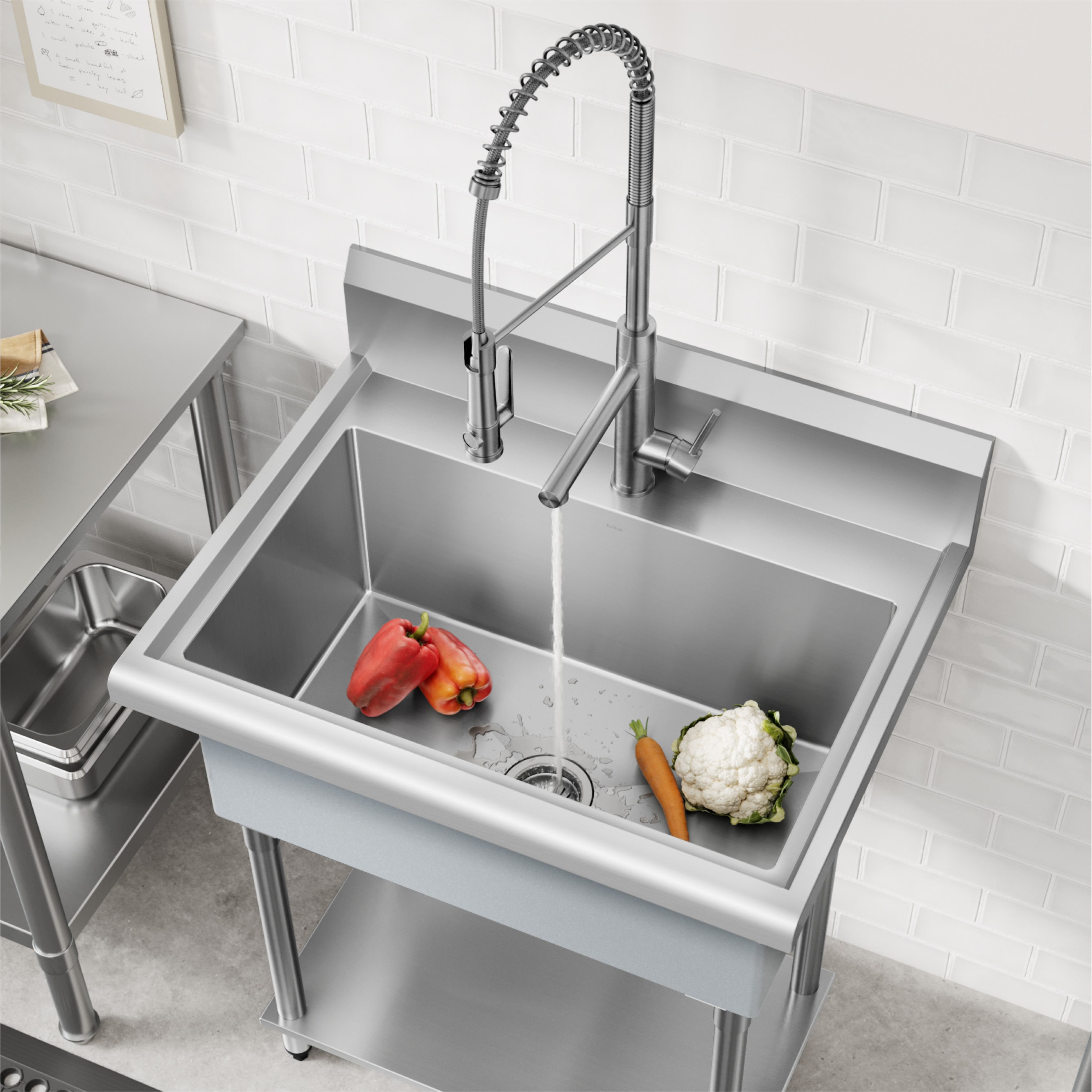
Freestanding utility tubs sit on four legs and are typically placed in garages, mudrooms, or workshop areas. Often constructed from steel or cast iron with an industrial look, these sinks are portable and require no cabinetry. Most utility sinks in this category are large, deep, single-basin designs — perfect for minimizing splashing when washing laundry or bathing pets. Double-basin freestanding models are also available for those who need separate areas for washing and rinsing.
Your ideal sink type ultimately depends on the available space and how you intend to put it to work.
Utility Sink Sizes
Utility and laundry sinks are built to accommodate their multi-purpose nature, which means sizing matters. You can find compact sinks designed to save space as well as oversized models that can tackle the toughest household cleanup jobs. Think about how you will use the sink to determine which size fits your space best.
Common Laundry Sink Sizes
21"
The most compact option and one of the most popular laundry sink sizes. Typically rectangular and designed to fit inside a standard sink base cabinet. Most commonly found in undermount or drop-in configurations.
22"
A favorite for laundry rooms because it is available in multiple styles including undermount, drop-in, and wall-mount. The slight increase in size over 21-inch models offers just enough extra room without taking up much more space.
25"
Another sought-after size, particularly for farmhouse-style utility sinks. At 25 inches, this is often the smallest available in apron-front designs. It also works well in wall-mount and drop-in styles.
31"
A generous size that opens up more material and style choices. At this width, double-basin configurations become common, offering one side for washing and another for rinsing. It is larger than most drop-in or undermount sinks but smaller than full-size wall-mount models.
35"
One of the largest standard utility sink sizes, though some single-basin laundry sinks extend up to 48 inches. At this range, you will typically find double-basin sinks crafted from fireclay or stainless steel — built for serious work.
Always measure the available space in your home before committing to a size. Selecting a sink that fits your dimensions and your daily needs will make all the difference.
How to Measure Your Utility Sink Dimensions
Whether you are replacing an existing sink or installing a brand-new one, you will need accurate measurements of the length, width, and depth to ensure a proper fit. Here is how to get it right regardless of your sink shape.
Length: Measure from one outer lip of the sink to the opposite side. For undermount or farmhouse sinks, measure from one countertop edge to the other along the length of the cutout.
Width: Use the same approach — lip to lip for most sinks, or countertop edge to edge for undermount and farmhouse styles.
Depth: Measure from the top rim of the sink (or where it meets the countertop) down to the lowest point of the basin. Utility sinks can range from 8 inches to over 24 inches deep.
Farmhouse sinks: Also measure the exterior depth — the height of the exposed apron-front panel.
Round or oval sinks: Measure the diameter or the length across the widest point.
Double-check every measurement before placing an order. Getting dimensions right the first time saves you the hassle and cost of returns.
Best Utility Sink Materials
Durability is the number one requirement for any utility sink. The material you choose must be tough enough to endure daily heavy use while complementing your functional requirements and budget. Here are the top materials to consider.
Stainless Steel
A time-tested favorite, stainless steel is antimicrobial, rust-resistant, and extremely durable. It blends easily with nearly any design style thanks to its neutral metallic finish. The main trade-offs are that stainless steel sinks can be prone to scratches and dents, and they may produce more noise during use — though sound-dampening pads installed during setup can resolve this. Opt for a lower gauge (thicker) steel for greater strength, reduced noise, and better dent resistance, keeping in mind that thicker options come at a higher price point.
Granite Composite
Among the strongest sink materials on the market, granite composite resists staining, chipping, scratching, and high heat with impressive ease. Cleanup is a breeze. Available in a range of colors, these sinks let you match your decor while enjoying top-tier durability. One consideration: granite composite is quite heavy, so you may need to reinforce the base cabinetry to support it properly.
Cast Iron
Cast iron sinks are heavy-duty classics, finished with a non-porous enamel coating that comes in a variety of colors. They are gorgeous, incredibly strong, and a popular choice for utility spaces. The enamel does require care — clean with mild detergents and baking soda, and avoid abrasive cleaners or harsh chemicals that could stain or crack the coating. Dropping heavy objects may chip the enamel and expose the iron beneath to rust. A protective grid on the basin floor can help, and cabinet reinforcements or professional installation may be necessary due to the significant weight.
Fireclay & Ceramic
Fireclay (including porcelain and vitreous china) and ceramic sinks deliver a beautiful, timeless aesthetic. They are remarkably resilient against stains, heavy scrubbing, and high temperatures, as well as resistant to rust, acid, and fading. Cleaning is straightforward with dish soap, water, or baking soda. The main vulnerability is cracking from heavy impacts, so a protective basin grid can be a worthwhile investment. Fireclay is a more affordable yet slightly less hardy alternative to cast iron.
Copper
Copper sinks are a premium choice prized for their handcrafted character and rich patina that develops naturally over time. They are even more antimicrobial than stainless steel, which means mildew is far less likely to form if damp laundry sits in the basin. Similar to stainless steel, choosing a lower gauge (thicker) copper helps prevent denting. Keep in mind that copper does require maintenance — hot utensils and acidic substances can stain the surface, so it is best suited for homeowners who appreciate the living finish.
Acrylic / Resin / Plastic
Often referred to as solid surface sinks, these budget-friendly options are moldable, lightweight, and easy to install. They are a practical choice for basic utility tasks. The downsides are that they do not handle heat well, can develop scratches and scuffs more easily, and generally will not last as long as heavier-duty materials. If longevity and rugged performance are top priorities, you may want to invest in a sturdier option.
How to Clean Utility Sinks
Routine cleaning for most utility sinks is as simple as using a mild detergent and warm water. A quick wipe-down after each use goes a long way in keeping the basin looking fresh.
For a deeper clean, fill the sink with warm water and add a few capfuls of hydrogen peroxide or ammonia (as long as the sink is not copper or bronze) to eliminate mildew-causing bacteria.
Stubborn stains such as dried paint can be tackled by first scraping off as much as possible with a putty knife, then soaking the sink in water and detergent for 15 to 20 minutes. Finish by gently scrubbing with a nylon pad — never steel wool — to remove any remaining residue.
Always rinse the sink thoroughly after every cleaning session to prevent leftover cleaners or debris from dulling the surface.
No matter the material, always follow the manufacturer's specific care instructions. Different surfaces have different sensitivities, and using the wrong cleaner can do more harm than good.
Best Utility Faucets to Pair with Utility Sinks
A utility sink is only as functional as the faucet you pair with it. The best utility faucets prioritize performance above all else, though coordinating the faucet style with your sink design can elevate the whole setup.
A standard utility faucet with a hose attachment is a natural companion for most utility sinks, especially those in mudrooms or garages. Many utility faucets are designed without aerators, delivering a stronger, unfiltered flow of water that can handle serious messes.
Wall-mounted faucets are a smart match for freestanding or wall-mount sinks where countertop or deck space is limited. Two-handle faucets offer easy temperature control and tend to be more durable than single-handle models, with simpler internal construction that makes them less prone to leaking. For a vintage aesthetic, consider a bridge faucet — a two-handle design that exposes the plumbing between the spout and handles.
Pre-rinse faucets are an excellent choice for deep utility sinks, featuring a flexible roto-flex spout and boosted water pressure — particularly handy for cleaning pets. Pull-down and pull-out faucets also complement utility sinks nicely, with the pull-out style being especially popular in laundry rooms due to its longer hose reach.
The golden rule: match your faucet to the sink type and the tasks you need it to handle. Function comes first — style is the bonus.
Make a Utility Sink Your Home's Best-Kept Secret
Armed with these insights, you are well on your way to selecting a utility sink and faucet combination that fits your lifestyle, your space, and your budget. The right pairing will handle everything from everyday laundry duties to the messiest cleanup jobs your household can throw at it.
A great utility sink quietly becomes one of the most valuable fixtures in your home — always ready to take on the dirty work so your other spaces stay clean and pristine.