


 Damage
  Loss
Loss  Theft
Theft 


CCD vs. CMOS Camera Sensors: What Sets Them Apart?
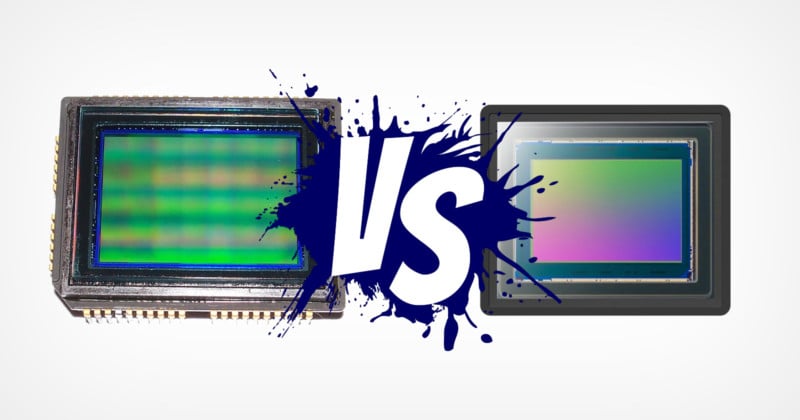
There has been plenty of discussion over the years about the differences between CCD (Charge-Coupled Device) and CMOS (Complementary Metal-Oxide Semiconductor with Active-Pixel Sensor) camera sensors. Photographers, enthusiasts, and professionals alike have debated the merits and drawbacks of each for close to two decades.
The rivalry between these two sensor technologies stretches back to the early 2000s, when CMOS began its slow but steady climb toward dominance in the camera industry. By the close of that decade, it had become clear which technology would prevail for both still photography and video capture.
Our goal here is to lay out the technical distinctions in straightforward terms while also tackling the subjective comparisons that have circulated online for years. We are keeping the conversation focused on still photography cameras, since diving into scientific, medical, and video applications would fill an entire volume on its own.
A Brief Look at Sensor History
Let us pick up the story in the early to mid-2000s. By that time, digital photography had proven itself as a legitimate alternative to film for a broad range of professionals. While both CCD and CMOS technology had existed well before that era, this is where the real competition began to heat up.

The camera industry at the turn of the millennium was going through enormous change. Manufacturers were racing against each other while managing the analog-to-digital transition, and sensor technology was in constant flux. A wide variety of unique and distinct sensor designs appeared across different brands, shifting and evolving at a rapid pace.
Fast-forward to the present day, and the landscape has consolidated dramatically. We essentially have four categories of sensors: CMOS with a Bayer color filter array, monochrome CMOS (no CFA), CMOS with Fujifilm's X-Trans CFA, and Foveon sensors. In practical terms, that boils down to just two fundamental technologies: CMOS and Foveon.
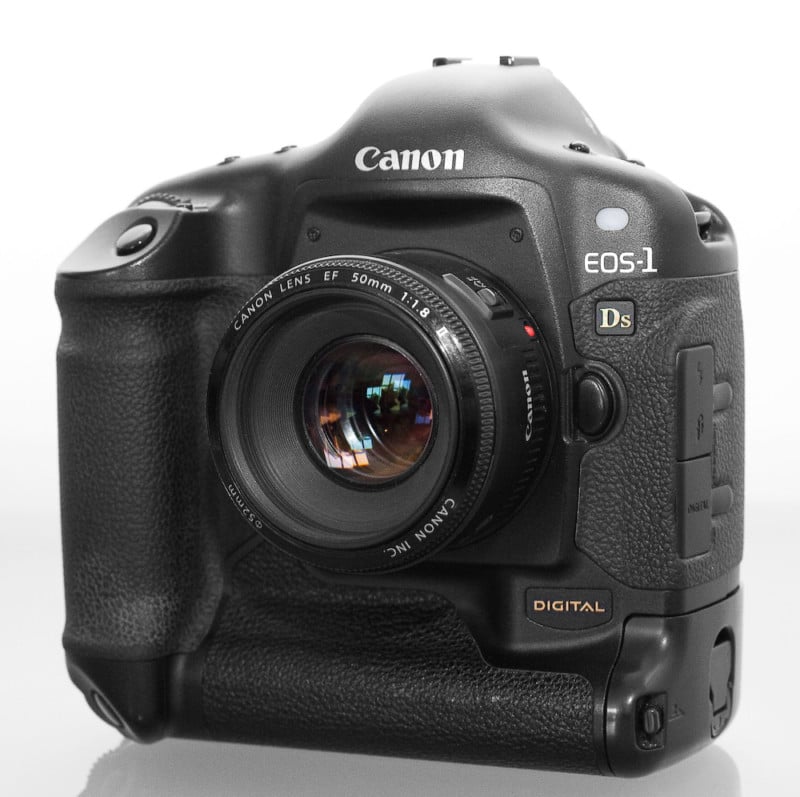
Although some unique sensor designs surfaced here and there, the majority of cameras manufactured in the early to mid-2000s used CCD sensors. That began to change gradually as the decade progressed. The shift was driven in large part by Canon, which debuted the first full-frame CMOS sensor in its Canon 1Ds back in 2002 and continued to favor CMOS technology going forward.
The arrival of cameras like the Nikon D3 and Sony a700 in mid-2007 sealed the deal for CMOS as the leading sensor technology in photography. It was no coincidence that this same year marked the first time CMOS sensor sales surpassed CCD. The one holdout was medium format, which continued to rely on CCD sensors until Hasselblad introduced the H5D-50c in 2014.
That naturally raises the question: why did the entire industry pivot away from CCD to embrace CMOS?
The Science Behind the Sensors
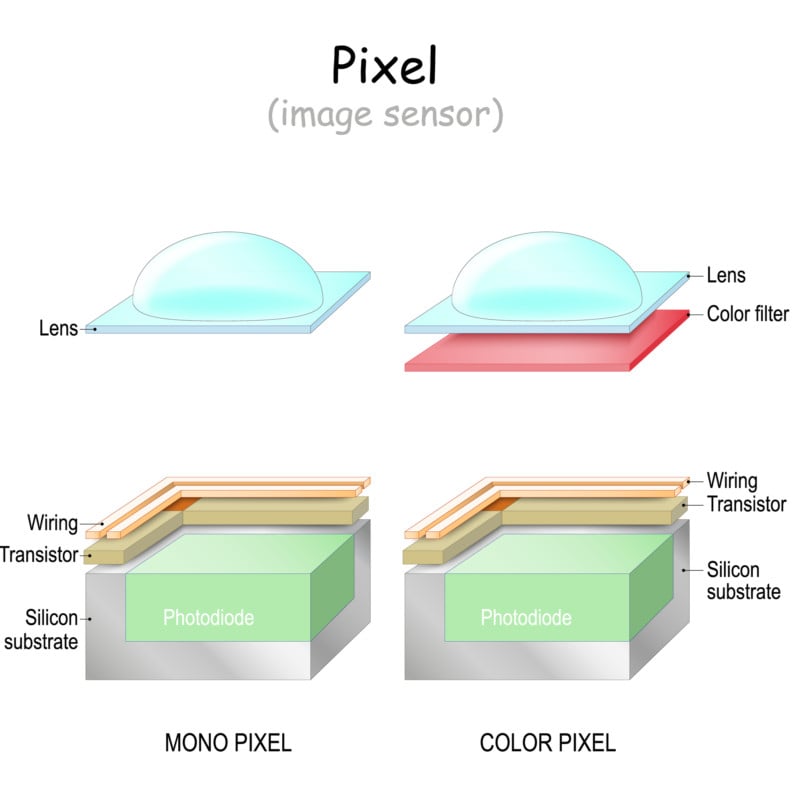
At the most fundamental level, all image sensors are monochromatic. They measure light intensity alone — color information only enters the picture when a color filter array is layered over the sensor surface. This is typically done using an RGB Bayer mosaic, regardless of whether the underlying chip is CCD or CMOS.
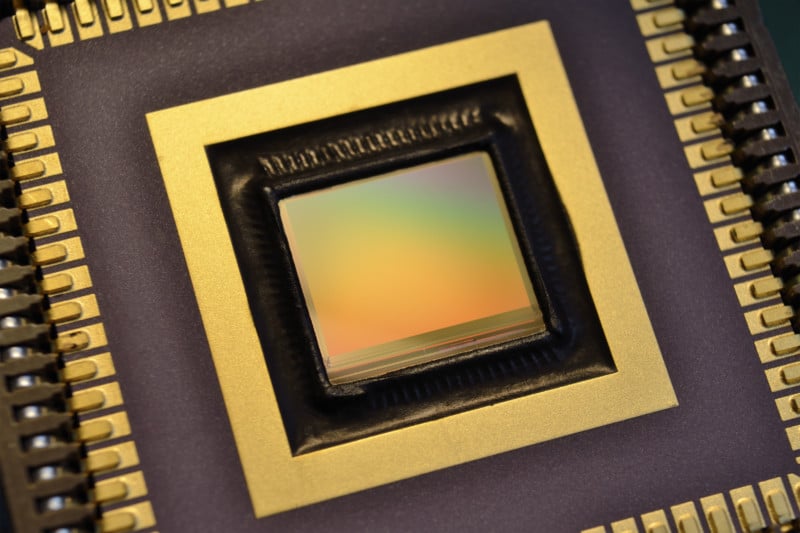
Both sensor types are constructed from arrays of silicon photosites, commonly referred to as pixels. A digital camera will have millions of these tiny light-sensitive elements — one million pixels equals one megapixel. They are arranged in rows and columns to form the familiar rectangular sensor shape.
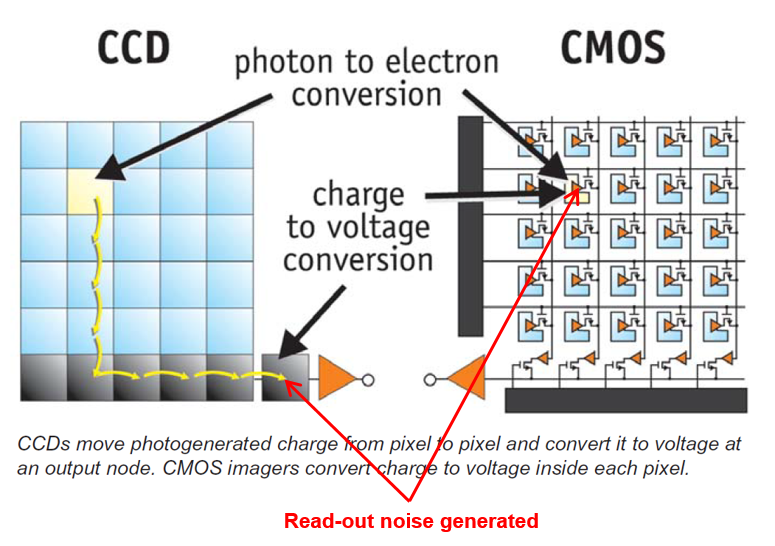
When light passes through the camera lens and reaches these silicon pixels, photons interact with atoms in the silicon substrate. This interaction excites electrons into higher energy states, sending them moving through the material. That basic process is identical for both CCD and CMOS. The critical difference lies in what happens next — how each technology reads out the sensor data and converts physical electrical activity into a digital image.
How CCD Sensors Work
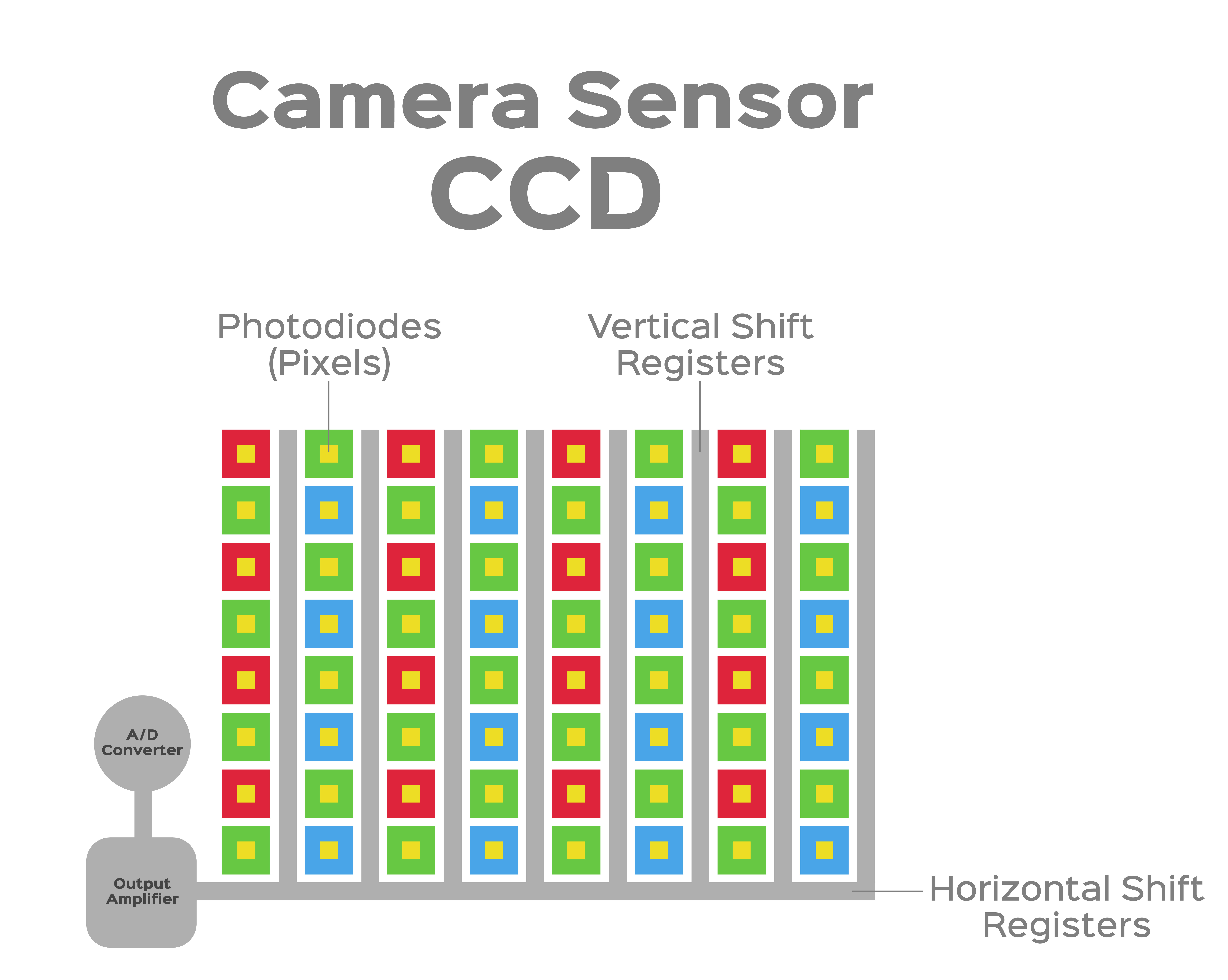
In a CCD sensor, every pixel features a potential well — often compared to a tiny bucket. During exposure, as light hits the sensor, this well collects photons that liberate electrons. Those electrons accumulate throughout the exposure, held in place by electrodes and vertical clock signals.
Once the exposure ends, the electrons are transferred row by row down the CCD. The charge gathered from each pixel along the way eventually reaches an amplifier at the end of each row. That amplifier measures the photon count from each well and converts the information into a voltage. The signal then continues through a gain stage and finally to an analog-to-digital converter (ADC).
Because the sensor is read one line at a time, a mechanical shutter is generally required to prevent "smear" — any light falling on photosites during the readout process can create vertical streaking artifacts. This also means CCD sensors in still cameras cannot support true live view.
Did You Know?
You might recall that some early compact digital cameras with CCD sensors appeared to offer live view. In truth, these displays showed significant lag — especially when panning the camera. This was not merely a product of primitive processing speeds; it was an inherent limitation of the CCD's slow readout. Each frame had to be binned and transferred to the LCD or electronic viewfinder, a process that could take up to a second or longer. The result was a choppy, quasi-live feed sufficient for framing static subjects but far from the seamless experience we expect today.
How CMOS Sensors Work
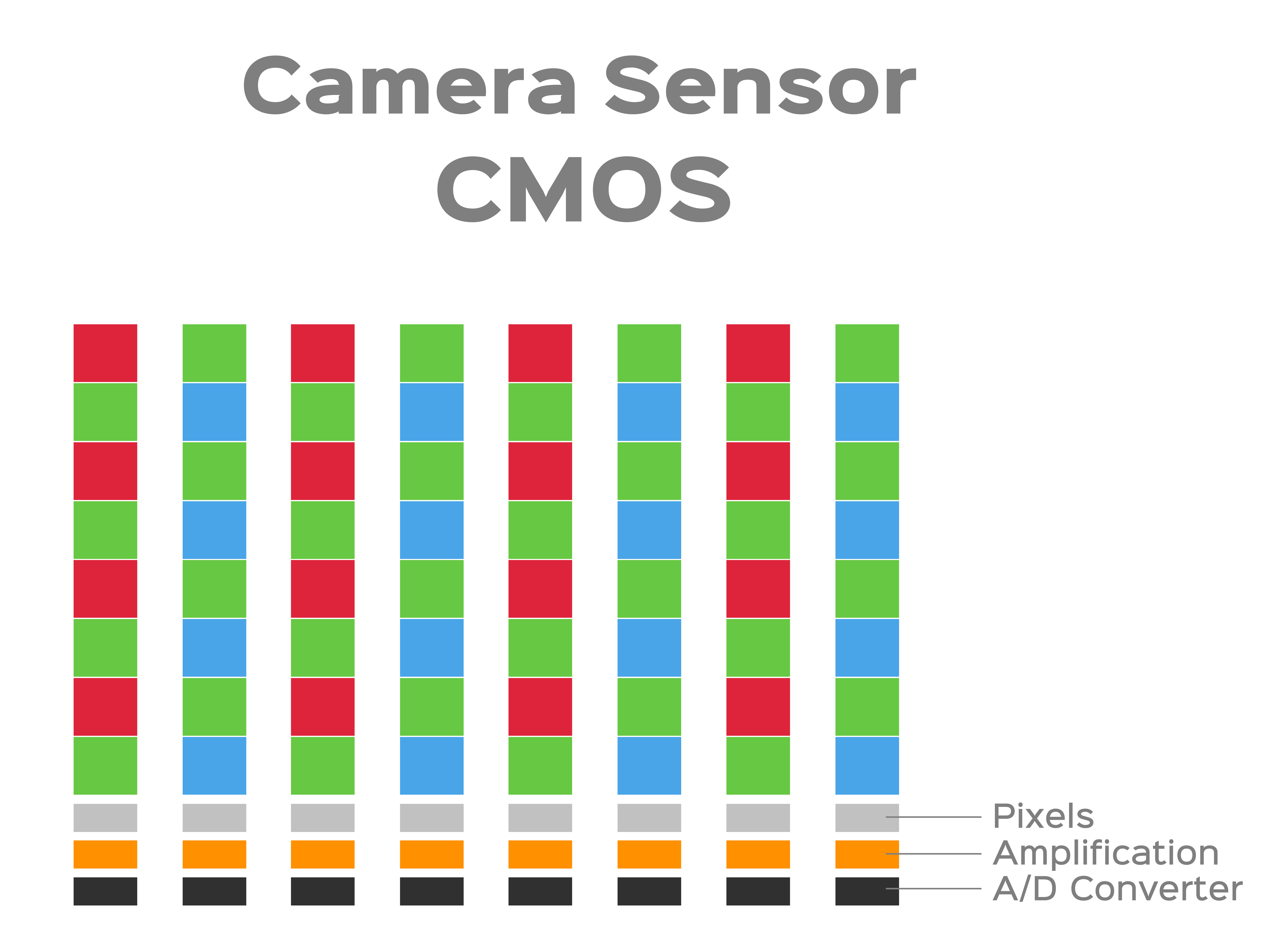
CMOS sensors share the same foundational principle of collecting light with silicon photosites, but they diverge at the readout stage. Every individual pixel in a CMOS sensor has its own readout circuit — a paired photodiode and amplifier that converts collected photons into voltage right at the pixel level. Each column of the sensor also has its own dedicated ADC.
This architecture brings significant manufacturing advantages. Because the ADCs and the imaging sensor are fabricated on the same silicon die, production costs are substantially lower. The design is also more compact, making it ideal for smartphones and ultra-slim cameras.
Since each pixel is read out in parallel rather than sequentially, CMOS sensors offer dramatically faster readout speeds. This is vital for modern video capabilities, silent electronic shutters, and continuous live view. Cameras like the Canon R5, Canon R6, and Sony Alpha 1 can read their sensors quickly enough that even fast-moving subjects barely distort when using the electronic shutter. None of this would be achievable with a CCD design.
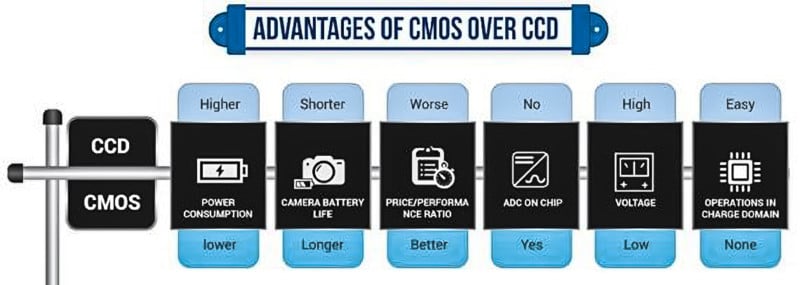
CMOS sensors also consume less power and generate less heat — a practical consideration that prevented certain CCD cinema sensor designs from being scaled down to smaller still camera bodies.
Sony's introduction of backside illumination (BSI) technology in 2009 with its Exmor R CMOS sensor pushed the dominance of CMOS even further. Traditional front-illuminated sensors have their circuitry and wiring on the light-facing surface, which reflects a portion of incoming light and reduces overall capture efficiency. BSI moves that circuitry behind the photodiodes, yielding roughly a half-stop improvement — about a 50% increase in light collection. This innovation made it virtually impossible for CCD to remain competitive.
What CCD Did Well
CCD sensors did possess genuine advantages over early CMOS designs, though most have since been addressed by advances in CMOS technology. One notable strength was on-sensor pixel binning. Consider the Nikon D1 from 1999: its APS-C CCD sensor contained 10.8 million photosites but produced 2.7-megapixel images. The serial readout design made it straightforward to combine charge from neighboring pixels directly on the chip, boosting sensitivity and improving the signal-to-noise ratio. While CMOS can accomplish binning, it must happen off-sensor and cannot merge charges from adjacent photosites in the same way.
CCD sensors also exhibit a tonal non-linearity that many photographers find appealing. This produces a more natural and graceful roll-off in quarter-tones and highlights — characteristics reminiscent of film. Film itself is highly non-linear, with generous highlight latitude but limited tolerance for pushing shadows without introducing visible noise or color shifts. CCD shares this quality: the trade-off for those beautiful highlights is a higher noise floor, especially noticeable in shadow areas even at base ISO. Achieving great results from a CCD requires careful, precise exposure.
The Subjective Side: CCD vs. CMOS Image Quality
This is where the conversation gets nuanced. On one side of the debate are photographers who insist that CCD sensors produce inherently superior images. On the other are those who champion the practical benefits of CMOS, with some arguing that the visual differences between the two are negligible.
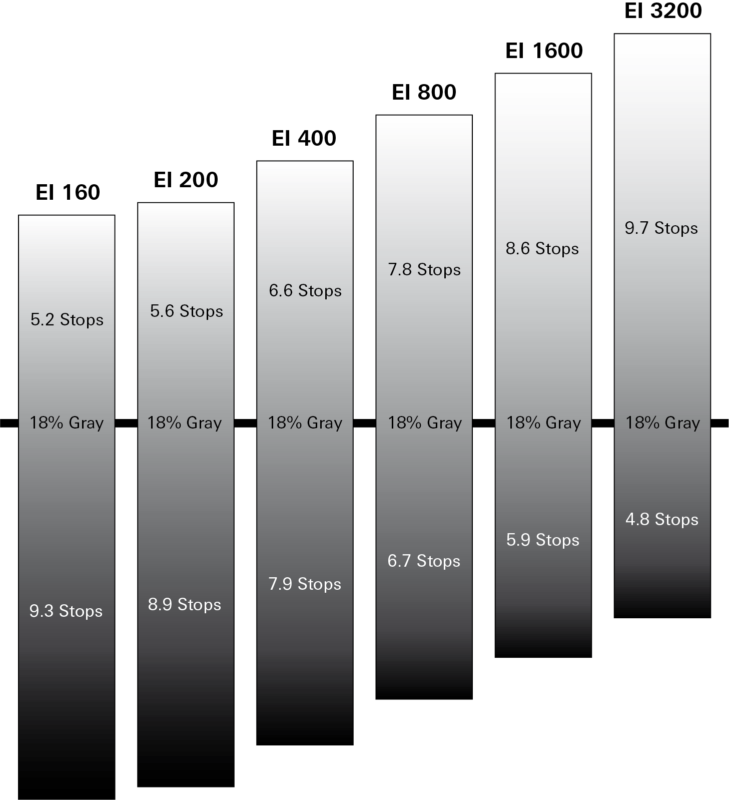
There is genuine merit to the claim that CCD sensors can yield more visually pleasing files — but "pleasing" is inherently subjective. Much of it traces back to the tonal characteristics we discussed earlier. The non-linearity of CCD output more closely mirrors human perception. Our eyes routinely clip to complete black in shadows, yet we almost never perceive totally blown highlights. If we could perceive twenty stops of dynamic range, the distribution might lean something like twelve stops above and eight below middle gray. A hypothetical twenty-stop CMOS sensor would likely distribute the opposite way.
Some photographers also maintain that CCD sensors render more natural and accurate colors. The color output is unquestionably different, and there may be something to the accuracy claim. Some attribute this to variations in color filter array design, and for cameras like Fujifilm's SuperCCD series, that likely plays a role. Yet we also see exceptional color neutrality from many CMOS sensors — Hasselblad is widely considered the benchmark for neutral color reproduction. Numerous blind comparisons have demonstrated that, at least in terms of color, CCD and CMOS output can be closely matched.
In ideal conditions — good directional light, low ISO, vivid subject matter — CCD cameras tend to produce deeper blues, surprisingly faithful reds, warm midtones, and cool neutral shadows, along with pleasing transitions through the quarter-tones into highlights. But if those highlights clip, the advantage shifts to CMOS, whose more gradual roll-off avoids the harsh edges that clipped CCD highlights can exhibit. In practice, most of these characteristics can be closely replicated through careful use of HSL (hue, saturation, luminance) adjustments in post-processing.
So What Does All of This Mean?
Is there a real difference between CCD and CMOS images? Without question — both in how the sensors are designed and in the character of the images they produce.
Do those differences matter? That depends entirely on your priorities.
If you prefer working with straight-out-of-camera files, CCD output often feels more immediately satisfying — punchier colors, richer tones, and an organic quality that requires minimal tweaking. That said, plenty of modern CMOS-based cameras with well-tuned JPEG engines can deliver similarly appealing results right out of the gate.
If you shoot in RAW and process your images, the wider latitude of CMOS gives you a much broader canvas to work with. You can approximate the CCD look while also having the freedom to push shadows, recover highlights, and explore a greater range of creative options.
The Bottom Line
One thing is undeniable: CMOS technology has outgrown and surpassed CCD for both stills and video imaging. But if you love the output from a camera like the Leica M9 and have no need for live view, silent electronic shutters, wide dynamic range, or remarkable low-light performance, then by all means — cherish and continue using it.
And if your CCD camera is showing its age and you are ready for an upgrade, there is absolutely no reason to worry about which sensor technology is inside your next camera. CMOS has you covered.
Interested in experiencing legendary CCD image quality for yourself?
Leica M9 Black CCD© Backyard Provider — Your Source for Quality Outdoor Living & Equipment