


 Damage
  Loss
Loss  Theft
Theft 


CCD vs. CMOS Sensors: A Personal Take on the Great Debate

The conversation around CCD and CMOS sensors has heated up considerably in recent years, drawing passionate opinions from photographers on both sides. After spending time reading up on the technical differences and doing some hands-on testing of my own, I wanted to share a personal perspective on this enduring photographic debate.
One of the most fascinating aspects of this discussion involves how each sensor type responds to light when compared to the way our eyes perceive the world. Human vision tends to preserve highlights at the expense of shadow detail, much like exposing to the right in-camera. CCD sensors behave in a remarkably similar fashion, with greater sensitivity above a mid-tone value, which often yields richer, more natural-looking highlights. CMOS sensors flip this around, placing more sensitivity below mid-tone, which changes the overall character of the resulting image.
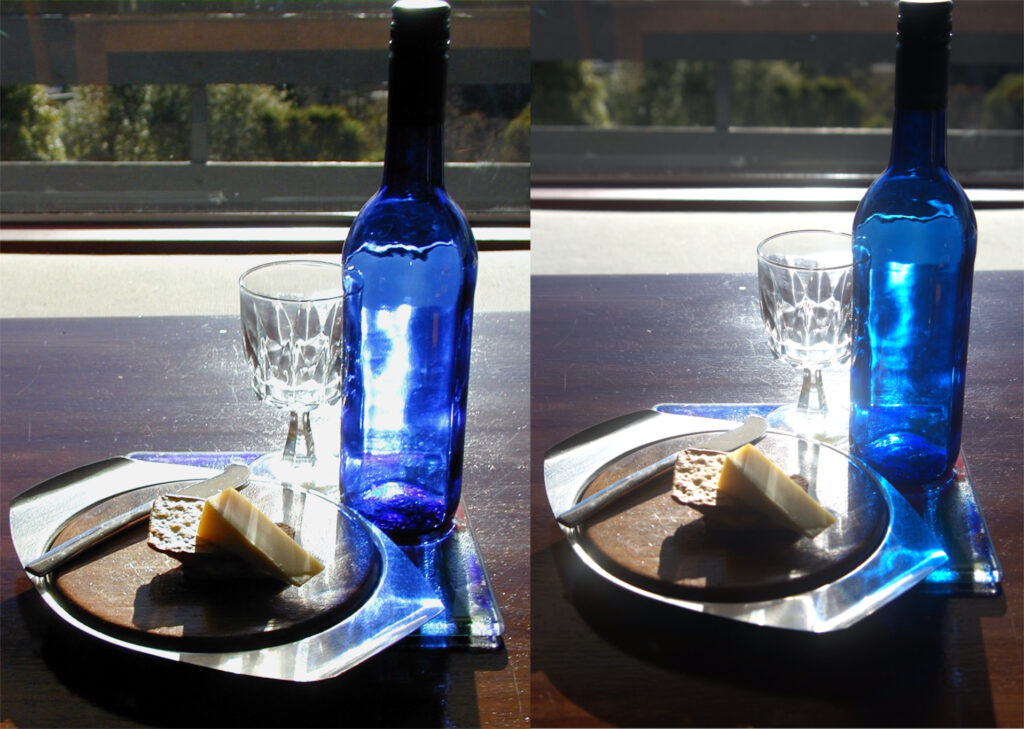
CCD capture (left) vs. CMOS capture (right)
The Ongoing Battle of Sensor Technologies
Technology has always seen competing approaches struggle for dominance. Gasoline-powered vehicles once displaced electric and steam cars, only for electric power to make a dramatic comeback in our era. VHS overtook Betamax despite its arguable quality disadvantage, purely on the basis of commercial viability and accessibility. The sensor world follows this same pattern of evolution and rivalry.
Within the realm of digital photography, CCD sensors were the original standard. However, CMOS eventually won the mainstream race by offering a collection of practical advantages that were hard to ignore — lower power draw, extended battery life, reduced heat generation, less shadow noise, and a faster live-view experience. These practical improvements made CMOS the default choice for camera manufacturers across the board.
Yet the question remains: which technology actually delivers a superior image? Research published as recently as 2024 continues to suggest that CCD sensors render a more organic, naturalistic result. It is worth noting that certain movie-industry cameras still utilize CCD technology precisely because it delivers that sought-after film-like quality — though "film-like" and "natural" are not always the same thing. Leica famously championed CCD in cameras like the M8 and M9, and for good reason: the particular tonal qualities of CCD sensors aligned perfectly with the aesthetic Leica wanted to achieve.
Putting the Sensors to the Test
To form an honest opinion, nothing beats testing things out yourself. This kind of comparison inevitably lives in subjective territory — different eyes will reach different conclusions, and that is perfectly fine.
For a meaningful side-by-side evaluation, you would ideally want a CCD camera and a CMOS camera that can be set up to produce comparable output. Consider pairing a classic CCD model with a modern CMOS mirrorless body, matching framing, focal length, and white balance as closely as possible. You may find that you need to adjust ISO settings slightly between bodies to arrive at equivalent exposure levels, which speaks to the inherent differences in how these sensors process light.
Presenting comparative images as straight JPEGs out of the camera, with only auto white balance adjustments applied in post-processing software, keeps the test honest. The way different cameras handle JPEG rendering does make truly identical comparisons tricky, but the differences in character become clearly visible regardless.
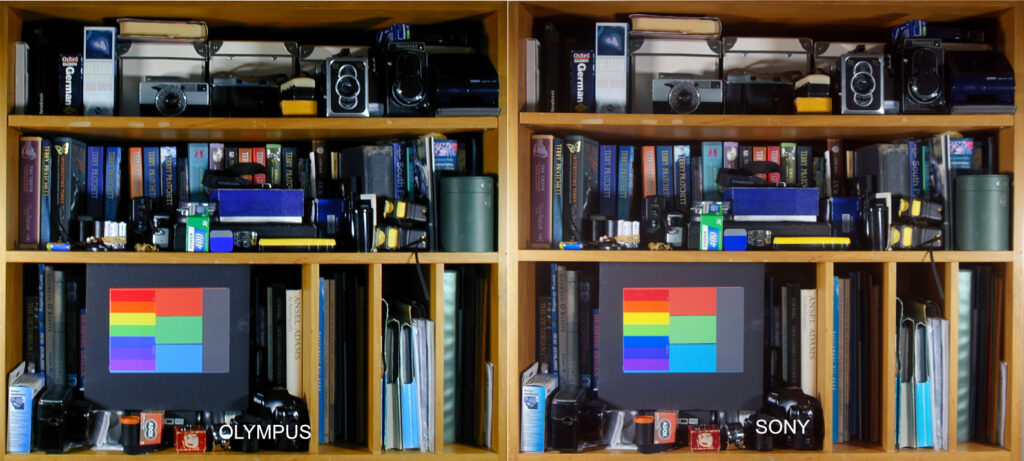
Side-by-side sensor comparison
What the Results Reveal
Contrast
CCD sensors tend to deliver noticeably higher contrast straight out of camera. There is a punchiness to CCD output that becomes especially apparent once you apply auto-level adjustments, where the tonal range differences between the two technologies really start to show themselves.
Color Vibrancy
Colors tend to emerge with a touch more vibrancy and saturation directly from a CCD sensor, giving images an appealing warmth and richness without the need for extensive post-processing adjustments.
Detail
At lower ISO settings, detail resolution between CCD and CMOS is broadly comparable. The real differences emerge in how each sensor renders those details rather than how many it resolves.
Noise Performance
Noise handling is where CMOS claims a clear, undisputed victory. Older CCD cameras typically max out at lower ISO ceilings, while modern CMOS bodies comfortably shoot at ISO 800, 1600, and beyond — a significant practical advantage for everyday use.
So Which Should You Prefer?
Honestly, the practical differences between CCD and CMOS may not matter enormously for most photographers. The appeal of CCD is primarily about achieving a different aesthetic — much in the same way choosing between different film stocks alters the final look of an image. The outcome is different, but not inherently better or worse. This was likely the core philosophy behind Leica's decision to use CCD in cameras like the M8, and it certainly fueled plenty of lively discussion in the photography community.
For those of us who do not shoot digital extensively, revisiting an older CCD camera can be a wonderful nostalgic exercise. However, going back to the slower response times and limited ISO ranges of those early digital bodies is a stark reminder of how far the technology has progressed. A more refined CCD camera from a later generation — something like the Leica M9 — could very well change that perspective entirely. But for general-purpose work, CMOS delivers everything most shooters need and then some.
Author's Note
The hero image for this article was captured over two decades ago using a CCD sensor, composited from multiple exposures. There is a richness and depth to that image that may well be attributable to the sensor technology behind it — a subtle quality that keeps the CCD conversation alive to this day. To each their own taste!