


 Damage
  Loss
Loss  Theft
Theft 


The Pixii Rangefinder Camera Review: A Modern Take on Classic Photography

There is something genuinely exciting about discovering a brand-new rangefinder camera in today's market. The Pixii represents a fully independent design effort — a courageous blend of timeless photographic tradition and contemporary engineering. Equipped with an M-mount bayonet for full lens compatibility and now in its third generation (model A2572) with a 26-megapixel APS-C sensor, this French-made camera sets out to answer one key question: can a modern startup successfully challenge decades of rangefinder heritage?
This review was conducted with a loaner unit provided directly by the manufacturer. No conditions were placed on the outcome, and no attempt was made to steer the verdict. The Pixii team was open and helpful in answering technical questions, but this remains an independent assessment in every sense. With that transparency established, let us explore what this remarkable camera has to offer.
Introduction: What Does the Pixii Rangefinder Bring to the Table?
In many respects, the Pixii is the most forward-thinking rangefinder camera currently available. Its designers had no legacy constraints to contend with — no historical requirement for a removable baseplate, no obligation to mimic an existing form factor. The team in Besançon, France started from a blank canvas, and the result is a camera that confidently occupies its own space. It does not pretend to be a Leica clone, nor does it ignore the visual language that rangefinder enthusiasts expect.
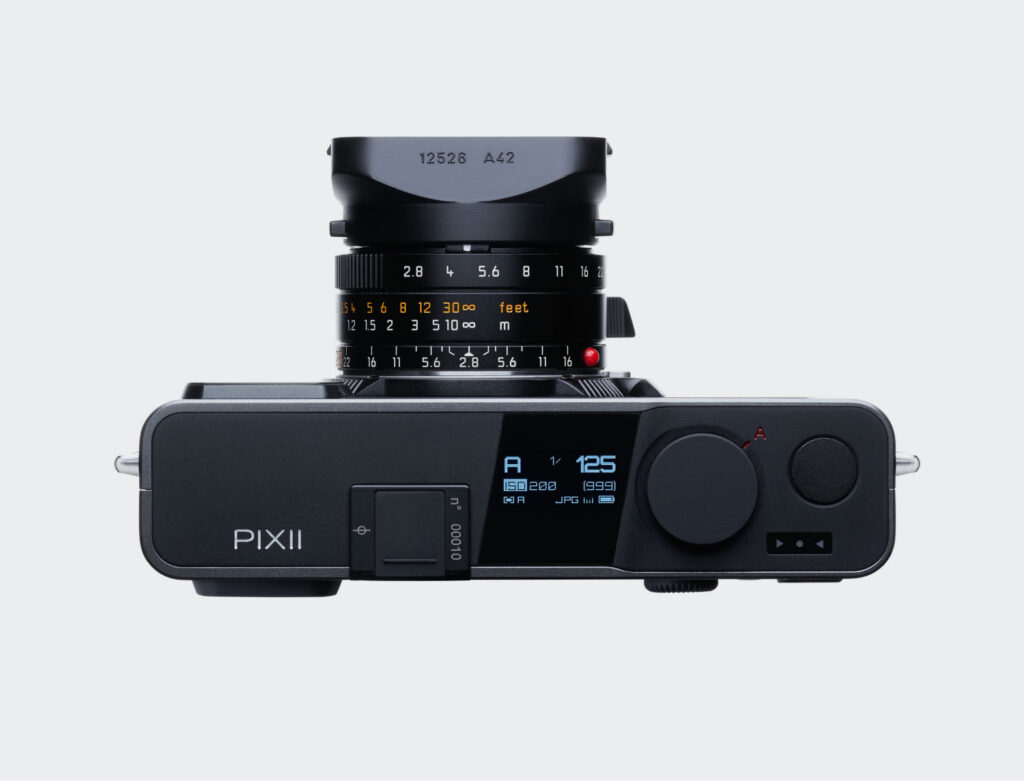
The Most Modern Answer to an 80-Year-Old Question
First impressions count, and the Pixii makes a strong one. The all-metal body conveys real solidity. The M-mount bayonet appears precisely machined, and the optical viewfinder delivers the familiar split-image focusing experience that rangefinder users depend on. Controls are kept to an absolute minimum, giving it an even more purist feel than some Leica M models. The camera reminded many testers of the early CCD-era Leica digital bodies — focused, deliberate, and uncluttered.
The APS-C Sensor Earns Top Marks with a 1.5x Crop Factor
Unlike Leica's full-frame M series, the Pixii houses an APS-C-sized sensor producing 26 megapixels through a Bayer array filter. The exact sensor supplier remains confidential, though it is confirmed to be different from the units found in the Leica CL or TL2. There is no mechanical shutter — the sensor remains permanently exposed, relying entirely on an electronic shutter mechanism. This is a bold engineering choice that has significant implications for image quality and shooting behaviour.
Connectivity Is at the Heart of the Pixii Experience
The Pixii leans heavily into a connected workflow. A dedicated smartphone app is essential for getting the most from this camera. Bluetooth and Wi-Fi connections enable parameter adjustments, image preview, and file transfers. Since the Pixii has no rear LCD screen or electronic viewfinder, the app effectively becomes your review screen. It is technically possible to operate without the app, but doing so misses the fundamental design philosophy of this camera.
Build Quality and Ergonomics: The Outward ImpressionPrecision Engineering and a Slim Silhouette

Lenses attach via the M-mount bayonet, and the fit is superb. The manufacturer established operations in Besançon specifically to take advantage of the region's watchmaking tradition and the resulting pool of precision mechanics talent. The camera works best with small to medium-sized M-mount lenses. Larger optics — such as the Zeiss Distagon 35/1.4 ZM — function well, but the biggest lenses (Summilux 21, Zeiss 18/4) may obstruct the rangefinder's optical path.
A Real Consideration for Wide-Angle Enthusiasts
Because of the APS-C crop factor, every lens produces a narrower field of view than its full-frame equivalent. A 28mm lens becomes a 42mm; a 50mm acts as a 75mm. The camera can display frame lines for 28, 35, 40, and 50mm focal lengths, but these reference full-frame equivalencies. If you need a genuinely wide perspective, you will need to pair the Pixii with ultra-wide full-frame lenses and an external viewfinder.

Key Dimensions
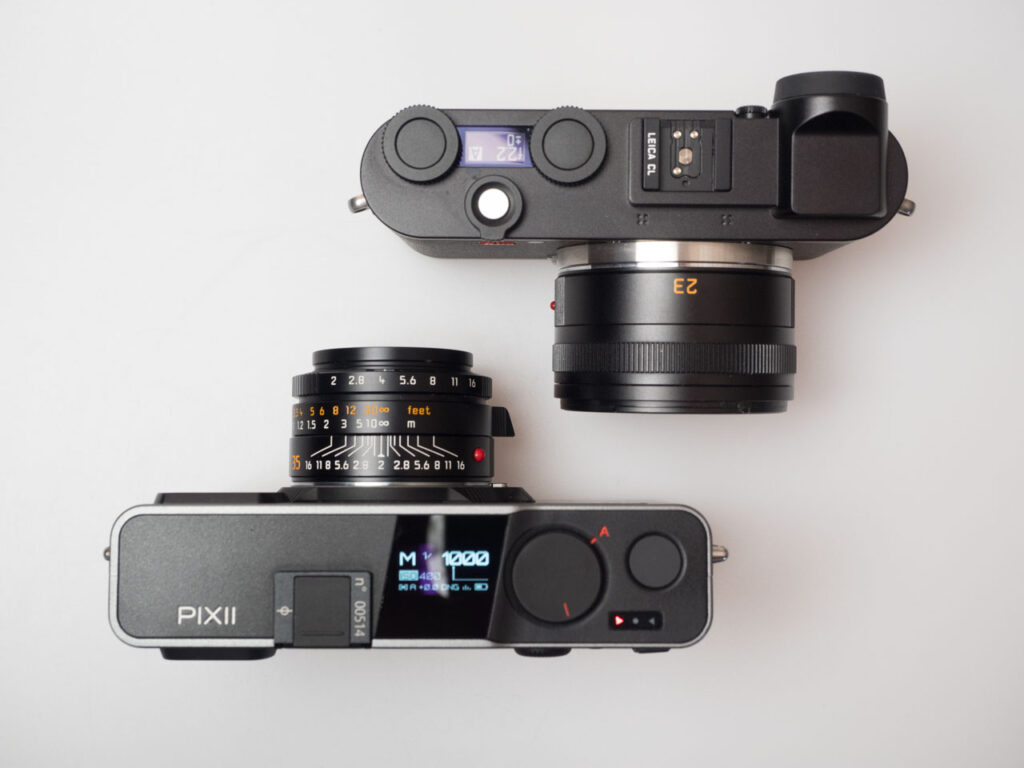
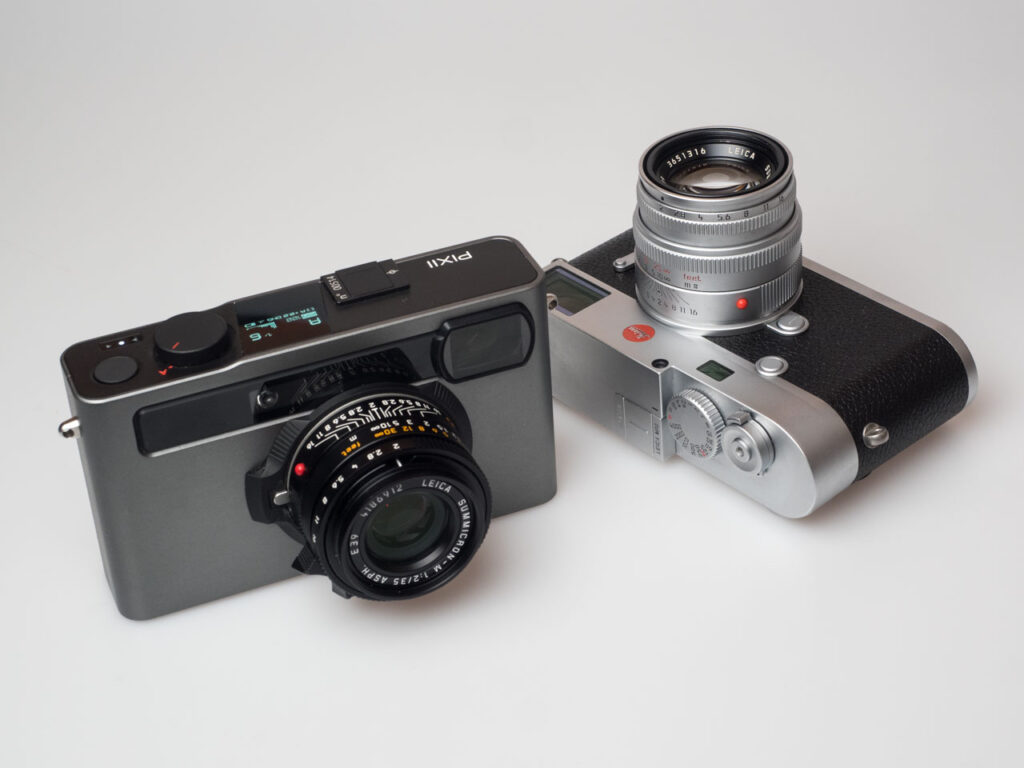
The body measures 138 × 79 × 33mm (excluding the protruding eyepiece, rear controls, and bayonet mount). By comparison, the Leica M11 measures 139 × 80 × 38.5mm. The Pixii weighs 460g with battery, making it noticeably lighter than the M11 at 530–640g depending on finish. Available in space grey and black — your colour choice does not affect weight.
New Wide-Angle Optics Seem Almost Designed for the Pixii
While the APS-C sensor does impose limitations, a growing number of affordable super-wide-angle M-mount lenses have appeared in recent years. Because the camera only uses the centre portion of the image circle, the often-weaker corners of such lenses become irrelevant. This creates an unexpected advantage — pairing the Pixii with affordable ultra-wides can produce remarkably clean results.
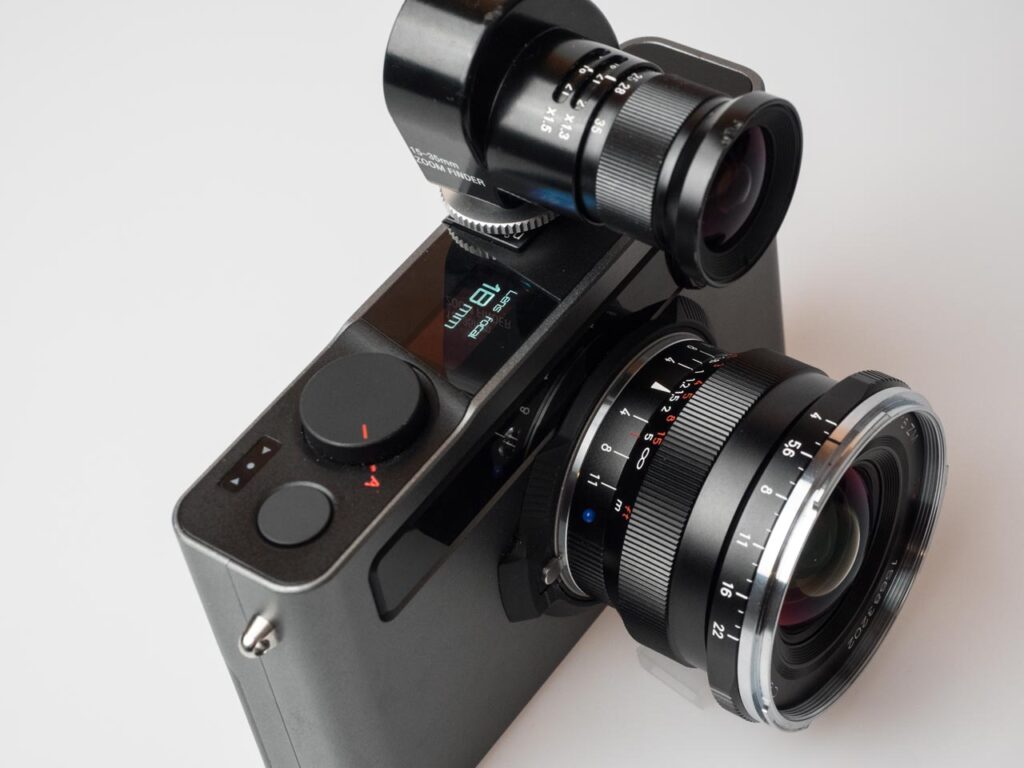
Image Quality: How Good Are the Pictures?
The most important question in any camera review deserves a thorough answer. We will examine colour accuracy, white balance performance, exposure metering, high and low ISO capabilities, RAW versus JPG output, and some specialised characteristics such as rolling shutter behaviour.
A Sensor That Punches Well Above Its Class
The current Pixii model A2572 scored a notable 90 points in DXO testing — a figure that places it amongst the best APS-C sensors available. In practical shooting, the dynamic range is genuinely impressive. The manufacturer claims 13.5 EV, which real-world testing supports. Even significantly underexposed images can be recovered from RAW files with no visible degradation. Burned highlights do occasionally appear, but far less frequently than on comparable bodies. For all practical purposes, a poor exposure is almost always correctable in post-production.
Prioritise Fast Shutter Speeds for Optimal Sharpness
The strong high-ISO performance means you should not hesitate to push sensitivity upward. With 26 megapixels packed onto an APS-C sensor, pixel pitch is extremely small at 3.76 micrometres — equivalent to a 61MP full-frame sensor. Even minimal camera shake becomes visible at this resolution. The practical advice is straightforward: use generous ISO values and aim for the shortest shutter speeds possible. A target of 1/500 second with a 50mm lens is not unreasonable.

Metering: Centre-Weighted Outperforms Average
The generous dynamic range proves especially valuable because the metering system has its quirks. Average metering delivered inconsistent results — near-identical shots taken seconds apart sometimes varied by several stops. Switching to centre-weighted metering improved reliability significantly. Since all metering is sensor-based, this inconsistency likely traces to software rather than hardware, and future firmware updates may well resolve it.
DNG Files Are Superb — JPGs Can Disappoint
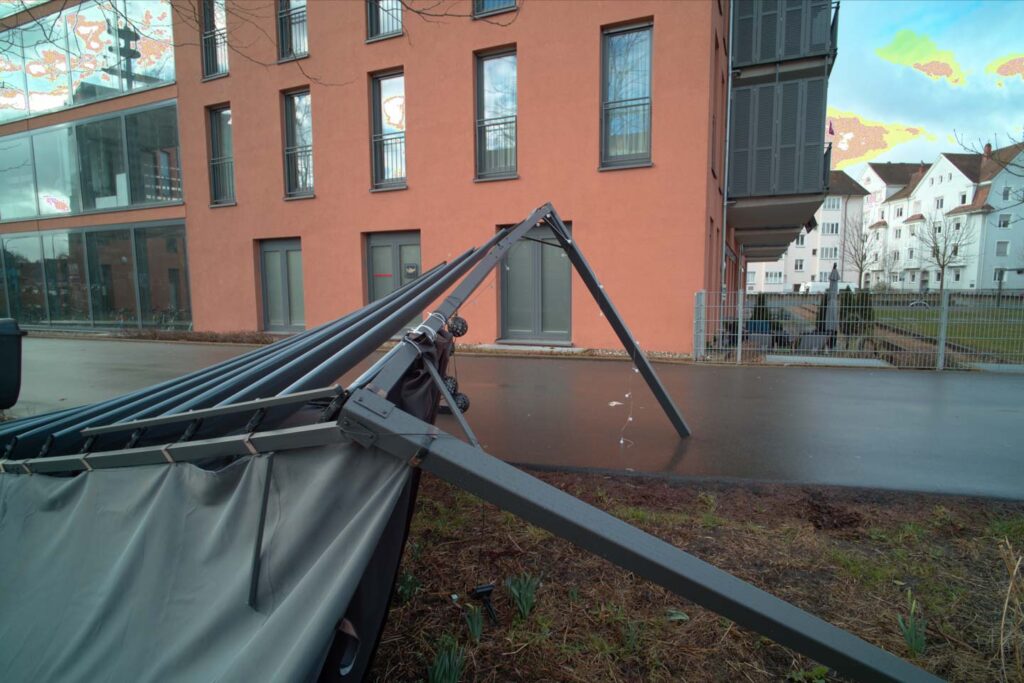
RAW (DNG) files from the Pixii are excellent. Colour rendering and white balance are largely accurate straight from the camera, and the standard Adobe profile delivers warm, pleasing tones. However, the in-camera JPG processing has notable weaknesses. Bright areas can produce ugly artefacts that ruin images entirely — an issue observed both before and after a major firmware update. For anyone serious about this camera, a RAW-based workflow is strongly recommended.

Black-and-White Mode: Good, But Not Monochrom-Level
The Pixii's black-and-white mode produces pleasing DNG files directly from the camera. However, the Bayer filter on the sensor means these are ultimately converted colour images rather than true monochrome captures. An orange filter test in monochrome mode showed virtually no difference — the camera appears to compensate digitally, negating the optical effect. For genuine monochrome work, a dedicated camera like the Leica Monochrom remains superior, but the Pixii's output is perfectly respectable for most applications.


Rolling Shutter: Impressively Well Controlled
With an all-electronic shutter, rolling shutter distortion is always a concern. The Pixii handles this exceptionally well. Sensor readout appears extremely fast — rolling shutter effects were barely detectable under normal conditions. Only fast-moving close-range subjects and fluorescent lighting produced noticeable artefacts. The 64-bit processor likely deserves credit for this impressive performance.
Flash Note
The Pixii does not support flash in any form. The accessory shoe is purely mechanical with no electrical contacts. For many rangefinder photographers, this will not be a significant limitation, but it is worth noting.
The Lens Question: Which M-Mount Optics Work Best?
Do not assume that an affordable camera body deserves budget lenses. The Pixii's 26MP APS-C sensor with its tiny 3.76-micrometre pixel pitch is extremely demanding — equivalent in resolving power to a 61MP full-frame body. However, because only the centre of the image circle is used, even moderately priced lenses tend to deliver their peak performance across the entire frame.
Zeiss ZM Lenses: An Excellent Match
The Zeiss T* coating delivers class-leading flare and veiling control, making these lenses ideal partners for the Pixii. The Biogon 28/2.8 proved outstanding — its full-frame vignetting virtually disappears on the APS-C sensor. The C Biogon 35/2.8 offers legendary resolution with colour drift simply cropped away. The Planar 50/2 matches this sharpness. Best of all, these lenses remain remarkably affordable compared to their Leica equivalents.
Leica Lenses Between 28mm and 50mm Shine
Testing began with the APO-Summicron 50, producing excellent results that confirmed the camera itself was not a limiting factor. The Summicron 28, Summicron 35 ASPH, and the compact Elmarit 28 all delivered superb image quality. Any of these Leica lenses can be confidently recommended for use on the Pixii — though if your budget extends to Summicrons, a second-hand Leica full-frame body may also be within reach.

Super Wide-Angle Lenses Open Creative Possibilities
Ultra-wide lenses are particularly interesting on the Pixii. The affordable Laowa 14/4 becomes an effective 21mm equivalent with decent results. The Voigtländer 12/5.6 functions as a viable 18mm option. The exciting Voigtländer 10/5.6 would create a stunning 15mm equivalent. Because the camera uses only the optical centre of these lenses, corner softness — often the weakness of budget ultra-wides — simply does not matter.
No Lens Profiles
The Pixii applies no internal lens correction whatsoever. The camera cannot detect which lens is attached — you only select focal length for frame lines and EXIF data. All corrections happen in post-production. This means every image represents the pure optical performance of your glass.
Connectivity in Practice: Wi-Fi, Bluetooth, and USB-C
Connectivity is the foundation of the Pixii experience, and the system works well — with some caveats. Bluetooth pairing is straightforward and reliable, though bandwidth is far too low for transferring large DNG files. It does, however, allow full parameter control without touching the camera's own menu, which is a genuinely useful feature.
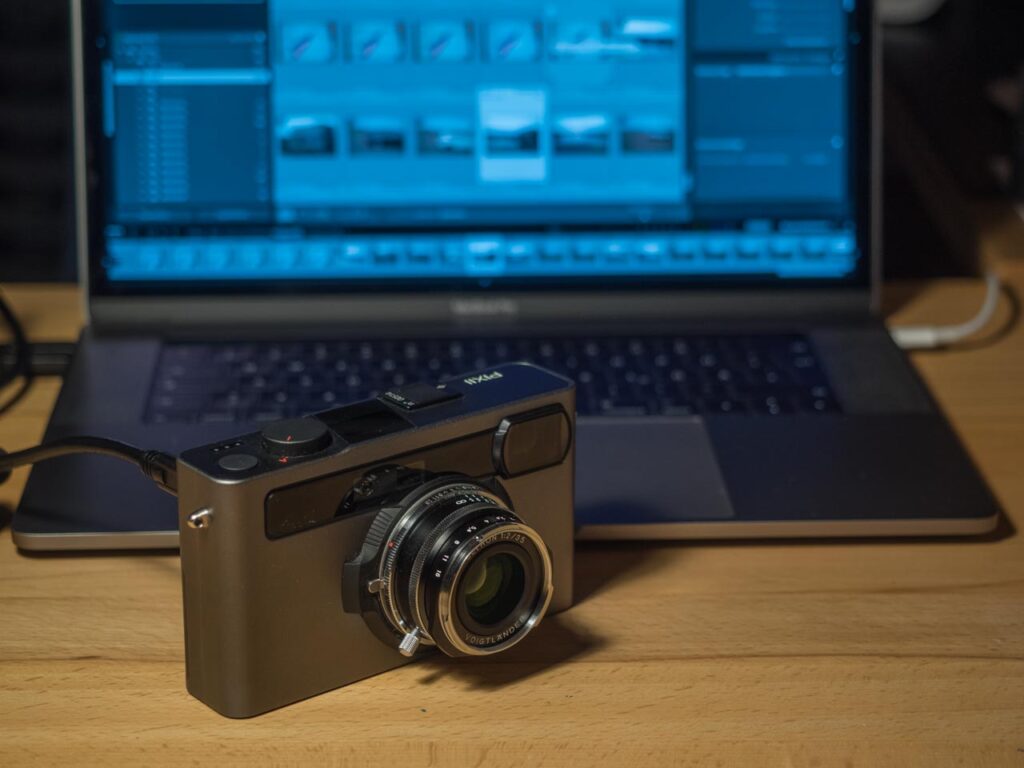
Wi-Fi connectivity enables near-real-time image review and DNG transfers to your device. There is even a live view function with remote control. Performance was strong on established home networks, though signal-weak environments proved challenging. Attempts to connect via iPhone-hosted networks were unsuccessful — the manufacturer has acknowledged this and is working on a fix.
For bulk file transfer, USB-C is the practical choice. It works flawlessly with genuine Thunderbolt cables, but cheap USB-C charging cables typically fail to establish a connection. Invest in a quality cable to avoid frustration.
Battery Life, Viewfinder, and the User Interface
Battery Life: Plan Ahead and Carry Spares

The Pixii uses standard Sony NP-50 batteries, which are inexpensive and widely available. The downside is that battery life is limited — expect around 120 shots per charge under normal conditions. The manufacturer candidly acknowledges this and draws a comparison to film photography, where you also change rolls throughout the day. In cold weather, keep spare batteries warm and accessible. This is honestly not the camera's strongest point.
The Interactive Viewfinder: A Genuine Highlight
The optical viewfinder is bright, well-sized (though slightly smaller than a Leica M), and features a well-calibrated rangefinder patch. Focus accuracy at f/2 with a 50mm lens was spot-on. What truly sets the Pixii apart is the additional information projected into the viewfinder in a dot-matrix style — shutter speed, remaining shots, ISO, exposure mode, and more. With practice, you can even navigate menu settings without removing your eye from the viewfinder. There is no dioptric correction, however.
The OLED shoulder display complements the viewfinder perfectly, providing clear parameter readouts even in bright sunlight. Between the viewfinder overlay and the shoulder display, the Pixii offers a surprisingly comprehensive interface despite lacking a rear screen entirely.
Pricing, Availability, and Storage Options
The Pixii costs significantly less than any new Leica rangefinder. The current model starts at €2,699 for the 16GB version (before tax). EU customers must add VAT; international buyers may face import duties. In Germany, for example, the effective starting price is around €3,211 including tax. Delivery is complimentary.
| Storage | DNG Capacity | Price (ex. tax) |
|---|---|---|
| 16 GB | ~360 files | €2,699 |
| 32 GB | ~800 files | €2,899 |
| 64 GB | ~1,600 files | €2,999 |
| 128 GB | ~3,200 files | €3,150 |
All Pixii cameras are handmade in Besançon, France, so stock availability is limited. Expect a wait of six weeks or more. There are currently no dealers — all sales are direct from the manufacturer. After-sales service and future support are handled in-house.
Featured Product
Looking for a Classic Rangefinder Experience?
Explore the Leica M9 Black — a legendary CCD-sensor rangefinder that defined digital rangefinder photography and continues to produce images with unmistakable character.
Leica M9 Black CCDFinal Verdict: Should You Buy the Pixii?
After five weeks and over 700 images, the answer resists a simple yes or no. The Pixii is not for everyone, but for the right photographer, it could be exactly what you need.The Pixii may not be for you if…
• You want a plug-and-play camera that does everything for you
• You depend on a JPG-only workflow with predictable results
• You are completely new to rangefinder photography and manual focusing
• Ultra-wide or telephoto focal lengths are your primary tools
• You simply want a less expensive Leica alternative rather than a distinct camera
You will thrive with the Pixii if…
• An evolving, growing product genuinely excites you
• You enjoy a connected, modern workflow and embrace DNG processing
• You value being part of a small startup's journey
• Exceptional sensor performance matters more than feature checklists
• You appreciate precision engineering, craftsmanship, and independent thinking
Your decision ultimately depends on your photographic philosophy. You might say, "I am perfectly served by my current Leica M," and that is completely valid. Or you might say, "I want to support a bold startup and be part of their story as the camera evolves," and that is equally valid. Both positions reflect a genuine love of the rangefinder tradition.
What is beyond question is the respect that the Pixii team deserves. Building a digital rangefinder camera from scratch, achieving this level of image quality and build precision, and creating a genuinely usable photographic tool is a remarkable achievement. The Pixii is imperfect in some areas, but it is also genuinely impressive in many others — and its story is far from finished.
This article was written for informational and editorial purposes. All opinions are based on independent testing. Product specifications are subject to change by manufacturers.