


 Damage
  Loss
Loss  Theft
Theft 


Zoom or Prime Lens? A Shootout Comparison
Few photography debates spark as much passion as the clash between zoom lenses and prime lenses. Zoom advocates praise their flexibility—one lens to cover a wide range of focal lengths without ever swapping glass. Prime devotees counter with superior sharpness, wider apertures, and a creative discipline that comes from being locked to a single focal length. So which side deserves your hard-earned money?
In this in-depth shootout, we take a close look at both categories, comparing optical quality, low-light capability, portability, cost, and creative impact. Whether you photograph sweeping landscapes in the backyard, fast-moving wildlife, or everyday family moments, this guide will help you decide which lens philosophy fits your shooting style best.
Understanding the Fundamentals
Prime lenses are designed around a single, fixed focal length—such as 35 mm, 50 mm, or 85 mm. Because the optical engineers do not have to accommodate a moving zoom mechanism, they can optimize every element for peak performance at that one distance. The result is typically outstanding edge-to-edge sharpness, minimal distortion, and beautifully controlled aberrations.
Zoom lenses cover a variable range of focal lengths—for example, 24–70 mm or 70–200 mm. This versatility means you can reframe a scene without moving your feet or changing glass, which is invaluable when conditions shift quickly. Modern zooms have narrowed the optical gap considerably, yet the laws of physics still impose trade-offs that matter in certain shooting scenarios.
Prime Lens Strengths
One of the greatest advantages of a prime lens is its maximum aperture. It is common to find primes that open to f/1.4 or even f/1.2, letting in far more light than a typical zoom at f/2.8 or f/4. That extra light is a game-changer in dim environments—think evening backyard gatherings, indoor events, or twilight landscapes—because it allows faster shutter speeds and lower ISO values, which translates directly into cleaner, more detailed images.
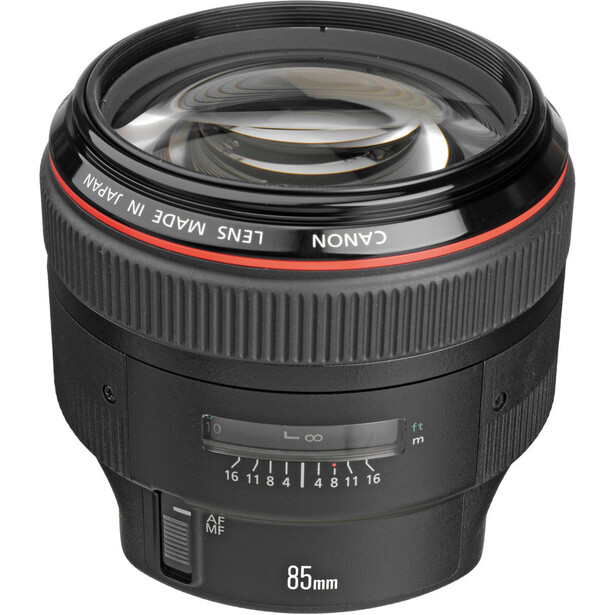
Wide apertures also produce a shallower depth of field, giving you that sought-after creamy background blur (bokeh) that isolates your subject from distracting surroundings. Portrait photographers, in particular, treasure the rendering of an 85 mm f/1.4 or a 50 mm f/1.2 for exactly this reason. Primes also tend to be lighter and more compact, since fewer glass elements are needed, making them excellent companions for long hikes, travel, or any situation where every gram counts.
Zoom Lens Advantages
Convenience is the zoom lens's strongest selling point. A single 24–70 mm zoom can replace an entire trio of primes—24 mm, 35 mm, and 50 mm—while a 70–200 mm covers the telephoto range in one barrel. That means fewer lens changes in the field, less dust on your sensor, and a lighter overall bag when you factor in the weight of multiple primes.
For fast-paced situations—wedding ceremonies, sports, wildlife, or children playing in the yard—the ability to quickly shift from a wide establishing shot to a tight close-up without fumbling through your bag is priceless. You may miss the decisive moment while unscrewing one lens and mounting another; a zoom keeps you in the action. Additionally, many professional-grade zooms now incorporate advanced optical coatings and aspherical elements that bring their sharpness impressively close to prime-level quality throughout most of the frame.
Optical Quality Face-Off
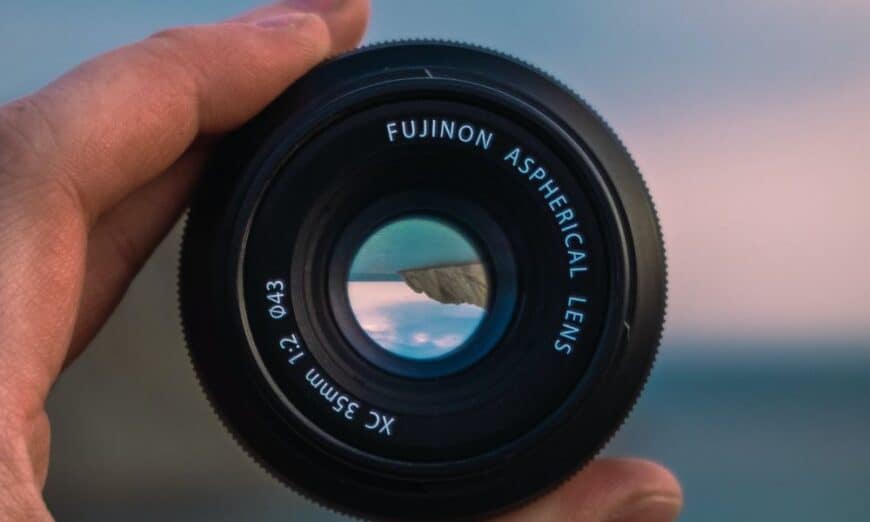
When both lens types are stopped down to a common aperture—say f/5.6 or f/8—the sharpness difference between a high-quality zoom and a well-regarded prime is often negligible in real-world prints and web-sized images. The distinction becomes more apparent at wide-open apertures and at the extreme edges of the frame, where primes maintain better contrast and resolution.
Chromatic aberration, vignetting, and geometric distortion can all be more pronounced in zooms, especially at the widest and longest extremes of their range. However, in-camera lens corrections and post-processing software have become remarkably effective at mitigating these issues, to the point where many photographers never notice them in finished work. For pixel-peepers and large-format printers, the prime still holds an edge; for the vast majority of shooters, the difference is academic.
Quick Comparison at a Glance
Prime Lens
Wider max aperture (f/1.2–f/1.8), superior sharpness wide open, lighter weight, stronger bokeh, encourages creative composition.
Zoom Lens
Greater focal-length range, fewer lens swaps, faster subject tracking, ideal for travel and dynamic events, modern optics closing the gap.
Low-Light Performance: Where Primes Shine
There is no getting around the physics: a lens with an f/1.4 aperture gathers roughly four times more light than one at f/2.8 and about eight times more than one at f/4. In practice, this means a prime shooter can keep the ISO low and the shutter speed fast when the sun dips below the horizon, delivering cleaner files with less noise and more usable detail.
Of course, modern image stabilization and high-ISO sensor technology have softened this advantage. Many zooms now include optical stabilization that compensates for several stops of camera shake, allowing handheld shots in conditions that would have demanded a tripod just a decade ago. Still, stabilization cannot freeze a moving subject the way a wider aperture and faster shutter speed can, so for action in dim light, the prime retains a meaningful advantage.
Size, Weight & Build Quality
A single prime lens is almost always smaller and lighter than a zoom covering the same focal length. A 50 mm f/1.8 pancake, for example, might weigh under 200 grams, whereas a 24–70 mm f/2.8 zoom often tips the scales near a kilogram. However, if you need to cover a broad range of focal lengths, carrying three or four primes can actually exceed the size and weight of one or two quality zooms.
Build quality varies more by price tier than by lens type. Both categories offer weather-sealed, metal-barrelled professional options as well as budget-friendly plastic-bodied models. If you photograph in dusty construction sites or rainy backyards, look for lenses with robust gaskets and fluorine-coated front elements regardless of whether they zoom or not.

Cost Considerations
Entry-level primes are among the best values in photography. A "nifty fifty"—a 50 mm f/1.8—can be had for a remarkably low price from nearly every manufacturer, delivering image quality that punches far above its weight class. As you move into faster apertures and exotic focal lengths, however, prime prices climb steeply; an f/1.2 or a tilt-shift prime can rival or exceed the cost of a top-tier zoom.
Quality zooms tend to sit in the mid-to-high price range, with professional constant-aperture models commanding premium prices. But when you calculate the cost per focal length covered, a zoom often represents strong value—especially for photographers who would otherwise need to purchase several primes to achieve the same range.
Fine Art & Intentional Photography
Many fine-art and street photographers swear by primes for a reason beyond optics: creative constraint. When you cannot zoom, you must move—step closer, step back, change your angle, rethink the composition entirely. This physical engagement with the scene fosters a more deliberate approach and often produces images with stronger visual intention.
Working with a single focal length also trains your eye over time. You begin to pre-visualize the frame before raising the camera, which accelerates your compositional instincts in every genre of photography. Some of the most celebrated photographers in history produced entire bodies of work with just one lens—proof that limitation can fuel creativity rather than restrict it.
Examples of Stunning Prime Lens Photography
From razor-thin depth-of-field portraits that melt backgrounds into smooth washes of color, to ultra-sharp architectural detail that reveals every brick and grain, prime lenses have a knack for producing images that feel three-dimensional. Landscape photographers working at golden hour often choose a wide prime like a 24 mm or 28 mm for their clean rendering of sun stars and minimal flare, while documentary shooters gravitate toward a 35 mm for its natural perspective that mirrors human vision.
The Verdict: Which Should You Choose?
The honest answer is that neither lens type is universally superior—they serve different needs. If you prioritize maximum image quality at wide apertures, crave beautiful bokeh, enjoy the creative discipline of a fixed focal length, and tend to shoot in low light, a prime lens is your best friend. If you value versatility, rapid reframing, fewer gear changes, and the ability to cover many scenarios with minimal equipment, a zoom will serve you exceptionally well.
Many experienced photographers ultimately carry both: a workhorse zoom for unpredictable situations and one or two favorite primes for when they want to slow down and create something special. The best lens is the one that gets you excited to go out and shoot—so follow the glass that sparks your creativity.
Featured Product
Capture Your World with Legendary Optics
Celebrate a century of photographic excellence with a compact camera built for both zoom versatility and prime-quality results.