


 Damage
  Loss
Loss  Theft
Theft 


Sodium Batteries: The Technology Reshaping Tomorrow's Energy Storage
The Battery Revolution Is Gaining Speed
The energy storage industry is evolving faster than ever, and much of that momentum is being driven by a single element found abundantly in the earth beneath our feet — sodium. In recent years, the battery sector has seen a dramatic surge in research activity, largely because of the extraordinary economic and practical benefits sodium-ion technology brings to the table.
Energy thought leaders and battery researchers alike have spent the past several years taking a deep look at the enormous potential that sodium-ion batteries are unleashing — and at what has been holding them back from mainstream adoption. Sodium batteries are gaining traction across the fields of energy storage and electric mobility. Sodium batteries will offer enormous promise once a few key hurdles are cleared, and they can be deployed across a wide range of applications. But first — let's understand what they actually are and what sets them apart.
What Are Sodium Batteries and How Do They Work?
Like lithium, sodium is an alkali metal — found in Group 1 of the periodic table. This means both elements share a great deal in terms of their atomic family and chemical behavior. Sodium and lithium actually sit together in the first two columns of the periodic table, which is why scientists began studying the potential of sodium batteries between 1978 and 1985, around the same time the first work on lithium cells was being done. That research faded for a time, but it was recently restarted as demand for affordable battery materials accelerated.

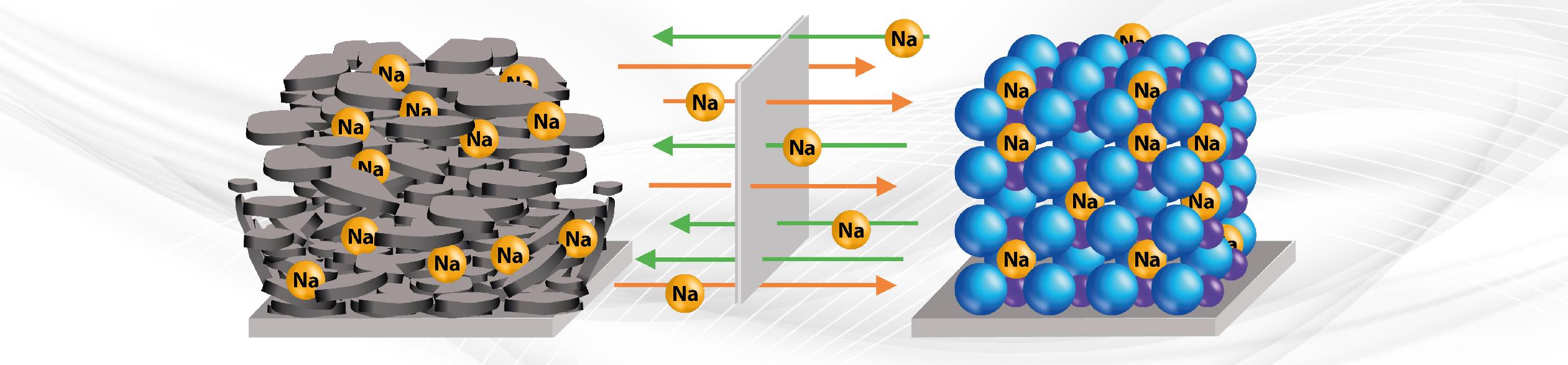
The fundamental working principle behind both sodium-ion and lithium-ion batteries is essentially the same: electrochemical energy is stored and released through the movement of ions between two electrodes — an anode and a cathode — separated by an electrolyte.
How the Core Components Work
The anode is the negative pole of the battery — the side that releases electrons during discharge. The cathode is the positive pole, typically composed of a material containing sodium (e.g., NMC, NMO, or Prussian Blue analogs). The electrolyte is the medium — a solution or gel — through which sodium ions travel between anode and cathode. The separator is a permeable barrier that keeps anode and cathode from direct contact while still allowing ion flow.
A sodium cell at its core is a cathode consisting of a sodium-containing compound, paired with an organic electrolyte solution that acts as the ion highway. When discharging, sodium ions travel from the anode to the cathode through the electrolyte, driving electrical current through your device. When charging, the process reverses.
Sodium vs. Lithium: How Do They Actually Differ?
While the operating principle is nearly identical, the properties of sodium and lithium as elements lead to meaningful differences in performance and cost between the two battery types.
The size difference between sodium and lithium ions is one of the key challenges engineers have had to solve. Sodium ions are considerably larger, which means they don't slot as easily into certain electrode materials used for lithium batteries. This made finding suitable anode materials — particularly for sodium — one of the more difficult technical problems in the field. Hard carbon has emerged as the most practical anode material, but it still offers a lower energy density than what lithium cells achieve.
Sodium-Ion Batteries
- Sodium is abundant worldwide
- Lower material cost
- No cobalt or nickel required
- Safe at wide temperature range
- Excellent for stationary storage
- Can discharge to 0V safely
Lithium-Ion Batteries
- Higher energy density
- Lighter per watt-hour
- More mature supply chain
- Preferred for EVs & portable use
- Sensitive to extreme temperatures
- Supply chain concerns persist
The standard reduction potential of sodium is slightly lower than lithium's (–2.71V vs. –3.04V), which means a sodium battery will inherently carry a somewhat lower voltage. In practical terms, this means sodium batteries will carry a lower energy density — a trade-off that is entirely acceptable in many large-format or stationary applications where weight and compact size are less critical than cost and longevity.

Advantages and Limitations of Sodium Batteries
✓ The Advantages
- Sodium is freely available globally
- Lower manufacturing cost
- No rare or conflict minerals required
- Operates between –40°C and 80°C
- No thermal runaway risk
- No explosion or fire hazard
- Easily shipped and transported safely
- Ideal for grid and off-grid storage
– The Limitations
- Lower energy density than lithium
- Heavier per watt-hour stored
- Fewer charge cycles currently
- Anode material still being optimized
- Manufacturing scale still maturing
- Not ideal for compact portable devices
"Sodium technology provides a path to high-performance energy storage that doesn't rely on the geopolitical lottery of where critical minerals happen to exist."
Where Do Sodium Batteries Make the Most Sense?
Sodium batteries are not necessarily trying to replace lithium everywhere — they're carving out the spaces where they are unambiguously the better solution. Applications that demand low cost, wide temperature tolerance, long service life, and safe operation are exactly where sodium shines brightest.
Off-Grid Living
Reliable backup power at lower cost without compromising safety
Solar Storage
Store harvested solar energy efficiently at residential or commercial scale
Grid Support
Large stationary banks supporting utility and microgrid infrastructure
Low-Speed EVs
Golf carts, scooters, utility vehicles where range anxiety isn't a factor
Home Backup
Emergency power reserves that remain stable through extreme weather
Developing Regions
Affordable, safe power access where supply chains are limited
Sodium's high natural density and availability make it uniquely positioned in markets where lithium supply disruptions, price volatility, or import restrictions make that chemistry risky to rely upon. Nations and communities looking to build energy independence are taking a serious look at sodium as a cornerstone of future infrastructure.
The Road Ahead: What Does the Future Hold?
Industry Growth Forecast
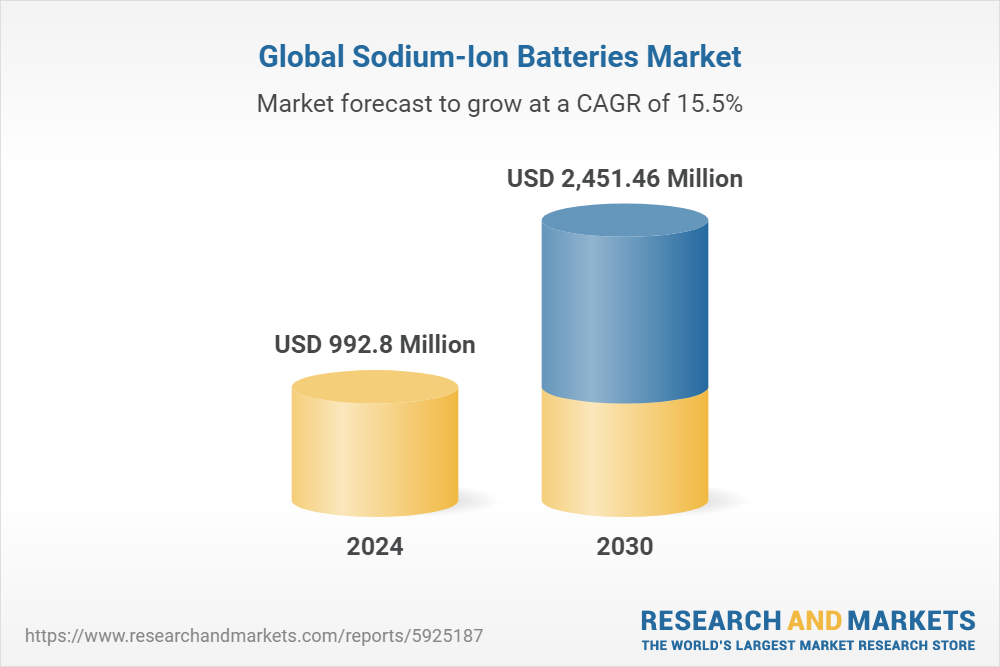
The global sodium-ion battery market is projected to expand at a compound annual growth rate of roughly 28% per year through the early 2030s. Sodium-ion technology could become even more widespread as the fact that both chemistries use the same production lines becomes more widely known — a detail that significantly lowers the barrier for manufacturers currently producing lithium cells to pivot or expand into sodium.
Major battery manufacturers, including several of the largest Chinese producers, are already committing to sodium-ion commercialization at scale. CATL unveiled a sodium-ion cell in 2021 and has continued development since. Introducing sodium production into existing lithium facilities requires only modest capital investment — the equipment is nearly identical. This means that once demand justifies the shift, the industry can scale relatively quickly compared to building entirely new supply chains from scratch.
Engineers are actively working to close the energy density gap. The most promising research involves pairing hard carbon anodes with advanced cathode compounds — including layered oxide structures and Prussian Blue analogs — that offer better sodium intercalation and cycle stability. As these chemistries mature, the performance difference between sodium and lithium will continue to narrow.
One detail that makes sodium cells especially attractive for logistics and shipping is that they can be fully discharged to 0 volts without damage — something that immediately simplifies transportation requirements that currently complicate lithium battery shipping. This single property alone has wide-reaching implications for supply chains, retailers, and international distributors handling energy products.
Ready to Experience Sodium Battery Technology?
The Limitless Lithium NoLi Sodium 50Ah Battery is one of the first sodium-ion batteries available for everyday consumers — bringing the safety, temperature resilience, and cost efficiency of this technology directly to your hands.
NoLi Sodium 50Ah Battery