


 Damage
  Loss
Loss  Theft
Theft 


How to Build a Dog Kennel for the Outdoors, According to Experts
On This Page
1. Plan the Size of Your Outdoor Dog Kennel
2. Pick the Right Kennel Fencing Materials
3. Select the Best Kennel Flooring
4. Plan for a Doghouse or Shading
5. Required Tools for the Project
6. Required Materials for the Project
Designing and constructing an outdoor dog kennel is one of the most rewarding DIY projects a pet owner can tackle. A well-built kennel gives your dog a dedicated outdoor space to run, rest, and play safely — while keeping them secure and sheltered from the elements. We consulted professional dog kennel builders and veterinary advisors to bring you this expert-backed guide on how to get it done right.
Whether you have a small terrier or a large breed, this guide walks you through every stage — from planning the right dimensions to choosing fencing, flooring, and shade solutions. Below, we also highlight common mistakes so you can avoid them before you even break ground.
Plan the Size of Your Outdoor Dog Kennel
The first and most important consideration is getting the size right. To do this effectively, think about how much time your dog will actually be spending inside the kennel, the breed size, and how much room you have in your yard. Experts recommend giving your dog at least enough room to walk, turn around comfortably, and lie down without being cramped.
We initially hoped for a universal sizing formula, but it turns out there is no single approach that works for every dog. Sizing depends on whether the kennel is for short supervised outings or extended stays. If your dog is going to be outdoors for long stretches, they will need a larger enclosure so they can exercise and move freely. A kennel that is too small can lead to stress, excessive barking, and destructive habits.
As a general guideline, a kennel for a medium-to-large dog should be no smaller than 10 feet long by 5 feet wide and at least 6 feet tall. This gives them plenty of room to stretch out, and the height is sufficient to keep most dogs from jumping over the fence. For smaller breeds, you can scale down proportionally, but always err on the side of giving them more space rather than less.
Pick the Right Kennel Fencing Materials
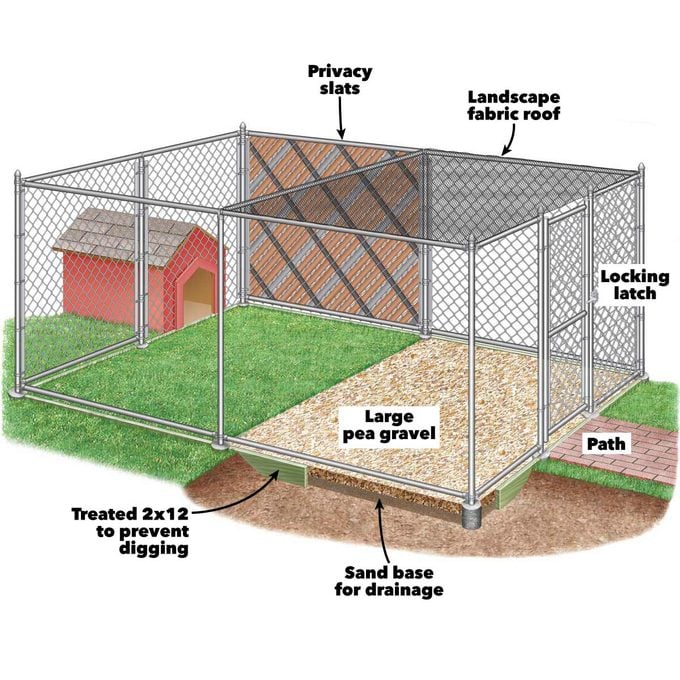
For most yards and climates, chain link fencing remains the top pick among professionals. It is durable, reasonably priced, easy to work with, and available at virtually every hardware store. A spring-loaded "snap ring" clip is the standard method for securing the chain link panels to their frame posts, keeping everything tight and rattle-free.
If your dog is a digger, you will want to install what is known as a "buried footer" — treated 2x12 lumber placed flat on the ground at the base of the fence, extending about 12 inches inward. This physical barrier prevents your dog from tunneling out. Some owners substitute hardware cloth for the buried footer, but lumber tends to be more reliable for determined diggers.
For jumpers, the answer is straightforward: add privacy slats woven through the chain link. These slats block the dog's line of sight to whatever is triggering them on the other side — whether that is a squirrel, another dog, or a passing pedestrian. When a dog cannot see what is exciting them, they are far less likely to try to scale the fence. Privacy slats also reduce barking caused by visual stimulation.
Select the Best Kennel Flooring
Flooring is one of the most debated aspects of kennel construction, and with good reason. The surface your dog stands, walks, and sleeps on directly affects their joint health, comfort level, and the overall cleanliness of the kennel. There is no single perfect solution — each material comes with its own set of trade-offs.
Concrete is the easiest to clean and the most durable, but it is unforgiving on joints and can become dangerously hot in the summer or freezing in the winter. Pea gravel is popular because it drains well and prevents muddy conditions, but it can be uncomfortable underfoot for some dogs and needs regular replenishing. Natural grass is the gentlest option, but it wears down quickly and is nearly impossible to keep sanitary over time.
Many experienced kennel builders recommend a layered approach: start with a compacted sand base for drainage, add a layer of pea gravel on top, and then consider interlocking rubber tiles or flat stone pavers in the areas where your dog spends the most time resting. This combination provides both comfort and drainage while keeping the kennel easy to clean.
★ Pro Tip
If you choose to build directly on top of grass, plan on reseeding or replacing the turf every year. High-traffic dog areas destroy grass faster than you might expect, and bare dirt quickly turns to mud after the first heavy rain.
Plan for a Doghouse or Shading
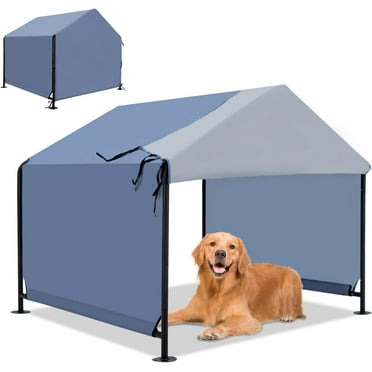
Shelter from the elements is not optional — it is essential. Dogs need protection from rain, wind, direct sun, and cold temperatures. Even if your kennel is in a partially shaded area of the yard, you should still provide a dedicated shelter inside the kennel where your dog can retreat when conditions get uncomfortable.
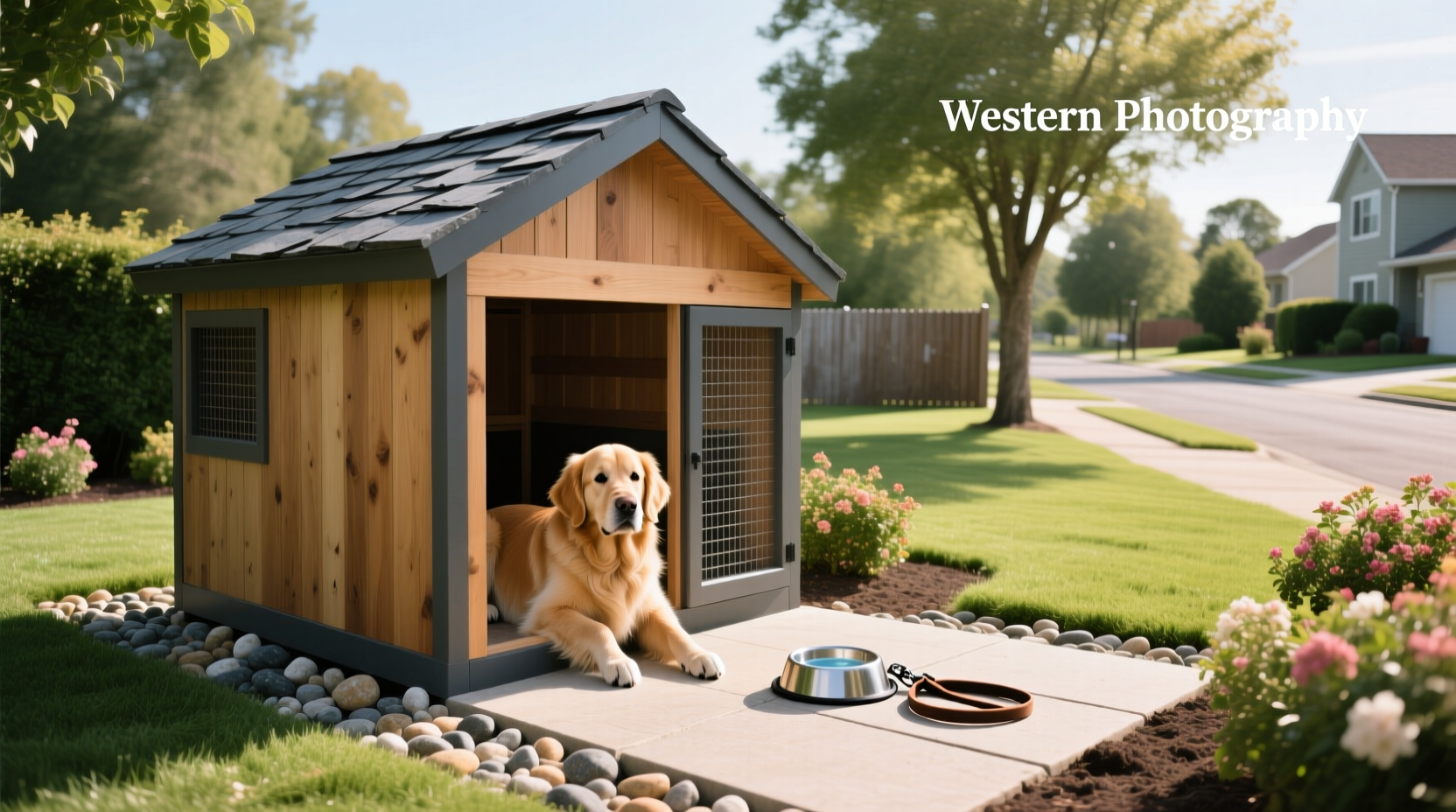
A traditional doghouse is the most common solution, and it works well as long as it is appropriately sized for the dog. A house that is too large will not retain body heat in winter, and one that is too small will feel cramped and uninviting. The doghouse should also be elevated slightly off the ground to prevent moisture from seeping in from below.
If a full doghouse is not practical for your setup, a landscape fabric roof stretched across the top of the kennel is an excellent alternative. This provides shade and moderate rain coverage while still allowing air to circulate. You can also use a combination approach — a doghouse for sleeping and a fabric canopy for the open area of the kennel.
When placing a doghouse inside the kennel, avoid the common mistake of putting it dead center. Instead, position it in a back corner so it does not block the main path through the enclosure. If the kennel has a gate, keep the doghouse on the opposite side to make it easier for you to enter and clean without having to navigate around it.
Required Tools for This Outdoor Dog Kennel Project
Gather the necessary tools for this DIY dog kennel project and line them up before you begin — it will save you time and frustration. Here is what you will need:
Required Materials for This Outdoor Dog Kennel Project
Avoid last-minute trips to the store by having all your materials ready ahead of time. Here is a full list of what you will need:
Ready to Get Started?
Outfit your outdoor kennel with the right enclosure — durable, adjustable, and built to last.
Lucky Dog Adjustable Chain Link KennelBuilding an outdoor kennel is a project that pays dividends for years. A properly constructed kennel keeps your dog safe, healthy, and happy — and gives you peace of mind knowing they have their own dedicated space outside. Take the time to plan each step thoroughly, invest in quality materials, and your dog will thank you with years of contented outdoor time.
Pick up all materials at your local home center, and be sure to check out the recommended kennel enclosure above to give your build a professional-grade foundation.