


 Damage
  Loss
Loss  Theft
Theft 


Disc Harrow: A Complete Guide to Its Uses, Benefits, and Types
 Successful farming begins with well-prepared soil, and few pieces of equipment deliver results like the disc harrow. This versatile agricultural tool has revolutionized how farmers till their land — making the job faster, more effective, and far less physically demanding. In this complete guide, we'll walk through everything worth knowing about disc harrows: what they are, the different types available, their advantages, and how they continue to shape modern agricultural practices.
What Is a Disc Harrow?
A disc harrow is a farming implement used to break up and smooth soil in preparation for planting. It features a series of concave metal discs mounted on a frame, which slice into the ground and flip the soil as the harrow moves forward. By shattering clods, blending soil layers, and tearing up weeds, a disc harrow produces a clean, level seedbed.
Unlike conventional plows, which primarily flip the earth, disc harrows also blend organic matter, crop residue, and nutrients evenly — enriching soil fertility. They work equally well on previously plowed ground or directly on untouched land, making them a highly flexible addition to any modern farming setup.
History of Disc Harrows
The disc harrow has come a long way since its early days. Initial designs were basic, manually powered contraptions. With the rise of mechanization, disc harrows evolved into tractor-mounted machines capable of covering wide stretches of land in record time. Today, they're offered in a range of sizes and configurations tailored to virtually any soil type or farming scale — cementing their role as an essential tool in agriculture.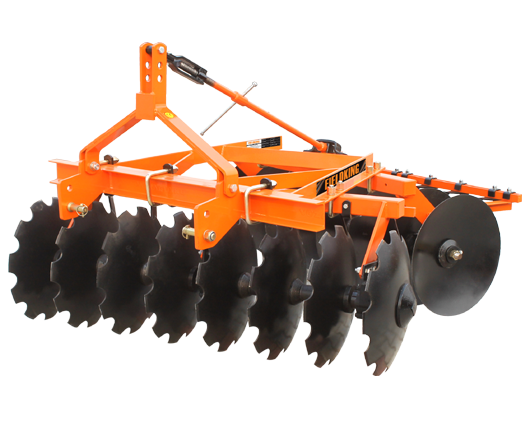
How Does a Disc Harrow Work?
A disc harrow operates by pulling a set of curved discs across the field. These discs slice into the soil, shatter it into smaller fragments, and flip it over. The concave shape plays a key role — it ensures the soil is both lifted and thoroughly blended during the pass.
Many modern disc harrows come with adjustable disc angles and spacing, giving farmers precise control over how deeply they till and how aggressively the soil is worked. This adjustability allows for fine-tuned soil preparation across different crops — whether rice, wheat, corn, or vegetables.
Types of Disc Harrows
Disc harrows are available in several designs, each tailored to specific farming needs. Knowing the differences makes it easier for farmers to pick the right tool for their land.
1. Disc Plough Harrow
A hybrid design that merges the functions of a plough and a harrow — ideal for breaking tough ground and prepping it for planting in one single run.
2. Single Action Disc Harrow
The discs rotate in one direction only. A great fit for primary tillage work and breaking apart soil clumps after plowing.
3. Double Action Disc Harrow
Features two sets of discs angled in opposing directions. Delivers superior soil mixing and leaves the field beautifully level.
4. Offset Disc Harrow
Discs are mounted on two angled gangs positioned off-center from the tractor. Highly effective for weed control and turning large, open fields.
5. Tandem Disc Harrow
Multiple disc gangs lined up in tandem — engineered for large-scale farming and heavy soil, delivering consistently uniform tillage.
Ready to Upgrade Your Soil Prep?
The MotoAlliance Disc Plow Harrow 54" with Weight Tray is built for durability and versatile field performance.
Shop MotoAlliance Disc HarrowBenefits of Using a Disc Harrow
Bringing a disc harrow into your farming routine unlocks a long list of advantages — which explains why it's such a trusted choice among growers.
- Efficient Soil PreparationDisc harrows crush clods and level fields far faster than manual tilling, saving both time and effort.
- Weed ControlAs they turn the soil, the discs uproot weeds simultaneously, reducing reliance on chemical herbicides.
- Enhanced Soil FertilityBy blending organic matter and plant residues back into the earth, disc harrows enrich nutrient distribution and improve soil vitality.
- VersatilityThey adapt easily to various soil compositions and crop types, making them a go-to choice for diverse operations.
- Improved Crop YieldA properly prepped seedbed helps seeds germinate evenly, translating into stronger growth and higher harvests.
- Reduced Labor CostsMechanized tillage dramatically cuts down the need for manual work, letting farmers manage bigger acreages with ease.
Applications of Disc Harrows
Disc harrows show up in a wide variety of farming situations:
- Primary Tillage: Loosening hard, compacted soil ahead of planting.
- Secondary Tillage: Polishing the soil post-plowing to create a smooth seedbed.
- Weed Management: Pulling weeds out and blending them into the soil in one pass.
- Soil Aeration: Boosting water retention and encouraging deeper root growth.
- Residue Management: Mixing crop stubble back in to feed soil fertility.
Choosing the Right Disc Harrow
Picking the ideal disc harrow comes down to a few key considerations:
- Field Size: Bigger fields call for heavy-duty tandem harrows, while smaller plots can rely on lighter models.
- Soil Type: Sandy, clay-heavy, or loamy soils each perform best with specific disc angles and sizes.
- Crop Requirements: Crops such as rice or corn require a finer seedbed, while others tolerate coarser preparation.
- Tractor Compatibility: Verify that the harrow matches your tractor's horsepower and hitch configuration.
Modern Innovations in Disc Harrows
Today's disc harrows pack advanced features that push efficiency to new heights:
- Adjustable Disc Angles: Give operators fine control over tilling depth and soil mixing.
- Hydraulic Systems: Simplify lifting, lowering, and transport between fields.
- Durable Materials: High-grade steel discs stand up to heavy wear and last significantly longer.
- GPS and Automation: Premium models bring precision farming tech on board for peak tillage performance.
Maintenance Tips for Disc Harrows
Routine care keeps your harrow running smoothly for years to come:
- Regular Cleaning: Wash away soil, debris, and plant residue after every use.
- Check Disc Sharpness: Sharpen or swap out worn discs to maintain tillage quality.
- Lubricate Moving Parts: Helps prevent rust and ensures silky-smooth operation.
- Inspect Frame and Bearings: Watch for cracks or loose bolts during regular check-ups.
- Store Properly: Park the harrow in a dry, sheltered spot when not in use.
Common Challenges and Solutions
Even top-tier disc harrows can run into a few hiccups:
- Heavy Soil: May slow performance — the fix is to use a heavier harrow or run multiple passes.
- Uneven Fields: Can cause uneven tillage — leveling the field beforehand solves the issue.
- Disc Wear: Frequent use eventually wears discs down — swap them out for high-quality replacements as needed.
Disc Harrows vs. Other Tillage Implements
Disc harrows are often stacked up against ploughs and rotavators:
Plough
Mainly flips the soil — disc harrows go further by shattering clods and mixing residue throughout.
Rotavator
Produces a finer seedbed — disc harrows, meanwhile, are the stronger pick for initial soil breaking and weed suppression.
Ultimately, the best option depends on soil conditions, crop choice, and what stage of tillage you're at.
Built Tough for Every Field
Equip yourself with a disc harrow engineered for reliable performance across seasons.
Get the 54" Disc Plow HarrowConclusion
The disc harrow stands as a pillar of modern agriculture — blending efficiency, versatility, and durability in one rugged package. By preparing the soil, suppressing weeds, and improving nutrient distribution, it plays a direct role in driving higher crop yields and more sustainable farming. With ongoing advancements in design and technology, disc harrows keep empowering farmers the world over, proving themselves indispensable on both small- and large-scale operations. Investing in a disc harrow isn't just a purchase — it's a deliberate step toward smarter, more productive, and more sustainable farming.