


 Damage
  Loss
Loss  Theft
Theft 


What Size Water Heater Is Right for You?
- Sizing a New Water Heater
- How Are Water Heaters Sized?
- What Size Tank Do You Need?
- Water Heater Sizes: A Guide
- Storage Tank vs. Tankless
- How to Find the Right Size
- What If I Have the Wrong Size?
- Other Considerations
- Frequently Asked Questions
Sizing a New Water Heater
Selecting the right water heater starts with understanding your household's actual hot water demand. An undersized unit leaves you shivering mid-shower; an oversized one wastes energy heating water no one uses. Getting this right from the start saves money every month.
The two main specs of water heaters are tank storage (in gallons) and recovery rate — how quickly the heater can reheat a full tank. Both matter enormously for a comfortable home experience.
💡 Pro Tip: The right water heater capacity directly affects your comfort, energy bills, and the long-term performance of the appliance. Always size up slightly if your household is growing
How Are Water Heaters Sized?
Water heaters must be large enough to supply sufficient hot water to your entire household. Key considerations include the number of people in your home, number of bathrooms, peak usage hours, and any high-demand appliances like dishwashers or large bathtubs.
These factors determine how fast hot water is replenished. They also affect the cost and type of water heater suited to your home, including efficiency ratings that impact running costs over years of operation.
Household Size
The number of people living in your home is the single most important factor in determining the right tank capacity.
Peak Usage Hours
Morning rushes when multiple people shower simultaneously place the highest demand on your water heater.
Number of Bathrooms
More bathrooms means higher simultaneous demand. A single-bathroom home needs far less capacity than a four-bathroom house.
Recovery Rate
How quickly your unit reheats after being depleted. A fast recovery rate can compensate for a smaller tank in busy households.
One important note: large storage water heaters have large storage tank sizes. This is not a unit of energy — it is the volume of water stored and available at any given moment.
What Size Tank Do You Need?
Sizing Tank and Tankless Water Heaters
For tank-style heaters, sizing is based on the first-hour rating (FHR) — how many gallons can be delivered per hour starting with a full tank. Match your household's peak-hour demand to an appropriate FHR.
For tankless heaters, sizing is based on flow rate in gallons per minute (GPM) and the temperature rise needed (the difference between your groundwater temperature and your desired output temperature).
📌 If you plan to install the heater in a colder climate or your groundwater is particularly cold, plan for a higher temperature rise, which demands a more powerful unit.
Tankless Water Heater Sizing
To calculate the flow rate you need, add up the GPM of all fixtures you might run simultaneously — a shower at 1.5–2.5 GPM, a kitchen faucet at 1.0–1.5 GPM, and a dishwasher at 1.0–1.5 GPM, for example.
This total gives you the minimum GPM rating your tankless heater must meet. In most families, a unit rated for 5–8 GPM handles daily life comfortably, but large households may need higher-capacity models.
Water Heater Sizes: A Guide
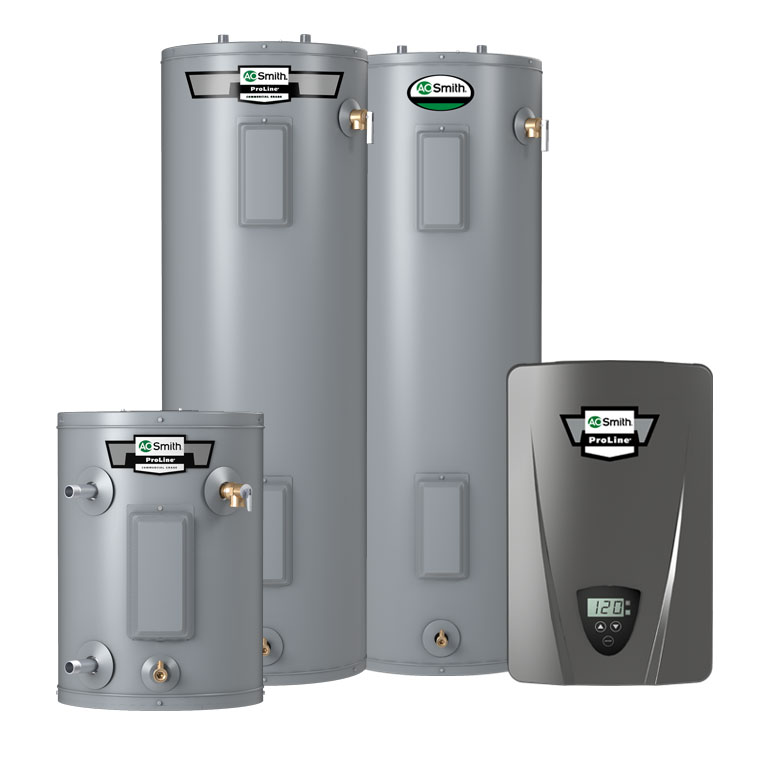
Tank sizes typically range from 20 to 100 gallons, with the most common residential options falling between 30 and 80 gallons. Tankless models are rated in GPM (gallons per minute) rather than storage capacity.
The chart below provides approximate tank sizes based on household size. These are starting points — your actual usage patterns, climate, and appliance mix may shift your needs up or down.
| Family Size | Recommended Tank Size |
|---|---|
| 1–2 people | 30–40 gallons |
| 2–3 people | 40 gallons |
| 3–4 people | 40–50 gallons |
| 5+ people | 50–80 gallons |
Tankless water heaters are sized according to flow rate in GPM rather than storage. They typically deliver between 2 and 12 GPM, with the appropriate size depending on the number of simultaneous uses anticipated in your home.
Physical Space: Storage Tank or Tankless?
Storage Tank
Storage water heaters continuously keep a large reservoir of water hot and ready. They take up more physical space — typically a dedicated utility closet or garage area — and need about 2 feet of clearance around the unit for safety and service access.
Since they maintain water at a set temperature around the clock, they can result in standby heat loss, adding modestly to energy costs compared to on-demand alternatives.
Tankless
Tankless models are wall-mounted and compact, freeing up significant floor space. They heat water only when a tap is opened, eliminating standby heat loss entirely. However, they require a larger upfront investment and may need a gas line or electrical upgrade to handle peak demand loads.

What Size Tank Do You Need?
When choosing a storage tank heater, consider the number of people in your home alongside your simultaneous usage habits. Households that run the dishwasher while someone is showering will need more capacity.
Storage Tank Heater Sizing
- 1–2 person household: 30–40 gallon tank is typically sufficient
- 3–4 person household: 40–50 gallons recommended for comfortable daily use
- 5 or more people: 50–80 gallons ensures no one runs out of hot water
- Active households with multiple bathrooms: consider a higher recovery rate unit
Tankless Water Heater Sizing
For tankless heaters, determine the maximum number of fixtures you'd realistically run at one time and add their flow rates. Factor in the temperature rise needed for your region. Colder incoming water requires more heating power from the unit.
Using a residential water heater selector tool — available on many manufacturer websites — can take the guesswork out of this process by walking you through household details step by step.
Here's How to Find Out If Your Water Heater Is the Right Size
If you already have a water heater installed, several signs can tell you whether it is correctly sized for your needs.
Running Out of Hot Water
If you consistently run out of hot water before everyone has showered, your tank is too small or the recovery rate is too slow.
Undersized Water Heater
A heater that is too small will run almost constantly and wear out faster, resulting in higher energy bills and a shorter lifespan.
Oversized Water Heater
An oversized heater heats water that rarely gets used, wasting energy round the clock through standby heat loss.
Energy Bill Spikes
Unexplained jumps in your utility bill can indicate your heater is working too hard — either too small and always catching up, or too large and always idling.
What If I Don't Have the Right Size Water Heater?
If your current water heater is too small, the most effective fix is replacement. Attempting to compensate by turning up the temperature setting is a short-term workaround that increases scalding risk and doesn't truly solve the capacity problem.
If you have sufficient hot water but the unit is consuming too much energy, you may simply have an oversized tank. In this case, downsizing at your next replacement or switching to a tankless model could meaningfully reduce your utility bills.
🔄 If you're replacing a water heater, it's also the perfect time to evaluate whether switching between tank and tankless makes sense for your household. Installation costs differ, but lifetime savings can be substantial.
Ready to Upgrade Your Hot Water Supply?
The MRCOOL 50-Gallon Electric Tank Water Heater is a reliable, high-efficiency solution built for the demands of modern households.
MRCOOL 50-Gal Water HeaterOther Water Heater Considerations
First-Hour Rating
The first-hour rating tells you how much hot water the heater can deliver in the first hour of use starting from a full tank. This metric is often more relevant than raw tank size for households with defined peak usage windows like busy mornings.
Fuel Type
Electric, natural gas, and propane heaters all have different operating costs, efficiencies, and installation requirements. Electric models like our featured MRCOOL unit are simpler to install and don't require venting, making them ideal for homes without existing gas connections.
Peak-Hour Demand
Track when your household uses the most hot water — typically morning and evening. Calculating how many gallons are used in that window helps you match FHR precisely to your lifestyle rather than relying on household size alone.
Want to Upgrade Your Water Heater?
When upgrading, look for units with strong Energy Factor (EF) ratings and consider models that qualify for rebates or tax credits. High-efficiency units often pay for themselves within a few years through reduced energy costs.
Problems With Your Water Heater?
Even correctly sized water heaters experience issues over time. Here are a few common problems and what they typically indicate:
Water Not Hot Enough
Check the thermostat setting first. Most residential heaters are set between 120–140°F. Below 120°F, bacterial growth becomes a concern. Above 140°F, scalding risk increases.
Discolored or Smelly Water
Rusty water can indicate a corroding anode rod or tank interior. A sulfur smell usually points to a reaction in the heating element. Both situations warrant inspection by a plumber.
Strange Noises
Popping or rumbling sounds typically indicate sediment buildup at the bottom of the tank. Flushing the tank annually can prevent this and extend the unit's lifespan significantly.
Leaks or Drips
A leaking pressure relief valve may indicate excessive tank pressure. Small drips from fittings can often be tightened, but a leaking tank itself usually requires full replacement.